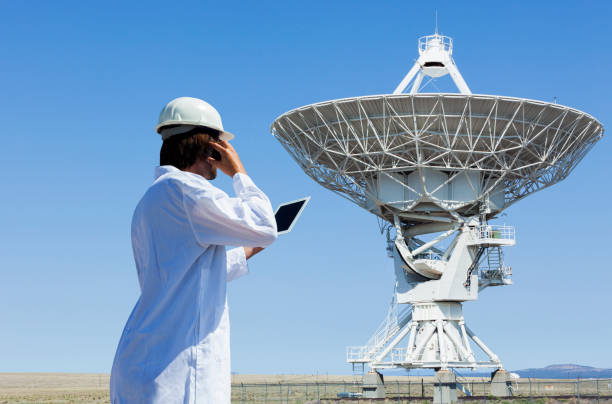
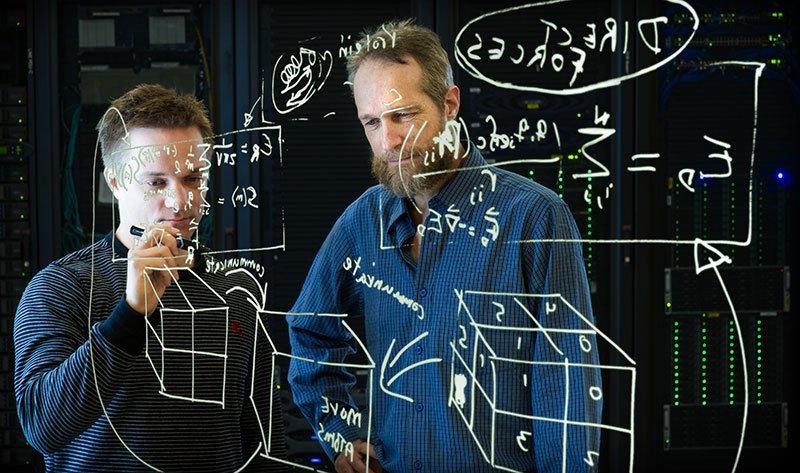
Computational Scientists work in interdisciplinary environments such as research labs, universities, government agencies, tech companies, or as independent consultants, often collaborating with domain experts, data scientists, and engineers across global and local research ecosystems. Their roles include developing algorithms, running simulations, and analyzing large datasets while addressing challenges like computational complexity, data accuracy, and the need for continuous upskilling in India’s evolving scientific landscape. They face issues such as limited access to high-end computational resources, integrating diverse data sources, and managing long research timelines amidst funding and organizational constraints. By leveraging expertise in programming, numerical methods, and scientific principles, they provide solutions to real-world problems. As key contributors to India’s research and innovation ecosystem and global scientific advancements, they propel progress through trends like cloud-based HPC, open-source simulation tools, and AI-driven modelling.
- Problem Formulation and Modelling
- Identify scientific or engineering problems that can be addressed through computational methods.
- Develop mathematical models or simulations to represent real-world phenomena or systems.
- Algorithm Development
- Design and implement algorithms for numerical analysis, optimization, or data processing.
- Optimize algorithms for performance on high-performance computing (HPC) systems or GPUs.
- Simulation and Experimentation
- Run large-scale simulations to test hypotheses or predict outcomes in areas like physics or biology.
- Validate models against experimental data or real-world observations for accuracy.
- Data Analysis and Visualization
- Analyze complex datasets generated from simulations or experiments using statistical methods.
- Create visualizations to communicate results effectively to stakeholders or researchers.
- Software Development and Maintenance
- Write and maintain custom software or scripts in languages like Python, C++, or MATLAB.
- Integrate computational tools with existing systems or databases for seamless workflows.
- Collaboration with Domain Experts
- Work with scientists, engineers, or policymakers to align computational solutions with domain needs.
- Translate scientific questions into computational frameworks for actionable insights.
- High-Performance Computing (HPC) Utilization
- Leverage supercomputers or cloud-based HPC resources to handle computationally intensive tasks.
- Optimize code for parallel processing to reduce runtime and improve efficiency.
- Research and Publication
- Conduct original research to advance computational methods or domain-specific applications.
- Publish findings in peer-reviewed journals or present at scientific conferences.
- Technology Integration and Innovation
- Stay updated on emerging tools like quantum computing, AI, or digital twins for enhanced modelling.
- Experiment with innovative approaches to solve previously intractable scientific problems.
| Route | Steps |
| Route 1: Bachelor’s Degree - Direct Entry |
1. Complete 10+2 in PCM (Physics, Chemistry, Mathematics) with minimum 50-60% marks. 2. Pursue B.Sc./B.Tech in Computational Science, Computer Science, or Physics (3-4 years) via entrance exams like JEE Main or university tests. 3. Gain practical skills through coding and research projects. 4. Join entry-level roles in research or tech firms post-graduation. |
| Route 2: Master’s Specialization (M.Sc./M.Tech) |
1. Complete B.Sc./B.Tech in relevant fields like Mathematics, Physics, or Computer Science. 2. Pursue M.Sc./M.Tech in Computational Science, Data Science, or related fields (2 years) via GATE or university exams. 3. Focus on advanced modeling or HPC skills. 4. Join specialized roles in research or industry. |
| Route 3: Doctoral Path (Ph.D.) |
1. Complete M.Sc./M.Tech in Computational Science or related discipline. 2. Pursue Ph.D. in Computational Science, focusing on niche areas like bioinformatics or climate modeling (3-5 years) via NET or institute exams. 3. Conduct original research. 4. Transition to academic, research, or senior industry roles. |
| Route 4: International Education Path |
1. Complete 10+2 in PCM and clear language proficiency tests like IELTS/TOEFL. 2. Pursue B.S./M.S./Ph.D. in Computational Science or related fields from international universities (e.g., USA, UK). 3. Gain global exposure through research projects. 4. Work internationally or return to India for high-demand roles. |
| Route 5: Short-Term Courses and Certifications |
1. Complete 10+2 or basic education with interest in science and computing. 2. Enroll in short-term courses or certifications in computational modeling, HPC, or data science (3-6 months). 3. Build a portfolio through research or simulation projects. 4. Transition to formal roles or advanced degrees for career growth. |
- Exposure through internships at research institutes, tech companies, or government labs for real-world computational projects.
- Training in simulations, data modeling, and algorithm development under mentorship.
- Participation in research projects like climate modeling, bioinformatics, or materials simulation.
- Observerships at scientific organizations to understand computational workflows and HPC usage.
- Involvement in research communities or hackathons for networking and skill-sharing opportunities.
- Exposure to tools like MATLAB, GROMACS, or TensorFlow during internships with research-focused entities.
- Workshops on emerging fields like quantum computing, AI in science, or digital twins for specialized expertise.
- Volunteer roles in NGOs or academic projects to apply computational skills for social or environmental impact.
- Collaborative projects with domain scientists to tackle real-world problems like drug discovery or disaster prediction.
- Bachelor’s in Computational Science, Computer Science, Mathematics, or Physics (B.Sc./B.Tech) for foundational training.
- Master’s in Computational Science, Data Science, or Applied Mathematics (M.Sc./M.Tech) with specializations in HPC or Bioinformatics.
- Ph.D. in Computational Science or related fields for advanced research and academic roles.
- Diploma or Certificate in Computational Modeling, Data Analysis, or Scientific Computing for entry-level roles.
- Specializations in areas like Computational Fluid Dynamics, Bioinformatics, or Machine Learning for Science.
- Short-term courses on Python for Scientific Computing, HPC, or Simulation Tools for quick skill acquisition.
- Certifications like NVIDIA Deep Learning AI, Coursera Computational Science, or edX Data Science for professional credibility.
| Institute | Course/Program | Official Link |
| Indian Institute of Science (IISc), Bangalore | M.Sc./Ph.D. in Computational Science | https://www.iisc.ac.in/ |
| Indian Institute of Technology (IIT), Bombay | M.Tech/Ph.D. in Computational Engineering | https://www.iitb.ac.in/ |
| Indian Institute of Technology (IIT), Madras | M.Tech/Ph.D. in Data Science & Computational Mechanics | https://www.iitm.ac.in/ |
| Indian Institute of Technology (IIT), Delhi | M.Tech/Ph.D. in Computational Methods | https://www.iitd.ac.in/ |
| Tata Institute of Fundamental Research (TIFR), Mumbai | Ph.D. in Computational Physics/Biology | https://www.tifr.res.in/ |
| Jawaharlal Nehru University (JNU), Delhi | M.Sc./Ph.D. in Computational Biology | https://www.jnu.ac.in/ |
| University of Hyderabad, Hyderabad | M.Sc./Ph.D. in Computational Sciences | https://www.uohyd.ac.in/ |
| Indian Statistical Institute (ISI), Kolkata | M.Stat/Ph.D. in Computational Statistics | https://www.isical.ac.in/ |
| National Institute of Technology (NIT), Warangal | M.Tech in Data Science & Computational Engineering | https://www.nitw.ac.in/ |
| Anna University, Chennai | M.E./Ph.D. in Computational Engineering | https://www.annauniv.edu/ |
| Institution | Course | Country | Official Link |
| Massachusetts Institute of Technology (MIT), Cambridge | M.S./Ph.D. in Computational Science & Engineering | USA | https://www.mit.edu/ |
| Stanford University, Stanford | M.S./Ph.D. in Computational Mathematics | USA | https://www.stanford.edu/ |
| University of California, Berkeley (UCB) | M.S./Ph.D. in Computational Science | USA | https://www.berkeley.edu/ |
| University of Oxford, Oxford | M.Sc./D.Phil. in Computational Science | UK | https://www.ox.ac.uk/ |
| ETH Zurich, Zurich | M.Sc./Ph.D. in Computational Science & Engineering | Switzerland | https://www.ethz.ch/ |
| National University of Singapore (NUS), Singapore | M.Sc./Ph.D. in Computational Science | Singapore | https://www.nus.edu.sg/ |
| University of Waterloo, Waterloo | M.Math/Ph.D. in Computational Mathematics | Canada | https://www.uwaterloo.ca/ |
| University of Melbourne, Melbourne | M.Sc./Ph.D. in Computational Science | Australia | https://www.unimelb.edu.au/ |
| Technical University of Munich (TUM), Munich | M.Sc./Ph.D. in Computational Science & Engineering | Germany | https://www.tum.de/ |
| California Institute of Technology (Caltech), Pasadena | M.S./Ph.D. in Computational Science | USA | https://www.caltech.edu/ |
India:
- Joint Entrance Examination (JEE Main & Advanced): Required for B.Tech programs at IITs and related fields.
- GATE (Graduate Aptitude Test in Engineering): For M.Tech programs in computational or related fields at IITs.
- UGC-NET/JRF: For Ph.D. admissions and research fellowships in computational sciences.
- IISc Entrance Exam: For integrated Ph.D. or M.Sc. programs at IISc Bangalore.
- State-Level or University Exams: For regional institutes offering computational science programs.
International (for Relevant Studies or Exposure):
- SAT/ACT: Required for undergraduate programs in the USA and some other countries.
- GRE: For graduate programs (M.S./Ph.D.) in Computational Science, especially in the USA.
- IELTS (International English Language Testing System): Minimum score of 6.5-7.5 for non-native speakers applying to programs in the UK, Canada, etc.
- TOEFL (Test of English as a Foreign Language): Minimum score of 90-110 for programs in English-speaking countries like the USA.
- Research Proposals or Portfolios: Often required for Ph.D. applications or research roles to demonstrate expertise.
Junior Computational Scientist → Computational Scientist → Senior Computational Scientist → Lead Computational Scientist → Research Director → Chief Scientific Officer (CSO)
- Research institutions for simulations in physics, chemistry, or climate science.
- Government agencies for projects in defense, space research, and public policy modeling.
- Healthcare and pharmaceutical companies for drug discovery, bioinformatics, and medical imaging.
- Technology firms for AI-driven modeling, optimization, and big data solutions.
- Academic institutions for teaching and conducting computational research.
- Energy sector for modeling renewable energy systems or oil exploration simulations.
- Environmental organizations for climate change modeling and disaster prediction.
- Financial institutions for risk modeling, fraud detection, and algorithmic trading.
- Aerospace industries for aerodynamics simulations and spacecraft design.
- Freelance or consulting roles for independent computational research and solutions.
| India (Firms/Organizations) | International Collaborations |
| Indian Institute of Science (IISc), Bangalore | Global Research Networks |
| Tata Institute of Fundamental Research (TIFR), Mumbai | International Scientific Collaborations |
| Bhabha Atomic Research Centre (BARC), Mumbai | Global Nuclear Research Networks |
| Indian Space Research Organisation (ISRO), Bangalore | International Space Research Networks |
| Council of Scientific & Industrial Research (CSIR), Delhi | Global Scientific Innovation Hubs |
| National Centre for Biological Sciences (NCBS), Bangalore | International Bioinformatics Networks |
| Infosys (Research Wing), Bangalore | Global Computational Solutions |
| TCS Research & Innovation, Mumbai | International Tech Research Networks |
| Wipro (AI & Computational Research), Bangalore | Global Digital Transformation Networks |
| DRDO (Defence Research and Development Organisation), Delhi | Global Defense Research Collaborations |
| Pros | Cons |
| High impact on scientific discovery and societal challenges through computational solutions | Limited access to high-end computational resources or funding in some regions |
| Opportunities to work on cutting-edge fields like AI, quantum computing, and bioinformatics | Long research timelines with delayed results or recognition |
| Interdisciplinary role combining science, math, and computing for diverse learning | High complexity of problems requiring deep domain and technical expertise |
| Growing demand globally with potential for international research collaborations | Risk of isolation in niche fields with limited immediate commercial application |
| Flexibility to work in academia, industry, or government on meaningful projects | Pressure to continuously upskill due to rapid advancements in tools and methods |
- High-Performance Computing (HPC): Increased reliance on supercomputers and cloud HPC for large-scale simulations.
- Artificial Intelligence in Science: Integration of AI/ML for predictive modeling and data-driven research.
- Quantum Computing: Emerging use in solving complex problems in chemistry and materials science.
- Digital Twins: Virtual replicas for real-time simulation in engineering, healthcare, and urban planning.
- Big Data Analytics: Handling massive datasets for insights in genomics, climate, and social sciences.
- Open-Source Tools: Adoption of accessible computational libraries and frameworks for research.
- Bioinformatics Growth: Computational methods driving advancements in personalized medicine and genomics.
- Climate Modeling: Focus on simulations for sustainability and disaster preparedness.
- Smart India Initiatives: Government push for computational solutions in smart cities and agriculture.
- Interdisciplinary Research: Blending computational science with fields like neuroscience and economics.
| Career Level (Private/Public Sector Example) | India (₹ per annum) | International (USD per annum, Tentative) |
| Junior Computational Scientist (Entry) | 4,00,000 - 7,00,000 | $40,000 - $60,000 |
| Computational Scientist (Early-Mid) | 7,00,000 - 12,00,000 | $60,000 - $85,000 |
| Senior Computational Scientist (Mid-Level) | 12,00,000 - 18,00,000 | $85,000 - $110,000 |
| Lead Computational Scientist/Research Director (Senior) | 18,00,000 - 25,00,000 | $110,000 - $140,000 |
| Chief Scientific Officer (Top) | 25,00,000 - 40,00,000+ | $140,000 - $200,000+ |
| Note: Salaries are indicative and vary based on location (metro vs. non-metro for India; country/region for international roles), sector, and experience. |
- Programming Languages: Python, C++, Fortran for scientific computing and simulations.
- Computational Tools: MATLAB, Mathematica, COMSOL Multiphysics for modeling and analysis.
- HPC Frameworks: MPI, OpenMP, CUDA for parallel computing on supercomputers or GPUs.
- Data Analysis Tools: R, Pandas, NumPy for statistical analysis and data processing.
- Simulation Software: GROMACS (molecular dynamics), ANSYS (engineering), LAMMPS (materials).
- Visualization Tools: ParaView, Matplotlib, Tableau for presenting simulation results.
- Machine Learning Libraries: TensorFlow, PyTorch for integrating AI into scientific models.
- Cloud Platforms: AWS, Google Cloud, Azure for scalable computational resources.
- Version Control Systems: Git, GitHub for collaborative research and code management.
- Domain-Specific Tools: BLAST (bioinformatics), NAMD (molecular modeling), OpenFOAM (fluid dynamics).
- Society for Industrial and Applied Mathematics (SIAM), Global.
- International Society for Computational Biology (ISCB), Global.
- Indian National Science Academy (INSA), India.
- Indian Academy of Sciences (IASc), India.
- Computational Science Society of India (CSSI), India.
- IEEE Computational Intelligence Society, Global.
- Open Source Initiative (OSI), Global.
- Women in Computational Science, Global.
- ResearchGate Community, Global.
- John von Neumann (Hungary/USA, 1903-1957): Pioneer in computational methods and numerical analysis for scientific problems. His algorithms shaped computing. His impact drives simulations.
- Alan Turing (UK, 1912-1954): Father of computer science, laying foundations for computational theory. His vision pioneered algorithms. His impact inspires innovation.
- Katherine Johnson (USA, 1918-2020): Computational scientist at NASA, critical to space mission calculations. Her precision enabled exploration. Her impact transforms aerospace.
- Stephen Wolfram (UK, 1959-): Creator of Mathematica, advancing computational tools for science. His software empowers research. His impact scales discovery.
- Ada Yonath (Israel, 1939-): Nobel laureate using computational crystallography for ribosome research. Her methods reveal biology. Her impact aids medicine.
- VenkatramanRamakrishnan (India/UK, 1952-): Nobel laureate in Chemistry, using computational methods for molecular biology. His work decodes life. His impact shapes science.
- C.N.R. Rao (India, 1934-): Renowned chemist using computational tools for materials science research. His innovations advance technology. His impact drives progress.
- Ashok Gadgil (India/USA, 1950-): Computational scientist focusing on energy and environmental solutions. His models solve crises. His impact fosters sustainability.
- SanghamitraBandyopadhyay (India, 1968-): Director of ISI Kolkata, pioneering computational biology and data science. Her research bridges domains. Her impact grows innovation.
- KalpanaChawla (India/USA, 1962-2003): Astronaut and computational researcher, contributing to aerospace simulations. Her legacy inspires science. Her impact elevates aspirations.
- Build a strong foundation in mathematics and computer science through degrees like B.Sc. or B.Tech in relevant fields.
- Pursue internships at research institutes or tech firms to gain hands-on experience in simulations and modeling.
- Create a portfolio on GitHub or ResearchGate showcasing projects like computational simulations or data analysis.
- Stay updated on emerging trends like quantum computing and AI in science through journals and webinars.
- Develop proficiency in tools like Python, MATLAB, and certifications like NVIDIA CUDA for HPC.
- Join reputed programs at institutes like IISc or international universities like MIT for quality education and networking.
- Work on research skills through platforms like Kaggle, Coursera, or university research labs for a competitive edge.
- Explore entry-level roles like junior researcher or freelance projects if full-time positions are delayed to build experience.
- Network with scientific professionals through communities like SIAM, INSA, or LinkedIn for mentorship and opportunities.
- Cultivate adaptability to work on diverse projects, from bioinformatics to climate modeling, for broader exposure.
- Engage in open-source research projects or community initiatives to apply skills for societal impact.
- Explore international certifications or exposure for advanced methodologies in computational science.
- Attend continuing education programs to stay abreast of trends like digital twins and big data in research.
- Focus on societal impact by creating computational solutions for challenges in healthcare, environment, and education.
A career in Computational Science offers a transformative opportunity to bridge science and technology, solve intricate global challenges, and drive discovery, opening doors to impactful contributions in a rapidly evolving research frontier. These professionals are the architects of scientific breakthroughs, using their analytical and computational expertise to craft models and insights that advance human knowledge across diverse contexts. This profession blends a passion for science with cutting-edge technology, providing diverse pathways in research, bioinformatics, computational physics, and beyond. For those passionate about problem-solving, driven by a desire to simulate the world’s complexities, and eager to navigate the ever-changing landscape of computational tools, becoming a Computational Scientist is a deeply rewarding journey. It empowers individuals to shape the future by building models and solutions that transform how we understand, innovate, and thrive through impactful, accessible, and groundbreaking scientific advancements.