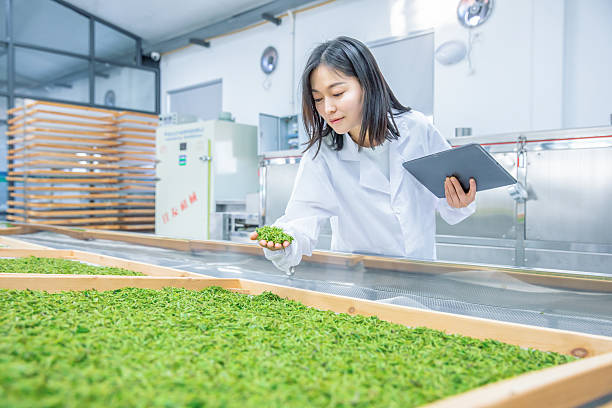
Computational Chemist

A Computational Chemist is a specialized professional who uses computer simulations, mathematical models, and theoretical methods to study chemical systems, predict molecular behaviour, and solve complex problems in chemistry, contributing to advancements in drug design, materials science, and industrial processes. They work in diverse environments including research laboratories, academic institutions, pharmaceutical companies, and government agencies. Computational Chemists apply principles of chemistry, physics, and computer science to explore molecular interactions, design new compounds, and optimize chemical processes, driving innovation in a field essential to modern scientific and technological progress. Combining expertise in quantum mechanics, molecular modelling, and data analysis, they play a crucial role in shaping the future of chemical discovery and application in a world increasingly reliant on computational solutions.

Share :
Career tree mind map (horizontal) — Computational Chemist
Colored branches, hub circles, and underlined topics — same style as counselor course classic (types 18–19 in admin).
Loading mind map…

Computational Chemists are experts who focus on harnessing computational tools to investigate chemical phenomena, predict properties of molecules, and develop new materials or drugs, applying their findings to address challenges in healthcare, energy, and environmental sustainability. Their work involves conducting simulations, analyzing data, and collaborating with interdisciplinary teams to translate theoretical insights into practical applications. They often operate in academic, industrial, or governmental settings, balancing rigorous scientific investigation with real-world impact. Computational Chemists are essential to fields like drug discovery, nanotechnology, and catalysis, serving as key contributors to science-driven solutions for complex chemical problems, advancing technological innovations, and ensuring efficient design processes. They tackle critical issues through methodical research and improve outcomes through evidence-based strategies in a landscape where computational approaches are rapidly transforming chemical research due to global demand for faster, cost-effective solutions.

  • Molecular Modelling and Simulation
    • Use computational tools to simulate molecular structures, dynamics, and interactions.
    • Predict chemical properties such as reactivity, stability, and electronic structure.
  • Drug Design and Discovery
    • Develop and test virtual models to identify potential drug candidates and optimize their efficacy.
    • Analyze protein-ligand interactions to support pharmaceutical research.
  • Materials Science Applications
    • Design and evaluate new materials for applications in electronics, energy storage, and nanotechnology.
    • Simulate material properties under various conditions to guide experimental synthesis.
  • Reporting and Communication
    • Prepare scientific papers, grants, and presentations to share research findings with the scientific community.
    • Communicate complex computational chemistry concepts to experimental chemists, engineers, and stakeholders.
  • Quantum Chemistry Calculations
    • Apply quantum mechanical methods to study electronic structures and chemical bonding.
    • Perform high-level calculations to understand reaction mechanisms at the atomic level.
  • Data Analysis and Interpretation
    • Analyze large datasets from simulations to extract meaningful chemical insights.
    • Use statistical tools to validate computational predictions against experimental data.
  • Consulting and Advisory
    • Advise pharmaceutical companies, material manufacturers, or research organizations on computational strategies.
    • Offer insights on emerging trends in computational chemistry and chemical informatics.
  • Research and Development
    • Innovate new computational methods or algorithms for more accurate chemical simulations.
    • Contribute to academic publications or industry advancements in computational chemistry.
  • Technology Integration
    • Use high-performance computing (HPC) and cloud platforms to handle large-scale simulations.
    • Leverage machine learning and AI to enhance molecular design and prediction accuracy.
  • Interdisciplinary Collaboration
    • Work with experimental chemists, biologists, and engineers to integrate computational research into broader scientific initiatives.
    • Partner with global research organizations for coordinated efforts in chemical technology development.

RouteSteps
Route 11. 10+2 with Physics, Chemistry, and Mathematics as core subjects.
2. Bachelor's degree in Chemistry, Chemical Engineering, or Physics (3-4 years).
3. Master's degree in Computational Chemistry, Physical Chemistry, or Bioinformatics (2 years).
4. PhD in Computational Chemistry or related field (3-5 years, optional).
5. Postdoctoral research or industry experience in computational methods (optional).
Route 21. 10+2 with Physics, Chemistry, and Mathematics.
2. Bachelor's degree in Applied Chemistry or Computer Science (3-4 years).
3. Master's degree in Computational Science or Chemical Informatics (2 years).
4. Specialized training in computational chemistry software (6 months-1 year).
5. Practical experience in computational labs or internships.
Route 31. 10+2 with Physics and Chemistry.
2. Bachelor's degree in Biotechnology or Materials Science (4 years).
3. Master's degree in Computational Materials Chemistry or Bioinformatics (2 years).
4. Certification or short-term training in molecular modeling (6 months-1 year).
5. Industry experience in chemical or pharmaceutical sectors.
Route 41. 10+2 with Physics and Chemistry.
2. Bachelor's degree from India in relevant field (3-4 years).
3. Master's or PhD in Computational Chemistry or Chemical Physics abroad (2-5 years).
4. Training or postdoctoral research in international computational programs (1-3 years).
5. Certification or licensure for international practice (if applicable).

  • Internships in computational chemistry labs focusing on molecular simulations and drug design.
  • Research apprenticeships with academic or industrial teams for applied computational projects.
  • Observerships in pharmaceutical companies developing computational drug discovery methods.
  • Participation in materials science projects analyzing molecular properties computationally.
  • Training in computational tools like Gaussian and Schrödinger under supervision.
  • Experience in high-performance computing units conducting large-scale simulations.
  • Involvement in collaborative studies for computational catalysis and reaction mechanisms.
  • Attendance at computational chemistry or cheminformatics conferences and workshops.
  • Exposure to interdisciplinary projects with chemists, biologists, and data scientists.
  • Collaborative research in international computational labs for global exposure.

  • Bachelor’s in Chemistry, Chemical Engineering, or Physics.
  • Bachelor’s in Computer Science or Materials Science.
  • Master’s in Computational Chemistry, Physical Chemistry, or Bioinformatics.
  • PhD in Computational Chemistry or Chemical Physics.
  • Certification courses in Molecular Modelling and Quantum Chemistry.
  • Training in Computational Drug Design and Materials Simulation.
  • Specialized courses in Cheminformatics and Machine Learning for Chemistry.
  • Master’s in Computational Science with Chemistry focus.
  • Continuing Education courses in Emerging Computational Tools.
  • Short-term courses in High-Performance Computing for Chemistry.

InstituteCourse/ProgramOfficial Link
Indian Institute of Science (IISc), BangaloreMSc/PhD in Chemistry (Computational focus)https://www.iisc.ac.in/
Indian Institute of Technology (IIT), BombayMSc/PhD in Chemistry and Chemical Engineeringhttps://www.iitb.ac.in/
Indian Institute of Technology (IIT), MadrasMSc/PhD in Computational Chemistryhttps://www.iitm.ac.in/
University of Hyderabad, HyderabadMSc/PhD in Chemistry (Computational focus)https://www.uohyd.ac.in/
Tata Institute of Fundamental Research (TIFR), MumbaiPhD in Chemical Scienceshttps://www.tifr.res.in/
Indian Institute of Technology (IIT), KanpurMSc/PhD in Chemistryhttps://www.iitk.ac.in/
University of Delhi, DelhiMSc/PhD in Chemistryhttps://www.du.ac.in/
Indian Institute of Technology (IIT), DelhiMSc/PhD in Chemical Scienceshttps://home.iitd.ac.in/
Jawaharlal Nehru University (JNU), New DelhiMSc/PhD in Computational Scienceshttps://www.jnu.ac.in/
Amity University, NoidaMSc in Computational Chemistryhttps://www.amity.edu/

InstitutionCourseCountryOfficial Link
Massachusetts Institute of Technology (MIT)PhD in Computational ChemistryUSAhttps://www.mit.edu/
University of OxfordMSc/DPhil in Theoretical ChemistryUKhttps://www.ox.ac.uk/
California Institute of Technology (Caltech)PhD in Chemical PhysicsUSAhttps://www.caltech.edu/
University of CambridgeMPhil/PhD in Computational ChemistryUKhttps://www.cam.ac.uk/
University of California, BerkeleyPhD in Chemistry (Computational focus)USAhttps://www.berkeley.edu/
ETH ZurichMSc/PhD in Computational ScienceSwitzerlandhttps://ethz.ch/en.html
University of WaterlooMSc/PhD in Chemistry (Computational)Canadahttps://uwaterloo.ca/
Australian National University (ANU)MSc/PhD in Chemical SciencesAustraliahttps://www.anu.edu.au/
National University of Singapore (NUS)MSc/PhD in Computational ChemistrySingaporehttps://www.nus.edu.sg/
Technical University of Munich (TUM)MSc/PhD in Theoretical ChemistryGermanyhttps://www.tum.de/en/

India:

  • Joint Entrance Examination (JEE) for undergraduate programs at IITs.
  • Graduate Aptitude Test in Engineering (GATE) for Master's programs in Chemistry and Chemical Engineering at IITs and other institutes.
  • Council of Scientific and Industrial Research (CSIR) NET for research fellowships and PhD programs.
  • Joint Admission Test for MSc (JAM) for postgraduate programs in Chemistry and related fields.
  • University-specific entrance exams for Master's and PhD programs in Computational Chemistry (e.g., TIFR Entrance, IISc Entrance).


International:

  • Graduate Record Examination (GRE) for postgraduate programs in Computational Chemistry in the USA and Canada.
  • International English Language Testing System (IELTS) with a minimum score of 6.5-7.0 for international programs.
  • Test of English as a Foreign Language (TOEFL) with a minimum score of 90-100 for programs in English-speaking countries.
  • University-specific entrance exams for international Master's or PhD programs in related fields.
  • Australian Education Assessment Services for programs in Australia.
  • Specific fellowship or scholarship exams for international research opportunities.

Undergraduate Student → Graduate Trainee (Master's) → Junior Computational Chemist → Established Computational Chemist → Senior Computational Chemist/Research Lead → Program Director/Professor

  • Academic institutions conducting computational chemistry research and teaching.
  • Pharmaceutical companies focusing on drug discovery and development.
  • Chemical industries developing new materials and catalysts.
  • Research institutes studying molecular dynamics and quantum chemistry.
  • Biotechnology firms applying computational methods to biological systems.
  • Government agencies focusing on environmental chemistry and energy solutions.
  • Technology companies exploring computational tools for chemical simulations.
  • Energy sectors using simulations for battery and fuel cell development.
  • International research organizations addressing global chemical challenges.
  • Consulting firms providing computational solutions for chemical industries.

IndiaInternational
Indian Institute of Science (IISc), BangalorePfizer, Global
Tata Institute of Fundamental Research (TIFR)Novartis, Global
Indian Institute of Technology (IIT), BombayGlaxoSmithKline (GSK), Global
Council of Scientific and Industrial Research (CSIR)Merck & Co., USA
Dr. Reddy’s Laboratories, HyderabadBristol Myers Squibb, USA
Indian Space Research Organisation (ISRO)Schrödinger, USA
Indian Institute of Technology (IIT), MadrasGaussian, Inc., USA
Biocon, BangaloreJohnson & Johnson, Global
National Chemical Laboratory (NCL), PuneEli Lilly and Company, USA
Sun Pharmaceutical Industries, MumbaiAstraZeneca, Global

ProsCons
Significant contribution to scientific innovation through simulations for drug discovery and materials design.Highly technical field requiring deep knowledge of chemistry and computational methods.
Intellectually stimulating work combining chemistry, physics, and computer science in computational research.Limited immediate experimental validation, as predictions often require lab confirmation.
High demand due to the growing reliance on computational methods in chemical industries.Competitive field with few top positions, often requiring advanced degrees and expertise.
Opportunities for innovation in drug design, materials science, and chemical process optimization.Requires access to expensive computational resources and high-performance computing systems.
Growing relevance due to global interest in cost-effective and rapid chemical solutions.Rapidly evolving field demands constant learning to stay updated with new tools and algorithms.

Career LevelIndia (₹ per annum)International (US$ per annum)
Trainee/Graduate Student2,00,000 - 5,00,000$30,000 - $40,000
Junior Computational Chemist5,00,000 - 10,00,000$50,000 - $70,000
Established Computational Chemist10,00,000 - 18,00,000$70,000 - $100,000
Senior Computational Chemist/Research Lead18,00,000 - 30,00,000$100,000 - $130,000
Program Director/Professor30,00,000 - 50,00,000$130,000 - $180,000

  • Molecular Modelling Software: Tools like Gaussian, Schrödinger, and AMBER for simulating molecular structures and dynamics.
  • Quantum Chemistry Tools: Platforms like ORCA and NWChem for performing quantum mechanical calculations.
  • Molecular Dynamics Software: Software like GROMACS and LAMMPS for studying molecular behaviour over time.
  • Cheminformatics Tools: Tools like RDKit and Open Babel for managing chemical data and structure analysis.
  • Data Visualization Tools: Software like PyMOL and VMD for visualizing molecular structures and simulation results.
  • High-Performance Computing Platforms: Frameworks like MPI and CUDA for leveraging HPC resources in simulations.
  • Machine Learning Libraries: Libraries like TensorFlow and scikit-learn for integrating AI into chemical predictions.
  • Statistical Analysis Tools: Software like R and MATLAB for analyzing computational chemistry data.
  • Database Management Tools: SQL and NoSQL databases for storing and querying large chemical datasets.
  • Collaboration Platforms: Tools like GitHub and Slack for interdisciplinary teamwork and code sharing in computational projects.

  • International Society for Quantum Biology and Pharmacology (ISQBP)
  • Indian Society of Chemists and Biologists (ISCB)
  • Computational Chemistry List (CCL) Community
  • Asia-Pacific Association of Theoretical and Computational Chemists (APATCC)
  • Chemical Information and Modeling Group (CINF)
  • World Association of Theoretical and Computational Chemists (WATOC)

  • Dr. Martin Karplus (Historical, USA): Known for developing multiscale models for complex chemical systems, active since the 1960s at Harvard University, Nobel Prize winner in 2013.
     
  • Dr.AriehWarshel (Historical, USA/Israel): Recognized for contributions to computational methods for chemical reactions, active since the 1970s at USC, Nobel Prize winner in 2013.
     
  • Dr. Michael Levitt (Historical, USA/UK/Israel): Noted for computational simulations of protein structures, active since the 1960s at Stanford University, Nobel Prize winner in 2013.
     
  • Dr. Kendall N. Houk (Contemporary, USA): Known for computational studies of organic reaction mechanisms, active since the 1970s at UCLA.
     
  • Dr. Michele Parrinello (Contemporary, Italy/Switzerland): Recognized for developing the Car-Parrinello method for molecular dynamics, active since the 1980s at ETH Zurich.
     
  • Dr. Sharon Hammes-Schiffer (Contemporary, USA): Noted for work on proton-coupled electron transfer in chemical systems, active since the 1990s at Yale University.
     
  • Dr. William L. Jorgensen (Contemporary, USA): Known for contributions to computational drug design and molecular simulations, active since the 1970s at Yale University.
     
  • Dr. Anna Krylov (Contemporary, USA/Russia): Recognized for advancements in electronic structure theory, active since the 1990s at USC.
     
  • Dr. David Baker (Contemporary, USA): Noted for computational protein design and structure prediction, active since the 1990s at University of Washington.
     
  • Dr. Vijay Pande (Contemporary, USA): Known for large-scale simulations and machine learning in chemistry, active since the 2000s at Stanford University.
     

  • Build a strong foundation in chemistry, physics, and computer science during undergraduate studies to prepare for specialized learning.
  • Seek early exposure through internships or lab projects to gain practical experience in computational research techniques.
  • Develop technical skills in molecular modeling tools like Gaussian and Schrödinger during Master's or PhD programs for a competitive edge.
  • Engage in interdisciplinary learning by exploring quantum mechanics, statistical analysis, and programming alongside computational chemistry.
  • Pursue research opportunities or fellowships to deepen expertise in niche areas like drug design or materials simulation.
  • Cultivate mentoring relationships with established computational chemists for career guidance and networking opportunities.
  • Stay updated with advancements in computational tools, quantum computing, and machine learning applications in chemistry.
  • Publish research findings or computational studies in scientific journals to establish credibility and contribute to the field.
  • Consider international exposure through collaborative projects, conferences, or advanced research abroad to broaden perspectives.
  • Balance technical expertise with communication skills to present complex computational concepts to non-scientific stakeholders effectively.


A career as a Computational Chemist offers a unique opportunity to impact global science, technological innovation, and societal well-being by leveraging the power of computational tools to solve chemical challenges. From designing life-saving drugs to developing sustainable materials, Computational Chemists play a pivotal role in addressing some of the world's most pressing issues in healthcare, energy, and environmental sustainability. This field combines rigorous scientific inquiry, interdisciplinary collaboration, and technological innovation, offering diverse paths in research, industry application, and academic roles. For those passionate about chemistry, problem-solving, and shaping the future of science, a career as a Computational Chemist provides a deeply rewarding journey with significant potential for making meaningful contributions to society in an era where computational advancements continue to shape chemical strategies, industrial innovations, and global responses across all sectors.

Knowledge & Skills You Will Learn
1
Technical expertise in molecular modelling, quantum chemistry, and computational tools
2
Observational accuracy in assessing simulation results and molecular behaviour
3
In-depth knowledge of chemical theory, thermodynamics, and electronic structure
4
Critical thinking to solve complex problems related to molecular design and reaction prediction
5
Attention to detail to ensure precision in simulations and theoretical models
6
Time management to handle multiple research projects and prioritize urgent computational tasks
7
Adaptability to learn and implement new computational tools and research methodologies
8
Interpersonal skills for effective collaboration with experimental chemists, biologists, and engineers
9
Problem-solving ability to address challenges in computational method development and application
10
Ethical awareness to manage sensitive issues like data integrity and unbiased reporting
Junior Computational Chemist

Junior Computational Chemist

Early-career scientists establish roles in research, industrial, or governmental settings while developing their expertise and project portfolio....

0.0LPA

Senior Computational Chemist/Research Lead

Senior Computational Chemist/Research Lead

Experienced scientists often take leadership roles, overseeing research teams or computational programs while mentoring junior staff and shaping...

0.0LPA

Program Director/Professor

Program Director/Professor

Top-level scientists may direct research programs or lead academic departments, combining technical expertise with administrative leadership and...

0.0LPA

Interested in this career?

Take the next step and explore more about Computational Chemist.