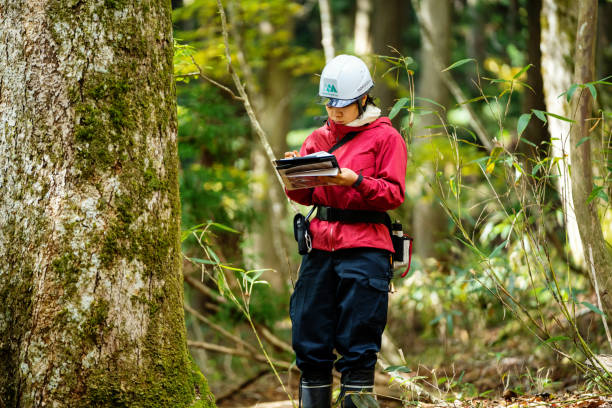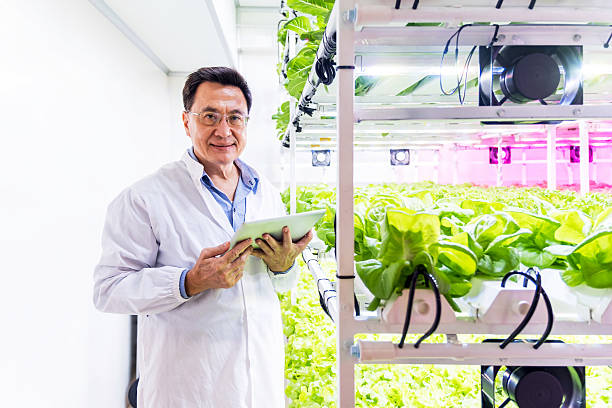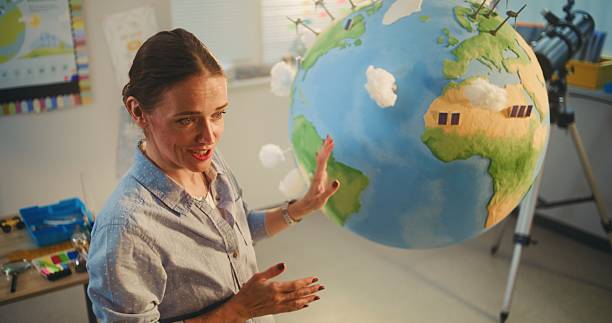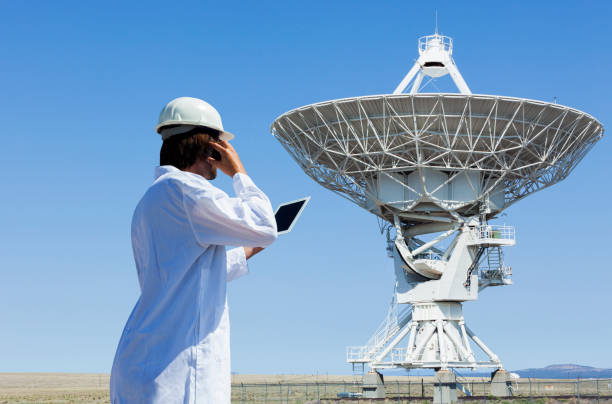
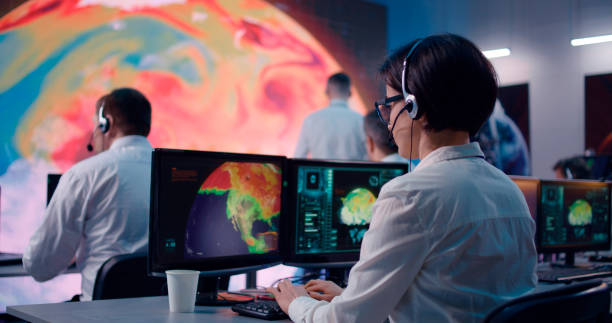
Climate Scientists are experts who focus on understanding the dynamics of the Earth's climate, identifying drivers of climate variability, and developing strategies to address climate-related challenges, applying their findings to tackle issues in environmental protection, disaster preparedness, and public policy. Their work involves collecting and analyzing data, creating climate models, and collaborating with interdisciplinary teams to translate research into actionable solutions. They often operate in academic, governmental, or non-profit settings, balancing rigorous scientific investigation with real-world impact. Climate Scientists are essential to fields like climate modelling, renewable energy, and environmental policy, serving as key contributors to science-driven solutions for climate mitigation, advancing sustainable practices, and ensuring planetary health. They tackle critical issues through methodical research and improve outcomes through evidence-based strategies in a landscape where climate change remains a leading global challenge due to its widespread environmental and societal impacts.
- Climate Data Analysis
- Collect and analyze data on temperature, precipitation, ice cover, and greenhouse gas concentrations.
- Study historical climate records to identify long-term trends and patterns.
- Climate Modelling and Prediction
- Develop and refine computer models to simulate past, present, and future climate scenarios.
- Predict potential impacts of climate change on ecosystems, economies, and communities.
- Impact Assessment
- Evaluate the effects of climate change on agriculture, water resources, and biodiversity.
- Assess risks of extreme weather events like hurricanes, droughts, and heatwaves.
- Reporting and Communication
- Prepare scientific papers, reports, and presentations to share research findings with the scientific community and policymakers.
- Communicate complex climate science concepts to the public, educators, and stakeholders.
- Policy and Advisory Support
- Collaborate with governments and organizations to develop climate adaptation and mitigation strategies.
- Provide scientific input for environmental regulations and international climate agreements.
- Field Research and Monitoring
- Conduct fieldwork to gather data from oceans, glaciers, and atmospheric conditions.
- Monitor environmental changes using remote sensing and ground-based instruments.
- Consulting and Advocacy
- Advise industries, urban planners, and NGOs on climate-resilient practices.
- Advocate for sustainable policies and public awareness on climate issues.
- Research and Development
- Innovate new methods for measuring climate variables and improving model accuracy.
- Contribute to academic publications or policy advancements in climate science.
- Technology Integration
- Use geospatial tools and satellite data to map climate impacts and vulnerabilities.
- Leverage machine learning and AI for enhanced climate prediction and analysis.
- Interdisciplinary Collaboration
- Work with ecologists, economists, and engineers to integrate climate research into broader sustainability initiatives.
- Partner with global organizations for coordinated efforts in climate action and research.
| Route | Steps |
| Route 1 | 1. 10+2 with Physics, Chemistry, and Mathematics/Biology as core subjects. 2. Bachelor's degree in Environmental Science, Meteorology, or Earth Sciences (3-4 years). 3. Master's degree in Climate Science, Atmospheric Science, or Oceanography (2 years). 4. PhD in Climate Science or related field (3-5 years, optional). 5. Postdoctoral research or industry experience in climate studies (optional). |
| Route 2 | 1. 10+2 with Physics and Mathematics. 2. Bachelor's degree in Physics, Geography, or Geology (3-4 years). 3. Master's degree in Climate Change or Environmental Modeling (2 years). 4. Specialized training in climate data analysis techniques (6 months-1 year). 5. Practical experience in climate labs or internships. |
| Route 3 | 1. 10+2 with Physics and Chemistry. 2. Bachelor's degree in Engineering or Computer Science (4 years). 3. Master's degree in Climate Informatics or Environmental Engineering (2 years). 4. Certification or short-term training in climate modeling (6 months-1 year). 5. Industry experience in environmental sectors. |
| Route 4 | 1. 10+2 with Physics and Mathematics. 2. Bachelor's degree from India in relevant field (3-4 years). 3. Master's or PhD in Climate Science or Atmospheric Science abroad (2-5 years). 4. Training or postdoctoral research in international climate programs (1-3 years). 5. Certification or licensure for international practice (if applicable). |
- Internships in climate research labs focusing on atmospheric data and modelling.
- Research apprenticeships with academic or governmental teams for applied climate projects.
- Observerships in meteorological departments studying weather and climate patterns.
- Participation in environmental impact assessment projects analyzing climate risks.
- Training in climate modeling tools like CMIP and GIS under supervision.
- Experience in field research units conducting climate data collection.
- Involvement in policy studies for climate adaptation and mitigation strategies.
- Attendance at climate science or sustainability conferences and workshops.
- Exposure to interdisciplinary projects with ecologists and policy experts.
- Collaborative research in international climate labs for global exposure.
- Bachelor’s in Environmental Science, Meteorology, or Earth Sciences.
- Bachelor’s in Physics, Geography, or Geology.
- Master’s in Climate Science, Atmospheric Science, or Oceanography.
- PhD in Climate Science or Environmental Modeling.
- Certification courses in Climate Data Analysis and Modeling.
- Training in Climate Adaptation and Mitigation Strategies.
- Specialized courses in Geospatial Analysis for Climate Research.
- Master’s in Environmental Engineering with Climate focus.
- Continuing Education courses in Emerging Climate Technologies.
- Short-term courses in Carbon Footprint Assessment Techniques.
| Institute | Course/Program | Official Link |
| Indian Institute of Science (IISc), Bangalore | MSc/PhD in Atmospheric Sciences | https://www.iisc.ac.in/ |
| Indian Institute of Technology (IIT), Bombay | MSc/PhD in Climate Studies | https://www.iitb.ac.in/ |
| Indian Institute of Technology (IIT), Delhi | MSc/PhD in Environmental Engineering | https://home.iitd.ac.in/ |
| University of Pune, Pune | MSc in Environmental Science | https://www.unipune.ac.in/ |
| Tata Institute of Social Sciences (TISS), Mumbai | MA/MSc in Climate Change and Sustainability | https://www.tiss.edu/ |
| Indian Institute of Technology (IIT), Kharagpur | MSc/PhD in Earth Sciences | https://www.iitkgp.ac.in/ |
| Jawaharlal Nehru University (JNU), New Delhi | MSc/PhD in Environmental Sciences | https://www.jnu.ac.in/ |
| University of Delhi, Delhi | MSc/PhD in Environmental Studies | https://www.du.ac.in/ |
| Anna University, Chennai | MSc in Environmental Science | https://www.annauniv.edu/ |
| Amity Institute of Environmental Sciences, Noida | MSc in Climate Science | https://www.amity.edu/ |
| Institution | Course | Country | Official Link |
| Massachusetts Institute of Technology (MIT) | PhD in Climate Science | USA | https://www.mit.edu/ |
| University of Oxford | MSc/DPhil in Climate Change | UK | https://www.ox.ac.uk/ |
| Stanford University | PhD in Earth System Science | USA | https://www.stanford.edu/ |
| University of Cambridge | MPhil/PhD in Climate Science | UK | https://www.cam.ac.uk/ |
| University of California, Berkeley | PhD in Environmental Science (Climate focus) | USA | https://www.berkeley.edu/ |
| ETH Zurich | MSc/PhD in Atmospheric Science | Switzerland | https://ethz.ch/en.html |
| University of British Columbia | MSc/PhD in Climate Studies | Canada | https://www.ubc.ca/ |
| Australian National University (ANU) | MSc/PhD in Climate Science | Australia | https://www.anu.edu.au/ |
| University of Copenhagen | MSc/PhD in Climate Change | Denmark | https://www.ku.dk/english/ |
| Stockholm University | MSc/PhD in Environmental Science | Sweden | https://www.su.se/english/ |
India:
- Joint Entrance Examination (JEE) for undergraduate programs at IITs.
- Graduate Aptitude Test in Engineering (GATE) for Master's programs in Environmental Science at IITs and other institutes.
- Council of Scientific and Industrial Research (CSIR) NET for research fellowships and PhD programs.
- Joint Admission Test for MSc (JAM) for postgraduate programs in Environmental Science and related fields.
- University-specific entrance exams for Master's and PhD programs in Climate Science (e.g., JNU Entrance, IISc Entrance).
International:
- Graduate Record Examination (GRE) for postgraduate programs in Climate Science in the USA and Canada.
- International English Language Testing System (IELTS) with a minimum score of 6.5-7.0 for international programs.
- Test of English as a Foreign Language (TOEFL) with a minimum score of 90-100 for programs in English-speaking countries.
- University-specific entrance exams for international Master's or PhD programs in related fields.
- Australian Education Assessment Services for programs in Australia.
- Specific fellowship or scholarship exams for international research opportunities.
Undergraduate Student → Graduate Trainee (Master's) → Junior Climate Scientist → Established Climate Scientist → Senior Climate Scientist/Research Lead → Program Director/Professor
- Academic institutions conducting climate research and teaching.
- Government agencies focusing on environmental policy and climate monitoring.
- Environmental consultancies developing climate adaptation strategies.
- Non-profit organizations advocating for climate action and sustainability.
- International bodies addressing global climate challenges and agreements.
- Research institutes studying atmospheric and oceanic climate dynamics.
- Renewable energy companies assessing climate impacts on energy production.
- Agricultural sectors analyzing climate effects on crop yields and food security.
- Urban planning organizations incorporating climate resilience into infrastructure.
- Disaster management agencies predicting and mitigating climate-related risks.
| India | International |
| Indian Meteorological Department (IMD) | National Oceanic and Atmospheric Administration (NOAA), USA |
| Indian Institute of Tropical Meteorology (IITM), Pune | NASA Earth Science Division, USA |
| Ministry of Environment, Forest and Climate Change (MoEFCC) | European Centre for Medium-Range Weather Forecasts (ECMWF), UK |
| National Centre for Earth Science Studies (NCESS) | World Meteorological Organization (WMO), Global |
| The Energy and Resources Institute (TERI), New Delhi | Intergovernmental Panel on Climate Change (IPCC), Global |
| Indian Space Research Organisation (ISRO) | United Nations Environment Programme (UNEP), Global |
| Centre for Science and Environment (CSE), New Delhi | Greenpeace International, Global |
| National Institute of Oceanography (NIO), Goa | World Resources Institute (WRI), USA |
| Wildlife Institute of India (WII), Dehradun | Climate Analytics, Global |
| Ashoka Trust for Research in Ecology and the Environment (ATREE) | Environmental Defense Fund (EDF), USA |
| Pros | Cons |
| Significant contribution to global sustainability through research on climate change mitigation and adaptation. | High pressure to produce actionable results amid political and societal debates on climate change. |
| Intellectually stimulating work combining atmospheric science, data analysis, and policy impact in climate research. | Often limited funding for long-term climate research projects, requiring constant grant applications. |
| High demand due to increasing global focus on climate change and environmental crises. | Emotional toll of working on issues with severe, often irreversible, environmental consequences. |
| Opportunities for innovation in climate modeling, renewable energy, and adaptation strategies. | Slow impact, as translating research into policy or societal change can take years or decades. |
| Growing relevance due to escalating climate impacts on economies, ecosystems, and human health. | Requires continuous learning to keep up with rapidly evolving climate data and technologies. |
- Climate Modeling Advancements: Increasing focus on high-resolution models to predict localized climate impacts with greater accuracy.
- Big Data and AI Integration: Growing use of artificial intelligence and machine learning to analyze vast climate datasets for better forecasting.
- Carbon Capture and Storage (CCS): Rising research into technologies for capturing and storing carbon emissions to mitigate climate change.
- Renewable Energy Solutions: Enhanced emphasis on studying climate impacts on renewable energy systems like solar and wind power.
- Climate Adaptation Strategies: Development of region-specific adaptation plans to address vulnerabilities in agriculture, infrastructure, and water resources.
- Extreme Weather Research: Greater focus on understanding and predicting the frequency and intensity of extreme weather events due to climate change.
- Global Policy Collaboration: Increased international partnerships to align climate science with policy frameworks like the Paris Agreement.
- Climate Justice and Equity: Expanding studies on how climate change disproportionately affects marginalized communities and regions.
- Ocean and Polar Research: Rising attention to the role of oceans and polar ice in regulating global climate systems.
- Public Engagement and Education: Growing trend towards involving communities in climate science through citizen science and awareness campaigns.
| Career Level | India (₹ per annum) | International (US$ per annum) |
| Trainee/Graduate Student | 2,00,000 - 4,00,000 | $25,000 - $35,000 |
| Junior Climate Scientist | 4,00,000 - 8,00,000 | $40,000 - $60,000 |
| Established Climate Scientist | 8,00,000 - 15,00,000 | $60,000 - $90,000 |
| Senior Climate Scientist/Research Lead | 15,00,000 - 25,00,000 | $90,000 - $120,000 |
| Program Director/Professor | 25,00,000 - 40,00,000 | $120,000 - $160,000 |
- Climate Modelling Software: Tools like CMIP (Coupled Model Intercomparison Project) and NCAR models for simulating climate scenarios.
- Geospatial Analysis Tools: Platforms like ArcGIS and QGIS for mapping climate impacts and vulnerabilities.
- Data Visualization Tools: Software like MATLAB and Python libraries (e.g., Matplotlib) for presenting climate data graphically.
- Statistical Analysis Tools: Software like R and SPSS for analyzing climate trends and variability.
- Remote Sensing Software: Tools like ENVI and ERDAS Imagine for processing satellite data related to climate monitoring.
- Big Data Platforms: Frameworks like Hadoop and Apache Spark for handling large climate datasets.
- Machine Learning Libraries: Libraries like TensorFlow and scikit-learn for predictive modeling in climate research.
- Database Management Platforms: SQL for querying and managing large climate research datasets.
- Weather Forecasting Tools: Software like WRF (Weather Research and Forecasting Model) for short-term climate predictions.
- Collaboration Platforms: Tools like Slack and Microsoft Teams for interdisciplinary teamwork and data sharing with researchers and policymakers.
- American Geophysical Union (AGU)
- World Meteorological Organization (WMO)
- Intergovernmental Panel on Climate Change (IPCC)
- Indian Meteorological Society (IMS)
- European Geosciences Union (EGU)
- Climate Science Legal Defence Fund (CSLDF), USA
- International Union of Geodesy and Geophysics (IUGG)
- Asia Oceania Geosciences Society (AOGS)
- Australian Meteorological and Oceanographic Society (AMOS)
- Global Climate Observing System (GCOS)
- Dr. James Hansen (Historical, USA): Known for early warnings on global warming and climate modeling, active since the 1960s at NASA Goddard Institute for Space Studies.
- Dr.Syukuro Manabe (Historical, USA/Japan): Recognized for pioneering climate modeling and predicting global warming, active since the 1960s at Princeton University, Nobel Prize winner in 2021.
- Dr. Katharine Hayhoe (Contemporary, USA): Noted for climate communication and regional climate impact studies, active since the 2000s at Texas Tech University.
- Dr. Michael Mann (Contemporary, USA): Known for the "hockey stick" graph illustrating rapid global warming, active since the 1990s at Penn State University.
- Dr. Susan Solomon (Contemporary, USA): Recognized for research on ozone depletion and climate chemistry, active since the 1980s at MIT.
- Dr. Gavin Schmidt (Contemporary, USA): Noted for climate modeling and public outreach, active since the 2000s at NASA Goddard Institute for Space Studies.
- Dr.Veerabhadran Ramanathan (Contemporary, India/USA): Known for work on greenhouse gases and black carbon impacts, active since the 1970s at UC San Diego.
- Dr.Sunita Narain (Contemporary, India): Recognized for advocacy on climate policy and sustainability in developing countries, active since the 1980s at Centre for Science and Environment.
- Dr.Jagadish Shukla (Contemporary, India/USA): Noted for contributions to monsoon prediction and climate modeling, active since the 1970s at George Mason University.
- Dr.Friederike Otto (Contemporary, Germany/UK): Known for attribution science linking extreme weather to climate change, active since the 2010s at University of Oxford.
- Build a strong foundation in environmental science, physics, and mathematics during undergraduate studies to prepare for specialized learning.
- Seek early exposure through internships or field projects to gain practical experience in climate research techniques.
- Develop technical skills in climate modeling tools like CMIP and GIS during Master's or PhD programs for a competitive edge.
- Engage in interdisciplinary learning by exploring atmospheric science, oceanography, and policy alongside climate studies.
- Pursue research opportunities or fellowships to deepen expertise in niche areas like climate adaptation or carbon capture.
- Cultivate mentoring relationships with established climate scientists for career guidance and networking opportunities.
- Stay updated with advancements in climate modeling, renewable energy, and international climate policies.
- Publish research findings or climate studies in scientific journals to establish credibility and contribute to the field.
- Consider international exposure through collaborative projects, conferences, or advanced research abroad to broaden perspectives.
- Balance technical expertise with communication skills to present complex climate concepts to non-scientific stakeholders effectively.
A career as a Climate Scientist offers a unique opportunity to impact global sustainability, scientific discovery, and societal well-being by unraveling the complexities of the Earth's climate system. From investigating atmospheric dynamics to developing adaptation strategies, Climate Scientists play a pivotal role in addressing one of the world's most pressing challenges—climate change. This field combines rigorous scientific inquiry, interdisciplinary collaboration, and technological innovation, offering diverse paths in research, policy development, and advocacy roles. For those passionate about environmental science, problem-solving, and improving planetary health, a career as a Climate Scientist provides a deeply rewarding journey with significant potential for making meaningful contributions to society in an era where climate change continues to shape environmental strategies, policy innovations, and global responses across all sectors.