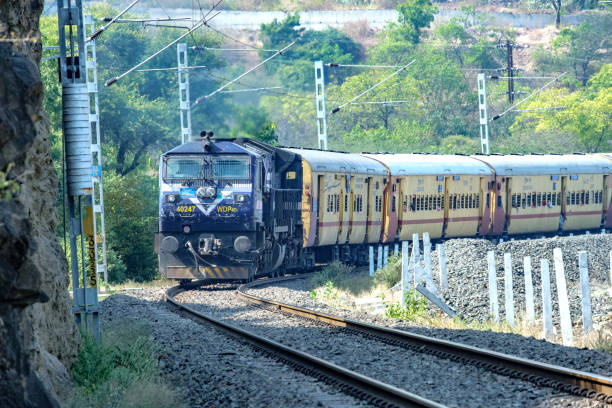
Indian Railway Service of Mechanical Engineers (IRSME)
Assistant Divisional Mechanical Engineer (Entry Level)
Explore CareerThe Central Water Engineering Service (CWES) is a prestigious civil service under the Government of India, categorized under the Central Civil Services (Group A). CWES officers are responsible for the planning, design, execution, and management of water resource projects, ensuring sustainable water management, irrigation, flood control, and hydropower development across the country. With India facing critical water challenges—evident in initiatives like the Jal Jeevan Mission (aiming to provide tap water to all rural households by 2024) and a projected investment of over ₹7 lakh crore in water infrastructure under various schemes—the demand for skilled CWES officers remains vital. Rooted in civil engineering principles, water resource management, and environmental sustainability, and driven by modern trends such as smart water management systems, climate resilience, and interlinking of rivers, this career is central to India’s development framework. CWES professionals play a key role in the Ministry of Jal Shakti and its associated organizations, contributing to irrigation projects, dam construction, and water policy formulation. This career drives progress through trends like integrated water resource management, digital monitoring tools, and sustainable water conservation practices.
The Central Water Engineering Service (CWES) is a prestigious civil service under the Government of India, categorized under the Central Civil Services (Group A). CWES officers are responsible for the planning, design, execution, and management of water resource projects, ensuring sustainable water management, irrigation, flood control, and hydropower development across the country. With India facing critical water challenges—evident in initiatives like the Jal Jeevan Mission (aiming to provide tap water to all rural households by 2024) and a projected investment of over ₹7 lakh crore in water infrastructure under various schemes—the demand for skilled CWES officers remains vital. Rooted in civil engineering principles, water resource management, and environmental sustainability, and driven by modern trends such as smart water management systems, climate resilience, and interlinking of rivers, this career is central to India’s development framework. CWES professionals play a key role in the Ministry of Jal Shakti and its associated organizations, contributing to irrigation projects, dam construction, and water policy formulation. This career drives progress through trends like integrated water resource management, digital monitoring tools, and sustainable water conservation practices.
Central Water Engineering Service officers work in diverse environments, including central government offices, field projects, river basin authorities, and state coordination units across India. They collaborate with state governments, environmental agencies, contractors, and international bodies within the national and global ecosystem. Their roles include designing water storage and distribution systems, managing flood control measures, ensuring water security, and addressing challenges like climate change impacts, budget constraints, and inter-state water disputes. They face issues such as public scrutiny, pressure to deliver projects amidst resource scarcity, and the need to adapt to evolving water management technologies amidst growing population demands. By leveraging expertise in civil engineering, hydrology, and administrative skills, they ensure sustainable water resource utilization and infrastructure development. As key contributors to India’s water security, they propel progress through trends like smart irrigation systems, river basin management, and climate-adaptive water policies.
Roles and Responsibilities
Study Route & Eligibility Criteria
| Route | Steps |
| Route 1: Undergraduate Degree with UPSC Exam | 1. Complete 10+2 in Science stream with Physics, Chemistry, and Mathematics (PCM) with minimum passing marks. 2. Pursue a Bachelor’s degree in Engineering (Civil preferred) (4 years). 3. Prepare for and clear the UPSC Engineering Services Examination (ESE) with CWES as preference. 4. Undergo training at designated institutes like the National Water Academy (NWA), starting as Assistant Director/Assistant Executive Engineer. |
| Route 2: Postgraduate Degree with UPSC Exam | 1. Complete a Bachelor’s degree in Engineering. 2. Pursue a Master’s degree in Engineering (Civil/Water Resources/Hydrology, etc.) (1-2 years) for deeper expertise. 3. Clear the UPSC ESE with CWES as preferred service. 4. Join CWES after training at NWA and other centers. |
| Route 3: Specialized Engineering Degree with UPSC Exam | 1. Complete 10+2 in PCM with minimum 50-60% marks. 2. Pursue a specialized B.Tech in Civil Engineering or related fields (4 years). 3. Prepare for and clear the UPSC ESE with CWES as choice. 4. Start CWES career post-training. |
| Route 4: Diploma to Degree with UPSC Exam (Limited Scope) | 1. Complete 10+2 in PCM. 2. Pursue a Diploma in Engineering (3 years), followed by a lateral entry to a B.Tech program. 3. Clear the UPSC ESE opting for CWES. 4. Begin CWES career after training. |
| Route 5: State Engineering Services to Central Services (Limited Scope) | 1. Hold a Bachelor’s degree in Engineering. 2. Join State Engineering Departments through state-level exams. 3. Gain experience and attempt promotion to CWES through limited competitive exams or deputation by UPSC. 4. Transition to CWES roles after selection and training. |
Significant Observations (Academic Related Points)
Internships & Practical Exposure
Courses & Specializations to Enter the Field
Top Institutes for CWES Preparation and Related Studies (India)
| Institute | Course/Program | Official Link |
| National Water Academy (NWA), Pune | CWES Initial Training for Selected Candidates | https://nwa.mah.nic.in/ |
| Central Water Commission (CWC), Delhi | Field Training and Project Exposure for CWES Officers | https://cwc.gov.in/ |
| Vajiram & Ravi, Delhi | UPSC ESE Coaching and Preparation | https://www.vajiramandravi.com/ |
| Made Easy, Delhi | UPSC ESE Coaching (Engineering Focus) | https://www.madeeasy.in/ |
| ACE Engineering Academy, Hyderabad | UPSC ESE Preparation and Mentorship | https://www.aceenggacademy.com/ |
| Indian Institute of Technology (IIT) Roorkee | B.Tech/M.Tech in Civil Engineering (Water Resources) | https://www.iitr.ac.in/ |
| National Institute of Technology (NIT) Warangal | B.Tech/M.Tech in Civil Engineering (Hydrology) | https://www.nitw.ac.in/ |
| Delhi Technological University (DTU), Delhi | B.Tech/M.Tech in Civil and Environmental Engineering | https://dtu.ac.in/ |
| Indian Institute of Technology (IIT) Kanpur | B.Tech/M.Tech in Civil Engineering | https://www.iitk.ac.in/ |
| Anna University, Chennai | B.E./M.E. in Civil Engineering (Irrigation Management) | https://www.annauniv.edu/ |
Entrance Tests Required
India:
Ideal Progressing Career Path (for CWES)
Assistant Director/Assistant Executive Engineer (Entry Level) → Deputy Director/Executive Engineer → Director/Superintending Engineer → Chief Engineer → Director General (Central Water Commission - Apex Level)
Major Areas of Employment
Prominent Employers/Associated Organizations
| India (Government Bodies/Organizations) | Key Roles/Areas |
| Union Public Service Commission (UPSC), Delhi | Recruitment and Selection for CWES |
| Ministry of Jal Shakti, Delhi | Water Policy Formulation and Oversight |
| Central Water Commission (CWC), Delhi | National Water Resource Strategy and Project Execution |
| National Water Development Agency (NWDA), Delhi | River Interlinking and Water Transfer Projects |
| Central Ground Water Board (CGWB), Faridabad | Groundwater Management and Monitoring |
| National Water Academy (NWA), Pune | CWES Training in Water Resource Engineering |
| National Institute of Hydrology (NIH), Roorkee | Research and Training in Hydrology |
| Brahmaputra Board, Guwahati | River Basin Management in Northeast India |
| Ganga Flood Control Commission, Patna | Flood Mitigation Strategies for Ganga Basin |
| Narmada Control Authority (NCA), Indore | Management of Narmada River Projects |
Pros and Cons of the Profession
| Pros | Cons |
| High societal impact through ensuring water security and sustainable resource management | High stress due to inter-state disputes and project delivery pressures |
| Prestigious government role with job security and benefits like pension | Frequent transfers and postings, often to remote project sites |
| Diverse responsibilities across irrigation, flood control, and policy formulation | Bureaucratic delays and funding issues can hinder project progress |
| Opportunity to work on flagship projects like Jal Jeevan Mission and river interlinking | Work-life balance issues due to field work and emergency response demands |
| Contribution to climate resilience through sustainable water infrastructure | Risk of criticism during water crises or project failures |
Industry Trends and Future Outlook
Salary Expectations
| Career Level (CWES - Public Sector) | India (₹ per annum, Approx. as per 7th Pay Commission) |
| Assistant Director/Assistant Executive Engineer (Entry Level) | 6,00,000 - 8,00,000 (including allowances) |
| Deputy Director/Executive Engineer (Early Level) | 8,00,000 - 10,00,000 |
| Director/Superintending Engineer (Early-Mid Level) | 10,00,000 - 14,00,000 |
| Chief Engineer (Mid-Level) | 14,00,000 - 18,00,000 |
| Director General (Central Water Commission - Apex Level) | 27,00,000 - 30,00,000+ |
| Note: Salaries include basic pay, dearness allowance (DA), house rent allowance (HRA), and other benefits; they vary based on posting location and seniority. |
Key Software Tools and Resources
Professional Organizations and Networks
Notable Central Water Engineering Service Officers and Leaders
Advice for Aspiring Central Water Engineering Service Officers
A career in the Central Water Engineering Service offers a transformative opportunity to shape India’s water resource landscape by planning, designing, and managing critical water infrastructure. CWES officers are the engineers behind India’s water security, using their technical expertise, project management skills, and commitment to build a robust foundation for sustainable development, support agricultural growth, and enhance resilience across diverse regions. This profession blends a passion for civil engineering with public service, providing diverse pathways in irrigation systems, flood control, hydropower development, policy advisory, and beyond. For those passionate about water resource management, driven by a desire to serve the nation through sustainable solutions, and eager to navigate the evolving landscape of smart and climate-resilient water engineering, becoming a CWES officer is a deeply rewarding journey. It empowers individuals to address critical water needs, maintain resource integrity, and advance national well-being through the transformative power of responsible, impactful, and accessible water governance.


Entry-level CWES officers handling design and execution of small-scale water projects, focusing on basic operations. They build foundational...
0.0LPA
Early-level officers overseeing water projects in specific regions, focusing on project implementation. They focus on operational duties. Their...
0.0LPA
Early-to-mid-level officers managing multiple water projects, supervising construction, and handling technical audits. They balance oversight...
0.0LPA
Take the next step and explore more about Central Water Engineering Service (CWES).
Explore similar career paths that might interest you
Assistant Divisional Mechanical Engineer (Entry Level)
Explore CareerJunior Legal Officer/Assistant Legal Advisor (Junior Level - Entry Level)
Explore CareerAssistant Divisional Railway Manager (ADRM) (Traffic/Operations):
Explore Career