
Aerobiologist
Aerology Research Scholar (PhD)
Explore Career
A Bioinformatician is a professional who applies computational tools and techniques to analyze and interpret biological data, such as genomic sequences, protein structures, and molecular interactions. They work in research institutions, pharmaceutical companies, universities, or biotech firms, collaborating with biologists, computer scientists, and data analysts. Bioinformaticians play a crucial role in advancing medical research, drug discovery, and personalized medicine through data-driven insights in a field driven by innovation, precision, and interdisciplinary expertise.
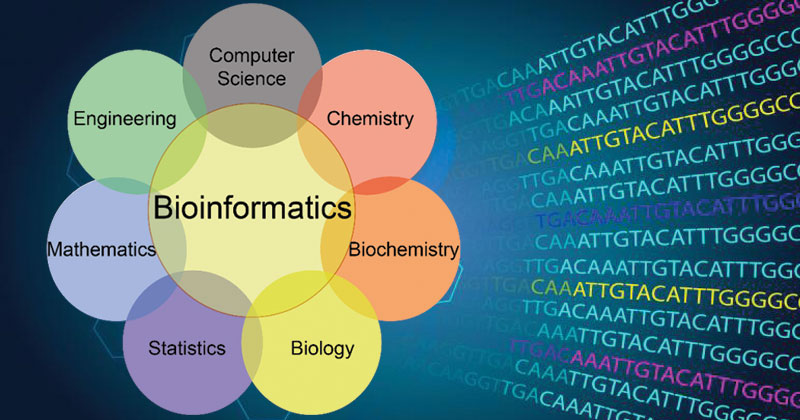
Bioinformaticians are analytical and tech-savvy professionals who work in office or lab environments, using advanced software, algorithms, and high-performance computing systems. Their role involves processing large-scale biological datasets, developing computational models, and solving complex biological problems like gene function prediction, often facing challenges such as data integration or algorithm optimization. They combine expertise in biology, computer science, and statistics to address issues ranging from disease genomics to evolutionary biology. As key contributors to scientific progress and healthcare innovation, they help shape the future of medicine and biotechnology in an industry increasingly driven by big data, artificial intelligence, and precision medicine.
| Route | Steps |
| Route 1 |
1. 10+2 in Science stream (with Biology, Chemistry, and Physics/Mathematics) 2. Bachelor’s degree in Bioinformatics or related field (3-4 years) 3. Internship or research assistant role in bioinformatics labs 4. Practice as Junior Bioinformatician or Data Analyst |
| Route 2 |
1. 10+2 in Science stream with Biology and Mathematics 2. Bachelor’s degree in Life Sciences, Computer Science, or Biotechnology (3-4 years) 3. Master’s degree in Bioinformatics (1-2 years) 4. Gain practical experience through research projects 5. Work as Bioinformatician or Computational Biologist |
| Route 3 |
1. 10+2 in Science with Mathematics and Biology 2. B.Tech in Bioinformatics or Biotechnology (4 years) 3. Certification or short-term course in computational biology (3-6 months) 4. Internship in biotech or research companies 5. Practice as Bioinformatics Engineer or Specialist |
| Route 4 |
1. 10+2 in Science stream 2. Bachelor’s degree in Bioinformatics or related field (3-4 years) 3. Ph.D. in Bioinformatics or Computational Biology (3-5 years) 4. Post-doctoral research or industry role 5. Practice as Senior Bioinformatician or Consultant |
| Institute | Course/Program | Official Link |
| Indian Institute of Technology (IIT), Delhi | B.Tech/M.Tech in Bioinformatics | https://home.iitd.ac.in/ |
| University of Hyderabad, Hyderabad | M.Sc/Ph.D. in Bioinformatics | https://www.uohyd.ac.in/ |
| Jawaharlal Nehru University (JNU), New Delhi | M.Sc/Ph.D. in Computational Biology | https://www.jnu.ac.in/ |
| Anna University, Chennai | B.Tech/M.Tech in Bioinformatics | https://www.annauniv.edu/ |
| Amity University, Noida | B.Sc/M.Sc in Bioinformatics | https://www.amity.edu/ |
| University of Pune, Pune | M.Sc in Bioinformatics | https://www.unipune.ac.in/ |
| Banaras Hindu University (BHU), Varanasi | M.Sc in Bioinformatics | https://www.bhu.ac.in/ |
| VIT University, Vellore | B.Tech/M.Tech in Bioinformatics | https://www.vit.ac.in/ |
| Institute of Bioinformatics and Applied Biotechnology (IBAB), Bangalore | M.Sc in Bioinformatics & Biotechnology | https://www.ibab.ac.in/ |
| University of Madras, Chennai | M.Sc in Bioinformatics | https://www.unom.ac.in/ |
| Institution | Course | Country | Official Link |
| Massachusetts Institute of Technology (MIT) | BS/MS/Ph.D. in Computational Biology | USA | https://www.mit.edu/ |
| University of Cambridge | MPhil/Ph.D. in Computational Biology | UK | https://www.cam.ac.uk/ |
| Stanford University | BS/MS/Ph.D. in Bioinformatics | USA | https://www.stanford.edu/ |
| University of Toronto | BS/MS in Bioinformatics & Computational Biology | Canada | https://www.utoronto.ca/ |
| ETH Zurich | MS/Ph.D. in Bioinformatics | Switzerland | https://www.ethz.ch/ |
| University of California, San Diego (UCSD) | BS/MS/Ph.D. in Bioinformatics | USA | https://www.ucsd.edu/ |
| National University of Singapore (NUS) | BS/MS in Computational Biology | Singapore | https://www.nus.edu.sg/ |
| University of Queensland | BS/MS in Bioinformatics | Australia | https://www.uq.edu.au/ |
| Imperial College London | MS/Ph.D. in Bioinformatics & Systems Biology | UK | https://www.imperial.ac.uk/ |
| Technical University of Munich (TUM) | MS/Ph.D. in Bioinformatics | Germany | https://www.tum.de/ |
India:
International:
Bioinformatics Intern → Junior Bioinformatician → Research Associate → Bioinformatician → Senior Bioinformatician → Bioinformatics Project Manager → Director of Computational Biology → Chief Data Scientist → Bioinformatics Consultant → Bioinformatics Professor
| India | International |
| Biocon | Illumina, Global |
| Strand Life Sciences | Thermo Fisher Scientific, Global |
| Dr. Reddy’s Laboratories | Roche, Global |
| Tata Consultancy Services (TCS) - Life Sciences | Novartis, Global |
| Wipro - Bioinformatics Division | Amgen, Global |
| Infosys - Life Sciences | Gilead Sciences, Global |
| Genotypic Technology | Bio-Rad Laboratories, Global |
| Syngene International | Qiagen, Global |
| MedGenome | 10x Genomics, Global |
| Ocimum Biosolutions | Broad Institute, USA |
| Pros | Cons |
| Opportunity to contribute to cutting-edge biological discoveries | Often involves long hours analyzing complex datasets |
| High personal satisfaction in solving health and research challenges | Can face slow progress due to data integration issues |
| Rewarding impact on medicine, agriculture, and genomics | May require continuous learning to keep up with rapid tech advancements |
| Diverse career paths across industries and research | Risk of data privacy and ethical dilemmas in genomics |
| Strong potential for growth with increasing data-driven biology | Limited control over funding or computational resource constraints |
| Career Level | India (₹ per annum) | International (USD per annum) |
| Bioinformatics Intern (Early Career) | 3,00,000 - 6,00,000 | 35,000 - 55,000 |
| Junior Bioinformatician (Mid-Career) | 6,00,000 - 12,00,000 | 55,000 - 80,000 |
| Bioinformatician | 12,00,000 - 20,00,000 | 80,000 - 110,000 |
| Senior Bioinformatician/Project Manager | 20,00,000 - 35,00,000 | 110,000 - 150,000 |
| Chief Data Scientist/Expert | 35,00,000+ | 150,000+ |
| Note: Salaries may vary based on location, employer, experience, and specialization. |
A career as a Bioinformatician offers a profound opportunity to decode the complexities of life through data, driving scientific progress with computational expertise, fostering global well-being with every insight. Bioinformaticians are the architects of biological data innovation, using their skills to uncover genetic mysteries, develop therapies, and advance precision medicine across industries. This profession blends scientific curiosity with technological precision, providing pathways in genomic research, drug discovery, clinical applications, and beyond. For those passionate about data-driven discovery, driven by a desire to solve biological challenges, and eager to embrace the evolving landscape of AI and big data in biology, becoming a Bioinformatician is a deeply rewarding journey. It empowers individuals to shape scientific outcomes, address critical global issues, and advance human progress through the transformative power of bioinformatics.


Early-career professionals who conduct routine data analysis and assist in pipeline development in research labs. They focus on specific tasks...
0.0LPA

Mid-level professionals who design and execute computational studies, often specializing in areas like genomics or proteomics. They analyze data...
0.0LPA

Professionals who lead independent research or development projects, applying computational techniques to solve biological problems like disease...
0.0LPA
Take the next step and explore more about Bioinformatics.
Explore similar career paths that might interest you