Citriculturist
Aspiring
Explore CareerA Bacteriologist is a specialized scientist who studies bacteria, focusing on their structure, function, behavior, and impact on health, environment, and industry. They work within research institutions, hospitals, public health organizations, pharmaceutical companies, and agricultural sectors. Bacteriologists investigate bacteria for purposes ranging from disease prevention and treatment to environmental sustainability and biotechnological innovation. Combining expertise in microbiology, biochemistry, and molecular biology, they play a crucial role in addressing global challenges like antibiotic resistance, infectious diseases, and food safety by harnessing the potential of bacteria, which are vital to human health, ecosystems, and industrial processes in a world where microbial solutions are increasingly critical.
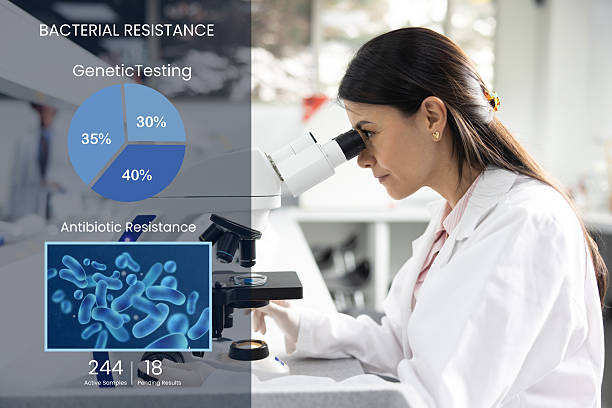
A Bacteriologist is a specialized scientist who studies bacteria, focusing on their structure, function, behavior, and impact on health, environment, and industry. They work within research institutions, hospitals, public health organizations, pharmaceutical companies, and agricultural sectors. Bacteriologists investigate bacteria for purposes ranging from disease prevention and treatment to environmental sustainability and biotechnological innovation. Combining expertise in microbiology, biochemistry, and molecular biology, they play a crucial role in addressing global challenges like antibiotic resistance, infectious diseases, and food safety by harnessing the potential of bacteria, which are vital to human health, ecosystems, and industrial processes in a world where microbial solutions are increasingly critical.
Bacteriologists are scientists who focus on the study of bacteria, encompassing their classification, physiology, genetics, and ecological roles. Their work involves conducting laboratory experiments to analyze bacterial properties, performing field studies to monitor bacterial populations, developing applications for bacteria in medicine, agriculture, and industry, and educating stakeholders on microbial safety practices. They often operate in academic, governmental, or industrial settings, balancing research with practical applications and interdisciplinary collaboration. Bacteriologists are essential to public health and sustainability efforts, serving as experts in bacterial pathogenesis, contributing to solutions for disease control, antibiotic development, and environmental bioremediation, addressing pressing health and ecological issues through innovative research, and improving societal well-being through evidence-based strategies in a scientific landscape where bacteria's potential as a resource continues to grow due to medical, environmental, and technological factors.
Roles and Responsibilities:
Study Route & Eligibility Criteria:
Study Route & Eligibility Criteria:
| Route | Steps |
| Route 1 | 1. 10+2 with Physics, Chemistry, Biology (PCB). 2. Bachelor’s degree in Microbiology, Biology, or Biotechnology (3-4 years). 3. Master’s degree in Bacteriology, Microbiology, or Medical Microbiology (2 years). 4. PhD in Bacteriology or related field for research roles (3-5 years). 5. Postdoctoral research or certification in specialized techniques (optional). |
| Route 2 | 1. 10+2 with Physics, Chemistry, Biology (PCB). 2. Bachelor’s degree in Life Sciences or Biochemistry (3-4 years). 3. Master’s degree in Applied Microbiology or Environmental Microbiology (2 years). 4. Specialized training or diploma in Bacteriology (1-2 years). 5. Research or industry experience in bacterial studies. |
| Route 3 | 1. 10+2 with Physics, Chemistry, Biology (PCB). 2. Bachelor’s degree in Biomedical Science or Environmental Science (3-4 years). 3. Master’s degree in Microbial Ecology or Infectious Diseases (2 years). 4. Fellowship or research project in Bacteriology (1-3 years). 5. Certification in bacterial biotechnology or related fields. |
| Route 4 | 1. 10+2 with Physics, Chemistry, Biology (PCB). 2. Bachelor’s degree from India in relevant field (3-4 years). 3. International Master’s or PhD program in Bacteriology or Microbiology. 4. Research or training abroad in specialized bacteriology labs (2-5 years). 5. Certification or licensure for international practice (if applicable). |
Significant Observations (Academic Related Points):
Internships & Practical Exposure:
Courses & Specializations to Enter the Field:
Top Institutes for Bacteriologist Education (India):
| Institute | Course/Program | Official Link |
| University of Delhi, Delhi | M.Sc. in Microbiology | https://www.du.ac.in/ |
| Banaras Hindu University (BHU), Varanasi | M.Sc. in Microbiology | https://www.bhu.ac.in/ |
| University of Calcutta, Kolkata | M.Sc. in Microbiology | https://www.caluniv.ac.in/ |
| Savitribai Phule Pune University, Pune | M.Sc. in Microbiology | https://www.unipune.ac.in/ |
| University of Madras, Chennai | M.Sc. in Microbiology | https://www.unom.ac.in/ |
| Aligarh Muslim University (AMU), Aligarh | M.Sc. in Microbiology | https://www.amu.ac.in/ |
| University of Kerala, Thiruvananthapuram | M.Sc. in Microbiology | https://www.keralauniversity.ac.in/ |
| Andhra University, Visakhapatnam | M.Sc. in Microbiology | https://www.andhrauniversity.edu.in/ |
| Jawaharlal Nehru University (JNU), Delhi | M.Sc. in Life Sciences | https://www.jnu.ac.in/ |
| Indian Institute of Science (IISc), Bangalore | Research Programs in Microbiology | https://www.iisc.ac.in/ |
Top International Institutes:
| Institution | Course | Country | Official Link |
| Harvard University | PhD in Microbiology | USA | https://www.harvard.edu/ |
| University of California, Berkeley | MS/PhD in Microbiology | USA | https://www.berkeley.edu/ |
| University of Oxford | MSc/PhD in Microbiology | UK | https://www.ox.ac.uk/ |
| University of Toronto | MSc/PhD in Molecular Genetics | Canada | https://www.utoronto.ca/ |
| University of Queensland | MSc/PhD in Microbiology | Australia | https://www.uq.edu.au/ |
| University of Copenhagen | MSc in Microbiology | Denmark | https://www.ku.dk/ |
| University of Auckland | MSc in Microbiology | New Zealand | https://www.auckland.ac.nz/ |
| University of Bern | MSc/PhD in Biomedical Sciences | Switzerland | https://www.unibe.ch/ |
| University of Tokyo | PhD in Life Sciences | Japan | https://www.u-tokyo.ac.jp/ |
| Stockholm University | MSc in Molecular Life Sciences | Sweden | https://www.su.se/ |
Entrance Tests Required:
India:
International:
Ideal Progressing Career Path
Undergraduate Student → Graduate Researcher (Master’s) → Doctoral Researcher (PhD) → Junior Bacteriologist → Established Bacteriologist → Senior Bacteriologist/Research Head → Program Director/Professor of Bacteriology
Major Areas of Employment:
Prominent Employers:
| India | International |
| Indian Council of Medical Research (ICMR) | World Health Organization (WHO) |
| Council of Scientific and Industrial Research (CSIR) | Centers for Disease Control and Prevention (CDC), USA |
| National Centre for Disease Control (NCDC) | National Institutes of Health (NIH), USA |
| University of Delhi | Harvard Medical School, USA |
| Banaras Hindu University (BHU) | University of Oxford, UK |
| The Energy and Resources Institute (TERI) | Pasteur Institute, France |
| Jawaharlal Nehru University (JNU) | University of Toronto, Canada |
| Indian Institute of Science (IISc) | Max Planck Institute for Infection Biology, Germany |
| All India Institute of Medical Sciences (AIIMS) | Johns Hopkins University, USA |
| Ministry of Health and Family Welfare | European Centre for Disease Prevention and Control (ECDC) |
Pros and Cons of the Profession:
| Pros | Cons |
| Significant contribution to public health through bacterial-based solutions for disease control. | Extended academic journey requiring 8-12 years for advanced roles, demanding time and resources. |
| Intellectually stimulating work combining microbiology, biochemistry, and molecular biology. | Competitive research funding, often requiring persistent effort to secure grants. |
| High impact on global challenges like antibiotic resistance and infectious disease management. | Laboratory risks, including exposure to pathogenic bacteria during experiments. |
| Opportunities for innovation in biotechnology and pharmaceutical sectors. | Limited public awareness of bacteriology, leading to fewer mainstream job opportunities in some regions. |
| Growing relevance due to increasing demand for microbial solutions in health and sustainability. | Technological and economic barriers in scaling up bacterial-derived products for commercial use. |
Industry Trends and Future Outlook:
Salary Expectations:
| Career Level | India (₹ per annum) | International (US$ per annum) |
| Research Scholar (PhD) | 3,00,000 - 6,00,000 | $30,000 - $40,000 |
| Junior Bacteriologist | 5,00,000 - 10,00,000 | $50,000 - $70,000 |
| Established Bacteriologist | 10,00,000 - 20,00,000 | $70,000 - $100,000 |
| Senior Bacteriologist/Research Lead | 20,00,000 - 35,00,000 | $100,000 - $130,000 |
| Program Director/Professor | 35,00,000 - 50,00,000 | $130,000 - $160,000 |
Key Software Tools:
Professional Organizations and Networks:
Notable Bacteriologists and Industry Leaders (Top 10):
Advice for Aspiring Bacteriologists:
A career as a Bacteriologist offers a unique opportunity to impact public health, environmental sustainability, and industrial innovation by studying and harnessing the potential of bacteria, which are fundamental to life and technology. From conducting detailed laboratory and field research to developing bacterial-based solutions for medicine, agriculture, and bioremediation, Bacteriologists play a pivotal role in addressing some of the world’s most pressing challenges. This field combines scientific inquiry, technological innovation, and interdisciplinary collaboration, offering diverse paths in research, industry, policy, and education. For those passionate about microbiology, health, and sustainable development, a career as a Bacteriologist provides a deeply rewarding journey with significant potential for making meaningful contributions to society in an era where microbial solutions, disease management, and environmental adaptation continue to shape global priorities.

Undergraduate students complete foundational education in microbiology or related fields, learning basic sciences such as biology, chemistry, and...
0.0LPA
Graduate students in Master’s programs focus on advanced studies in bacteriology or microbiology, conducting supervised research on bacterial...
0.0LPA
Doctoral researchers receive specialized training in bacteriology, focusing on original research in areas like antibiotic resistance or bacterial...
0.0LPA
Take the next step and explore more about Bacteriologist.
Explore similar career paths that might interest you