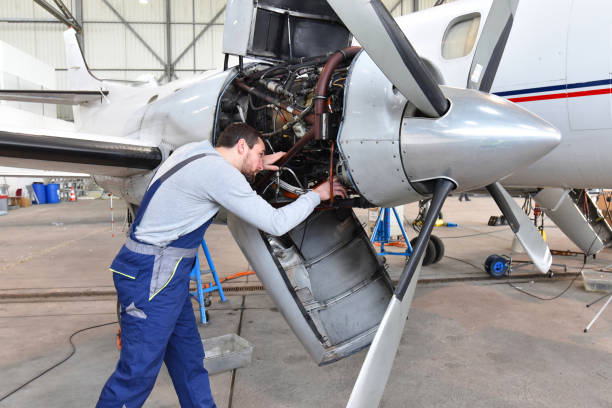
Aerospace Engineer
Junior Aerospace Engineer (Entry to Mid-Level)
Explore Career
An Automation Engineer is a professional dedicated to designing, developing, and implementing automated systems and processes to enhance efficiency, productivity, and accuracy across various industries. They work in sectors such as manufacturing, automotive, aerospace, energy, and technology, collaborating with mechanical engineers, software developers, project managers, and industrial experts. Automation Engineers play a critical role in driving operational excellence and innovation in a world increasingly focused on industrial automation, smart manufacturing, and process optimization.
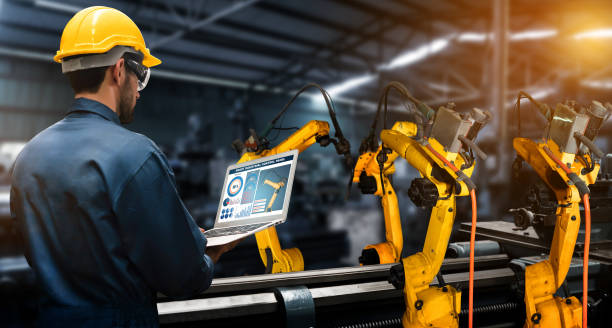
Automation Engineers are experts in control systems, robotics, and software programming, responsible for creating automated solutions, integrating machinery with digital systems, and optimizing workflows to address challenges like production bottlenecks, quality control, or cost reduction. Their role involves designing, testing, and troubleshooting, often working in settings such as industrial plants, tech company offices, or remote environments. They combine expertise in engineering principles, programming, and industrial processes to tackle issues like system downtime, scalability, and safety compliance. As key contributors to operational advancement, they help organizations and societies thrive in an era prioritizing efficiency, smart solutions, and sustainable manufacturing.
| Route | Steps |
| Route 1 | 1. 10+2 with Science (Mathematics/Physics) or relevant subjects. 2. Bachelor’s degree in Electrical Engineering, Mechanical Engineering, or Automation Engineering (3-4 years). 3. Gain practical experience through internships or training in automation or industrial roles (3-6 months). 4. Pursue entry-level roles like Junior Automation Engineer or Control Systems Technician (1-2 years). |
| Route 2 | 1. 10+2 with Science (Mathematics/Physics) or relevant subjects. 2. Bachelor’s degree in Electrical Engineering, Instrumentation Engineering, or related field (3-4 years). 3. Master’s degree in Automation Engineering, Control Systems, or Industrial Engineering (2 years, optional). 4. Work in industrial automation or control systems roles to gain experience (1-2 years). 5. Transition to Automation Engineer roles with enhanced skills and knowledge. |
| Route 3 | 1. 10+2 with Science (Mathematics/Physics) or relevant subjects. 2. Bachelor’s degree in Engineering, Computer Science, or related field (3-4 years). 3. Pursue professional certifications like Certified Automation Professional (CAP) or Siemens Certified Programmer (1-2 years). 4. Gain hands-on experience through roles in automation or robotics (1-2 years). 5. Establish a career as an Automation Engineer in industrial or tech sectors. |
| Route 4 | 1. 10+2 with Science (Mathematics/Physics) or relevant subjects. 2. Bachelor’s degree from India in Electrical Engineering or Mechanical Engineering (3-4 years). 3. Pursue international certifications or advanced degrees in automation or control systems abroad (1-2 years). 4. Gain exposure through roles in global industrial firms or automation companies (1-2 years). 5. Work as an Automation Engineer in international markets or global firms. |
| Institute | Course/Program | Official Link |
| Indian Institute of Technology (IIT), Bombay | B.Tech/M.Tech in Electrical/Mechanical Engineering | https://www.iitb.ac.in/ |
| Indian Institute of Technology (IIT), Delhi | B.Tech/M.Tech in Electrical/Mechanical Engineering | https://www.iitd.ac.in/ |
| Indian Institute of Technology (IIT), Madras | B.Tech/M.Tech in Electrical/Mechanical Engineering | https://www.iitm.ac.in/ |
| Indian Institute of Technology (IIT), Kanpur | B.Tech/M.Tech in Electrical/Mechanical Engineering | https://www.iitk.ac.in/ |
| Indian Institute of Science (IISc), Bangalore | M.Tech in Electrical/Mechanical Engineering | https://www.iisc.ac.in/ |
| Birla Institute of Technology and Science (BITS), Pilani | B.E./M.E. in Electrical/Mechanical Engineering | https://www.bits-pilani.ac.in/ |
| National Institute of Technology (NIT), Trichy | B.Tech/M.Tech in Electrical/Instrumentation Engineering | https://www.nitt.edu/ |
| Vellore Institute of Technology (VIT), Vellore | B.Tech/M.Tech in Electrical/Mechanical Engineering | https://www.vit.ac.in/ |
| Amity University, Noida | B.Tech/M.Tech in Automation & Robotics | https://www.amity.edu/ |
| Manipal Institute of Technology, Manipal | B.Tech/M.Tech in Mechatronics/Automation | https://manipal.edu/mit.html |
| Institution | Course | Country | Official Link |
| Massachusetts Institute of Technology (MIT) | BS/MS in Mechanical/Electrical Engineering | USA | https://www.mit.edu/ |
| Stanford University | BS/MS in Mechanical/Electrical Engineering | USA | https://www.stanford.edu/ |
| Carnegie Mellon University | BS/MS in Robotics/Automation | USA | https://www.cmu.edu/ |
| University of California, Berkeley | BS/MS in Mechanical/Electrical Engineering | USA | https://www.berkeley.edu/ |
| University of Toronto | BS/MS in Mechanical/Electrical Engineering | Canada | https://www.utoronto.ca/ |
| University of Oxford | MEng in Engineering Science | UK | https://www.ox.ac.uk/ |
| ETH Zurich | MS in Mechanical/Electrical Engineering | Switzerland | https://ethz.ch/ |
| National University of Singapore (NUS) | B.Eng/M.Eng in Mechanical/Electrical Engineering | Singapore | https://www.nus.edu.sg/ |
| University of Melbourne | MS in Mechanical/Electrical Engineering | Australia | https://www.unimelb.edu.au/ |
| Technical University of Munich (TUM) | MS in Mechanical/Electrical Engineering | Germany | https://www.tum.de/ |
India:
International:
Junior Automation Engineer → Automation Engineer → Senior Automation Engineer → Automation Solutions Architect → Automation Project Manager → Director of Automation Engineering → Chief Automation Officer → Academician/Independent Consultant
| India | International |
| Siemens India, Mumbai | Siemens, Germany |
| Larsen & Toubro, Mumbai | Rockwell Automation, USA |
| Bosch India, Bangalore | Honeywell, USA |
| Honeywell India, Pune | ABB, Switzerland |
| ABB India, Bangalore | Schneider Electric, France |
| Schneider Electric India, Gurgaon | Fanuc, Japan |
| Rockwell Automation India, Noida | Mitsubishi Electric, Japan |
| Tata Technologies, Pune | Emerson Electric, USA |
| Tech Mahindra, Pune | KUKA Robotics, Germany |
| Wipro, Bangalore | Bosch Rexroth, Germany |
| Pros | Cons |
| Direct impact on efficiency through creating automated systems that transform industries and reduce costs | High-pressure role due to complex problem-solving and tight project deadlines in industrial environments |
| Growing demand due to increasing reliance on automation for productivity and smart manufacturing | Challenges in addressing system failures, safety concerns, and integration issues in automation projects |
| Opportunity to contribute to cutting-edge advancements in manufacturing, energy, and other critical sectors | Emotional stress from troubleshooting critical failures or handling downtime in high-stakes industrial settings |
| Varied career paths in engineering, industrial technology, consulting, and international sectors | Need for constant learning to keep up with rapidly evolving automation tools, standards, and methodologies |
| Potential for societal change through automation solutions for sustainability, safety, and operational excellence | Limited immediate visibility of impact, as automation projects often require long-term implementation and testing |
| Career Level | India (₹ per annum) | International (USD per annum) |
| Junior Automation Engineer (Early Career) | 4,00,000 - 8,00,000 | 50,000 - 70,000 |
| Automation Engineer | 8,00,000 - 15,00,000 | 70,000 - 90,000 |
| Senior Automation Engineer | 15,00,000 - 22,00,000 | 90,000 - 120,000 |
| Automation Solutions Architect/Automation Project Manager | 22,00,000 - 30,00,000 | 120,000 - 150,000 |
| Director of Automation Engineering/Chief Automation Officer/Academician/Independent Consultant | 30,00,000 - 50,00,000+ | 150,000 - 200,000+ |
Note: Salaries may vary based on location, employer, experience, and specialization. Indian figures are updated estimates based on current industry trends, corporate pay scales, and private sector data as of 2025, reflecting inflation and demand growth in the automation sector. International figures are based on data from the U.S., UK, and Europe as of 2025, adjusted for market trends in automation roles, sourced from industry reports and salary surveys like Glassdoor and PayScale. Due to the speculative nature of future data, these are approximations and may differ based on real-time economic factors.
A career as an Automation Engineer offers a unique opportunity to contribute to industrial progress by designing automated systems that transform operations and improve efficiency across diverse sectors. From optimizing production lines to integrating smart technologies, Automation Engineers play a pivotal role in modern industrial innovation and process excellence. This field combines expertise in control systems, programming, and a commitment to operational advancement, offering diverse paths in industrial technology, research, consulting, and international sectors. For those passionate about shaping the future of manufacturing, adapting to rapid technological shifts, and addressing critical efficiency needs in an era of increasing industrial reliance, a career as an Automation Engineer provides an intellectually stimulating and professionally rewarding journey with the potential to make significant contributions to society by advancing productivity, safety, and sustainability worldwide.


Entry-level professionals assist in designing and testing basic automation systems, working in firms like Siemens India or Larsen & Toubro....
0.0LPA
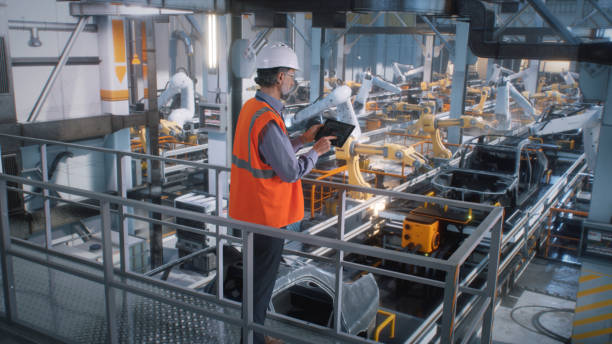
Mid-level engineers design and implement automation solutions, focusing on control systems, employed by companies like Bosch India or Honeywell...
0.0LPA
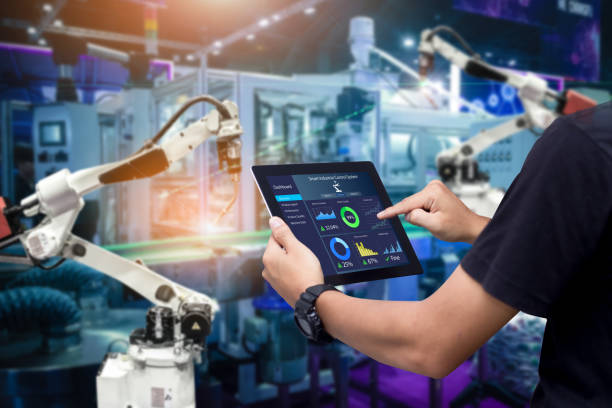
Experienced engineers lead complex automation projects, mentor juniors, and optimize systems in organizations like ABB India or Schneider Electric...
0.0LPA
Take the next step and explore more about Automation Engineer.
Explore similar career paths that might interest you