
Archaeozoologist

An Archaeozoologist is a specialized scientist who studies animal remains from archaeological sites to understand past human-animal interactions, ancient ecosystems, and cultural practices. They work within research institutions, museums, universities, cultural heritage organizations, and environmental agencies. Archaeozoologists analyze bones, teeth, and other faunal remains to reconstruct historical diets, domestication processes, hunting practices, and environmental conditions. Combining expertise in zoology, archaeology, and anthropology, they play a crucial role in addressing global challenges like understanding human history, climate change impacts, and biodiversity loss by examining the faunal record, which provides critical insights into past societies and ecosystems in a world where historical data informs sustainable future practices.

Share :
Career tree mind map (horizontal) — Archaeozoologist
Colored branches, hub circles, and underlined topics — same style as counselor course classic (types 18–19 in admin).
Loading mind map…

Archaeozoologists are scientists who focus on the analysis of animal remains recovered from archaeological contexts, investigating species identification, age, sex, and evidence of human use. Their work involves fieldwork at excavation sites, laboratory analysis of skeletal remains, developing interpretations of past human behaviours, and contributing to broader archaeological narratives. They often operate in academic, governmental, or museum settings, balancing research with interdisciplinary collaboration and public education. Archaeozoologists are essential to cultural and environmental studies, serving as experts in faunal analysis, contributing to solutions for heritage preservation, ecological reconstruction, and historical understanding, addressing pressing issues through meticulous research, and enhancing knowledge of human history through evidence-based strategies in a scientific landscape where the past informs present and future challenges.

  • Research and Analysis
    • Conduct laboratory analysis of animal bones and remains from archaeological sites.
    • Identify species, age, sex, and evidence of butchery or domestication in faunal assemblages.
  • Environmental Reconstruction
    • Study faunal remains to reconstruct past climates, habitats, and ecosystems.
    • Assess changes in biodiversity and animal populations over time due to human activity or natural events.
  • Cultural Interpretation
    • Analyze evidence of hunting, fishing, and domestication to understand ancient human diets and economies.
    • Investigate animal use in rituals, trade, or symbolic practices in past societies.
  • Fieldwork and Excavation
    • Participate in archaeological digs to recover and document faunal remains in context.
    • Ensure proper collection and preservation techniques to maintain sample integrity.
  • Data Collection and Reporting
    • Compile databases of faunal remains for statistical and comparative analysis.
    • Publish research findings in academic journals and contribute to archaeological reports.
  • Heritage and Conservation
    • Collaborate with museums and cultural organizations to preserve and interpret faunal artifacts.
    • Contribute to conservation efforts by providing historical data on species distribution and extinction.
  • Interdisciplinary Collaboration
    • Work with archaeologists, anthropologists, and historians to integrate faunal data into broader studies.
    • Consult with environmental scientists to apply historical data to modern ecological challenges.
  • Education and Outreach
    • Teach courses on archaeozoology or archaeology in academic institutions.
    • Educate the public and policymakers on the significance of faunal remains in understanding history.
  • Policy and Regulation
    • Advise on cultural heritage policies related to the preservation of archaeological sites.
    • Develop guidelines for ethical handling and analysis of faunal remains.

RouteSteps
Route 11. 10+2 with Physics, Chemistry, Biology (PCB) or History.
2. Bachelor’s degree in Archaeology, Anthropology, or Zoology (3-4 years).
3. Master’s degree in Archaeozoology, Zooarchaeology, or Archaeology (2 years).
4. PhD in Archaeozoology or related field for research roles (3-5 years).
5. Postdoctoral research or certification in specialized techniques (optional).
Route 21. 10+2 with Physics, Chemistry, Biology (PCB) or History.
2. Bachelor’s degree in Biology or Environmental Science (3-4 years).
3. Master’s degree in Archaeology or Bioarchaeology (2 years).
4. Specialized training or diploma in Archaeozoology (1-2 years).
5. Research or museum experience in faunal analysis.
Route 31. 10+2 with Physics, Chemistry, Biology (PCB) or History.
2. Bachelor’s degree in Wildlife Science or Anthropology (3-4 years).
3. Master’s degree in Environmental Archaeology or Osteoarchaeology (2 years).
4. Fellowship or research project in Archaeozoology (1-3 years).
5. Certification in faunal analysis or related fields.
Route 41. 10+2 with Physics, Chemistry, Biology (PCB) or History.
2. Bachelor’s degree from India in relevant field (3-4 years).
3. International Master’s or PhD program in Archaeozoology or Zooarchaeology.
4. Research or training abroad in specialized archaeozoology labs (2-5 years).
5. Certification or licensure for international practice (if applicable).

  • Fieldwork at archaeological excavation sites for faunal remain collection.
  • Internships in museums or research labs focusing on faunal analysis.
  • Observerships with cultural heritage organizations studying ancient human-animal interactions.
  • Research assistantships in archaeozoology or bioarchaeology projects.
  • Participation in projects related to isotopic analysis or ancient diet reconstruction.
  • Training in laboratory techniques for bone identification under supervision.
  • Experience in documenting and cataloging faunal remains for museum collections.
  • Involvement in data collection for paleoenvironmental studies.
  • Attendance at archaeology or archaeozoology conferences and workshops.
  • Exposure to interdisciplinary projects combining archaeology and environmental science.

  • Bachelor’s in Archaeology, Anthropology, or Zoology.
  • Bachelor’s in Biology or Environmental Science.
  • Master’s in Archaeozoology or Zooarchaeology.
  • Master’s in Bioarchaeology or Environmental Archaeology (Faunal focus).
  • PhD in Archaeozoology or Osteoarchaeology.
  • Certification courses in Faunal Analysis.
  • Training in Isotopic Analysis for Dietary Reconstruction.
  • Specialized courses in Taphonomy and Bone Preservation.
  • Diploma in Archaeological Science (Faunal focus).
  • Continuing Education courses in Cultural Heritage and Faunal Studies.

InstituteCourse/ProgramOfficial Link
University of Delhi, DelhiM.A./M.Sc. in Archaeology/Anthropologyhttps://www.du.ac.in/
Banaras Hindu University (BHU), VaranasiM.A. in Archaeologyhttps://www.bhu.ac.in/
University of Calcutta, KolkataM.A. in Archaeologyhttps://www.caluniv.ac.in/
Savitribai Phule Pune University, PuneM.A. in Archaeologyhttps://www.unipune.ac.in/
University of Madras, ChennaiM.A. in Ancient History and Archaeologyhttps://www.unom.ac.in/
Aligarh Muslim University (AMU), AligarhM.A. in Archaeologyhttps://www.amu.ac.in/
University of Kerala, ThiruvananthapuramM.A. in Archaeologyhttps://www.keralauniversity.ac.in/
Andhra University, VisakhapatnamM.A. in Ancient History and Archaeologyhttps://www.andhrauniversity.edu.in/
Jawaharlal Nehru University (JNU), DelhiM.A. in Ancient Historyhttps://www.jnu.ac.in/
Archaeological Survey of India (ASI), DelhiTraining Programs in Archaeologyhttps://asi.nic.in/

InstitutionCourseCountryOfficial Link
University College London (UCL)MA/MSc in BioarchaeologyUKhttps://www.ucl.ac.uk/
University of YorkMSc in ZooarchaeologyUKhttps://www.york.ac.uk/
University of SheffieldMA in OsteoarchaeologyUKhttps://www.sheffield.ac.uk/
Harvard UniversityPhD in Anthropology (Archaeology focus)USAhttps://www.harvard.edu/
University of Arizona, TucsonMA/PhD in Anthropology (Archaeology focus)USAhttps://www.arizona.edu/
Leiden UniversityMA in Archaeology (Bioarchaeology focus)Netherlandshttps://www.universiteitleiden.nl/
University of TorontoMA/PhD in AnthropologyCanadahttps://www.utoronto.ca/
Australian National UniversityMA in Archaeological ScienceAustraliahttps://www.anu.edu.au/
University of CopenhagenMSc in ArchaeologyDenmarkhttps://www.ku.dk/
Stockholm UniversityMA in ArchaeologySwedenhttps://www.su.se/

India:

  • University-specific entrance exams for Bachelor’s and Master’s programs (e.g., BHU PET, JNU CEEB).
  • National Eligibility cum Entrance Test (NEET-UG) for related undergraduate science programs.
  • Graduate Aptitude Test in Engineering (GATE) for some interdisciplinary programs.
  • Joint Admission Test for Masters (JAM) for science programs at IITs and IISc.
  • Council of Scientific and Industrial Research (CSIR) NET for research fellowships.
  • Indian Council of Agricultural Research (ICAR) AIEEA for related programs.
  • State-level entrance examinations for various science and archaeology institutions.
  • Institute-specific entrance examinations for specialized programs.
  • National Board of Examinations for certain diploma courses.
  • Entrance tests for PhD programs at specific universities.

International:

  • Graduate Record Examination (GRE) for postgraduate programs in the USA and Canada.
  • International English Language Testing System (IELTS) with a minimum score of 6.5-7.0 for international programs.
  • Test of English as a Foreign Language (TOEFL) with a minimum score of 90-100 for programs in English-speaking countries.
  • Subject-specific GRE tests for certain graduate programs.
  • University-specific entrance exams for international Master’s and PhD programs.
  • Australian Education Assessment Services for programs in Australia.
  • European Union standardized tests for specific programs in Europe.
  • Japanese Language Proficiency Test (JLPT) for programs in Japan, if applicable.
  • Canadian Academic English Language (CAEL) test for programs in Canada.
  • Specific fellowship or scholarship exams for international research opportunities.

Undergraduate Student → Graduate Researcher (Master’s) → Doctoral Researcher (PhD) → Junior Archaeozoologist → Established Archaeozoologist → Senior Archaeozoologist/Research Head → Program Director/Professor of Archaeozoology

  • Research institutions studying historical human-animal interactions.
  • Government agencies focused on cultural heritage and archaeological preservation.
  • Universities and academic centers for teaching and research in archaeozoology.
  • Museums curating and interpreting faunal remains.
  • Environmental organizations reconstructing past ecosystems.
  • Cultural heritage firms protecting archaeological sites.
  • Non-governmental organizations (NGOs) working on heritage and biodiversity.
  • International bodies addressing global cultural and environmental challenges.
  • Forensic archaeology units analyzing historical remains.
  • Private consultancies providing expertise on archaeological projects.

IndiaInternational
Archaeological Survey of India (ASI)UNESCO
Indian Council of Historical Research (ICHR)Smithsonian Institution, USA
Wildlife Institute of India (WII)British Museum, UK
University of DelhiUniversity College London, UK
Banaras Hindu University (BHU)Harvard University, USA
The Energy and Resources Institute (TERI)Natural History Museum, UK
Jawaharlal Nehru University (JNU)University of York, UK
National Museum, New DelhiAustralian National University, Australia
University of CalcuttaUniversity of Toronto, Canada
Ministry of Culture, IndiaInternational Council on Monuments and Sites (ICOMOS)

ProsCons
Significant contribution to understanding human history through faunal analysis.Extended academic journey requiring 8-12 years for advanced roles, demanding time and resources.
Intellectually stimulating work combining archaeology, zoology, and anthropology.Competitive research funding, often requiring persistent effort to secure grants.
High impact on global challenges like cultural preservation and ecological reconstruction.Fieldwork risks, including exposure to harsh conditions during excavations.
Opportunities for innovation in isotopic analysis and ancient DNA studies.Limited public awareness of archaeozoology, leading to fewer mainstream job opportunities in some regions.
Growing relevance due to increasing demand for historical data in sustainability studies.Technological and logistical barriers in accessing and analyzing ancient remains.

Career LevelIndia (₹ per annum)International (US$ per annum)
Research Scholar (PhD)3,00,000 - 6,00,000$30,000 - $40,000
Junior Archaeozoologist5,00,000 - 10,00,000$45,000 - $65,000
Established Archaeozoologist10,00,000 - 18,00,000$65,000 - $90,000
Senior Archaeozoologist/Research Lead18,00,000 - 30,00,000$90,000 - $120,000
Program Director/Professor30,00,000 - 45,00,000$120,000 - $150,000

  • Data Analysis Software: Tools like R and SPSS for statistical analysis of faunal data.
  • Geographic Information Systems (GIS): For mapping archaeological sites and faunal distributions.
  • 3D Imaging Software: For creating digital models of bones and remains for detailed study.
  • Database Management Tools: For cataloging and organizing large datasets of faunal remains.
  • Isotopic Analysis Software: For processing data related to diet and environmental reconstruction.
  • Image Analysis Software: For microscopic examination of bone structures and wear patterns.
  • Research Publication Tools: Software like EndNote or Mendeley for managing references and publications.
  • Field Data Collection Apps: For recording observations and contextual data during excavations.
  • Collaboration Platforms: For interdisciplinary teamwork and data sharing with archaeologists and scientists.
  • Virtual Reconstruction Tools: For simulating ancient environments and human-animal interactions.

  • International Council for Archaeozoology (ICAZ)
  • Society for American Archaeology (SAA)
  • European Association of Archaeologists (EAA)
  • British Association for Biological Anthropology and Osteoarchaeology (BABAO)
  • Archaeological Institute of America (AIA)
  • Indian Archaeological Society (IAS)
  • World Archaeological Congress (WAC)
  • International Union for Prehistoric and Protohistoric Sciences (UISPP)
  • Association for Environmental Archaeology (AEA)
  • Paleoanthropology Society

  • Dr. Richard H. Meadow (Contemporary, USA): Renowned for his work on animal domestication in South Asia, active since the 1970s at Harvard University.
     
  • Dr. Melinda A. Zeder (Contemporary, USA): Expert in the origins of animal domestication, associated with the Smithsonian Institution since the 1980s.
     
  • Dr. Simon J. M. Davis (Contemporary, UK/Portugal): Known for faunal analysis in Mediterranean archaeology, contributing since the 1970s.
     
  • Dr. Naomi Sykes (Contemporary, UK): Professor at the University of Exeter, noted for research on human-animal relationships since the 2000s.
     
  • Dr. Terry O’Connor (Contemporary, UK): Emeritus Professor at the University of York, recognized for zooarchaeology methodologies since the 1980s.
     
  • Dr. Elizabeth Reitz (Contemporary, USA): Professor at the University of Georgia, known for studies on historical ecology through faunal remains since the 1970s.
     
  • Dr. Umberto Albarella (Contemporary, UK): Professor at the University of Sheffield, expert in medieval animal economies since the 1990s.
     
  • Dr. Angela Perri (Contemporary, USA): Researcher focusing on ancient human-canid relationships, active since the 2010s.
     
  • Dr. Jean-Denis Vigne (Contemporary, France): CNRS researcher, noted for work on early domestication in the Near East since the 1980s.
     
  • Dr. P. P. Joglekar (Contemporary, India): Researcher at Deccan College, Pune, known for faunal studies in Indian archaeology since the 1990s.
     

  • Build a strong foundation in archaeology, anthropology, and biology during undergraduate studies to prepare for specialized learning.
  • Seek early exposure through internships or fieldwork at archaeological sites to gain practical experience in faunal recovery.
  • Develop technical skills in laboratory analysis, bone identification, and data interpretation during graduate studies for a competitive edge.
  • Engage in interdisciplinary learning by exploring zoology, environmental science, and cultural studies alongside archaeozoology.
  • Pursue research opportunities or fellowships to deepen expertise in niche areas like isotopic analysis or ancient domestication.
  • Cultivate mentoring relationships with established archaeozoologists for career guidance and networking opportunities.
  • Stay updated with advancements in faunal analysis techniques, digital archaeology, and ethical standards.
  • Publish research findings in reputed journals to establish credibility and contribute to the scientific community.
  • Consider international exposure through collaborative projects, conferences, or advanced studies abroad to broaden perspectives.
  • Balance academic pursuits with practical applications to address real-world challenges like heritage preservation and ecological reconstruction.


A career as an Archaeozoologist offers a unique opportunity to impact cultural heritage, environmental understanding, and historical knowledge by studying ancient animal remains and their relationship to human societies. From conducting detailed fieldwork and laboratory research to reconstructing past ecosystems and human behaviors, Archaeozoologists play a pivotal role in addressing some of the world’s most pressing challenges. This field combines scientific inquiry, historical interpretation, and interdisciplinary collaboration, offering diverse paths in research, museums, policy, and education. For those passionate about archaeology, zoology, and cultural preservation, a career as an Archaeozoologist provides a deeply rewarding journey with significant potential for making meaningful contributions to society in an era where understanding the past continues to shape sustainable and informed futures.

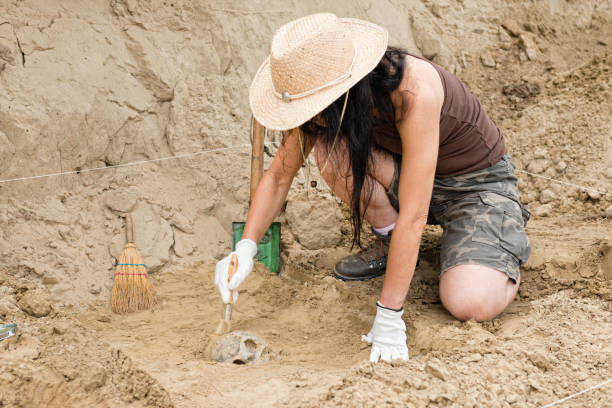
Knowledge & Skills You Will Learn
1
Technical expertise in analyzing faunal remains with precision in laboratory settings
2
Observational accuracy in identifying species, age, and human use from skeletal evidence
3
In-depth knowledge of zoology, archaeology, anthropology, and paleoenvironmental studies
4
Critical thinking to interpret historical data and troubleshoot analytical challenges
5
Attention to detail to ensure compliance with scientific and ethical standards
6
Time management to handle multiple research projects and prioritize urgent analyses
7
Adaptability to learn and implement new analytical technologies and archaeological protocols
8
Interpersonal skills for effective communication with research teams and stakeholders
9
Problem-solving ability to address historical and ecological questions through faunal analysis
10
Emotional resilience to manage demanding fieldwork and complex cultural heritage challenges
Junior Archaeozoologist

Junior Archaeozoologist

Early-career archaeozoologists establish research or applied roles, often joining academic groups, museums, or government bodies while developing...

0.0LPA
Established Archaeozoologist

Established Archaeozoologist

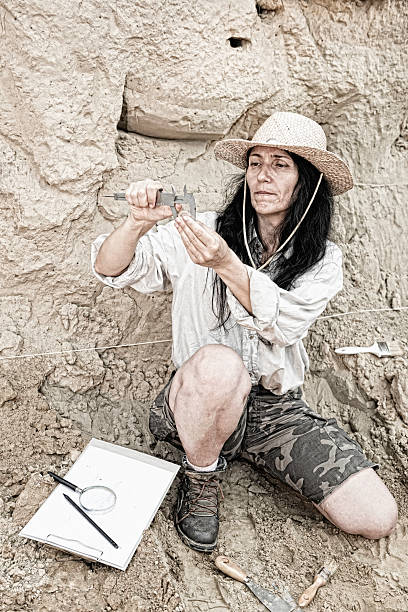
Mid-career specialists maintain active research portfolios, often developing subspecialty interests within archaeozoology such as isotopic...

0.0LPA
Senior Archaeozoologist /Research Head

Senior Archaeozoologist /Research Head

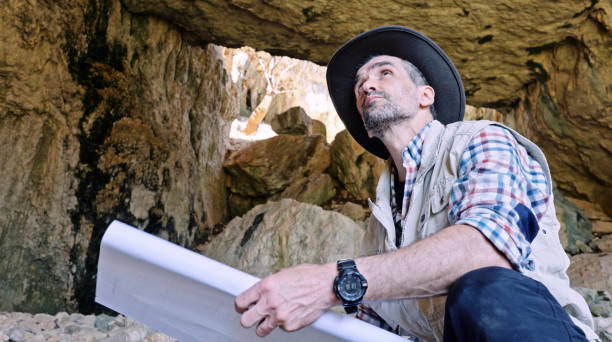
Experienced archaeozoologists often take leadership roles, overseeing research teams or programs while mentoring junior researchers and shaping...

0.0LPA

Interested in this career?

Take the next step and explore more about Archaeozoologist.