Animal Welfare Officer


An Animal Welfare Officer is a dedicated professional responsible for ensuring the ethical treatment, safety, and well-being of animals in various settings, advocating for their rights and enforcing welfare standards. They work in diverse environments such as animal shelters, government agencies, non-profit organizations, zoos, research facilities, or private industries, collaborating with veterinarians, policymakers, community members, and animal caregivers to protect animals from cruelty and improve their living conditions. Animal Welfare Officers are vital in promoting humane practices in a time when societal awareness of animal rights and ethical treatment is growing significantly.
Share :
✨ Radial Mind Map - Animal Welfare Officer
Nodes arranged in concentric circles

Loading radial mind map...

Overview


An Animal Welfare Officer is a dedicated professional responsible for ensuring the ethical treatment, safety, and well-being of animals in various settings, advocating for their rights and enforcing welfare standards. They work in diverse environments such as animal shelters, government agencies, non-profit organizations, zoos, research facilities, or private industries, collaborating with veterinarians, policymakers, community members, and animal caregivers to protect animals from cruelty and improve their living conditions. Animal Welfare Officers are vital in promoting humane practices in a time when societal awareness of animal rights and ethical treatment is growing significantly.

Animal Welfare Officers are committed advocates who monitor and enforce animal welfare laws, investigate cases of abuse or neglect, and implement programs to enhance the quality of life for animals. Their duties include inspecting facilities to ensure compliance with welfare regulations, educating the public on responsible animal care, and rescuing or rehabilitating animals in distress. Operating in field settings, offices, or community outreach programs, they combine a deep passion for animal protection with a strong understanding of legal and ethical frameworks to address challenges related to animal cruelty and exploitation. As key contributors to the Veterinary & Fishery Sciences career cluster, Animal Welfare Officers advance the cause of animal well-being in a landscape increasingly focused on ethical standards, sustainable practices, and the prevention of cruelty across domestic, farm, and wild animal populations.
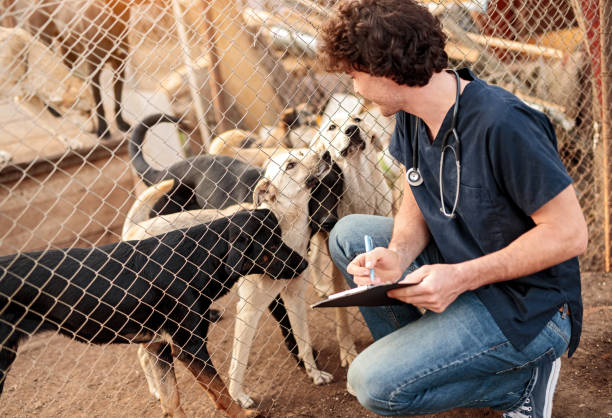
Roles and Responsibilities

💼
Animal Welfare Officer
Roles and Responsibilities
Inspection and Compliance Monitoring:
Conduct regular inspections of animal facilities such as shelters, farms, zoos, and research labs to ensure adherence to welfare laws and standards.
Assess living conditions, handling practices, and care protocols to identify violations or areas needing improvement.
Investigation of Cruelty and Neglect:
Respond to reports of animal abuse or neglect, conducting thorough investigations to gather evidence and document cases.
Collaborate with law enforcement or legal authorities to take action against offenders, including rescues or prosecutions when necessary.
Animal Rescue and Rehabilitation:
Coordinate or participate in the rescue of animals from harmful situations, ensuring their safe transfer to shelters or rehabilitation centers.
Oversee or support rehabilitation efforts, working with veterinarians to provide medical care and behavioral support for traumatized animals.
Public Education and Advocacy:
Educate communities, pet owners, and stakeholders on animal welfare laws, responsible ownership, and humane treatment practices through workshops or campaigns.
Advocate for stronger animal protection policies by engaging with policymakers, media, and the public to raise awareness of welfare issues.
Policy Development and Enforcement:
Assist in drafting or updating animal welfare regulations and guidelines at local, regional, or national levels to strengthen protections.
Ensure enforcement of existing laws by issuing warnings, fines, or other penalties to non-compliant individuals or organizations.
Collaboration with Organizations:
Work with animal welfare NGOs, veterinary teams, and government bodies to develop programs for spay/neuter initiatives, adoption drives, or disaster response for animals.
Partner with international agencies to align local practices with global animal welfare standards and address cross-border issues like illegal trade.
Documentation and Reporting:
Maintain detailed records of inspections, investigations, and interventions to ensure transparency and support legal or administrative actions.
Prepare reports for authorities, organizations, or funders to document progress, challenges, and outcomes of welfare initiatives.
Crisis and Emergency Response:
Respond to emergencies such as natural disasters or large-scale cruelty cases, coordinating efforts to rescue, shelter, and care for affected animals.
Develop contingency plans to protect animals during crises, ensuring rapid and effective welfare interventions.

Roles and Responsibilities:

  • Inspection and Compliance Monitoring:
    • Conduct regular inspections of animal facilities such as shelters, farms, zoos, and research labs to ensure adherence to welfare laws and standards.
    • Assess living conditions, handling practices, and care protocols to identify violations or areas needing improvement.
  • Investigation of Cruelty and Neglect:
    • Respond to reports of animal abuse or neglect, conducting thorough investigations to gather evidence and document cases.
    • Collaborate with law enforcement or legal authorities to take action against offenders, including rescues or prosecutions when necessary.
  • Animal Rescue and Rehabilitation:
    • Coordinate or participate in the rescue of animals from harmful situations, ensuring their safe transfer to shelters or rehabilitation centers.
    • Oversee or support rehabilitation efforts, working with veterinarians to provide medical care and behavioral support for traumatized animals.
  • Public Education and Advocacy:
    • Educate communities, pet owners, and stakeholders on animal welfare laws, responsible ownership, and humane treatment practices through workshops or campaigns.
    • Advocate for stronger animal protection policies by engaging with policymakers, media, and the public to raise awareness of welfare issues.
  • Policy Development and Enforcement:
    • Assist in drafting or updating animal welfare regulations and guidelines at local, regional, or national levels to strengthen protections.
    • Ensure enforcement of existing laws by issuing warnings, fines, or other penalties to non-compliant individuals or organizations.
  • Collaboration with Organizations:
    • Work with animal welfare NGOs, veterinary teams, and government bodies to develop programs for spay/neuter initiatives, adoption drives, or disaster response for animals.
    • Partner with international agencies to align local practices with global animal welfare standards and address cross-border issues like illegal trade.
  • Documentation and Reporting:
    • Maintain detailed records of inspections, investigations, and interventions to ensure transparency and support legal or administrative actions.
    • Prepare reports for authorities, organizations, or funders to document progress, challenges, and outcomes of welfare initiatives.
  • Crisis and Emergency Response:
    • Respond to emergencies such as natural disasters or large-scale cruelty cases, coordinating efforts to rescue, shelter, and care for affected animals.
    • Develop contingency plans to protect animals during crises, ensuring rapid and effective welfare interventions.


Study Route & Eligibility Criteria

Study Route & Eligibility Criteria
Animal Welfare Officer
Route 1
🎓
1
10+2 in any stream
Route 2
🎓
1
10+2 in any stream
Route 3
🎓
1
10+2 in any stream
Route 4
🎓
1
10+2 in any stream
🎯 Animal Welfare Officer - Professional

Significant Observations (Academic Related Points)

💡
Animal Welfare Officer
Academic Related Points
1
Broad Educational Base:
Backgrounds in veterinary science, zoology, or social sciences provide a foundation for understanding animal needs and welfare issues.
2
Animal Welfare Knowledge:
Understanding of animal behavior, health, and ethical treatment is crucial for effective advocacy and intervention.
3
Specialized Welfare Training:
Postgraduate degrees or certifications in animal welfare equip professionals with skills for policy, enforcement, and education roles.
4
Practical Experience:
Hands-on training through volunteer work or internships in shelters or NGOs is vital for real-world application of welfare principles.
5
Interdisciplinary Understanding:
Knowledge of legal frameworks, sociology, and veterinary basics enhances the ability to address welfare from multiple angles.
6
Licensing Consideration:
Veterinary licensure may be required for certain roles, though not always mandatory for welfare advocacy or policy positions.
7
Continuing Education:
Participation in workshops on animal rights, cruelty prevention, or disaster response keeps professionals updated on evolving standards.
8
Ethical Commitment:
Deep awareness of animal rights and welfare ethics is essential for advocating humane treatment and policy reform.
9
Field Exposure:
Direct involvement in rescue or inspection activities during education builds confidence in handling diverse welfare scenarios.
10
Career Preparation:
Competitive roles in animal welfare often require a strong record of advocacy, community impact, or collaboration with organizations.
11
Global Opportunities:
Familiarity with international welfare standards and language skills can lead to roles in global animal protection initiatives.

Internships & Practical Exposure

💼
Animal Welfare Officer
Internships & Practical Experience
1
Participation in internships or volunteer programs at animal shelters or NGOs for initial exposure to welfare issues and rescue operations.
2
Involvement in university-affiliated veterinary or zoology projects to assist in animal care and welfare assessments under supervision during academic training.
3
Assisting in animal welfare organizations like PETA India or Blue Cross to learn investigation techniques, public outreach, and rehabilitation processes.
4
Observerships at zoos or wildlife rehabilitation centers for exposure to welfare challenges of exotic or wild animals in captivity or recovery.
5
Participation in animal welfare workshops or training programs on cruelty prevention and humane law enforcement for skill enhancement and networking.
6
Training through collaborative projects like community spay/neuter drives or anti-cruelty campaigns to apply welfare principles in real-world settings.
7
Exposure to field practices such as facility inspections or emergency rescues during placements with government or non-profit welfare bodies.
8
Project-based learning in specialized areas like farm animal welfare or disaster response for animals to build focused expertise.
9
Community service initiatives to advocate for stray animal protection or responsible pet ownership in local areas.
10
International volunteering or online courses for exposure to global animal welfare standards and innovative advocacy practices.

Courses & Specializations to Enter the Field

📚
Animal Welfare Officer
Courses & Specializations
📖
Bachelor of Veterinary Science and Animal Husbandry (BVSc & AH).
📖
Bachelor’s in Animal Science, Zoology, or Social Work.
📖
Master’s in Animal Welfare, Veterinary Science, or Environmental Science.
📖
Ph.D. in Animal Welfare or related fields for research and policy roles.
📖
Certificate or Diploma in Animal Welfare and Behavior.
📖
Specialization in Farm Animal Welfare, Companion Animal Protection, or Wildlife Welfare Advocacy.
📖
Certification in Humane Law Enforcement or Animal Cruelty Investigation.
📖
Training in Animal Rescue and Rehabilitation Techniques.
📖
Workshops on Animal Welfare Legislation and Policy Development.
📖
Short Courses in Disaster Response and Emergency Animal Care.

Prominent Employers

🏢
Animal Welfare Officer
🌟 Top Companies & Organizations
🇮🇳 India
🏛️
People for Animals (PFA), Multiple Locations
🏛️
Blue Cross of India, Chennai
🏛️
Wildlife SOS, Multiple Locations
🏛️
Animal Welfare Board of India (AWBI), Multiple Locations
🏛️
PETA India, Multiple Locations
🏛️
Humane Society International - India, Multiple Locations
🏛️
Federation of Indian Animal Protection Organisations (FIAPO), Multiple Locations
🏛️
Stray Relief and Animal Welfare (STRAW), Delhi
🏛️
Bombay Society for the Prevention of Cruelty to Animals (BSPCA), Mumbai
🏛️
Help in Suffering (HIS), Jaipur
🌍 International
🌐
World Organisation for Animal Health (OIE), France
🌐
Humane Society International (HSI), Global
🌐
World Society for the Protection of Animals (WSPA), Global
🌐
American Society for the Prevention of Cruelty to Animals (ASPCA), USA
🌐
Royal Society for the Prevention of Cruelty to Animals (RSPCA), UK
🌐
International Fund for Animal Welfare (IFAW), Global
🌐
World Wildlife Fund (WWF), Global
🌐
Compassion in World Farming (CIWF), UK
🌐
The Brooke (for working equines), UK
🌐
Born Free Foundation, Global

Advice for Aspiring Animal Welfare Officers

💡
Animal Welfare Officer
🌟 Tips for Students & Parents
1
Build a solid foundation in animal science, veterinary studies, or social work to understand welfare needs and advocacy approaches.
2
Seek early field exposure through volunteering at shelters or NGOs to develop practical skills in rescue and welfare enforcement.
3
Prepare diligently for relevant entrance exams or certifications to gain admission into programs focused on animal welfare or veterinary science.
4
Pursue specialized training in animal welfare laws and humane enforcement to stand out in this impactful field.
5
Stay informed about welfare advancements by attending seminars and following global trends in animal rights and protection.
6
Develop hands-on expertise by assisting in real-world investigations, rescues, or community outreach programs.
7
Engage in university projects or local welfare initiatives to apply ethical principles in diverse practical settings.
8
Join professional networks like HSI or AWBI for connections and access to critical animal welfare resources.
9
Cultivate emotional strength to manage the challenges of witnessing animal suffering while maintaining professional focus.
10
Explore international opportunities or wildlife welfare roles to understand varied protection needs across species and regions.
11
Volunteer at local animal care events or rural campaigns to gain experience in advocating for diverse animal populations.
12
Sharpen investigative and communication skills to address welfare violations and educate communities effectively.
13
Participate in ongoing learning to keep pace with evolving welfare laws, technologies, and advocacy strategies.
14
Build relationships with welfare organizations and stakeholders to foster trust and collaborative progress in protection efforts.
15
Maintain perseverance to navigate the emotionally intense and often under-resourced landscape of animal welfare advocacy.
16
Balance academic preparation with extensive field experience to adapt to the dynamic challenges of animal protection work.
🎓 Final Message
Pursuing a career as an Animal Welfare Officer opens a deeply meaningful and transformative path to champion the rights and well-being of animals, ensuring they are treated with the dignity and care they deserve. From rescuing creatures in distress to shaping policies that prevent cruelty across pets, livestock, and wildlife, Animal Welfare Officers stand as steadfast guardians of ethical treatment in a world awakening to animal rights. This vocation melds a profound commitment to living beings, a robust understanding of welfare principles, and a focused drive for advocacy, unlocking significant roles in enforcement, education, and global protection efforts. For those inspired by the mission to shield animals from harm, equipped to tackle challenges with innovative and compassionate strategies, and determined to forge a lasting legacy in humane practices, a career as an Animal Welfare Officer presents an extraordinarily fulfilling and influential professional expedition, holding the power to reshape societal perspectives on animal care for generations to come.
Knowledge & Skills You Will Learn
1
Expertise in animal welfare principles to advocate for ethical treatment and enforce relevant laws across various settings
2
Strong investigative skills to assess welfare conditions, gather evidence, and document cases of abuse or neglect accurately
3
Proficiency in animal behaviour and care to evaluate needs, ensure safety during rescues, and support rehabilitation efforts
4
Communication skills to educate diverse audiences on welfare issues, mediate conflicts, and advocate for policy changes effectively
5
Emotional resilience to handle distressing situations involving animal suffering
6
Legal and regulatory knowledge to understand and enforce animal welfare laws
7
Collaboration abilities to work with NGOs, government bodies, veterinarians, and communities
8
Problem-solving skills to address complex welfare challenges
9
Organizational skills to manage inspections, rescue operations, and community programs
10
Adaptability to stay updated on evolving welfare standards, technologies, and global trends in animal protection
Animal Welfare Officer

Animal Welfare Officer

Professionals monitor and enforce welfare standards, investigate cruelty cases, and educate communities on humane treatment in NGOs, government,...

0.0LPA
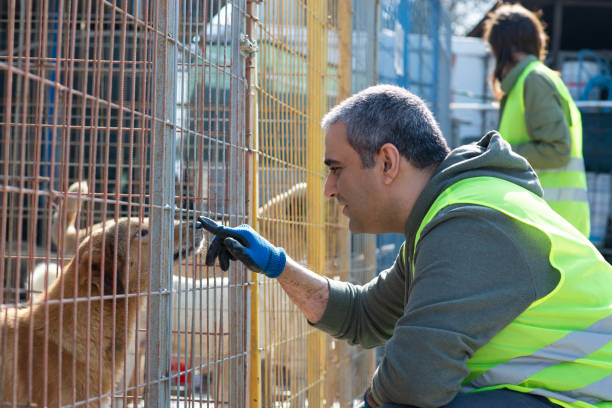
Senior Animal Welfare Officer

Senior Animal Welfare Officer

Experienced officers oversee teams, manage larger caseloads of investigations or inspections, and lead community programs in organizations or...

0.0LPA

Animal Welfare Program Manager

Animal Welfare Program Manager

Leaders coordinate welfare initiatives, manage budgets, and design large-scale projects like adoption drives or anti-cruelty campaigns for NGOs or...

0.0LPA

Interested in this career?

Take the next step and explore more about Animal Welfare Officer.