
Certificate in Handicrafts, Pottery, or Embroidery
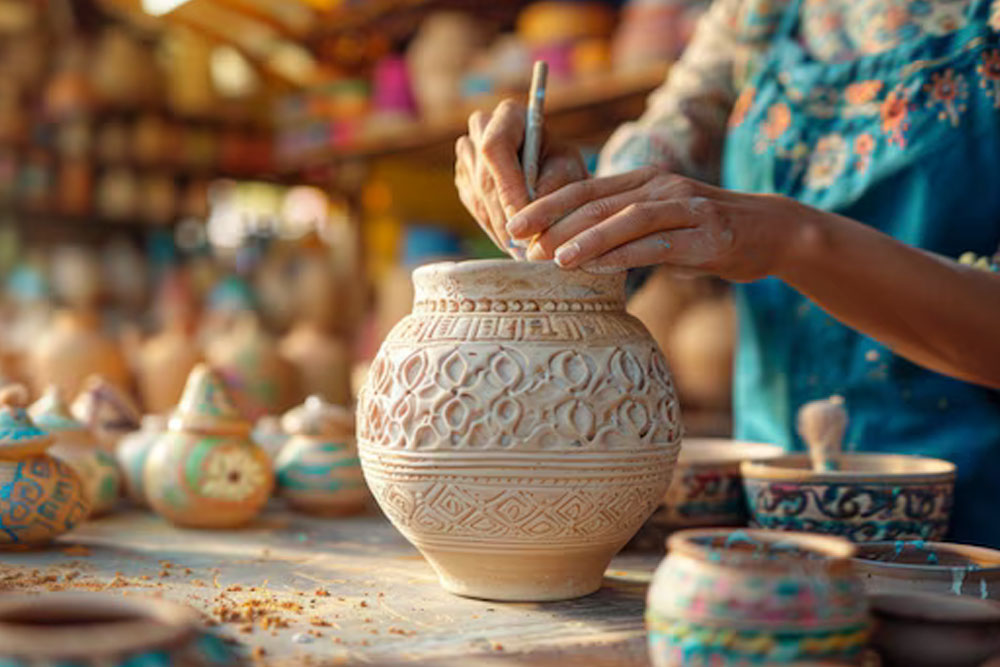
The Certificate Course in Handicrafts, Pottery, or Embroidery is a short-term vocational program designed for students who have completed Class 10 or an equivalent examination. This course introduces students to traditional and contemporary techniques in arts and crafts, including the...
- Eligibility:
- Candidates must have passed Class 10 or an equivalent examination.
- A basic understanding of English and an interest in art and craft is beneficial.
- Admission Process:
- Application and Merit-Based Selection: Admissions are generally based on a simple application process and academic performance.
- Institute-Specific Procedures: Each training center may have its own selection criteria. Some well-known centers offering these courses include:
- Government ITI, Mumbai
- Delhi ITI (Government ITI, Delhi)
- Government ITI, Chennai
- Government ITI, Pune
- Local Vocational Training Centers under state technical education boards
- Private Institutes and Art & Craft Academies such as those affiliated with the National Institute of Fashion Technology (NIFT) regional centers or local craft training centers
- Specific regional or institution-level requirements may apply. Prospective students should check with the respective center or local education authority for detailed admission guidelines and enrollment dates.
- Course Duration:
- Typically spans 3 to 6 months, depending on the depth of the curriculum and the mode of instruction.
- Structure:
- Theory Classes: Cover the history, cultural significance, and basic techniques of handicrafts, pottery, or embroidery.
- Practical Sessions: Hands-on training in designing, creating, and finishing craft products using traditional and modern methods.
- Project Work: Assignments and mini-projects where students create sample pieces or complete small craft collections to build their portfolio.
- Assessment: Regular tests, practical evaluations, and a final project help ensure students acquire the necessary creative and technical skills.
Core Subjects:
- Introduction to Handicrafts: Overview of the art and craft industry, including traditional techniques and contemporary trends.
- Basic Design and Drawing: Fundamentals of sketching and design that serve as a foundation for crafting.
- Techniques in Pottery: Basics of clay preparation, molding, glazing, and firing methods (if focusing on pottery).
- Embroidery Techniques: Introduction to various embroidery stitches, fabric selection, and design transfer methods (if focusing on embroidery).
- Material and Tool Usage: Understanding different materials (clay, fabric, threads) and the tools used in handicrafts.
- Finishing and Quality Control: Techniques for finishing, decoration, and ensuring the quality of the craft products.
- Cultural and Contemporary Trends: Discussion on the evolution of handicrafts and modern market demands.
- Practical Workshops: Hands-on sessions that simulate real-world crafting processes, from design to final product.
Technical Skills:
- Basic artistic and drawing abilities.
- Familiarity with craft materials and tools (e.g., clay, fabrics, threads, needles).
- Willingness to learn traditional and modern craft techniques.
- Ability to follow design instructions and replicate patterns.
- Basic measurement and color theory knowledge.
Soft Skills:
- Creativity and a strong visual sense.
- Attention to detail and precision in craftwork.
- Patience and persistence in refining skills.
- Effective communication for collaborative projects and customer interactions.
- Adaptability to learn new techniques and keep up with evolving craft trends.
Pros:
- Rapid Skill Acquisition: The short-term format allows students to quickly develop practical creative skills.
- Cost-Effective: Generally lower tuition fees compared to full degree programs in fine arts or design.
- Portfolio Development: Emphasis on practical projects helps students build a portfolio, crucial for a career in crafts.
- Immediate Employability: Equips students with job-ready skills for entry-level positions in handicrafts, textile, and artisanal industries.
- Cultural Value: Preserves and promotes traditional art forms while also embracing modern design trends.
Cons:
- Limited Theoretical Depth: Focuses primarily on practical skills with less emphasis on advanced art theory or business management.
- Specialized Focus: Training is highly specialized, which might limit flexibility if students wish to switch to broader art or design fields later.
- Market Variability: The demand for traditional crafts can fluctuate with market trends and consumer preferences.
- Variability in Quality: Course quality and certification standards can vary between institutions.
- Hands-On Workshops: Practical sessions in well-equipped craft studios or workshops provide direct experience in creating and finishing handicraft products.
- Project-Based Learning: Assignments such as designing a collection of pottery pieces, embroidery designs, or mixed media crafts enable students to apply theoretical concepts and build a professional portfolio.
- Live Demonstrations: Instructors conduct live demonstrations of specific craft techniques, followed by guided practice sessions to build proficiency.
- Soft Skills Enhancement: Modules on creative brainstorming, collaborative projects, and customer service prepare students for professional work environments in the art and craft industry.
- Government Support and Schemes: Many government initiatives under the National Skill Development Mission provide subsidized or free training in handicrafts and artisanal skills through ITIs and community centers.
- Cost and Accessibility: Certificate courses in handicrafts, pottery, or embroidery are generally affordable and widely available through both government and private training centers.
- Regional Variations: While the core curriculum remains standardized, elective modules, teaching methods, and facility quality may vary by institution. Prospective students should research local offerings carefully.
- Future Educational Pathways: This certificate course serves as a foundation for more advanced studies in fine arts, craft design, or textile technology, offering further avenues for creative and entrepreneurial career advancement.
Entry-Level Opportunities:
- Artisan or Craftsperson: Roles in creating and selling handmade products through local markets, craft fairs, or online platforms.
- Embroidery Designer: Entry-level positions in designing patterns for garments, home décor, or fashion accessories.
- Pottery Maker: Opportunities in small-scale pottery production or artisanal workshops.
- Handicrafts Technician: Support roles in manufacturing or quality control in craft production units.
Career Progression:
- Mid-Level Roles: With experience, graduates can progress to positions such as Senior Artisan, Craft Supervisor, or Design Consultant.
- Advanced Opportunities: Further studies or certifications can lead to roles in creative direction, product design, or craft entrepreneurship.
- Entrepreneurship: Many skilled artisans establish their own workshops, retail outlets, or e-commerce platforms for their products.
- Continued Learning: Advanced courses in design, marketing, or business management can further enhance career prospects and support growth in the creative industry.
Key Employment Sectors:
- Artisan and Handicraft Production: Workshops and small-scale industries specializing in handmade products.
- Textile and Fashion Industries: Companies requiring embroidery designs and artisanal embellishments.
- Retail and E-Commerce: Boutiques, craft fairs, and online platforms that market handmade goods.
- Cultural and Heritage Organizations: Museums, cultural centers, and NGOs promoting traditional arts.
- Self-Employment: Freelance opportunities or independent craft businesses.
Examples of Potential Employers:
- Artisan Cooperatives: Local cooperatives and craft villages.
- Retail Boutiques: Specialty stores and online marketplaces like Etsy.
- Textile Companies: Firms integrating handcrafted elements into their products.
- Cultural Organizations: Museums and cultural heritage projects.
- Self-Employed: Opportunities for entrepreneurs starting their own craft ventures.
The Certificate Course in Handicrafts, Pottery, or Embroidery after Class 10 offers a practical, industry-focused education that equips students with the creative and technical skills needed to excel in the world of artisanal crafts. With a strong emphasis on hands-on training, project-based learning, and portfolio development, the course prepares graduates for immediate entry-level roles in the handicrafts and textile industries, as well as for entrepreneurial ventures. Although it provides a specialized skill set with less theoretical depth compared to full degree programs, its affordability, rapid skill acquisition, and cultural relevance make it an excellent option for students aspiring to build a rewarding career in traditional and contemporary crafts.