
Tool & Die Maker
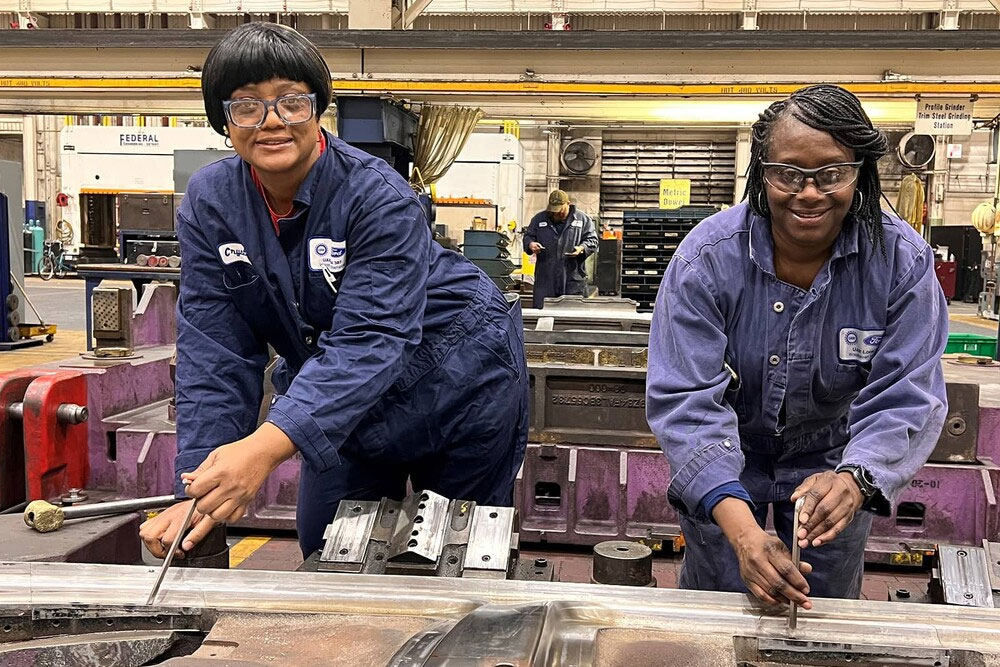
The Tool & Die Maker course is a specialized vocational program designed for students who have completed Class 10 or an equivalent examination. This course focuses on developing the skills required to design, fabricate, and repair precision tools, dies, jigs, and fixtures used in...
- Eligibility:
- Candidates must have passed Class 10 or an equivalent examination.
- A strong background in Mathematics and Science is generally preferred.
- Admission Process:
- Entrance Examinations and Merit-Based Selection: Many ITIs and vocational centers conduct entrance exams or base admissions on academic performance in Class 10.
- Institute-Specific Procedures: Each institute may have its own selection criteria. Some well-known institutions offering the Tool & Die Maker course include:
- Government ITI, Mumbai
- Delhi ITI (Government ITI, Delhi)
- Government ITI, Chennai
- Government ITI, Pune
- State-specific ITIs and Vocational Training Centers across various states
- Specific state-level requirements, reservation policies, and quotas may apply. Prospective students should consult the respective institute or state technical education board for detailed admission guidelines and deadlines.
- Course Duration:
- Typically spans 2 to 3 years (divided into several semesters), depending on the institution and program structure.
- Structure:
- Theory Classes: Cover subjects such as technical drawing, material science, and fundamentals of machining and tool design.
- Practical Sessions: Extensive hands-on training in operating machine tools, precision measurement, and fabrication of tools, dies, jigs, and fixtures.
- Project Work & Industrial Training: Practical projects and on-site training at manufacturing units or specialized workshops provide real-world exposure and industry experience.
Core Subjects:
- Technical Drawing and CAD: Fundamentals of manual drafting and computer-aided design for creating precise tool designs.
- Machining Processes: In-depth study of machining operations including turning, milling, drilling, and grinding techniques.
- Material Science: Understanding the properties of various metals and alloys used in tool and die making.
- Tool Design and Fabrication: Techniques for designing and manufacturing dies, jigs, fixtures, and other precision tools.
- Precision Measurement: Training in using measuring instruments such as micrometers, calipers, and gauges for quality control.
- Heat Treatment and Finishing: Processes to enhance the strength, durability, and performance of tools and dies.
- Workshop Practices: Practical sessions on tool handling, machine maintenance, and adherence to safety protocols.
- Quality Control and Inspection: Principles of ensuring accuracy, repeatability, and high-quality standards in tool fabrication.
Technical Skills:
- Strong foundation in Mathematics, Physics, and technical drawing.
- Proficiency in using machine tools and precision measurement instruments.
- Knowledge of machining processes and materials used in tool making.
- Ability to interpret technical drawings and CAD designs.
- Practical skills in fabrication, assembly, and finishing techniques.
Soft Skills:
- High attention to detail and precision in workmanship.
- Effective problem-solving and analytical thinking.
- Clear technical communication (both written and verbal).
- Ability to work collaboratively in workshop or production environments.
- Adaptability to learn new technologies and advanced manufacturing processes.
Pros:
- Immediate Practical Exposure: Extensive hands-on training develops precision tool-making skills early.
- Cost-Effective: Typically, lower tuition fees compared to full engineering degree programs.
- High Industry Demand: Skilled tool & die makers are essential in manufacturing, automotive, aerospace, and related sectors.
- Industry-Relevant Curriculum: Regular updates ensure the course meets current technological standards and manufacturing practices.
- Foundation for Further Studies: Provides a pathway for lateral entry into advanced technical courses or engineering degree programs.
Cons:
- Limited Theoretical Depth: May not cover advanced theoretical engineering concepts as comprehensively as full degrees.
- Specialized Focus: Highly specialized training might limit flexibility if switching to broader engineering fields later.
- Variability in Quality: Training quality and facilities can vary between ITIs and vocational centers.
- Career Ceiling: Without further studies or certifications, upward mobility into higher-level technical or managerial roles may be limited.
- Hands-On Workshops: Regular practical sessions in well-equipped workshops provide direct exposure to machine tool operation, precision measurement, and tool fabrication techniques.
- Project-Based Learning: Final year projects and assignments enable students to apply theoretical knowledge to real-world tool and die making challenges, enhancing technical proficiency and creative problem-solving.
- Industrial Attachments: Short-term industrial training or apprenticeships at manufacturing units or specialized tool-making workshops bridge the gap between classroom learning and practical industry experience.
- Soft Skills Enhancement: Modules on teamwork, technical report writing, and effective communication prepare graduates for collaborative work environments and professional growth.
- Government Support and Schemes: Many vocational courses are supported by initiatives such as the National Skill Development Mission and state-specific technical education schemes, which may offer scholarships, subsidies, or placement assistance.
- Cost and Accessibility: ITI and vocational courses are generally more affordable than full engineering programs, making them an attractive option for many students.
- Regional Variations: While the core curriculum remains consistent, elective subjects, practical modules, and facility quality may differ between institutions and regions. Prospective students should research local offerings carefully.
- Future Educational Pathways: This course not only offers immediate employment opportunities but also serves as a stepping stone for lateral entry into undergraduate engineering programs or specialized courses in advanced manufacturing and design.
Entry-Level Opportunities:
- Tool & Die Maker Technician: Roles in fabricating and repairing tools, dies, jigs, and fixtures in manufacturing units.
- Production Technician: Supporting positions in quality control and production processes related to tool making.
- CAD Operator/Drafting Technician: Entry-level roles in preparing technical drawings and designs for tools and dies.
Career Progression:
- Mid-Level Roles: With experience, graduates can progress to positions such as Senior Tool & Die Maker, Workshop Supervisor, or Production Team Leader.
- Advanced Opportunities: Further studies or certifications can lead to specialized roles in precision engineering, CNC machining, or process optimization.
- Entrepreneurship: Many skilled tool & die makers establish their own workshops or provide freelance services to manufacturing firms.
- Continued Learning: Additional training in advanced CAD, 3D modeling, or manufacturing automation further enhances career prospects.
Key Employment Sectors:
- Manufacturing: Involvement in producing precision tools, dies, jigs, and fixtures for automotive, aerospace, and industrial applications.
- Automotive and Aerospace Industries: Essential roles in tool making for production lines and component manufacturing.
- Metal Fabrication and Machining: Work in specialized tool-making shops and fabrication units.
- Industrial Production: Employment in large-scale production facilities requiring high-quality tooling and precision components.
- Public and Private Sectors: Opportunities in government projects, public works, and private manufacturing companies.
Examples of Potential Employers:
- Automotive and Industrial Manufacturers: Companies such as Tata Motors, Mahindra & Mahindra, Bosch.
- Aerospace Firms: Organizations involved in precision component manufacturing.
- Tooling and Machining Service Providers: Specialized firms offering tool & die making services.
- Public Sector Units (PSUs): Entities like BHEL and other state-run manufacturing units.
- Self-Employment: Many tool & die makers work as freelance professionals or run their own workshops.
The Tool & Die Maker course via ITI or specialized vocational centers after Class 10 offers a focused, hands-on education that equips students with the essential skills in precision tool fabrication, repair, and maintenance. With a strong emphasis on practical training, quality control, and real-world project experience, the course prepares graduates for immediate employment in manufacturing, automotive, aerospace, and other industrial sectors. Although it provides less theoretical depth compared to full engineering degrees, its cost-effectiveness and specialized focus make it an excellent option for students seeking to enter the workforce with robust, job-ready skills and promising avenues for future career growth.