Waste Management Specialist

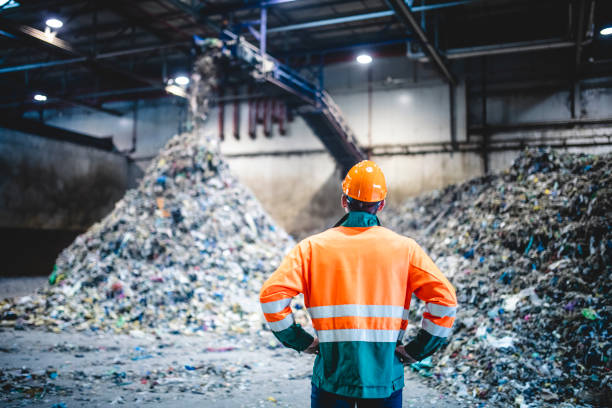
A Waste Management Specialist is a professional focused on designing, implementing, and overseeing systems for the collection, treatment, and disposal of waste to minimize environmental impact and promote sustainability. They work in government agencies, private waste management firms, industrial sectors, and non-profit organizations, collaborating with engineers, environmentalists, and policymakers. Waste Management Specialists play a critical role in reducing pollution, conserving resources, and ensuring public health by managing waste effectively in a world increasingly focused on circular economies, recycling, and environmental conservation.
Share :
Career tree mind map (horizontal) — Waste Management Specialist
Colored branches, hub circles, and underlined topics — same style as counselor course classic (types 18–19 in admin).
Loading mind map…

Waste Management Specialists are experts in handling waste materials, responsible for developing strategies to manage solid, liquid, and hazardous waste in compliance with environmental regulations. Their role involves assessing waste generation processes, designing recycling or disposal systems, and educating communities or organizations on sustainable practices, often working in diverse settings such as urban municipalities, industrial zones, or rural areas. They combine knowledge of environmental science, engineering, and policy to tackle issues like landfill overuse, plastic pollution, and improper waste disposal. As key contributors to sustainability, they help reduce environmental degradation in an era prioritizing resource recovery, waste reduction, and ecological responsibility.

  • Waste Assessment and Analysis
    • Evaluate waste generation patterns and quantities in industrial, commercial, or residential settings.
    • Analyze waste composition to determine appropriate management or recycling methods.
  • System Design and Implementation
    • Develop waste collection, segregation, and disposal systems tailored to specific needs.
    • Implement recycling programs and waste-to-energy initiatives for sustainable outcomes.
  • Regulatory Compliance Monitoring
    • Ensure waste management practices adhere to local, national, and international environmental laws.
    • Prepare documentation and reports for regulatory bodies to verify compliance.
  • Waste Reduction Strategies
    • Devise strategies to minimize waste generation through process optimization or reuse initiatives.
    • Promote circular economy practices to reduce dependency on landfills.
  • Facility and Process Oversight
    • Supervise operations at waste treatment plants, landfills, or recycling centers.
    • Monitor the safety and efficiency of waste handling and disposal processes.
  • Community and Stakeholder Engagement
    • Collaborate with local governments, businesses, and residents to promote waste segregation and recycling.
    • Conduct awareness campaigns on proper waste disposal and environmental benefits.
  • Policy Development and Advisory
    • Assist in formulating waste management policies for municipalities or organizations.
    • Provide expert advice on adopting sustainable waste practices and technologies.
  • Emergency Waste Management
    • Respond to incidents involving hazardous waste spills or improper disposal crises.
    • Coordinate rapid response efforts to mitigate environmental and health risks.

RouteSteps
Route 1

1. 10+2 with Physics, Chemistry, Biology (PCB) or Mathematics (PCM).

2. Bachelor’s degree in Environmental Science, Engineering, or Chemistry (3-4 years).

3. Gain practical experience through internships or field training in waste management or environmental firms (3-6 months).

4. Pursue entry-level roles like Junior Waste Management Specialist or Environmental Assistant (1-2 years).

Route 2

1. 10+2 with PCB or PCM.

2. Bachelor’s degree in Environmental Studies, Civil Engineering, or Chemical Engineering (3-4 years).

3. Master’s degree in Waste Management, Environmental Engineering, or Sustainability Studies (2 years, optional).

4. Work in waste handling or recycling roles to gain experience (1-2 years).

5. Transition to Waste Management Specialist roles with enhanced skills and knowledge.

Route 3

1. 10+2 with PCB or PCM.

2. Bachelor’s degree in Environmental Science, Engineering, or related field (3-4 years).

3. Pursue professional certifications like Certified Waste Management Professional or Solid Waste Management Specialist (1-2 years).

4. Gain hands-on experience through roles in waste treatment or recycling operations (1-2 years).

5. Establish a career as a Waste Management Specialist in government agencies or private firms.

Route 4

1. 10+2 with PCB or PCM.

2. Bachelor’s degree from India in Environmental Science, Engineering, or related field (3-4 years).

3. Pursue international waste management certifications or advanced degrees abroad (1-2 years).

4. Gain exposure through roles in global waste management projects or environmental agencies (1-2 years).

5. Work as a Waste Management Specialist in international markets or multinational organizations.

  • Mandatory field training during degree programs in waste treatment or recycling facilities.
  • Rotations in municipal solid waste management departments for hands-on operational experience.
  • Internships under senior waste management specialists for exposure to real-time project implementation.
  • Observerships in environmental regulatory bodies for insights into waste policy enforcement.
  • Participation in waste segregation or recycling simulations for practical skill development.
  • Training in waste treatment technologies through real-world site engagements.
  • Exposure to tools like waste compactors and recycling machinery during internships.
  • Field projects on landfill management or composting during training.
  • Community outreach programs to educate locals on waste segregation and recycling benefits.
  • International waste management attachments for global exposure to advanced practices.

  • Certificate in Waste Management and Recycling
  • Bachelor’s in Environmental Science, Engineering, or Chemistry
  • Master’s in Waste Management, Environmental Engineering, or Sustainability Studies
  • Ph.D. in Environmental Science or Waste Management Studies
  • Specialization in Solid Waste Management
  • Certification in Hazardous Waste Handling
  • Workshops on Circular Economy Practices
  • Training in Biomedical Waste Management
  • Specialization in E-Waste Recycling
  • Certification in Sustainable Waste Technologies

InstituteCourse/ProgramOfficial Link
Indian Institute of Technology (IIT), BombayM.Tech in Environmental Engineeringhttps://www.iitb.ac.in/
Jawaharlal Nehru University (JNU), New DelhiM.Sc. in Environmental Scienceshttps://www.jnu.ac.in/
TERI School of Advanced Studies, New DelhiM.Sc./M.Tech in Environmental Studieshttps://www.terisas.ac.in/
Anna University, ChennaiM.E. in Environmental Engineeringhttps://www.annauniv.edu/
University of Delhi, DelhiM.Sc. in Environmental Studieshttps://www.du.ac.in/
Banaras Hindu University (BHU), VaranasiM.Sc. in Environmental Sciencehttps://www.bhu.ac.in/
Indian Institute of Science (IISc), BangaloreM.Tech in Environmental Engineeringhttps://www.iisc.ac.in/
Savitribai Phule Pune University, PuneM.Sc. in Environmental Sciencehttps://www.unipune.ac.in/
Amity University, NoidaB.Sc./M.Sc. in Environmental Sciencehttps://www.amity.edu/
National Institute of Technology (NIT), TrichyM.Tech in Environmental Engineeringhttps://www.nitt.edu/

InstitutionCourseCountryOfficial Link
Stanford UniversityEnvironmental Engineering ProgramsUSAhttps://www.stanford.edu/
University of California, BerkeleyEnvironmental Science and PolicyUSAhttps://www.berkeley.edu/
Wageningen University & ResearchEnvironmental Sciences ProgramsNetherlandshttps://www.wur.nl/
University of OxfordEnvironmental Change and ManagementUKhttps://www.ox.ac.uk/
Massachusetts Institute of Technology (MIT)Environmental EngineeringUSAhttps://www.mit.edu/
University of MelbourneEnvironmental Science ProgramsAustraliahttps://www.unimelb.edu.au/
University of British ColumbiaEnvironmental ManagementCanadahttps://www.ubc.ca/
ETH ZurichEnvironmental SciencesSwitzerlandhttps://www.ethz.ch/
University of CopenhagenEnvironmental Science ProgramsDenmarkhttps://www.ku.dk/
National University of Singapore (NUS)Environmental StudiesSingaporehttps://www.nus.edu.sg/

India:

  • GATE (Graduate Aptitude Test in Engineering): For admission to M.Tech programs in environmental engineering at IITs and other institutes.
  • JNU CEEB (Combined Entrance Examination for Biotechnology): For admissions in environmental science programs at JNU.
  • JEE Main (Joint Entrance Examination): For admission to B.Tech programs in environmental engineering.
  • State-Level Entrance Exams: Various states conduct exams for admission to environmental programs in state universities.

International:

  • TOEFL (Test of English as a Foreign Language): Minimum score of 80-100 required for non-native speakers applying to programs in English-speaking countries.
  • IELTS (International English Language Testing System): Minimum score of 6.0-7.0 required for admission to universities in the UK, Australia, and other regions.
  • PTE Academic (Pearson Test of English Academic): Accepted by many international institutes as an alternative to TOEFL or IELTS for English proficiency.

Junior Waste Management Specialist → Senior Waste Management Specialist → Waste Management Project Manager → Waste Management Consultant → Waste Management Director → Academician/Researcher → Sustainability Advisor

  • Government municipal corporations for managing urban waste systems.
  • Private waste management firms for implementing recycling and disposal solutions.
  • Industrial sectors for handling production-related waste and by-products.
  • Environmental consulting firms for designing sustainable waste strategies.
  • Non-profit organizations for advocating waste reduction and community education.
  • Academic institutions for teaching and researching waste management technologies.
  • Construction companies for managing debris and construction waste.
  • Healthcare sectors for overseeing biomedical waste disposal.
  • International environmental agencies for global waste reduction initiatives.
  • Urban planning bodies for integrating waste management into city development.

IndiaInternational
Central Pollution Control Board (CPCB)United Nations Environment Programme (UNEP), Global
Swachh Bharat Mission (Urban)World Resources Institute (WRI), Global
Ramky Enviro Engineers LimitedWaste Management, Inc., USA
IL&FS Environmental Infrastructure & Services Ltd.Veolia Environment, France
A2Z Green Waste Management Ltd.Suez Environment, France
Tata Chemicals LimitedRepublic Services, USA
Reliance Industries Limited (Sustainability Division)Clean Harbors, USA
Larsen & Toubro (L&T) - Environment DivisionBiffa, UK
Municipal Corporation of Greater Mumbai (MCGM)Covanta, USA
Ministry of Urban Development, Government of IndiaWaste Connections, Canada

ProsCons
Direct impact on reducing environmental pollution and promoting sustainabilityHigh pressure to manage increasing waste volumes with limited resources
Growing demand due to rising urbanization and waste generation challengesFieldwork often involves exposure to unpleasant or hazardous conditions
Opportunity to contribute to circular economy and resource conservationLimited public recognition compared to other environmental professions
Varied career paths in government, private sector, and consultancyResistance from communities or industries to adopt new waste practices
Potential for societal change through innovative waste solutionsNeed for constant updates on evolving waste management technologies

Career LevelIndia (₹ per annum)International (USD per annum)
Junior Waste Management Specialist (Early Career)3,00,000 - 5,00,00050,000 - 65,000
Senior Waste Management Specialist (Mid-Career)5,00,000 - 8,50,00065,000 - 80,000
Waste Management Project Manager8,50,000 - 12,00,00080,000 - 95,000
Waste Management Consultant/Director12,00,000 - 18,00,00095,000 - 120,000
Academician/Researcher/Sustainability Advisor18,00,000+120,000+

Note: Salaries may vary based on location, employer, experience, and specialization. International figures are based on data from the U.S. and Canada as of December 2025, reflecting averages and medians from multiple sources. Indian figures are estimated based on industry standards and prior trends due to limited real-time data in the search results.

  • Geographic Information Systems (GIS) for mapping waste collection routes and landfill sites.
  • Waste Management Software (e.g., WasteWORKS) for tracking waste streams and operations.
  • Data Analytics Tools (e.g., Tableau, Excel) for analyzing waste generation patterns.
  • Remote Sensing Software for monitoring landfill usage and waste accumulation.
  • Compliance Tracking Tools for managing regulatory requirements and reporting.
  • Teleconferencing tools like Zoom for stakeholder collaboration on waste projects.
  • Cloud Platforms (e.g., Google Cloud) for storing and sharing waste management data.
  • Microsoft Office Suite for documentation and presentations.
  • Project Management Tools (e.g., Trello, Monday.com) for coordinating waste initiatives.
  • Waste-to-Energy Simulation Software for assessing conversion potential of waste.

  • Indian Environmental Society (IES)
  • National Solid Waste Association of India (NSWAI)
  • International Solid Waste Association (ISWA)
  • World Resources Institute (WRI)
  • United Nations Environment Programme (UNEP)
  • Institute of Waste Management of Southern Africa (IWMSA)
  • Global Reporting Initiative (GRI)
  • Waste and Resources Action Programme (WRAP), UK
  • Asia-Pacific Waste Management Network (APWMN)

  • Dr.Sunita Narain (Contemporary, India): Director of Centre for Science and Environment (CSE), advocating for sustainable waste management in urban India. Her work addresses plastic and solid waste challenges. Her influence shapes national policies. She critiques inefficient waste systems.
     
  • Dr.Vandana Shiva (Contemporary, India): Environmental activist focusing on agricultural waste reduction through organic farming. Her initiatives promote composting and zero-waste practices. Her global impact challenges industrial waste norms. She founded Navdanya for sustainable living.
     
  • Dr.Prodipto Ghosh (Contemporary, India): Former Environment Secretary, instrumental in shaping waste management policies in India. His expertise guides regulatory frameworks for waste disposal. His contributions strengthen compliance systems. He advises on sustainable waste strategies.
     
  • Dr.Amiya Kumar Sahu (Contemporary, India): Founder of National Solid Waste Association of India (NSWAI), dedicated to improving waste management practices. His leadership drives professional standards in the sector. His efforts enhance recycling initiatives. He advocates for policy reforms.
     
  • Dr. P. U. Asnani (Contemporary, India): Expert in municipal solid waste management, known for contributions to Swachh Bharat Mission. His work focuses on urban waste solutions. His consultancy aids city-level waste systems. He promotes decentralized waste processing.
     
  • Dr. Ellen MacArthur (Contemporary, UK): Founder of the Ellen MacArthur Foundation, championing circular economy to reduce waste globally. Her vision redefines waste as a resource. Her initiatives inspire global waste policies. She drives innovation in waste-free systems.
     
  • Dr. Jane Goodall (Contemporary, UK/USA): Primatologist advocating for waste reduction to protect wildlife habitats. Her work highlights plastic pollution in ecosystems. Her contributions inspire conservation-focused waste practices. She founded the Jane Goodall Institute for environmental education.
     
  • Dr. Bea Johnson (Contemporary, France/USA): Pioneer of the Zero Waste lifestyle movement through her book "Zero Waste Home." Her advocacy reduces household waste worldwide. Her influence promotes minimal waste living. She inspires global waste reduction efforts.
     
  • Dr. Christiana Figueres (Contemporary, Costa Rica): Former UNFCCC Executive Secretary, linking waste management to climate action in the Paris Agreement. Her efforts drive sustainable waste policies. Her leadership fosters international cooperation. She advocates for waste-to-energy solutions.
     
  • Dr. Johan Rockström (Contemporary, Sweden): Scientist at Stockholm Resilience Centre, addressing waste within planetary boundaries. His frameworks guide sustainable waste practices. His global impact influences environmental policies. He co-developed planetary health concepts.
     

  • Build a strong foundation in environmental science, engineering, and sustainability to understand waste dynamics.
  • Seek early exposure to waste handling or recycling operations through internships to confirm interest in the field.
  • Prepare thoroughly for entrance exams or certification requirements specific to your chosen program or region.
  • Pursue certifications in waste management, recycling technologies, or circular economy to gain expertise.
  • Stay updated on advancements in waste regulations by attending industry seminars and workshops.
  • Develop hands-on skills in waste assessment, treatment technologies, and recycling through practical training.
  • Engage in research projects or waste reduction initiatives to build real-world experience.
  • Join professional associations like the National Solid Waste Association of India (NSWAI) for networking and resources.
  • Work on innovation and problem-solving to ensure efficient and sustainable waste solutions.
  • Explore international waste management projects for exposure to diverse waste challenges.
  • Volunteer in community waste segregation or clean-up campaigns to understand local issues.
  • Cultivate adaptability to handle operational and regulatory constraints in waste management settings.
  • Attend continuing education programs to stay abreast of evolving waste technologies.
  • Build a network with waste management experts, regulators, and industry leaders for collaborative efforts.
  • Develop resilience to manage the logistical and societal pressures of waste management.
  • Balance technical skills with policy application to adapt to rapid changes in waste management standards.

A career as a Waste Management Specialist offers a unique opportunity to contribute to environmental protection and sustainability by managing and reducing waste across various sectors. From designing recycling systems to promoting circular economy practices, Waste Management Specialists play a pivotal role in modern environmental stewardship and resource conservation. This field combines scientific analysis, technical expertise, and a commitment to ecological health, offering diverse paths in government, industry, and consultancy. For those passionate about combating waste pollution, adapting to global sustainability challenges, and addressing critical resource recovery needs in an era of increasing environmental urgency, a career as a Waste Management Specialist provides an intellectually stimulating and professionally rewarding journey with the potential to make significant contributions to society by enhancing environmental quality and industry standards worldwide.

Knowledge & Skills You Will Learn
1
Circular Economy Focus: Increasing emphasis on transforming waste into resources through recycling and reuse, driven by sustainability goals.
2
Skill Development Needs: Demand for training in advanced waste technologies and regulatory compliance to meet industry demands.
Senior Waste Management Specialist

Senior Waste Management Specialist

Experienced specialists oversee waste treatment and recycling initiatives with expertise in organizations like Ramky Enviro Engineers or state...

0.0LPA

Waste Management Project Manager

Waste Management Project Manager

Professionals manage large-scale waste management projects, coordinating teams in entities like the Swachh Bharat Mission or private companies...

0.0LPA
Waste Management Consultant

Waste Management Consultant

Experts provide specialized guidance on waste management strategies to Indian municipalities, industries like Tata Chemicals, or government bodies...

0.0LPA

Interested in this career?

Take the next step and explore more about Waste Management Specialist.