Volcanologist

Summary

A Volcanologist is a scientist who studies volcanoes, their eruptions, and related geological phenomena to understand volcanic behaviour, predict eruptions, and mitigate risks to human life and the environment

Share :
✨ Radial Mind Map - Volcanologist
Nodes arranged in concentric circles

Loading radial mind map...

Overview

A Volcanologist is a scientist who studies volcanoes, their eruptions, and related geological phenomena to understand volcanic behaviour, predict eruptions, and mitigate risks to human life and the environment. They work in diverse settings, including field sites near active volcanoes, research laboratories, and government agencies, often collaborating with geologists, seismologists, and emergency response teams. Volcanologists use advanced tools and technologies to monitor volcanic activity, analyze lava and ash samples, and develop hazard maps. Their expertise combines geology, geophysics, and data analysis to protect communities, advance scientific knowledge, and contribute to disaster preparedness, playing a critical role in understanding Earth's dynamic processes.
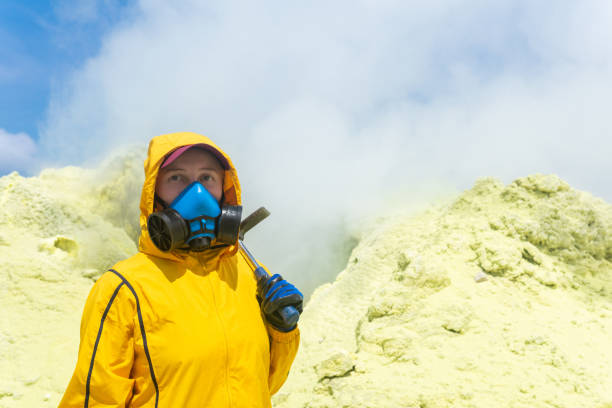
Volcanologists are dedicated to unravelling the mysteries of volcanoes, focusing on their formation, eruption mechanisms, and impacts on the planet. Their work involves fieldwork to collect data from active and dormant volcanoes, laboratory analysis of rock and gas samples, and the use of remote sensing technologies to monitor seismic activity and gas emissions. They collaborate with international research teams, government bodies, and local communities to predict volcanic eruptions and develop evacuation plans. Volcanologists also contribute to public education on volcanic hazards and environmental impacts, often working in high-risk environments near volcanic sites or in academic and governmental institutions to advance safety and scientific understanding of these natural phenomena.

Roles and Responsibilities

💼
Volcanologist
Roles and Responsibilities
Field Research and Data Collection
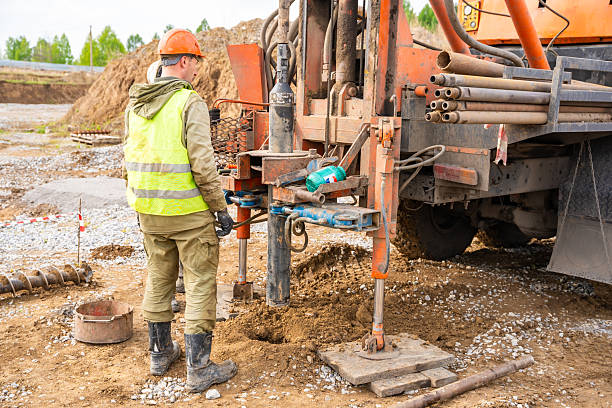
Conduct fieldwork at volcanic sites to collect samples of lava, ash, and gases.
Install and maintain monitoring equipment like seismometers and gas sensors near volcanoes.
Eruption Prediction and Monitoring
Analyze seismic data, ground deformation, and gas emissions to predict volcanic activity.
Use satellite imagery and remote sensing to monitor changes in volcanic behaviour.
Laboratory Analysis
Study rock and mineral samples to understand the composition and history of volcanic eruptions.
Conduct experiments to simulate volcanic processes and test eruption models.
Hazard Assessment and Mitigation
Create volcanic hazard maps to identify at-risk areas for communities and infrastructure.
Develop emergency response plans and advise governments on evacuation strategies.
Public Education and Outreach
Educate communities and policymakers about volcanic risks and safety measures.
Publish research findings and present at conferences to share knowledge with the scientific community.
Interdisciplinary Collaboration
Work with seismologists, meteorologists, and geochemists to study broader geophysical phenomena.
Collaborate with disaster management teams to implement safety protocols.
Environmental Impact Studies
Assess the impact of volcanic eruptions on climate, air quality, and ecosystems.
Study long-term effects of volcanic ash and gases on agriculture and water resources.
Technology and Model Development
Develop and refine computer models to simulate volcanic eruptions and ash dispersal.
Innovate monitoring technologies to improve early warning systems.
Entrance Exam Requirements
: JEE Main for related undergraduate programs in India, GATE for postgraduate studies, GRE for international programs.
Strong Scientific Foundation
: Requires understanding of geology, geophysics, and chemistry.
Practical Skills Essential
: Fieldwork and hands-on experience in volcanic regions are critical for success.
Software Proficiency Required
: Mastery of GIS, seismic analysis tools, and modelling software is important.
Advanced Education Preferred
: Postgraduate degrees (Master’s/PhD) enhance opportunities in research and senior roles.
Interdisciplinary Knowledge
: Combines geology, physics, and environmental science for comprehensive analysis.
Continuous Learning Necessity
: Rapid advancements in monitoring tech and eruption modelling require staying updated.
Industry Exposure Valued
: Field projects, internships, and networking significantly boost employability and credibility.
Dr. Stanley Williams (Contemporary, USA)
: A pioneer in volcanic gas studies, he has researched hazardous volcanoes globally since the 1980s, surviving a near-fatal eruption incident in 1993 at Galeras, Colombia.
Dr. Marie Edmonds (Contemporary, UK)
: A volcanologist at the University of Cambridge, she has advanced volcanic gas monitoring techniques since the 2000s, focusing on eruption forecasting.
Dr. Tetsuya Takada (Contemporary, Japan)
: A leading researcher at the Japan Meteorological Agency, he has contributed to volcanic monitoring in Japan since the 1990s, enhancing early warning systems.
Dr. Tina Neal (Contemporary, USA)
: As Scientist-in-Charge at the Hawaiian Volcano Observatory, she has led research on Kilauea eruptions since the 2010s, improving community safety measures during volcanic crises.
Dr. Augusto Neri (Contemporary, Italy)
: A prominent volcanologist at the Istituto Nazionale di Geofisica e Vulcanologia, he has specialized in eruption modeling and ash dispersal since the 1990s, aiding hazard mitigation in Europe.
Dr. Hazel Rymer (Contemporary, UK)
: A professor at The Open University, she has pioneered geophysical techniques for volcanic monitoring since the 1980s, focusing on gravity changes as eruption precursors.
Dr.Surono (Contemporary, Indonesia)
: Known as "Mbah Rono," he led Indonesia’s Center for Volcanology and Geological Hazard Mitigation during major eruptions like Mount Merapi in 2010, saving countless lives through timely warnings.
Dr. Patricia Mothes (Contemporary, Ecuador)
: Head of the Volcanology Department at the Geophysical Institute of Ecuador, she has monitored active volcanoes like Tungurahua since the 1990s, enhancing regional disaster preparedness.
Dr. Janine Krippner (Contemporary, New Zealand/USA)
: A volcanologist and science communicator, she has worked on global volcanic hazard awareness since the 2010s, using social media to educate the public.
Dr. Erik Klemetti (Contemporary, USA)
: A volcanologist and professor at Denison University, he has contributed to public understanding of volcanic processes since the 2000s through his popular blog and research on eruption dynamics.

Roles and Responsibilities

  • Field Research and Data Collection
    • Conduct fieldwork at volcanic sites to collect samples of lava, ash, and gases.
    • Install and maintain monitoring equipment like seismometers and gas sensors near volcanoes.
  • Eruption Prediction and Monitoring
    • Analyze seismic data, ground deformation, and gas emissions to predict volcanic activity.
    • Use satellite imagery and remote sensing to monitor changes in volcanic behaviour.
  • Laboratory Analysis
    • Study rock and mineral samples to understand the composition and history of volcanic eruptions.
    • Conduct experiments to simulate volcanic processes and test eruption models.
  • Hazard Assessment and Mitigation
    • Create volcanic hazard maps to identify at-risk areas for communities and infrastructure.
    • Develop emergency response plans and advise governments on evacuation strategies.
  • Public Education and Outreach
    • Educate communities and policymakers about volcanic risks and safety measures.
    • Publish research findings and present at conferences to share knowledge with the scientific community.
  • Interdisciplinary Collaboration
    • Work with seismologists, meteorologists, and geochemists to study broader geophysical phenomena.
    • Collaborate with disaster management teams to implement safety protocols.
  • Environmental Impact Studies
    • Assess the impact of volcanic eruptions on climate, air quality, and ecosystems.
    • Study long-term effects of volcanic ash and gases on agriculture and water resources.
  • Technology and Model Development
    • Develop and refine computer models to simulate volcanic eruptions and ash dispersal.
    • Innovate monitoring technologies to improve early warning systems.


Study Route & Eligibility Criteria

RouteSteps
Route 11. 10+2 with Physics, Chemistry, Mathematics (PCM) or Physics, Chemistry, Biology (PCB) stream.
2. Bachelor’s degree (3-4 yrs) in Geology, Earth Sciences, or Geophysics.
3. Internships or field training in geological surveys during studies.
4. Optional Master’s degree (2 yrs) in Volcanology or Geology.
Route 21. 10+2 with Physics, Chemistry, Mathematics (PCM) stream.
2. Bachelor’s degree (3-4 yrs) in Environmental Science or Earth Sciences.
3. Certification courses in Volcanology or Hazard Assessment.
4. Practical experience through fieldwork with geological organizations.
5. Optional PhD (3-5 yrs) for research-focused roles.
Route 31. 10+2 in Science stream.
2. Diploma (2-3 yrs) in Geology or Earth Sciences.
3. Entry-level roles in geological surveys or monitoring agencies for hands-on experience.
4. Bachelor’s degree (part-time, 3-4 yrs) in Geology.
5. Advanced certifications and field training programs.
Route 41. 10+2 with Physics, Chemistry, Mathematics (PCM) stream.
2. Bachelor’s degree (3-4 yrs) in Geology or Geophysics.
3. Master’s degree (2 yrs) in Volcanology or Geological Hazards.
4. PhD (3-5 yrs) specializing in Volcanic Studies or Seismology.
5. Research projects and international fieldwork experience.


Significant Observations

  • Entrance Exam Requirements: JEE Main for related undergraduate programs in India, GATE for postgraduate studies, GRE for international programs.
  • Strong Scientific Foundation: Requires understanding of geology, geophysics, and chemistry.
  • Practical Skills Essential: Fieldwork and hands-on experience in volcanic regions are critical for success.
  • Software Proficiency Required: Mastery of GIS, seismic analysis tools, and modelling software is important.
  • Advanced Education Preferred: Postgraduate degrees (Master’s/PhD) enhance opportunities in research and senior roles.
  • Interdisciplinary Knowledge: Combines geology, physics, and environmental science for comprehensive analysis.
  • Continuous Learning Necessity: Rapid advancements in monitoring tech and eruption modelling require staying updated.
  • Industry Exposure Valued: Field projects, internships, and networking significantly boost employability and credibility.


Internships & Practical Exposure

  • Internships with geological surveys or volcano observatories for field experience.
  • Hands-on projects in seismic monitoring or volcanic sample analysis.
  • Training with GIS software and remote sensing tools for volcanic mapping.
  • Exposure to fieldwork in active volcanic regions or hazard zones.
  • Participation in geoscience conferences and workshops for networking.
  • Collaboration with disaster management teams on volcanic risk projects.
  • Attendance at training programs on eruption prediction and safety protocols.
  • Involvement in environmental impact studies post-eruption.
  • Experience with data collection during volcanic monitoring expeditions.
  • Engagement in public outreach programs on volcanic hazards.


Courses & Specializations to Enter the Field

  • Bachelor’s degrees in Geology, Earth Sciences, or Geophysics.
  • Master’s and PhD programs in Volcanology, Seismology, or Geological Hazards.
  • Courses in Remote Sensing, GIS, and Geochemical Analysis.
  • Training in Volcanic Hazard Assessment and Disaster Management.
  • Certifications in Environmental Geology or Natural Hazard Mitigation.
  • Safety and Fieldwork Training for Volcanic Environments.
  • Workshops in Seismic Data Analysis and Eruption Modeling.
  • Specializations in Volcanic Petrology, Geothermal Energy, or Climate Impact Studies.
  • Professional Development Programs in Geospatial Technologies.
  • Industry Certifications (e.g., Certified Volcanologist by IAVCEI affiliates).


Top Institutes for Volcanology and Geology Education (India)

InstituteCourse/ProgramOfficial Link
Indian Institute of Technology (IIT) BombayEarth Sciences, Geophysicshttps://www.iitb.ac.in/
Indian Institute of Technology (IIT) KharagpurGeology and Geophysicshttps://www.iitkgp.ac.in/
University of DelhiGeology, Earth Scienceshttps://www.du.ac.in/
Banaras Hindu University (BHU), VaranasiGeology, Earth Scienceshttps://www.bhu.ac.in/
Jadavpur University, KolkataGeological Scienceshttps://www.jaduniv.edu.in/
University of Pune (Savitribai Phule Pune University)Geology, Environmental Sciencehttps://www.unipune.ac.in/
Anna University, ChennaiApplied Geologyhttps://www.annauniv.edu/
Indian Institute of Science (IISc), BangaloreEarth Sciences, Geophysicshttps://www.iisc.ac.in/
University of HyderabadEarth and Space Scienceshttps://www.uohyd.ac.in/
National Institute of Technology (NIT) RourkelaEarth and Atmospheric Scienceshttps://www.nitrkl.ac.in/


Top International Institutes

InstitutionCourseCountryOfficial Link
University of Hawaii at ManoaVolcanology, GeologyUSAhttps://manoa.hawaii.edu/
University of BristolVolcanology, Earth SciencesUKhttps://www.bristol.ac.uk/
University of CambridgeEarth Sciences, GeophysicsUKhttps://www.cam.ac.uk/
California Institute of Technology (Caltech)Geology, Planetary SciencesUSAhttps://www.caltech.edu/
ETH ZurichEarth Sciences, VolcanologySwitzerlandhttps://ethz.ch/
University of AucklandVolcanology, Geothermal StudiesNew Zealandhttps://www.auckland.ac.nz/
University of TokyoEarth and Planetary SciencesJapanhttps://www.u-tokyo.ac.jp/
University of Naples Federico IIVolcanology, Geological HazardsItalyhttps://www.unina.it/
University of OregonEarth Sciences, VolcanologyUSAhttps://www.uoregon.edu/
Australian National University (ANU)Earth Sciences, GeophysicsAustraliahttps://www.anu.edu.au/


Entrance Tests Required

India

  • JEE Main/Advanced: For admission to undergraduate programs in Earth Sciences at IITs and NITs.
  • GATE: For postgraduate programs (M.Tech/M.Sc.) in Geology or Geophysics.
  • UGC-NET/JRF: For research fellowships and PhD programs in Earth Sciences.
  • Institute-Specific Entrance Tests: For specialized programs in geology institutes.


International

  • GRE: For admission to graduate programs in volcanology or earth sciences.
  • TOEFL/IELTS: For English proficiency in international universities.
  • University-Specific Entrance Tests: May include interviews or subject-specific assessments for research programs.


Ideal Progressing Career Path

Field Assistant (Geology) → Junior Volcanologist → Senior Volcanologist → Volcanic Hazard Specialist → Research Scientist (Volcanology) → Director of Volcanic Observatory → Chief Geoscientist


Major Areas of Employment

  • Government geological surveys and observatories.
  • Academic institutions and research universities.
  • International volcanic research organizations.
  • Disaster management and emergency response agencies.
  • Environmental consulting firms.
  • Geothermal energy companies.
  • Non-governmental organizations (NGOs) focused on hazard mitigation.
  • Space agencies for planetary volcanology studies.
  • Museums and science education centers.
  • Private sector firms in risk assessment and insurance.


Prominent Employers

IndiaInternational
Geological Survey of India (GSI)United States Geological Survey (USGS)
National Institute of Disaster Management (NIDM)Hawaiian Volcano Observatory (HVO)
Indian Institute of Science (IISc)Istituto Nazionale di Geofisica e Vulcanologia (INGV, Italy)
Indian Space Research Organisation (ISRO)GNS Science (New Zealand)
National Geophysical Research Institute (NGRI)Smithsonian Institution’s Global Volcanism Program (USA)
Ministry of Earth Sciences (MoES)Volcano Disaster Assistance Program (VDAP, USA)
Tata Institute of Fundamental Research (TIFR)University of Bristol Volcanology Group (UK)
Wadia Institute of Himalayan GeologyJapan Meteorological Agency (JMA)
Centre for Earth Sciences, IIScPhilippine Institute of Volcanology and Seismology (PHIVOLCS)
National Centre for Seismology (NCS)International Association of Volcanology and Chemistry of the Earth’s Interior (IAVCEI)


Pros and Cons of the Profession

ProsCons
Opportunity to study one of nature’s most powerful phenomena.High-risk fieldwork in hazardous volcanic environments.
Significant impact on public safety and disaster prevention.Irregular hours and frequent travel to remote locations.
Potential to contribute to groundbreaking geological research.Emotional stress from dealing with disaster-affected communities.
Diverse work settings from field sites to advanced labs.Limited job openings in specialized volcanology roles.
Collaborative work with global scientific and emergency teams.Physically demanding conditions during field expeditions.


Industry Trends and Future Outlook

  • Growing use of AI and machine learning for eruption prediction.
  • Increased focus on drone technology for volcanic monitoring.
  • Rising interest in planetary volcanology for Mars and lunar studies.
  • Advances in satellite-based remote sensing for global volcano surveillance.
  • Emphasis on community resilience and volcanic disaster education.
  • Integration of big data for real-time volcanic activity analysis.
  • Development of portable monitoring devices for field research.
  • Focus on climate impact studies of volcanic eruptions.
  • Growth in international collaboration for volcanic hazard mitigation.
  • Investment in geothermal energy exploration near volcanic regions.


Salary Expectations

Career LevelIndia (₹ per annum)International (US$ per annum)
Field Assistant / Trainee3,00,000 - 5,00,000$35,000 - $50,000
Junior Volcanologist5,00,000 - 8,00,000$50,000 - $65,000
Senior Volcanologist8,00,000 - 12,00,000$65,000 - $85,000
Volcanic Hazard Specialist12,00,000 - 18,00,000$85,000 - $110,000
Director of Volcanic Observatory18,00,000 - 30,00,000+$110,000 - $150,000+


Key Software Tools

  • ArcGIS: For mapping volcanic hazards and terrain analysis.
  • MATLAB: For numerical modeling of volcanic processes.
  • Petrel: For subsurface geological analysis.
  • SeisComp3: For seismic data acquisition and eruption prediction.
  • ENVI: For processing satellite imagery in volcanic monitoring.
  • Volcano Analysis and Visualization (VHub): For eruption simulations.
  • COMSOL Multiphysics: For modeling volcanic heat and fluid dynamics.
  • Python: For custom data analysis and scripting in volcanology.
  • ERDAS Imagine: For remote sensing and geospatial data interpretation.
  • Surfer: For creating 3D models of volcanic structures.


Professional Organizations and Networks

  • Geological Society of India (GSI).
  • Indian Geophysical Union (IGU).
  • International Association of Volcanology and Chemistry of the Earth’s Interior (IAVCEI).
  • American Geophysical Union (AGU).
  • European Geosciences Union (EGU).
  • Volcanic Ash Advisory Centers (VAAC).
  • Asia Oceania Geosciences Society (AOGS).
  • Smithsonian Institution’s Global Volcanism Program.
  • United Nations Office for Disaster Risk Reduction (UNDRR).
  • World Organization of Volcano Observatories (WOVO).


Notable Volcanologists and Industry Leaders (Top 10)

  • Dr. Stanley Williams (Contemporary, USA): A pioneer in volcanic gas studies, he has researched hazardous volcanoes globally since the 1980s, surviving a near-fatal eruption incident in 1993 at Galeras, Colombia.
     
  • Dr. Marie Edmonds (Contemporary, UK): A volcanologist at the University of Cambridge, she has advanced volcanic gas monitoring techniques since the 2000s, focusing on eruption forecasting.
     
  • Dr. Tetsuya Takada (Contemporary, Japan): A leading researcher at the Japan Meteorological Agency, he has contributed to volcanic monitoring in Japan since the 1990s, enhancing early warning systems.
     
  • Dr. Tina Neal (Contemporary, USA): As Scientist-in-Charge at the Hawaiian Volcano Observatory, she has led research on Kilauea eruptions since the 2010s, improving community safety measures during volcanic crises.
     
  • Dr. Augusto Neri (Contemporary, Italy): A prominent volcanologist at the Istituto Nazionale di Geofisica e Vulcanologia, he has specialized in eruption modeling and ash dispersal since the 1990s, aiding hazard mitigation in Europe.
     
  • Dr. Hazel Rymer (Contemporary, UK): A professor at The Open University, she has pioneered geophysical techniques for volcanic monitoring since the 1980s, focusing on gravity changes as eruption precursors.
     
  • Dr.Surono (Contemporary, Indonesia): Known as "Mbah Rono," he led Indonesia’s Center for Volcanology and Geological Hazard Mitigation during major eruptions like Mount Merapi in 2010, saving countless lives through timely warnings.
     
  • Dr. Patricia Mothes (Contemporary, Ecuador): Head of the Volcanology Department at the Geophysical Institute of Ecuador, she has monitored active volcanoes like Tungurahua since the 1990s, enhancing regional disaster preparedness.
     
  • Dr. Janine Krippner (Contemporary, New Zealand/USA): A volcanologist and science communicator, she has worked on global volcanic hazard awareness since the 2010s, using social media to educate the public.
     
  • Dr. Erik Klemetti (Contemporary, USA): A volcanologist and professor at Denison University, he has contributed to public understanding of volcanic processes since the 2000s through his popular blog and research on eruption dynamics.
     

Advice for Aspiring Volcanologists

  • Build a strong foundation in earth sciences, physics, and mathematics during early education.
  • Pursue hands-on experience through internships or field programs with geological surveys.
  • Develop proficiency in GIS, remote sensing, and volcanic modeling software early in your career.
  • Stay updated with advancements in eruption prediction technologies and hazard mitigation strategies.
  • Participate in geoscience conferences, workshops, and networking events for professional growth.
  • Consider certifications in disaster management or geophysical monitoring to enhance credibility.
  • Focus on developing analytical skills for interpreting complex seismic and geochemical data.
  • Pursue postgraduate education (Master’s or PhD) for advanced research or leadership roles.
  • Cultivate communication skills to effectively educate communities and collaborate with scientists.
  • Maintain a commitment to safety protocols and ethical practices during high-risk fieldwork.

A career as a Volcanologist offers the extraordinary opportunity to explore and understand one of nature’s most awe-inspiring and destructive forces, contributing to the safety and resilience of communities worldwide. From predicting eruptions to studying the environmental impacts of volcanic activity, Volcanologists play a crucial role in advancing scientific knowledge and protecting lives in the face of natural disasters. This field combines rigorous scientific analysis with adventurous fieldwork, providing diverse paths in research, hazard mitigation, education, and geothermal energy exploration. For those passionate about unraveling the mysteries of the Earth’s fiery core and making a tangible difference in disaster preparedness, a career in volcanology offers a thrilling and impactful journey in an ever-evolving realm of geoscience.


Study Route & Eligibility Criteria

Study Route & Eligibility Criteria
Volcanologist
Route 1
🎓
1
10+2 with Physics, Chemistry, Mathematics or Physics, Chemistry, Biology stream.
🏛️
2
Bachelor’s degree in Geology, Earth Sciences, or Geophysics.
3-4 yrs
💼
3
Internships or field training in geological surveys during studies.
🏛️
4
Optional Master’s degree in Volcanology or Geology.
2 yrs
Route 2
🎓
1
10+2 with Physics, Chemistry, Mathematics stream.
🏛️
2
Bachelor’s degree in Environmental Science or Earth Sciences.
3-4 yrs
📚
3
Certification courses in Volcanology or Hazard Assessment.
💼
4
Practical experience through fieldwork with geological organizations.
🌍
5
Optional PhD for research-focused roles.
3-5 yrs
Route 3
🎓
1
10+2 in Science stream.
🎓
2
Diploma in Geology or Earth Sciences.
2-3 yrs
💼
3
Entry-level roles in geological surveys or monitoring agencies for hands-on experience.
🏛️
4
Bachelor’s degree in Geology.
📚
5
Advanced certifications and field training programs.
Route 4
🎓
1
10+2 with Physics, Chemistry, Mathematics stream.
🏛️
2
Bachelor’s degree in Geology or Geophysics.
3-4 yrs
🏛️
3
Master’s degree in Volcanology or Geological Hazards.
2 yrs
💼
4
PhD specializing in Volcanic Studies or Seismology.
3-5 yrs
💼
5
Research projects and international fieldwork experience.
🎯 Volcanologist - Professional

Significant Observations (Academic Related Points)

💡
Volcanologist
Academic Related Points
1
Entrance Exam Requirements
JEE Main for related undergraduate programs in India, GATE for postgraduate studies, GRE for international programs.
2
Strong Scientific Foundation
Requires understanding of geology, geophysics, and chemistry.
3
Practical Skills Essential
Fieldwork and hands-on experience in volcanic regions are critical for success.
4
Software Proficiency Required
Mastery of GIS, seismic analysis tools, and modelling software is important.
5
Advanced Education Preferred
Postgraduate degrees (Master’s/PhD) enhance opportunities in research and senior roles.
6
Interdisciplinary Knowledge
Combines geology, physics, and environmental science for comprehensive analysis.
7
Continuous Learning Necessity
Rapid advancements in monitoring tech and eruption modelling require staying updated.
8
Industry Exposure Valued
Field projects, internships, and networking significantly boost employability and credibility.
9
Dr. Stanley Williams (Contemporary, USA)
A pioneer in volcanic gas studies, he has researched hazardous volcanoes globally since the 1980s, surviving a near-fatal eruption incident in 1993 at Galeras, Colombia.
10
Dr. Marie Edmonds (Contemporary, UK)
A volcanologist at the University of Cambridge, she has advanced volcanic gas monitoring techniques since the 2000s, focusing on eruption forecasting.
11
Dr. Tetsuya Takada (Contemporary, Japan)
A leading researcher at the Japan Meteorological Agency, he has contributed to volcanic monitoring in Japan since the 1990s, enhancing early warning systems.
12
Dr. Tina Neal (Contemporary, USA)
As Scientist-in-Charge at the Hawaiian Volcano Observatory, she has led research on Kilauea eruptions since the 2010s, improving community safety measures during volcanic crises.
13
Dr. Augusto Neri (Contemporary, Italy)
A prominent volcanologist at the Istituto Nazionale di Geofisica e Vulcanologia, he has specialized in eruption modeling and ash dispersal since the 1990s, aiding hazard mitigation in Europe.
14
Dr. Hazel Rymer (Contemporary, UK)
A professor at The Open University, she has pioneered geophysical techniques for volcanic monitoring since the 1980s, focusing on gravity changes as eruption precursors.
15
Dr.Surono (Contemporary, Indonesia)
Known as "Mbah Rono," he led Indonesia’s Center for Volcanology and Geological Hazard Mitigation during major eruptions like Mount Merapi in 2010, saving countless lives through timely warnings.
16
Dr. Patricia Mothes (Contemporary, Ecuador)
Head of the Volcanology Department at the Geophysical Institute of Ecuador, she has monitored active volcanoes like Tungurahua since the 1990s, enhancing regional disaster preparedness.
17
Dr. Janine Krippner (Contemporary, New Zealand/USA)
A volcanologist and science communicator, she has worked on global volcanic hazard awareness since the 2010s, using social media to educate the public.
18
Dr. Erik Klemetti (Contemporary, USA)
A volcanologist and professor at Denison University, he has contributed to public understanding of volcanic processes since the 2000s through his popular blog and research on eruption dynamics.

Internships & Practical Exposure

💼
Volcanologist
Internships & Practical Experience
1
Internships with geological surveys or volcano observatories for field experience.
2
Hands-on projects in seismic monitoring or volcanic sample analysis.
3
Training with GIS software and remote sensing tools for volcanic mapping.
4
Exposure to fieldwork in active volcanic regions or hazard zones.
5
Participation in geoscience conferences and workshops for networking.
6
Collaboration with disaster management teams on volcanic risk projects.
7
Attendance at training programs on eruption prediction and safety protocols.
8
Involvement in environmental impact studies post-eruption.
9
Experience with data collection during volcanic monitoring expeditions.
10
Engagement in public outreach programs on volcanic hazards.
11
Bachelor’s degrees in Geology, Earth Sciences, or Geophysics.
12
Master’s and PhD programs in Volcanology, Seismology, or Geological Hazards.
13
Courses in Remote Sensing, GIS, and Geochemical Analysis.
14
Training in Volcanic Hazard Assessment and Disaster Management.
15
Certifications in Environmental Geology or Natural Hazard Mitigation.
16
Safety and Fieldwork Training for Volcanic Environments.
17
Workshops in Seismic Data Analysis and Eruption Modeling.
18
Specializations in Volcanic Petrology, Geothermal Energy, or Climate Impact Studies.
19
Professional Development Programs in Geospatial Technologies.
20
Industry Certifications (e.g., Certified Volcanologist by IAVCEI affiliates).
21
JEE Main/Advanced: For admission to undergraduate programs in Earth Sciences at IITs and NITs.
22
GATE: For postgraduate programs (M.Tech/M.Sc.) in Geology or Geophysics.
23
UGC-NET/JRF: For research fellowships and PhD programs in Earth Sciences.
24
Institute-Specific Entrance Tests: For specialized programs in geology institutes.
25
GRE: For admission to graduate programs in volcanology or earth sciences.
26
TOEFL/IELTS: For English proficiency in international universities.
27
University-Specific Entrance Tests: May include interviews or subject-specific assessments for research programs.
28
Government geological surveys and observatories.
29
Academic institutions and research universities.
30
International volcanic research organizations.
31
Disaster management and emergency response agencies.
32
Environmental consulting firms.
33
Geothermal energy companies.
34
Non-governmental organizations (NGOs) focused on hazard mitigation.
35
Space agencies for planetary volcanology studies.
36
Museums and science education centers.
37
Private sector firms in risk assessment and insurance.
38
Growing use of AI and machine learning for eruption prediction.
39
Increased focus on drone technology for volcanic monitoring.
40
Rising interest in planetary volcanology for Mars and lunar studies.
41
Advances in satellite-based remote sensing for global volcano surveillance.
42
Emphasis on community resilience and volcanic disaster education.
43
Integration of big data for real-time volcanic activity analysis.
44
Development of portable monitoring devices for field research.
45
Focus on climate impact studies of volcanic eruptions.
46
Growth in international collaboration for volcanic hazard mitigation.
47
Investment in geothermal energy exploration near volcanic regions.
48
ArcGIS: For mapping volcanic hazards and terrain analysis.
49
MATLAB: For numerical modeling of volcanic processes.
50
Petrel: For subsurface geological analysis.
51
SeisComp3: For seismic data acquisition and eruption prediction.
52
ENVI: For processing satellite imagery in volcanic monitoring.
53
Volcano Analysis and Visualization (VHub): For eruption simulations.
54
COMSOL Multiphysics: For modeling volcanic heat and fluid dynamics.
55
Python: For custom data analysis and scripting in volcanology.
56
ERDAS Imagine: For remote sensing and geospatial data interpretation.
57
Surfer: For creating 3D models of volcanic structures.
58
Geological Society of India (GSI).
59
Indian Geophysical Union (IGU).
60
International Association of Volcanology and Chemistry of the Earth’s Interior (IAVCEI).
61
American Geophysical Union (AGU).
62
European Geosciences Union (EGU).
63
Volcanic Ash Advisory Centers (VAAC).
64
Asia Oceania Geosciences Society (AOGS).
65
Smithsonian Institution’s Global Volcanism Program.
66
United Nations Office for Disaster Risk Reduction (UNDRR).
67
World Organization of Volcano Observatories (WOVO).
68
Dr. Stanley Williams (Contemporary, USA): A pioneer in volcanic gas studies, he has researched hazardous volcanoes globally since the 1980s, surviving a near-fatal eruption incident in 1993 at Galeras, Colombia.
69
Dr. Marie Edmonds (Contemporary, UK): A volcanologist at the University of Cambridge, she has advanced volcanic gas monitoring techniques since the 2000s, focusing on eruption forecasting.
70
Dr. Tetsuya Takada (Contemporary, Japan): A leading researcher at the Japan Meteorological Agency, he has contributed to volcanic monitoring in Japan since the 1990s, enhancing early warning systems.
71
Dr. Tina Neal (Contemporary, USA): As Scientist-in-Charge at the Hawaiian Volcano Observatory, she has led research on Kilauea eruptions since the 2010s, improving community safety measures during volcanic crises.
72
Dr. Augusto Neri (Contemporary, Italy): A prominent volcanologist at the Istituto Nazionale di Geofisica e Vulcanologia, he has specialized in eruption modeling and ash dispersal since the 1990s, aiding hazard mitigation in Europe.
73
Dr. Hazel Rymer (Contemporary, UK): A professor at The Open University, she has pioneered geophysical techniques for volcanic monitoring since the 1980s, focusing on gravity changes as eruption precursors.
74
Dr.Surono (Contemporary, Indonesia): Known as "Mbah Rono," he led Indonesia’s Center for Volcanology and Geological Hazard Mitigation during major eruptions like Mount Merapi in 2010, saving countless lives through timely warnings.
75
Dr. Patricia Mothes (Contemporary, Ecuador): Head of the Volcanology Department at the Geophysical Institute of Ecuador, she has monitored active volcanoes like Tungurahua since the 1990s, enhancing regional disaster preparedness.
76
Dr. Janine Krippner (Contemporary, New Zealand/USA): A volcanologist and science communicator, she has worked on global volcanic hazard awareness since the 2010s, using social media to educate the public.
77
Dr. Erik Klemetti (Contemporary, USA): A volcanologist and professor at Denison University, he has contributed to public understanding of volcanic processes since the 2000s through his popular blog and research on eruption dynamics.
78
Build a strong foundation in earth sciences, physics, and mathematics during early education.
79
Pursue hands-on experience through internships or field programs with geological surveys.
80
Develop proficiency in GIS, remote sensing, and volcanic modeling software early in your career.
81
Stay updated with advancements in eruption prediction technologies and hazard mitigation strategies.
82
Participate in geoscience conferences, workshops, and networking events for professional growth.
83
Consider certifications in disaster management or geophysical monitoring to enhance credibility.
84
Focus on developing analytical skills for interpreting complex seismic and geochemical data.
85
Pursue postgraduate education (Master’s or PhD) for advanced research or leadership roles.
86
Cultivate communication skills to effectively educate communities and collaborate with scientists.
87
Maintain a commitment to safety protocols and ethical practices during high-risk fieldwork.

Courses & Specializations to Enter the Field

📚
Volcanologist
Courses & Specializations
📖
Bachelor’s degrees in Geology, Earth Sciences, or Geophysics.
📖
Master’s and PhD programs in Volcanology, Seismology, or Geological Hazards.
📖
Courses in Remote Sensing, GIS, and Geochemical Analysis.
📖
Training in Volcanic Hazard Assessment and Disaster Management.
📖
Certifications in Environmental Geology or Natural Hazard Mitigation.
📖
Safety and Fieldwork Training for Volcanic Environments.
📖
Workshops in Seismic Data Analysis and Eruption Modeling.
📖
Specializations in Volcanic Petrology, Geothermal Energy, or Climate Impact Studies.
📖
Professional Development Programs in Geospatial Technologies.
📖
Industry Certifications (e.g., Certified Volcanologist by IAVCEI affiliates).
📖
JEE Main/Advanced: For admission to undergraduate programs in Earth Sciences at IITs and NITs.
📖
GATE: For postgraduate programs (M.Tech/M.Sc.) in Geology or Geophysics.
📖
UGC-NET/JRF: For research fellowships and PhD programs in Earth Sciences.
📖
Institute-Specific Entrance Tests: For specialized programs in geology institutes.
📖
GRE: For admission to graduate programs in volcanology or earth sciences.
📖
TOEFL/IELTS: For English proficiency in international universities.
📖
University-Specific Entrance Tests: May include interviews or subject-specific assessments for research programs.
📖
Government geological surveys and observatories.
📖
Academic institutions and research universities.
📖
International volcanic research organizations.
📖
Disaster management and emergency response agencies.
📖
Environmental consulting firms.
📖
Geothermal energy companies.
📖
Non-governmental organizations (NGOs) focused on hazard mitigation.
📖
Space agencies for planetary volcanology studies.
📖
Museums and science education centers.
📖
Private sector firms in risk assessment and insurance.
📖
Growing use of AI and machine learning for eruption prediction.
📖
Increased focus on drone technology for volcanic monitoring.
📖
Rising interest in planetary volcanology for Mars and lunar studies.
📖
Advances in satellite-based remote sensing for global volcano surveillance.
📖
Emphasis on community resilience and volcanic disaster education.
📖
Integration of big data for real-time volcanic activity analysis.
📖
Development of portable monitoring devices for field research.
📖
Focus on climate impact studies of volcanic eruptions.
📖
Growth in international collaboration for volcanic hazard mitigation.
📖
Investment in geothermal energy exploration near volcanic regions.
📖
ArcGIS: For mapping volcanic hazards and terrain analysis.
📖
MATLAB: For numerical modeling of volcanic processes.
📖
Petrel: For subsurface geological analysis.
📖
SeisComp3: For seismic data acquisition and eruption prediction.
📖
ENVI: For processing satellite imagery in volcanic monitoring.
📖
Volcano Analysis and Visualization (VHub): For eruption simulations.
📖
COMSOL Multiphysics: For modeling volcanic heat and fluid dynamics.
📖
Python: For custom data analysis and scripting in volcanology.
📖
ERDAS Imagine: For remote sensing and geospatial data interpretation.
📖
Surfer: For creating 3D models of volcanic structures.
📖
Geological Society of India (GSI).
📖
Indian Geophysical Union (IGU).
📖
International Association of Volcanology and Chemistry of the Earth’s Interior (IAVCEI).
📖
American Geophysical Union (AGU).
📖
European Geosciences Union (EGU).
📖
Volcanic Ash Advisory Centers (VAAC).
📖
Asia Oceania Geosciences Society (AOGS).
📖
Smithsonian Institution’s Global Volcanism Program.
📖
United Nations Office for Disaster Risk Reduction (UNDRR).
📖
World Organization of Volcano Observatories (WOVO).
📖
Dr. Stanley Williams (Contemporary, USA): A pioneer in volcanic gas studies, he has researched hazardous volcanoes globally since the 1980s, surviving a near-fatal eruption incident in 1993 at Galeras, Colombia.
📖
Dr. Marie Edmonds (Contemporary, UK): A volcanologist at the University of Cambridge, she has advanced volcanic gas monitoring techniques since the 2000s, focusing on eruption forecasting.
📖
Dr. Tetsuya Takada (Contemporary, Japan): A leading researcher at the Japan Meteorological Agency, he has contributed to volcanic monitoring in Japan since the 1990s, enhancing early warning systems.
📖
Dr. Tina Neal (Contemporary, USA): As Scientist-in-Charge at the Hawaiian Volcano Observatory, she has led research on Kilauea eruptions since the 2010s, improving community safety measures during volcanic crises.
📖
Dr. Augusto Neri (Contemporary, Italy): A prominent volcanologist at the Istituto Nazionale di Geofisica e Vulcanologia, he has specialized in eruption modeling and ash dispersal since the 1990s, aiding hazard mitigation in Europe.
📖
Dr. Hazel Rymer (Contemporary, UK): A professor at The Open University, she has pioneered geophysical techniques for volcanic monitoring since the 1980s, focusing on gravity changes as eruption precursors.
📖
Dr.Surono (Contemporary, Indonesia): Known as "Mbah Rono," he led Indonesia’s Center for Volcanology and Geological Hazard Mitigation during major eruptions like Mount Merapi in 2010, saving countless lives through timely warnings.
📖
Dr. Patricia Mothes (Contemporary, Ecuador): Head of the Volcanology Department at the Geophysical Institute of Ecuador, she has monitored active volcanoes like Tungurahua since the 1990s, enhancing regional disaster preparedness.
📖
Dr. Janine Krippner (Contemporary, New Zealand/USA): A volcanologist and science communicator, she has worked on global volcanic hazard awareness since the 2010s, using social media to educate the public.
📖
Dr. Erik Klemetti (Contemporary, USA): A volcanologist and professor at Denison University, he has contributed to public understanding of volcanic processes since the 2000s through his popular blog and research on eruption dynamics.
📖
Build a strong foundation in earth sciences, physics, and mathematics during early education.
📖
Pursue hands-on experience through internships or field programs with geological surveys.
📖
Develop proficiency in GIS, remote sensing, and volcanic modeling software early in your career.
📖
Stay updated with advancements in eruption prediction technologies and hazard mitigation strategies.
📖
Participate in geoscience conferences, workshops, and networking events for professional growth.
📖
Consider certifications in disaster management or geophysical monitoring to enhance credibility.
📖
Focus on developing analytical skills for interpreting complex seismic and geochemical data.
📖
Pursue postgraduate education (Master’s or PhD) for advanced research or leadership roles.
📖
Cultivate communication skills to effectively educate communities and collaborate with scientists.
📖
Maintain a commitment to safety protocols and ethical practices during high-risk fieldwork.

Prominent Employers

🏢
Volcanologist
🌟 Top Companies & Organizations
🇮🇳 India
🏛️
Geological Survey of India (GSI)
🏛️
National Institute of Disaster Management (NIDM)
🏛️
Indian Institute of Science (IISc)
🏛️
Indian Space Research Organisation (ISRO)
🏛️
National Geophysical Research Institute (NGRI)
🏛️
Ministry of Earth Sciences (MoES)
🏛️
Tata Institute of Fundamental Research (TIFR)
🏛️
Wadia Institute of Himalayan Geology
🏛️
Centre for Earth Sciences, IISc
🏛️
National Centre for Seismology (NCS)
🌍 International
🌐
United States Geological Survey (USGS)
🌐
Hawaiian Volcano Observatory (HVO)
🌐
Istituto Nazionale di Geofisica e Vulcanologia (INGV, Italy)
🌐
GNS Science (New Zealand)
🌐
Smithsonian Institution’s Global Volcanism Program (USA)
🌐
Volcano Disaster Assistance Program (VDAP, USA)
🌐
University of Bristol Volcanology Group (UK)
🌐
Japan Meteorological Agency (JMA)
🌐
Philippine Institute of Volcanology and Seismology (PHIVOLCS)
🌐
International Association of Volcanology and Chemistry of the Earth’s Interior (IAVCEI)

Advice for Aspiring Volcanologists

💡
Volcanologist
🌟 Tips for Students & Parents
1
Build a strong foundation in earth sciences, physics, and mathematics during early education.
2
Pursue hands-on experience through internships or field programs with geological surveys.
3
Develop proficiency in GIS, remote sensing, and volcanic modeling software early in your career.
4
Stay updated with advancements in eruption prediction technologies and hazard mitigation strategies.
5
Participate in geoscience conferences, workshops, and networking events for professional growth.
6
Consider certifications in disaster management or geophysical monitoring to enhance credibility.
7
Focus on developing analytical skills for interpreting complex seismic and geochemical data.
8
Pursue postgraduate education (Master’s or PhD) for advanced research or leadership roles.
9
Cultivate communication skills to effectively educate communities and collaborate with scientists.
10
Maintain a commitment to safety protocols and ethical practices during high-risk fieldwork.
🎓 Final Message
A career as a Volcanologist offers the extraordinary opportunity to explore and understand one of nature’s most awe-inspiring and destructive forces, contributing to the safety and resilience of communities worldwide. From predicting eruptions to studying the environmental impacts of volcanic activity, Volcanologists play a crucial role in advancing scientific knowledge and protecting lives in the face of natural disasters. This field combines rigorous scientific analysis with adventurous fieldwork, providing diverse paths in research, hazard mitigation, education, and geothermal energy exploration. For those passionate about unraveling the mysteries of the Earth’s fiery core and making a tangible difference in disaster preparedness, a career in volcanology offers a thrilling and impactful journey in an ever-evolving realm of geoscience.
Knowledge & Skills You Will Learn
1
Develop proficiency in GIS, remote sensing, and volcanic modeling software early in your career.
2
Focus on developing analytical skills for interpreting complex seismic and geochemical data.
3
Cultivate communication skills to effectively educate communities and collaborate with scientists.
Field Volcanologist

Field Volcanologist

Field Volcanologists conduct on-site research at active and dormant volcanoes, collecting data on eruptions and gas emissions. They install...

0.0LPA

Volcanic Seismologist

Volcanic Seismologist

Volcanic Seismologists analyze seismic data to detect tremors and predict eruptions. They maintain networks of seismometers around volcanic...

0.0LPA

Volcanic Geochemist

Volcanic Geochemist

Volcanic Geochemists study the chemical composition of volcanic gases and rocks to understand eruption triggers. They conduct lab analyses of...

0.0LPA

Interested in this career?

Take the next step and explore more about Volcanologist.