
Teaching

A Teaching professional is dedicated to educating and inspiring individuals across various age groups and subjects, aiming to foster intellectual growth, critical thinking, and personal development for academic and societal advancement. In India, the demand for teachers remains high due to a growing population, government initiatives like the National Education Policy (NEP) 2020 emphasizing quality education, and the expansion of digital learning platforms. With roots in traditional classroom instruction and modern advancements such as technology-integrated learning, flipped classrooms, and skill-based curricula, this career is vital for shaping future generations and addressing educational disparities. Professionals in this field are crucial for imparting knowledge in subjects ranging from mathematics and science to humanities and vocational skills, contributing to opportunities in schools, colleges, online education, and community development. This career drives progress through trends like inclusive education, EdTech innovations, and competency-based learning frameworks.

Share :
Career tree mind map (horizontal) — Teaching
Colored branches, hub circles, and underlined topics — same style as counselor course classic (types 18–19 in admin).
Loading mind map…

Teaching professionals work in diverse settings such as government and private schools, colleges, universities, coaching centers, online platforms, or as independent tutors, often collaborating with students, parents, administrators, and policymakers across various demographics. Their roles encompass designing lesson plans, delivering instruction, assessing student progress, and providing mentorship while addressing challenges like diverse learning needs, resource constraints, and technological adaptation in India’s vast and varied educational landscape. They face issues such as managing large classrooms, bridging learning gaps in rural areas, and staying updated with evolving pedagogies amidst systemic challenges. By leveraging expertise in subject matter, pedagogy, classroom management, and digital tools, they create engaging learning environments that promote academic success and holistic growth. As key contributors to India’s educational ecosystem, they propel progress through trends like digital literacy programs, teacher training initiatives, and inclusive education policies.

  • Subject Instruction and Skill Development
    • Teach core subjects or specialized skills (e.g., math, literature, vocational training) to students of varying academic levels.
    • Facilitate critical thinking, problem-solving, and practical application through interactive teaching methods.
  • Curriculum Design and Lesson Planning
    • Develop structured lesson plans and teaching materials aligned with national or state curricula and student needs.
    • Adapt content to cater to diverse learning styles, ensuring accessibility and engagement for all students.
  • Assessment and Progress Monitoring
    • Conduct regular tests, quizzes, and assignments to evaluate students’ academic performance and understanding.
    • Provide constructive feedback to students and parents to support improvement and address learning gaps.
  • Behavioural and Emotional Support
    • Foster a positive classroom environment to encourage discipline, collaboration, and emotional well-being among students.
    • Address behavioural challenges through counselling, mentorship, or collaboration with school psychologists.
  • Collaboration with Stakeholders
    • Work with colleagues, school administrators, and parents to create supportive educational ecosystems for students.
    • Participate in parent-teacher meetings and school committees to align on student progress and institutional goals.
  • Advocacy and Inclusivity Promotion
    • Advocate for equitable education by supporting students from marginalized or disadvantaged backgrounds.
    • Implement inclusive teaching practices to accommodate students with diverse needs, including those with disabilities.
  • Use of Technology and Innovative Methods
    • Integrate digital tools, learning management systems, and multimedia resources to enhance teaching effectiveness.
    • Utilize modern pedagogies like flipped classrooms or gamification to boost student engagement in hybrid or online settings.
  • Professional Development and Mentorship
    • Engage in continuous learning through workshops, certifications, and training to stay updated with educational trends.
    • Mentor students and junior teachers, guiding career aspirations and professional growth within the education sector.

Route Steps
Route 1: Bachelor’s to Certification - Direct Entry

1. Complete 10+2 in any stream with minimum 50% marks (subject-specific for certain roles)

2. Pursue Bachelor’s in Education (B.Ed.) or subject-specific degree (3-4 years)

3. Complete certifications like CTET/STET for teaching eligibility (6 months-1 year)

4. Join roles in schools or tutoring after practical exposure via internships

Route 2: Diploma to Degree Pathway

1. Complete 10+2 and enroll in a 2-year Diploma in Elementary Education (D.El.Ed.)

2. Gain entry-level teaching roles or pursue lateral entry into B.Ed. programs

3. Build skills through practical classroom experience

4. Pursue advanced degrees or certifications for career growth

Route 3: Master’s Specialization (M.Ed.)

1. Complete Bachelor’s in Education or related field

2. Pursue M.Ed. via entrance exams for advanced pedagogy skills (1-2 years)

3. Gain expertise through specialized electives and research

4. Join mid-level roles in schools, colleges, or educational administration

Route 4: International Education Path

1. Complete 10+2 and clear relevant entrance exams or language proficiency tests

2. Pursue education or teaching degrees from international universities (e.g., USA, UK)

3. Gain global exposure through modern pedagogies and internships

4. Return to India or work internationally in educational institutions

Route 5: Short-Term Courses and Practical Entry

1. Complete 10+2 or basic education in any stream

2. Enroll in short-term certificate courses (3-6 months) in teaching or tutoring

3. Work in entry-level roles or tutoring positions for hands-on learning

4. Build experience and pursue formal qualifications like B.Ed. for established roles

Route 6: Ph.D. for Academic/Research Focus

1. Complete Bachelor’s and Master’s in Education or related field (5-6 years)

2. Pursue Ph.D. in Education or Pedagogy (3-5 years)

3. Work as university professor, researcher, or policy consultant in education

  • Exposure through mandatory student teaching internships during B.Ed./D.El.Ed. programs in schools for hands-on experience.
  • Training workshops on classroom management, curriculum design, and digital teaching tools with education experts.
  • Participation in real classroom settings under supervision for practical skills in instruction, discipline, and feedback.
  • Observerships at government or private schools to understand diverse teaching environments and student demographics.
  • Involvement in community education programs or extracurricular activities for societal impact and networking.
  • Exposure to digital platforms like Google Classroom or Zoom during internships with tech-driven educational services.
  • Workshops on preparing lesson plans, assessments, and inclusive strategies for specialized expertise.
  • Volunteer roles in NGOs or after-school programs to build initial teaching experience and portfolios.
  • Collaborative projects with senior teachers or educational consultants for real-world insights and pedagogical challenges.

  • Bachelor of Education (B.Ed.) for foundational training in teaching methodologies and classroom management.
  • Master of Education (M.Ed.) for advanced skills in pedagogy, curriculum design, and educational leadership.
  • Diploma in Elementary Education (D.El.Ed.) for entry-level teaching in primary schools.
  • Specialization in Subjects like Mathematics, Science, English, or Social Studies for secondary and higher education roles.
  • Short-term courses on Digital Teaching, Inclusive Education, and Classroom Behavior Management.
  • Training in Competitive Exam Preparation (e.g., CTET, TET) for teaching eligibility.
  • Certifications in Early Childhood Education, Montessori Methods, or Special Education for niche expertise.

Institute Course/Program Official Link
National Council for Teacher Education (NCTE), New Delhi B.Ed./D.El.Ed. Accreditation https://ncte.gov.in/
Lady Shri Ram College for Women, Delhi B.El.Ed. (Bachelor of Elementary Education) https://lsr.edu.in/
Jamia Millia Islamia, New Delhi B.Ed./M.Ed./D.El.Ed. https://www.jmi.ac.in/
University of Delhi, Delhi B.Ed./M.Ed./B.El.Ed. https://www.du.ac.in/
Banaras Hindu University (BHU), Varanasi B.Ed./M.Ed. https://www.bhu.ac.in/
Central Institute of Education (CIE), Delhi B.Ed./M.Ed. https://cie.du.ac.in/
Tata Institute of Social Sciences (TISS), Mumbai MA in Education https://www.tiss.edu/
Azim Premji University, Bangalore MA in Education https://azimpremjiuniversity.edu.in/
IGNOU (Indira Gandhi National Open University), New Delhi B.Ed./Certificate in Education http://www.ignou.ac.in/
Amity Institute of Education, Noida B.Ed./M.Ed. https://www.amity.edu/

Institution Course Country Official Link
Harvard Graduate School of Education, Cambridge Ed.M. in Education USA https://www.gse.harvard.edu/
University College London (UCL), London MA in Education UK https://www.ucl.ac.uk/
University of Melbourne, Melbourne Master of Teaching Australia https://www.unimelb.edu.au/
University of Toronto (OISE), Toronto Master of Teaching Canada https://www.oise.utoronto.ca/
Stanford Graduate School of Education, Stanford MA in Education USA https://ed.stanford.edu/
University of Oxford, Oxford MSc in Education UK https://www.ox.ac.uk/
University of Sydney, Sydney Master of Teaching Australia https://www.sydney.edu.au/
Teachers College, Columbia University, New York MA in Teaching USA https://www.tc.columbia.edu/
University of Helsinki, Helsinki MA in Education Finland https://www.helsinki.fi/
Nanyang Technological University (NIE), Singapore Master of Education Singapore https://www.nie.edu.sg/

India:

  • Central Teacher Eligibility Test (CTET): Required for teaching positions in central government schools (Classes I-VIII).
  • State Teacher Eligibility Test (STET/TET): Required for state government school teaching roles across various states.
  • Common University Entrance Test (CUET): Required for undergraduate and postgraduate education programs at central universities like DU and BHU.
  • University-Specific Tests: Many institutes like Jamia Millia Islamia or Amity conduct their own entrance exams for B.Ed./M.Ed. programs.

International (for Relevant Studies or Exposure):

  • Graduate Record Examination (GRE): Required for MA/M.Ed. programs in most international universities, especially in the USA.
  • IELTS (International English Language Testing System): Minimum score of 6.0-7.0 for non-native speakers applying to programs in the UK, Canada, etc.
  • TOEFL (Test of English as a Foreign Language): Minimum score of 80-100 for programs in English-speaking countries like the USA.
  • Specific Subject Tests: Some universities may require additional tests or portfolios demonstrating teaching aptitude or subject expertise.

Assistant Teacher → Junior Teacher → Teacher → Senior Teacher → Head of Department → Principal/Academic Coordinator → Educational Consultant/Researcher

  • Government Schools for roles in primary, secondary, and higher secondary education under state or central boards.
  • Private Schools for teaching positions in CBSE, ICSE, IB, or state-affiliated institutions.
  • Colleges and Universities for lecturing or professorial roles in higher education.
  • Coaching Centers for specialized instruction in competitive exams like JEE, NEET, or UPSC.
  • Online Education Platforms for virtual teaching and content creation.
  • Non-Governmental Organizations (NGOs) for community-based education and literacy programs.
  • Vocational Training Institutes for teaching skill-based courses like IT or crafts.
  • Freelance Tutoring for personalized instruction or subject-specific support.

India (Firms/Organizations) International Collaborations
Kendriya Vidyalaya Sangathan (KVS), Multiple Locations Central Government Education Network
Navodaya Vidyalaya Samiti (NVS), Multiple Locations Central Government Residential Schools
Delhi Public School (DPS), Multiple Locations Global IB and CBSE Networks
Ryan International School, Multiple Locations International Education Partnerships
Teach For India, Multiple Locations Teach For All, Global
Pratham Education Foundation, Multiple Locations UNESCO Education Programs
Byju’s, Remote Global EdTech Networks
Unacademy, Remote Global Online Learning Platforms
NIIT Limited, Gurgaon International Skill Development Networks
Azim Premji Foundation, Bangalore Global Education Reform Networks

Pros Cons
High societal impact by shaping future generations and communities Often emotionally and physically demanding due to large classes and long hours
Stable demand in India due to population growth and education policies Limited resources and infrastructure in many government or rural schools
Rewarding role in fostering intellectual and personal growth in students Challenges in managing diverse learning needs and behavioral issues
Diverse career paths across schools, colleges, online platforms, and consultancy Risk of stagnation or burnout due to repetitive tasks or systemic constraints
Opportunity for lifelong learning through professional development and student interaction Often lower pay in government or early-career roles compared to corporate sectors

Career Level (Private/Public Sector Example) India (₹ per annum) International (USD per annum, Tentative)
Assistant/Junior Teacher (Entry) 2,00,000 - 4,50,000 $25,000 - $40,000
Teacher (Early-Mid) 4,50,000 - 7,00,000 $40,000 - $55,000
Senior Teacher (Mid-Level) 7,00,000 - 10,00,000 $55,000 - $70,000
Head of Department/Academic Coordinator (Senior) 10,00,000 - 15,00,000 $70,000 - $90,000
Principal/Educational Consultant (Top) 15,00,000 - 25,00,000+ $90,000 - $120,000+
Note: Salaries are indicative and vary based on location (metro vs. non-metro for India; country/region for international roles), sector, and experience.    

  • Virtual Classroom Platforms: Zoom, Google Meet, Microsoft Teams for conducting online or hybrid classes.
  • Learning Management Systems: Google Classroom, Moodle, Blackboard for managing assignments and progress.
  • Content Creation Tools: Canva, PowerPoint for designing engaging lesson materials and presentations.
  • Assessment Software: Google Forms, Kahoot, Quizizz for creating quizzes and tracking student performance.
  • Educational Apps: Khan Academy, Duolingo for supplementary learning resources and subject support.
  • Behavior Tracking Tools: ClassDojo for monitoring student behavior and fostering positive reinforcement.
  • Video Editing Software: Adobe Premiere, iMovie for creating instructional videos and multimedia content.
  • Collaboration Tools: Padlet, Jamboard for interactive student activities and group projects.
  • Project Management Software: Trello, Asana for organizing lesson plans and teaching schedules.
  • AI-Powered Tools: Grammarly, ChatGPT for lesson planning support and content adaptation.

  • National Council for Teacher Education (NCTE), India.
  • All India Federation of Teachers’ Organisations (AIFTO), India.
  • National Association of Secondary School Principals (NASSP), USA.
  • International Society for Technology in Education (ISTE), Global.
  • Association for Supervision and Curriculum Development (ASCD), USA.
  • European Educational Research Association (EERA), Europe.
  • Asia-Pacific Educational Research Association (APERA), Asia.
  • British Educational Research Association (BERA), UK.
  • Australian Association for Research in Education (AARE), Australia.
  • Teachers’ Union of India (TUI), India.

  • John Dewey (USA, 1859-1952): Pioneer of progressive education, emphasizing experiential learning and democracy in schools. His philosophy reshaped modern teaching. His impact endures by fostering critical thinking globally.
     
  • Maria Montessori (Italy, 1870-1952): Developer of the Montessori Method, focusing on child-centered, hands-on learning. Her innovation transformed early education. Her impact drives individualized pedagogies worldwide.
     
  • Paulo Freire (Brazil, 1921-1997): Advocate of critical pedagogy, promoting education as a tool for liberation and social justice. His ideas revolutionized teaching for equity. His impact inspires transformative education.
     
  • Jean Piaget (Switzerland, 1896-1980): Psychologist whose theories on cognitive development shaped child-centered teaching approaches. His research guides developmental education. His impact aligns teaching with learning stages.
     
  • Lev Vygotsky (Russia, 1896-1934): Known for sociocultural theory, emphasizing social interaction in learning. His framework influences collaborative teaching. His impact enhances classroom dynamics.
     
  • Savitribai Phule (India, 1831-1897): First female teacher in India, advocating for women’s education and social reform. Her vision pioneered gender equity in education. Her impact uplifts marginalized communities.
     
  • Rabindranath Tagore (India, 1861-1941): Founder of Visva-Bharati University, promoting holistic, nature-based education. His philosophy reshaped Indian pedagogy. His impact fosters creative learning.
     
  • Sarvepalli Radhakrishnan (India, 1888-1975): Philosopher and educator whose birthday is celebrated as Teachers’ Day in India, advocating for value-based education. His legacy honors teaching. His impact elevates educational ethics.
     
  • Azim Premji (India, 1945-): Founder of Azim Premji Foundation, focusing on teacher training and educational reform in India. His initiatives transform rural education. His impact strengthens systemic quality.
     
  • Ken Robinson (UK, 1950-2020): Advocate for creativity in education, known for TED Talks on reimagining schools. His ideas inspire innovative teaching. His impact drives global education reform.
     

  • Build a strong foundation in your subject area and teaching methodologies through formal degrees like B.Ed. or D.El.Ed. for credibility.
  • Pursue student teaching internships or volunteer roles early in schools or NGOs to gain hands-on classroom experience.
  • Create a portfolio showcasing lesson plans, student progress, or innovative teaching strategies to demonstrate impact.
  • Stay updated on educational policies like NEP 2020, pedagogical trends, and EdTech tools through workshops and journals.
  • Develop proficiency in digital teaching platforms and interactive methods for a competitive edge in modern education markets.
  • Join reputed institutes like CIE or Azim Premji University for quality education and industry connections in teaching.
  • Work on empathy, patience, and adaptability to manage diverse student needs and maintain engagement in varied settings.
  • Explore entry-level assistant or tutoring roles on platforms like UrbanPro if institutional positions are delayed to build experience.
  • Network with educators through NCTE events or associations like ISTE for resources, mentorship, and inspiration.
  • Cultivate creativity to make lessons engaging through real-world examples, multimedia, or experiential learning activities.
  • Engage in community education programs to understand practical teaching challenges and contribute to societal development.
  • Explore international teaching opportunities or online courses for exposure to global pedagogies and diverse contexts.
  • Attend continuing education programs to stay abreast of evolving digital tools, inclusive strategies, and teaching policies.
  • Focus on societal impact by delivering education that promotes critical thinking, equity, and lifelong learning for students.


A career in Teaching offers a profound opportunity to shape minds, empower individuals, and build the foundation for societal progress, opening doors to personal fulfillment and community transformation. These professionals are the architects of knowledge and values, using their expertise and passion to inspire learning and foster understanding in an increasingly dynamic world. This profession blends a commitment to education with social impact, providing diverse pathways in schools, colleges, online platforms, educational leadership, and beyond. For those passionate about imparting knowledge, driven by a desire to nurture growth, and eager to navigate the evolving landscape of digital education and inclusive learning, becoming a Teacher is a deeply rewarding journey. It empowers individuals to transform lives by equipping others with the tools to think critically, contribute to societal advancement, and thrive through impactful education.


Knowledge & Skills You Will Learn
1
NEP 2020 Implementation: Focus on competency-based education, vocational training, and teacher upskilling in India.
2
Skill-Based Learning: Shift towards integrating life skills, coding, and entrepreneurship into school curricula.
Assistant Teacher (Entry Level)

Assistant Teacher (Entry Level)

Entry-level professionals who support lead teachers in classroom activities, focusing on basic instruction and student assistance. They build...

0.0LPA

Teacher (Mid-Level)

Teacher (Mid-Level)

Mid-level professionals who independently manage classrooms, delivering comprehensive subject instruction and mentorship. They balance student...

0.0LPA
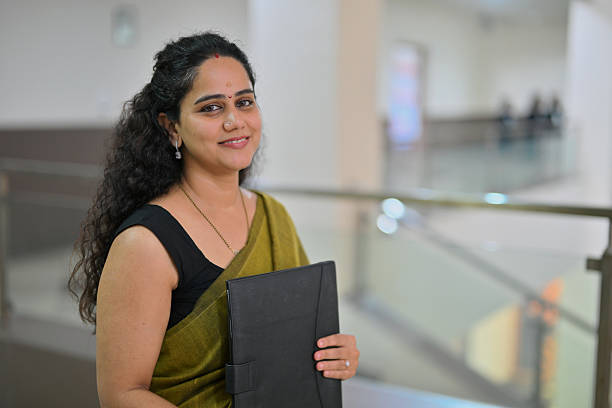
Senior Teacher (Mid-Senior Level)

Senior Teacher (Mid-Senior Level)

Mid-to-senior-level professionals who handle advanced classes, mentor junior staff, and contribute to curriculum development. They provide...

0.0LPA

Interested in this career?

Take the next step and explore more about Teaching.