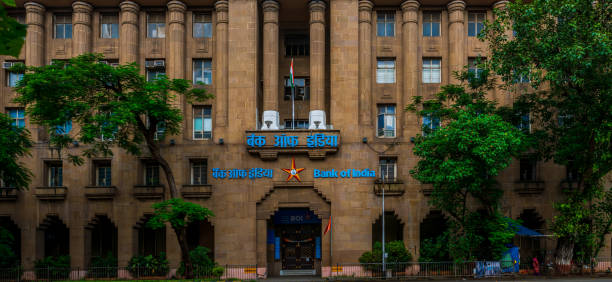
State Civil Services Officer

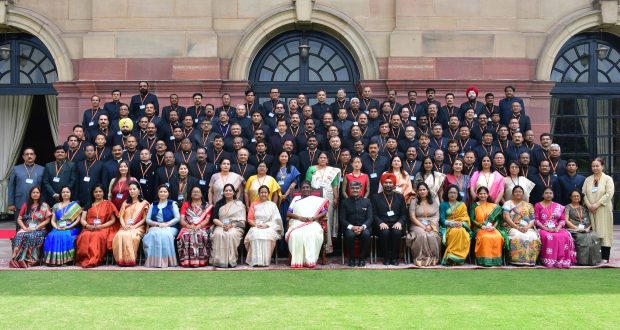
A State Civil Services Officer is a professional dedicated to serving in various administrative, executive, and judicial roles at the state level under the Government of India, implementing policies, managing public services, and ensuring governance at the grassroots level. They work in sectors such as revenue administration, law enforcement, public welfare, and rural development, collaborating with senior bureaucrats, local leaders, and other government officials. State Civil Services Officers play a critical role in driving governance and public welfare in a country focused on equitable development, policy implementation, and citizen-centric administration.
Share :
Career tree mind map (horizontal) — State Civil Services Officer
Colored branches, hub circles, and underlined topics — same style as counselor course classic (types 18–19 in admin).
Loading mind map…

State Civil Services Officers are administrative professionals responsible for executing state government policies, managing public resources, and addressing challenges like poverty, infrastructure development, and law enforcement at the district or sub-district level. Their role involves decision-making, field inspections, and public interaction, often working in settings such as district collectorates, tehsil offices, or state secretariats. They combine expertise in governance, legal frameworks, and public administration to tackle issues like bureaucratic delays, resource allocation, and social inequality. As key contributors to societal advancement, they help state governments and communities thrive in an era prioritizing inclusive growth, transparency, and effective public service delivery.

  • Policy Implementation and Administration
    • Implement state and central government policies at the district or sub-district level to ensure effective governance.
    • Oversee the execution of welfare schemes, infrastructure projects, and development programs for public benefit.
  • Revenue and Land Administration
    • Manage revenue collection, land records, and property disputes as part of district administration duties.
    • Conduct surveys and inspections to ensure accurate documentation and resolution of land-related issues.
  • Law and Order Maintenance
    • Coordinate with police and other agencies to maintain law and order during elections, festivals, or emergencies.
    • Act as executive magistrates to handle legal matters, public grievances, and crisis situations.
  • Public Welfare and Development
    • Supervise the delivery of public services like education, healthcare, and sanitation in rural and urban areas.
    • Address citizen grievances and ensure equitable distribution of government benefits and subsidies.
  • Disaster Management
    • Lead relief and rehabilitation efforts during natural calamities like floods, droughts, or earthquakes.
    • Coordinate with NGOs, local bodies, and state agencies for emergency response and recovery operations.
  • Cross-Departmental Coordination
    • Work across departments such as education, health, and agriculture to ensure integrated development in their jurisdiction.
    • Facilitate communication between local bodies and state government for policy alignment and resource allocation.
  • Monitoring and Reporting
    • Monitor the progress of government schemes and projects, ensuring compliance with guidelines and timelines.
    • Prepare detailed reports on administrative activities, challenges, and outcomes for state government review.
  • Community Engagement and Conflict Resolution
    • Engage with local communities to understand their needs, mediate disputes, and promote social harmony.
    • Organize public hearings and grievance redressal camps to address citizen concerns directly.

Route Steps
Route 1

1. 10+2 in any stream (Science/Commerce/Arts).

2. Bachelor’s degree in any discipline from a recognized university (3-5 years).

3. Prepare for state civil services exams conducted by State Public Service Commissions (1-2 years).

4. Clear preliminary, mains, and interview stages to secure entry-level roles like Deputy Collector or Tehsildar (1-2 years).

Route 2

1. 10+2 in any stream (Science/Commerce/Arts).

2. Bachelor’s degree in any discipline from a recognized university (3-5 years).

3. Pursue optional diploma or certificate courses in public administration or governance (6 months-1 year, optional).

4. Prepare for and clear state civil services exams conducted by State Public Service Commissions (1-2 years).

5. Join as a State Civil Services Officer in administrative or executive roles.

Route 3

1. 10+2 in any stream (Science/Commerce/Arts).

2. Bachelor’s degree in any discipline from a recognized university (3-5 years).

3. Master’s degree in Public Administration, Political Science, or related field (2 years, optional).

4. Prepare for state civil services exams through self-study or coaching (1-2 years).

5. Secure a position as a State Civil Services Officer after clearing all exam stages.

Route 4

1. 10+2 in any stream (Science/Commerce/Arts).

2. Bachelor’s degree in any discipline from a recognized university (3-5 years).

3. Join coaching institutes for structured preparation for state civil services exams (1-2 years).

4. Gain practical exposure through voluntary work or local governance projects (6 months-1 year, optional).

5. Clear state civil services exams and start as a State Civil Services Officer in various state departments.

  • Voluntary work with NGOs or local government bodies for real-world insights into public administration and community issues.
  • Participation in field surveys or data collection projects under district administration for hands-on governance experience.
  • Internships with state government departments or public welfare organizations for exposure to policy implementation.
  • Observerships during state-sponsored development programs or disaster management drills for insights into administrative coordination.
  • Engagement in student-led governance initiatives or mock parliaments for practical skill development in leadership and decision-making.
  • Training through government schemes like internships at district collectorates for understanding bureaucratic processes.
  • Exposure to rural development projects or Gram Panchayat activities for grassroots-level administrative experience.
  • Fieldwork on public health or education campaigns to understand citizen needs and government service delivery.
  • Community outreach programs to engage with local issues like sanitation or literacy and build problem-solving skills.
  • Participation in state-level workshops or seminars on governance for exposure to policy-making and administrative challenges.

  • Certificate in Public Administration
  • Bachelor’s in Public Administration, Political Science, or History
  • Master’s in Public Administration (MPA) or Political Science
  • Diploma in Governance and Public Policy
  • Specialization in State-Specific Administrative Laws
  • Certificate in Disaster Management
  • Workshops on Rural Development and Panchayati Raj
  • Training in Public Grievance Redressal Systems
  • Specialization in Revenue and Land Administration
  • Certificate in Ethics and Integrity in Public Service

Institute Course/Program Official Link
Chanakya IAS Academy, Delhi Civil Services Coaching https://chanakyaiasacademy.com/
Vajiram & Ravi, Delhi Civil Services Coaching https://www.vajiramandravi.com/
Rau’s IAS Study Circle, Delhi Civil Services Coaching https://www.rauias.com/
Drishti IAS, Delhi Civil Services Coaching https://www.drishtiias.com/
ALS IAS Academy, Delhi Civil Services Coaching https://www.alsias.net/
Vision IAS, Delhi Civil Services Coaching https://visionias.in/
Shankar IAS Academy, Chennai Civil Services Coaching https://www.shankariasacademy.com/
KSG India (Khan Study Group), Delhi Civil Services Coaching https://www.ksgindia.com/
Unacademy, Bangalore (Online Platform) Civil Services Coaching https://unacademy.com/
BYJU’S IAS, Bangalore (Online Platform) Civil Services Coaching https://byjus.com/ias/

India:

  • State Public Service Commission Exams (e.g., UPPSC, MPPSC, RPSC): Conducted by respective state commissions for recruitment to state civil services (Prelims, Mains, Interview).
  • Combined Competitive Examination (CCE) by State PSCs: For states like Bihar (BPSC), Jharkhand (JPSC), etc., to select candidates for various administrative posts.
  • Tamil Nadu Public Service Commission (TNPSC) Group I Exam: For recruitment to top state civil services roles in Tamil Nadu.
  • Maharashtra Public Service Commission (MPSC) State Services Exam: For administrative positions in Maharashtra state government.
  • Karnataka Administrative Service (KAS) Exam by KPSC: For recruitment to state civil services in Karnataka.

Note: Eligibility criteria such as age limits (generally 21-32 years with relaxations for reserved categories) and number of attempts vary by state. Candidates must check specific state PSC notifications for details.

Assistant State Civil Services Officer → State Civil Services Officer → Senior State Civil Services Officer → Deputy Collector/Tehsildar → Sub-Divisional Magistrate (SDM) → District Magistrate (DM)/Collector → Divisional Commissioner → Secretary (State Government) → Academician/Policy Consultant

  • Revenue administration for managing land records, tax collection, and property dispute resolution at state level.
  • Rural development for implementing welfare schemes, infrastructure projects, and poverty alleviation programs.
  • Law and order for coordinating with police and local bodies to maintain public safety and legal compliance.
  • Public health and education for supervising state-run schools, hospitals, and sanitation initiatives in districts.
  • Disaster management for leading relief operations and rehabilitation during natural or man-made crises.
  • Urban development for overseeing municipal services, housing schemes, and smart city projects in state jurisdictions.
  • Agriculture and irrigation for managing state schemes for farmers, water resources, and rural productivity.
  • Social welfare for ensuring delivery of subsidies, pensions, and benefits to marginalized communities.
  • State secretariats for policy formulation, inter-departmental coordination, and administrative oversight.
  • Election management for conducting free and fair elections at state and local levels under state election commissions.

India (State Governments and Departments)

  • Uttar Pradesh State Government (UPPSC), Lucknow
  • Madhya Pradesh State Government (MPPSC), Bhopal
  • Rajasthan State Government (RPSC), Jaipur
  • Tamil Nadu State Government (TNPSC), Chennai
  • Maharashtra State Government (MPSC), Mumbai
  • Karnataka State Government (KPSC), Bangalore
  • Bihar State Government (BPSC), Patna
  • West Bengal State Government (WBPSC), Kolkata
  • Andhra Pradesh State Government (APPSC), Vijayawada
  • Telangana State Government (TSPSC), Hyderabad

Pros Cons
Direct impact on society through implementing policies that transform public welfare and governance High-pressure role due to accountability for public issues and tight deadlines in crisis situations
Job security and prestige due to stable government employment and societal respect Challenges in addressing bureaucratic delays, resource shortages, and political interference
Opportunity to contribute to grassroots development in education, health, and infrastructure Emotional stress from handling public grievances, law and order issues, or disaster response failures
Varied career paths in administration, revenue, law enforcement, and state policy-making Frequent transfers and postings to remote or challenging areas with limited facilities
Potential for societal change through inclusive schemes for marginalized communities and rural upliftment Limited immediate visibility of impact, as policy outcomes often take years to materialize

Career Level India (₹ per annum)
Assistant State Civil Services Officer (Early Career) 5,00,000 - 7,00,000
State Civil Services Officer 7,00,000 - 9,00,000
Senior State Civil Services Officer 9,00,000 - 12,00,000
Deputy Collector/Tehsildar/Sub-Divisional Magistrate (SDM) 12,00,000 - 15,00,000
District Magistrate (DM)/Collector/Divisional Commissioner/Secretary (State Government)/Academician/Policy Consultant 15,00,000 - 25,00,000+

Note: Salaries may vary based on state, seniority, postings, and additional allowances (e.g., HRA, DA). Figures are updated estimates based on current pay scales under the 7th Pay Commission as of 2025, reflecting revisions, inflation, and state-specific variations for State Civil Services Officers in India. Data is sourced from government notifications, state PSC reports, and public sector trends. These are approximations and may differ based on real-time policy changes or state-specific rules.

  • E-Governance Platforms (e.g., e-District, NIC Portal) for managing public services and digital records.
  • Document Management Systems (e.g., e-Office by NIC) for drafting and storing administrative reports.
  • Data Analysis Tools (e.g., MS Excel, Tableau) for monitoring scheme progress and resource allocation.
  • Geographic Information Systems (GIS) (e.g., QGIS, Bhuvan) for land surveys and disaster mapping.
  • Public Grievance Portals (e.g., CPGRAMS, state-specific portals) for addressing citizen complaints online.
  • Project Management Tools (e.g., Trello, MS Project) for tracking government projects and timelines.
  • Communication Platforms (e.g., WhatsApp for Business, NIC Email) for coordinating with teams and citizens.
  • Election Management Software (e.g., ECI Portals) for conducting and monitoring state and local elections.
  • Training Platforms (e.g., iGOT Karmayogi) for continuous learning and skill development in governance.

  • Indian Institute of Public Administration (IIPA), Delhi
  • All India Services Officers’ Association
  • State Civil Services Officers’ Associations (State-Specific, e.g., UPPCS Association)
  • National Academy of Administration (LBSNAA), Mussoorie (for training and networking)
  • Association of State Training Institutions (ASTI), India
  • Indian Administrative Service (IAS) and Allied Services Network (for mentorship)
  • Public Administration Research and Training Network (PARTN), India
  • State Administrative Training Institutes (e.g., ATI West Bengal, HCM RIPA Rajasthan)
  • Governance and Public Policy Forum, India
  • Civil Services Training Network, India

  • Tina Dabi (Contemporary, Rajasthan): IAS officer, known for topping UPSC and exemplary district administration. Her vision drives governance. Her leadership builds trust. She shaped public welfare in Rajasthan.
     
  • Armstrong Pame (Contemporary, Manipur): IAS officer, known for building roads in remote areas. His strategies uplift communities. His leadership inspires change. He redefined grassroots development in Manipur.
     
  • Sasikanth Senthil (Contemporary, Tamil Nadu/Karnataka): Former IAS officer, known for innovative governance. His work builds efficiency. His leadership drives impact. He influenced administrative reforms in South India.
     
  • Divya Devarajan (Contemporary, Uttar Pradesh): IAS officer, known for rural development initiatives. Her vision shapes welfare. Her leadership inspires innovation. She reshapes governance in UP districts.
     
  • Awanish Kumar Awasthi (Contemporary, Uttar Pradesh): IAS officer, known for crisis management and policy execution. His initiatives drive progress. His leadership builds trust. He advanced governance in UP.
     
  • Durga Shakti Nagpal (Contemporary, Uttar Pradesh): IAS officer, known for tackling illegal mining and public service. Her vision transforms administration. Her leadership drives reform. She influenced governance standards in UP.
     
  • Ritu Maheshwari (Contemporary, Uttar Pradesh): IAS officer, known for smart city and urban development projects. Her strategies shape infrastructure. Her leadership builds impact. She advanced urban governance in India.
     
  • Ashok Khemka (Contemporary, Haryana): IAS officer, known for integrity and exposing corruption. His work enables transparency. His leadership inspires ethics. He reshaped administrative accountability in Haryana.
     
  • Smita Sabharwal (Contemporary, Telangana): IAS officer, known for public welfare and digital governance. Her vision pioneers change. Her leadership drives progress. She influenced citizen-centric reforms in Telangana.
     
  • Anu Kumari (Contemporary, Haryana): IAS officer, known for topping UPSC and effective district management. Her platform uplifts society. Her leadership inspires youth. She advanced governance in Haryana.
     

  • Build a strong foundation in general studies, current affairs, and state-specific knowledge to excel in competitive exams.
  • Seek early exposure to governance or public service through voluntary work to confirm interest in the field.
  • Prepare thoroughly for state PSC exams with a focus on prelims, mains, and interview stages for selection.
  • Pursue structured coaching or self-study plans to gain expertise in public administration and policy issues.
  • Stay updated on national and state-specific policies, schemes, and current events through newspapers and government portals.
  • Develop hands-on skills in problem-solving, decision-making, and public interaction through community engagement.
  • Engage in rural or urban development projects to build real-world experience in addressing citizen needs.
  • Join professional forums like the Indian Institute of Public Administration for resources and networking.
  • Work on analytical and ethical skills to ensure impactful governance solutions and public trust.
  • Explore state-specific administrative challenges for exposure to local governance structures and cultural nuances.
  • Volunteer in local governance or NGO initiatives to understand public service delivery and societal impacts.
  • Cultivate adaptability to handle diverse postings, challenging environments, and evolving policy requirements.
  • Attend state-sponsored training or workshops to stay abreast of new governance tools and legal frameworks.
  • Build a network with current officers, mentors, and peers for guidance and collaborative learning opportunities.
  • Develop resilience to manage the high-pressure demands and complex challenges of public administration.
  • Balance administrative precision with empathy to drive governance impact and adapt to societal changes.

A career as a State Civil Services Officer offers a unique opportunity to contribute to societal progress by implementing policies that transform public welfare and governance across diverse regions of India. From managing revenue administration to leading disaster response, State Civil Services Officers play a pivotal role in grassroots governance and citizen-centric development. This field combines expertise in public administration, legal knowledge, and a commitment to societal advancement, offering diverse paths in revenue, law enforcement, welfare, and state policy-making. For those passionate about shaping the future of state governance, adapting to dynamic challenges, and addressing critical public needs in an era of increasing focus on inclusive growth, a career as a State Civil Services Officer provides an intellectually stimulating and professionally rewarding journey with the potential to make significant contributions to society by advancing equitable development, transparency, and effective service delivery across India.
Knowledge & Skills You Will Learn
1
Rural Development Focus: Growing emphasis on rural upliftment schemes in India, necessitating expertise in grassroots governance.
2
Administrative Talent Demand: High demand for skilled state civil services officers in India, pushing for competitive recruitment.
3
Skill Development Needs: Demand for training in digital tools, crisis management, and public policy for future officers.
Assistant State Civil Services Officer

Assistant State Civil Services Officer

Entry-level officers assist senior administrators in policy implementation and public service delivery, often in state departments like revenue or...

0.0LPA
State Civil Services Officer

State Civil Services Officer

Mid-level officers handle independent administrative roles, employed by state governments in positions like Block Development Officer (BDO) or...

0.0LPA
Senior State Civil Services Officer

Senior State Civil Services Officer

Experienced officers lead larger administrative units or specialized departments in state government roles like Deputy Director or Joint...

0.0LPA

Interested in this career?

Take the next step and explore more about State Civil Services Officer.