State Administrative Service (SAS)

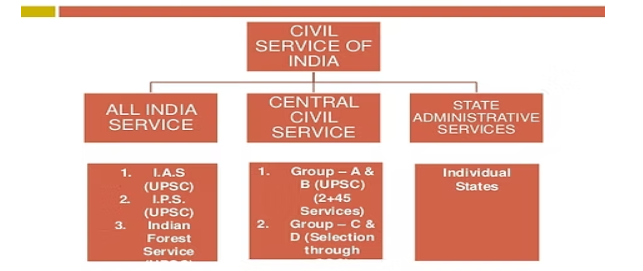
The State Administrative Service (SAS) is a prestigious civil service under various state governments in India, categorized as a Group A or Group B service depending on the state. SAS officers are responsible for the administration, policy implementation, and governance at the state and district levels, ensuring the effective delivery of public services and development programs. With India’s focus on decentralized governance—evident in initiatives like the Aspirational Districts Programme and a growing emphasis on state-specific schemes like Tamil Nadu’s Kalaignar Magalir Urimai Thittam (2023) or Maharashtra’s Ladki Bahin Yojana (2024)—the demand for competent SAS officers remains crucial. Rooted in public administration, law, and socio-economic development principles, and driven by modern trends such as e-governance, data-driven decision-making, and citizen-centric services, this career is central to India’s governance framework. SAS professionals play a vital role in state secretariats, district administrations, and various departments, contributing to policy execution, public welfare, and developmental projects. This career drives progress through trends like digital administration, sustainable development goals (SDGs), and inclusive governance.
Share :
Career tree mind map (horizontal) — State Administrative Service (SAS)
Colored branches, hub circles, and underlined topics — same style as counselor course classic (types 18–19 in admin).
Loading mind map…

State Administrative Service officers work in diverse environments, including state capitals, district headquarters, rural blocks, and field offices across their respective states. They collaborate with central government officials, local bodies, NGOs, and citizens within the state governance ecosystem. Their roles include managing government schemes, ensuring law and order, overseeing development projects, and addressing challenges like bureaucratic inefficiencies, resource constraints, and public grievances. They face issues such as political pressure, the need to balance diverse stakeholder interests, and adapting to evolving governance technologies amidst increasing public expectations. By leveraging expertise in administration, policy analysis, and interpersonal skills, they ensure effective governance and public service delivery. As key contributors to state-level progress, they propel development through trends like smart governance, participatory planning, and digital service delivery.

  • Policy Implementation and Monitoring
    • Execute state and central government policies and schemes at the district and block levels, such as MGNREGA or state-specific welfare programs.
    • Monitor the progress of development projects and ensure targets are met as per state guidelines.
  • District and Block Administration
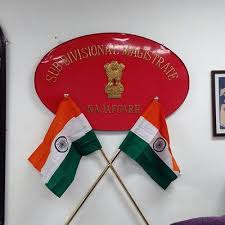
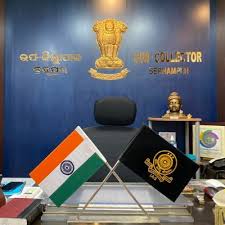
    • Serve as Sub-Divisional Magistrates (SDMs), Block Development Officers (BDOs), or District Collectors (in some states after promotion), managing local governance.
    • Oversee land revenue, law and order, and disaster management activities in their jurisdiction.
  • Public Service Delivery
    • Ensure the effective delivery of public services like health, education, and sanitation through coordination with relevant departments.
    • Address citizen grievances through public hearings, online portals, and field visits to ensure accessibility and accountability.
  • Development Project Management
    • Plan and supervise infrastructure and welfare projects, such as rural roads, schools, or housing under state budgets or central schemes.
    • Collaborate with local bodies like Panchayati Raj Institutions (PRIs) for grassroots implementation.
  • Law and Order Maintenance
    • Assist in maintaining public safety and order, especially during elections, festivals, or emergencies, under the guidance of senior officials.
    • Act as magistrates to handle legal disputes, issue orders, and ensure compliance with state laws.
  • Budget and Resource Management
    • Prepare and manage budgets for district or block-level projects under state funding allocations.
    • Optimize resource utilization, including manpower and materials, for efficient governance and project execution.
  • Stakeholder Coordination and Issue Resolution
    • Collaborate with state departments, elected representatives, and community leaders to align governance with local needs.
    • Resolve public disputes, inter-departmental conflicts, and administrative bottlenecks through dialogue and policy adherence.
  • Environmental and Regulatory Compliance
    • Ensure developmental activities comply with environmental regulations under state and central laws like the Environment Protection Act, 1986.
    • Promote sustainable practices such as waste management and renewable energy adoption at the local level.
  • Training and Capacity Building
    • Train subordinate staff and local officials in governance practices, digital tools, and public service delivery mechanisms.
    • Stay updated on state policies and global governance trends through training at state administrative training institutes.

Route Steps
Route 1: Undergraduate Degree with State PSC Exam 1. Complete 10+2 in any stream with minimum passing marks.
2. Pursue a Bachelor’s degree in any discipline (Arts/Science/Commerce) (3-4 years).
3. Prepare for and clear the State Public Service Commission (PSC) Exam (varies by state, e.g., UPPSC, MPSC) with SAS as preference.
4. Undergo training at state training institutes (e.g., ATI Maharashtra), starting as Assistant Collector or equivalent.
Route 2: Postgraduate Degree with State PSC Exam 1. Complete a Bachelor’s degree in any discipline.
2. Pursue a Master’s degree in Public Administration, Law, or related fields (1-2 years) for deeper expertise.
3. Clear the State PSC Exam with SAS as preferred service.
4. Join SAS after training at state institutes.
Route 3: Specialized Degree with State PSC Exam 1. Complete 10+2 in any stream with minimum 50-60% marks.
2. Pursue a specialized degree like LLB, B.A. in Public Administration, or Sociology (3-5 years).
3. Prepare for and clear the State PSC Exam with SAS as choice.
4. Start SAS career post-training.
Route 4: Diploma to Degree with State PSC Exam (Limited Scope) 1. Complete 10+2 in any stream.
2. Pursue a Diploma in relevant fields (if applicable), followed by a lateral entry to a Bachelor’s program.
3. Clear the State PSC Exam opting for SAS.
4. Begin SAS career after training.
Route 5: Lower-Level State Services to SAS (Limited Scope) 1. Hold a Bachelor’s degree in any discipline.
2. Join lower-level state services through state PSC exams (e.g., clerical or junior roles).
3. Gain experience and attempt promotion to SAS through departmental exams or seniority.
4. Transition to SAS roles after selection and training.

  • Exposure through internships with state government departments, district collectorates, or NGOs for insights into public administration.
  • Training in policy implementation and grievance redressal through observerships at district or block offices during preparation or post-selection.
  • Participation in mock administrative scenarios or case studies at coaching institutes to simulate real-world governance challenges for PSC exam preparation.
  • Observerships with state welfare projects or rural development initiatives to understand grassroots governance challenges.
  • Involvement in public service audits or citizen engagement programs for practical understanding of operational dynamics.
  • Exposure to digital governance tools like e-office systems or public service portals during training at state institutes or through online platforms.
  • Workshops on disaster management, e-governance, and public policy for operational readiness.
  • Volunteer roles in government initiatives like Swachh Bharat Abhiyan or state-specific welfare schemes to apply theoretical knowledge and build networks.
  • Collaborative projects with peers during training to tackle real-world challenges like rural development or public health crises.

  • Bachelor’s Degree in any discipline (B.A./B.Sc./B.Com.) for eligibility to appear in State PSC exams.
  • Master’s Degree in Public Administration, Sociology, or Law for advanced expertise in governance and policy.
  • Professional Certifications like Certificate in Public Administration or e-Governance Training for domain-specific advantages in service.
  • Specializations in Rural Development, Social Work, or Political Science during higher studies.
  • Short-term courses on State Policies, Public Service Delivery, and Digital Governance for PSC preparation.
  • Training in Digital Tools like e-office software, data management systems, and grievance redressal platforms through online platforms or state institutes.
  • Certifications like IGNOU’s Diploma in Public Administration or courses from state training academies for administrative knowledge.

India:

  • State Public Service Commission (PSC) Exams: Mandatory for entry into SAS, consisting of Preliminary (objective), Mains (descriptive), and Interview (personality test) stages; conducted annually by respective state PSCs (e.g., UPPSC PCS, MPSC State Services Exam, TNPSC Group I). Ranking and preference determine allocation to SAS.
  • Lower-Level State Service Exams: For entry into junior state services, which can be a pathway to SAS through promotion or departmental exams (limited scope).
  • University-Specific Tests for Academic Programs: Some institutes like JNU or TISS conduct entrance exams for relevant postgraduate programs.

Assistant Collector/SDM/BDO (Entry Level) → Deputy Collector/Additional District Magistrate (Early Level) → Joint Secretary/Director in State Secretariat (Early-Mid Level) → District Collector/District Magistrate (Mid-Level) → Divisional Commissioner (Mid-Senior Level) → Secretary in State Government (Senior Level) → Principal Secretary/Chief Secretary (Apex Level, in some states)

  • State Secretariats: Policy formulation, coordination, and advisory roles in state capitals.
  • District Administration: Governance, law and order, and development project oversight as District Collectors or SDMs.
  • Block and Tehsil Offices: Grassroots administration and scheme implementation as BDOs or Tehsildars.
  • State Departments: Management of portfolios like education, health, agriculture, or public works in state secretariats.
  • Revenue and Land Records: Handling land disputes, revenue collection, and property records at district and sub-district levels.
  • Disaster Management Units: Coordination of relief and rehabilitation during natural calamities or emergencies.
  • Election Offices: Supervision of electoral processes and voter registration during state and national elections.
  • Urban Local Bodies (on deputation): Administrative support for municipal corporations or urban development projects.
  • Rural Development Agencies: Implementation of rural welfare schemes like MGNREGA or PMAY-G in collaboration with PRIs.
  • State Public Service Commissions (senior roles): Advisory or administrative roles in recruitment and policy for state services.

India (Government Bodies/Organizations) Key Roles/Areas
State Public Service Commissions (e.g., UPPSC, MPSC, TNPSC) Recruitment and Selection for SAS
State Governments (e.g., Uttar Pradesh, Maharashtra, Tamil Nadu) Policy Formulation and Governance Oversight
District Collectorates, Nationwide District-Level Administration and Development
State Administrative Training Institutes (e.g., ATI Mumbai, UPAAM Lucknow) SAS Training in Public Administration
State Disaster Management Authorities Crisis Management and Relief Coordination
State Election Commissions Electoral Process Management
Panchayati Raj Departments Rural Governance and Development Schemes
State Urban Development Departments Urban Planning and Municipal Administration
State Revenue Departments Land Records and Revenue Collection
State Welfare Departments (e.g., Women & Child Development) Implementation of Social Welfare Schemes

Pros Cons
High societal impact through direct public service and development initiatives High stress due to political pressure and public scrutiny
Prestigious state government role with job security and benefits like pension Frequent transfers and postings, often to remote areas
Diverse responsibilities across administration, policy, and crisis management Bureaucratic delays and resource constraints can hinder progress
Opportunity to work on state-specific flagship schemes and grassroots projects Work-life balance issues due to long hours and emergency duties
Contribution to inclusive governance through citizen-centric policies Risk of criticism during governance failures or public unrest

Career Level (SAS - Public Sector) India (₹ per annum, Approx., varies by state)
Assistant Collector/SDM/BDO (Entry Level) 5,00,000 - 7,00,000 (including allowances)
Deputy Collector/Additional DM (Early Level) 7,00,000 - 9,00,000
Joint Secretary/Director (Early-Mid Level) 9,00,000 - 12,00,000
District Collector/DM (Mid-Level) 12,00,000 - 15,00,000
Divisional Commissioner (Mid-Senior Level) 15,00,000 - 18,00,000
Secretary in State Government (Senior Level) 18,00,000 - 22,00,000
Principal Secretary/Chief Secretary (Apex Level, in some states) 22,00,000 - 25,00,000+
Note: Salaries include basic pay, dearness allowance (DA), house rent allowance (HRA), and other benefits; they vary based on state pay scales, posting location, and seniority.  

  • E-Governance Platforms: State-specific portals like e-District (UP), e-Seva (AP), or MahaOnline (Maharashtra) for service delivery.
  • Project Management Tools: MS Project or state-specific monitoring dashboards for tracking scheme progress and budgets.
  • Data Analysis Software: Excel, Tableau, or state data portals for socio-economic analysis and policy planning.
  • Grievance Redressal Systems: Tools like CM Helpline (UP) or state grievance portals for public complaint management.
  • GIS and Mapping Tools: ArcGIS or state GIS platforms for development planning and disaster mapping.
  • Legal Databases: Access to state laws, revenue codes, and policy guidelines for administrative reference.
  • Policy and Plan Reports: State Five-Year Plans, budget documents, and welfare scheme guidelines for operational updates.
  • Training Modules: Resources from state ATIs or LBSNAA for skill development in public administration practices.
  • Current Affairs Resources: Newspapers (The Hindu, Indian Express) and state government portals for policy and governance news.
  • Citizen Engagement Tools: Social media and state apps for public outreach and feedback collection.

  • State Administrative Service Associations (state-specific, e.g., UP SAS Association, Maharashtra SAS Association), India.
  • State Government Networks (e.g., UP Government, Tamil Nadu Government), India.
  • State Administrative Training Institute Alumni (e.g., ATI Mumbai, UPAAM Lucknow), India.
  • Indian Institute of Public Administration (IIPA), India.
  • National Institute of Rural Development and Panchayati Raj (NIRDPR), India.
  • State Disaster Management Authority Networks, India.
  • State Election Commission Networks, India.
  • Confederation of Indian Industry (CII) Governance Forums, India.
  • Federation of Indian Chambers of Commerce & Industry (FICCI) Public Policy Networks, India.

  • Durga Shanker Mishra (India, 1961-): Former UP SAS officer, later IAS, known for urban governance reforms in UP. His policies improved infrastructure. His impact uplifted cities.
     
  • Anita Bhatnagar Jain (India, 1963-): Former UP SAS officer, contributed to education and women welfare schemes. Her initiatives empowered communities. Her impact enhanced access.
     
  • Sanjay Agarwal (India, 1965-): Former UP SAS officer, focused on rural development and MGNREGA implementation. His efforts boosted livelihoods. His impact supported farmers.
     
  • Deepak Trivedi (India, 1959-): Former UP SAS officer, played a key role in disaster management during floods. His strategies saved lives. His impact ensured safety.
     
  • Rajesh Bhushan (India, 1962-): Former Bihar SAS officer, later IAS, instrumental in health policy execution at state level. His projects improved care. His impact strengthened systems.
     
  • Shivaji Daund (India, 1967-): Maharashtra SAS officer, known for effective implementation of state welfare schemes. His leadership aided delivery. His impact helped beneficiaries.
     
  • K. Shanmugam (India, 1960-): Tamil Nadu SAS officer, contributed to industrial policy execution in the state. His efforts attracted investment. His impact boosted growth.
     
  • Neelam Shammi Rao (India, 1964-): Madhya Pradesh SAS officer, focused on social welfare and tribal development. Her initiatives bridged gaps. Her impact uplifted marginalized groups.
     
  • Ajoy Sharma (India, 1966-): Punjab SAS officer, supported agricultural reforms and farmer welfare schemes. His projects sustained incomes. His impact aided rural areas.
     
  • P. Amudha (India, 1968-): Tamil Nadu SAS officer, played a role in women’s empowerment programs like Kalaignar Magalir Urimai Thittam. Her efforts empowered women. Her impact transformed lives.

  • Build a strong academic foundation in public administration, law, or social sciences for State PSC preparation and governance knowledge.
  • Start State PSC preparation early by studying NCERTs, state-specific policies, and current affairs for exam relevance.
  • Join reputed coaching institutes like Vajiram & Ravi or Chanakya IAS Academy for structured guidance on PSC syllabus.
  • Develop analytical and communication skills by practicing essay writing, case studies, and public policy analysis for PSC Mains.
  • Gain exposure through internships with state departments, district offices, or NGOs to understand real-world administrative challenges.
  • Stay updated on state-specific schemes, governance models, and national policies through state portals and PIB updates.
  • Engage in mock interviews and personality development programs to refine communication skills for the PSC interview stage.
  • Work on administrative planning, grievance redressal, and crisis management skills to handle governance projects and public concerns.
  • Explore lower-level state services as a stepping stone if initial PSC attempts are unsuccessful, aiming for promotion to SAS later.
  • Volunteer in state welfare drives or rural development initiatives to build empathy and understand public service needs.
  • Cultivate resilience to handle high-pressure administrative targets, frequent transfers, and public scrutiny during service.
  • Focus on digital literacy to adapt to e-governance tools, data management systems, and citizen service platforms transforming administration.
  • Attend continuing education programs or workshops at state ATIs to stay abreast of trends like digital governance and sustainable development.
  • Commit to societal impact by aiming to strengthen state governance through transparent, efficient, and inclusive public service delivery.


A career in the State Administrative Service offers a transformative opportunity to shape state-level governance by managing, implementing, and monitoring critical public policies and development initiatives. SAS officers are the backbone of state administration, using their administrative expertise, policy analysis skills, and commitment to build a robust foundation for public welfare, support sustainable growth, and enhance governance across diverse regions. This profession blends a passion for public service with administrative leadership, providing diverse pathways in district governance, policy execution, crisis management, citizen engagement, and beyond. For those passionate about state-level development, driven by a desire to serve communities through effective governance, and eager to navigate the evolving landscape of digital and inclusive administration, becoming an SAS officer is a deeply rewarding journey. It empowers individuals to address critical public needs, maintain administrative integrity, and advance state well-being through the transformative power of responsible, impactful, and accessible governance.
Knowledge & Skills You Will Learn
1
Project management
2
Excellent analytical and Problem-solving skills
3
Exceptional communication skills
4
Adaptability and resilience
5
Attention to Detail
6
Technological Aptitude
7
Team work
8
Effective leadership
9
Administrative Expertise
Assistant Collector/Sub-Divisional Magistrate/Block Development Officer (Entry Level)

Assistant Collector/Sub-Divisional Magistrate/Block Development Officer (Entry Level)

Entry-level SAS officers handling local administration, revenue, and development tasks, focusing on grassroots operations. They build foundational...

0.0LPA
Deputy Collector/Additional District Magistrate (Early Level)

Deputy Collector/Additional District Magistrate (Early Level)

Early-level officers overseeing larger administrative units, focusing on law and order and scheme implementation. They focus on operational...

0.0LPA
Joint Secretary/Director in State Secretariat (Early-Mid Level)

Joint Secretary/Director in State Secretariat (Early-Mid Level)

Early-to-mid-level officers managing state department portfolios, supervising policy execution, and handling audits. They balance oversight roles....

0.0LPA

Interested in this career?

Take the next step and explore more about State Administrative Service (SAS).