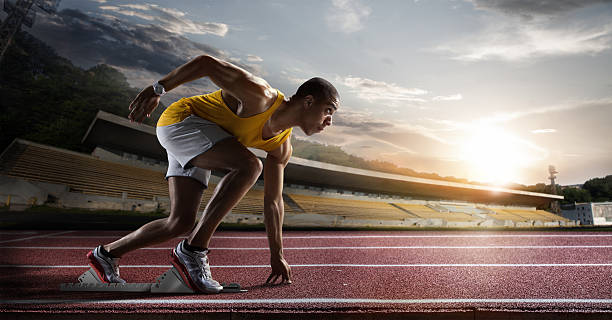
Sports Journalist

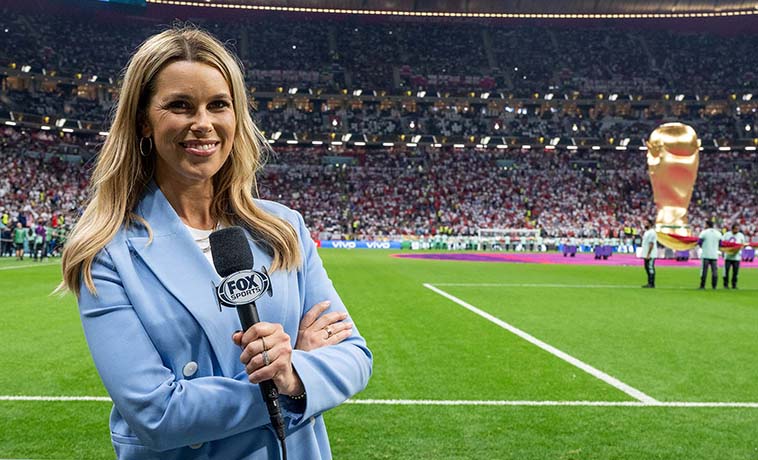
A Sports Journalist is a professional who reports, analyzes, and narrates stories related to sports events, athletes, and industry trends through various media platforms such as print, broadcast, and digital channels. They work for newspapers, magazines, television networks, online platforms, or as freelancers, collaborating with editors, photographers, and sports organizations. Sports Journalists play a crucial role in informing and engaging audiences, shaping public perception, and preserving the cultural impact of sports in a field driven by storytelling, technology, and real-time updates.
Share :
Career tree mind map (horizontal) — Sports Journalist
Colored branches, hub circles, and underlined topics — same style as counselor course classic (types 18–19 in admin).
Loading mind map…

Sports Journalists are dynamic and inquisitive professionals who operate in fast-paced environments like stadiums, press conferences, or newsrooms, using tools such as recording devices, content management systems, and social media platforms. Their role involves covering live events, conducting interviews, and crafting compelling narratives, often facing challenges like tight deadlines or access restrictions. They combine expertise in writing, research, and sports knowledge to deliver accurate and engaging content. As key contributors to the media and sports industries, they help shape the future of fan engagement, digital storytelling, and sports culture in a sector increasingly driven by multimedia, data journalism, and global connectivity.

  • Event Coverage and Reporting
    • Attend sports events to provide live updates, match reports, and post-game analysis.
    • Capture key moments, statistics, and player performances for accurate storytelling.
  • Interviewing and Research
    • Conduct interviews with athletes, coaches, and industry insiders for in-depth stories.
    • Research historical data, team records, and trends to provide context in reporting.
  • Content Creation Across Platforms
    • Write articles, blogs, or scripts for print, online, or broadcast media.
    • Produce multimedia content like videos, podcasts, or social media posts to engage audiences.
  • Analysis and Commentary
    • Offer expert opinions on game strategies, player form, or sports controversies.
    • Break down complex sports data or trends for accessible audience understanding.
  • Breaking News and Updates
    • Report on breaking news such as transfers, injuries, or major announcements in real-time.
    • Use social media to deliver instant updates and interact with followers.
  • Ethical Journalism and Fact-Checking
    • Ensure accuracy and fairness in reporting while adhering to journalistic ethics.
    • Verify sources and data to maintain credibility and avoid misinformation.
  • Collaboration with Media Teams
    • Work with editors, photographers, and producers to create polished, cohesive content.
    • Coordinate with marketing teams for audience engagement strategies or campaigns.
  • Special Features and Investigative Reporting
    • Develop long-form features on athletes’ personal stories or cultural sports phenomena.
    • Investigate issues like doping, corruption, or inequality within the sports industry.

Route Steps
Route 1

1. 10+2 in any stream

2. Certificate or Diploma in Journalism or Sports Journalism (6 months-1 year)

3. Internship at media houses or sports websites

4. Practice as Junior Sports Reporter

Route 2

1. 10+2 in any stream

2. Bachelor’s degree in Journalism, Mass Communication, or Media Studies (3 years)

3. Internship or entry-level role in sports media

4. Work as Sports Journalist or Beat Reporter

Route 3

1. 10+2 in any stream

2. Bachelor’s degree in Journalism or Mass Communication (3 years)

3. Master’s degree in Sports Journalism or Media Management (2 years)

4. Gain experience through freelance or staff roles

5. Work as Senior Sports Journalist or Editor

Route 4

1. 10+2 in any stream

2. Bachelor’s degree in English, Communications, or related field (3 years)

3. Postgraduate Diploma in Sports Journalism (1 year)

4. Internship or freelance sports writing

5. Practice as Sports Writer or Columnist

  • Mandatory internships during degree or diploma programs at newspapers, sports channels, or websites for real-world experience.
  • Rotations in event coverage, editing, and digital content teams for hands-on exposure to diverse media tasks.
  • Internships under experienced Sports Journalists for training in interviewing and live reporting.
  • Observerships at sports events or press rooms for applied storytelling insights.
  • Participation in mock newsroom exercises for skill development in deadline-driven reporting.
  • Training in content management systems through real-world projects like publishing match reports.
  • Exposure to live broadcasts during internships for skills in on-air commentary or production.
  • Volunteer roles in local sports coverage or community media to build a portfolio.
  • Community engagement projects for promoting sports awareness through local journalism.
  • International media attachments for global exposure to advanced sports reporting practices.

  • Certificate in Sports Journalism or Media Writing.
  • Diploma in Journalism with a focus on Sports Reporting.
  • Bachelor’s in Journalism, Mass Communication, or Media Studies.
  • Master’s in Sports Journalism, Broadcast Journalism, or Media Management.
  • Specialization in Sports Broadcasting, Digital Sports Media, or Investigative Sports Reporting.
  • Workshops on Sports Data Journalism or Multimedia Storytelling.
  • Training in Live Sports Coverage or Sports Podcasting.
  • Specialization in Athlete Profiling or Sports Business Reporting.
  • Certification in Social Media for Sports Journalism.
  • Short courses in Video Editing for Sports Content Creation.

Institute Course/Program Official Link
Indian Institute of Mass Communication (IIMC), Delhi Diploma/PG Diploma in Journalism https://www.iimc.nic.in/
Symbiosis Institute of Media & Communication (SIMC), Pune MA in Mass Communication (Journalism) https://www.simc.edu/
Xavier Institute of Communications (XIC), Mumbai Diploma in Journalism & Mass Communication https://www.xic.edu/
Asian College of Journalism (ACJ), Chennai PG Diploma in Journalism https://www.asianmedia.org.in/
Manipal Institute of Communication, Manipal BA/MA in Media & Communication https://www.manipal.edu/
Amity School of Communication, Noida BA/MA in Journalism & Mass Communication https://www.amity.edu/
Christ University, Bangalore BA/MA in Media & Communication https://www.christuniversity.in/
Jamia Millia Islamia, AJK Mass Communication Research Centre, Delhi MA in Mass Communication https://www.jmi.ac.in/
Savitribai Phule Pune University, Department of Communication & Journalism MA in Journalism & Mass Communication https://www.unipune.ac.in/
Mudra Institute of Communications (MICA), Ahmedabad PG Diploma in Communication Management https://www.mica.ac.in/

Institution Course Country Official Link
Columbia University, Graduate School of Journalism MA in Journalism with Sports Focus USA https://journalism.columbia.edu/
University of Southern California, Annenberg School for Communication and Journalism MA in Sports Journalism USA https://annenberg.usc.edu/
City, University of London, Department of Journalism MA in Sports Journalism UK https://www.city.ac.uk/
University of Queensland, School of Communication and Arts MA in Journalism with Sports Focus Australia https://www.uq.edu.au/
Cardiff University, School of Journalism, Media and Culture MA in Sports Journalism UK https://www.cardiff.ac.uk/
Northwestern University, Medill School of Journalism MS in Journalism with Sports Media USA https://www.medill.northwestern.edu/
University of Toronto, Faculty of Arts & Science (Journalism Programs) Certificate/BA in Journalism Canada https://www.utoronto.ca/
La Trobe University, Department of Communication and Media MA in Journalism with Sports Focus Australia https://www.latrobe.edu.au/
University of Westminster, School of Media and Communication MA in Sports Journalism UK https://www.westminster.ac.uk/
New York University, Arthur L. Carter Journalism Institute MA in Journalism with Sports Reporting USA https://www.nyu.edu/

India:

  • IIMC Entrance Exam: For admission to Diploma and PG Diploma programs in Journalism at Indian Institute of Mass Communication.
  • SIMC SET (Symbiosis Entrance Test for Media & Communication): For admission to media and journalism programs at Symbiosis Institute of Media & Communication.
  • XIC OET (Xavier Institute of Communications Online Entrance Test): For admission to journalism and mass communication programs at XIC Mumbai.
  • ACJ Entrance Exam (Asian College of Journalism Entrance Test): For admission to PG Diploma in Journalism at ACJ Chennai.
  • Christ University Entrance Test (CUET): For admission to media and journalism programs at Christ University.
  • University-Specific Tests (e.g., JamiaMilliaIslamia Entrance Test): For admission to mass communication programs at specific universities like Jamia Millia Islamia.


International:

  • GRE (Graduate Record Examination): Occasionally required for MA or graduate admissions in Journalism or related fields at universities in the USA, Canada, and other countries.
  • TOEFL (Test of English as a Foreign Language): Minimum score of 80-100 required for non-native speakers applying to programs in English-speaking countries like the USA, Canada, or Australia.
  • IELTS (International English Language Testing System): Minimum score of 6.5-7.0 required for admission to universities in the UK, Australia, and other English-speaking regions for journalism courses.
  • SAT (Scholastic Aptitude Test): Often required for undergraduate admissions in the USA or Canada for programs leading to Journalism or Sports Journalism studies.
  • ACT (American College Testing): Alternative to SAT for undergraduate admissions in the USA for journalism-related programs.
  • Portfolio or Writing Samples: Many international programs require submission of prior work or essays as part of the admission process for journalism courses.

Junior Sports Reporter → Sports Journalist → Senior Sports Journalist → Sports Columnist → Sports Editor → Sports Content Manager → Director of Sports Media → Regional Sports Media Head → Chief Sports Editor → Sports Media Consultant

  • Newspapers and magazines for traditional sports reporting and feature writing.
  • Television networks for live sports commentary, analysis, and broadcast journalism.
  • Online sports portals for digital content creation and real-time updates.
  • Radio stations for play-by-play commentary and sports talk shows.
  • Social media platforms for short-form content and fan engagement.
  • Sports agencies for content partnerships and athlete storytelling.
  • Freelance journalism for independent reporting across multiple outlets.
  • Sports marketing firms for branded content and campaign narratives.
  • Podcasts and streaming platforms for audio-visual sports storytelling.
  • Academic or research roles for sports media analysis and education.

India International
The Times of India, Multiple Locations ESPN, USA
Hindustan Times, Multiple Locations BBC Sport, UK
The Hindu, Multiple Locations Sky Sports, UK
India Today, Multiple Locations Fox Sports, USA
NDTV Sports, Multiple Locations CBS Sports, USA
Star Sports, Multiple Locations NBC Sports, USA
Sony Sports Network, Multiple Locations The Athletic, USA
ESPN Cricinfo India, Digital Platform Bleacher Report, USA
Sportskeeda, Digital Platform Sports Illustrated, USA
Zee News Sports, Multiple Locations Reuters Sports, Global

Pros Cons
Opportunity to combine passion for sports with storytelling Often involves irregular hours, including weekends and late nights
High personal satisfaction in covering iconic sports moments Can face high stress due to tight deadlines and competitive pressure
Rewarding role in the growing sports media industry May require frequent travel to cover events, impacting work-life balance
Diverse career paths across print, broadcast, and digital platforms Risk of burnout due to constant need for fresh content and updates
Strong potential for growth with increasing demand for sports content Uncertainty in job stability, especially for freelancers or startups

Career Level India (₹ per annum) International (USD per annum)
Junior Sports Reporter (Early Career) 2,00,000 - 4,00,000 25,000 - 40,000
Sports Journalist (Mid-Career) 4,00,000 - 8,00,000 40,000 - 60,000
Senior Sports Journalist/Columnist 8,00,000 - 15,00,000 60,000 - 80,000
Sports Editor/Content Manager 15,00,000 - 25,00,000 80,000 - 100,000
Chief Sports Editor/Director 25,00,000+ 100,000+
Note: Salaries may vary based on location, employer, experience, and specialization.    

  • Content Management Systems (CMS) (e.g., WordPress, Drupal) for publishing articles and blogs.
  • Audio Editing Software (e.g., Audacity, Adobe Audition) for podcast production.
  • Video Editing Tools (e.g., Adobe Premiere Pro, Final Cut Pro) for sports highlights or features.
  • Social Media Management Platforms (e.g., Hootsuite, Buffer) for scheduling and engagement.
  • Data Visualization Tools (e.g., Tableau, Google Data Studio) for sports stats and infographics.
  • Writing and Editing Software (e.g., Grammarly, Microsoft Word) for polished content creation.
  • Live Streaming Apps (e.g., OBS Studio) for real-time event coverage or commentary.
  • Transcription Tools (e.g., Otter.ai) for converting interviews into text efficiently.
  • Cloud Collaboration Platforms (e.g., Google Workspace) for team coordination and file sharing.
  • Analytics Tools (e.g., Google Analytics) for tracking audience engagement and content performance.

  • Sports Journalists’ Association (SJA), UK.
  • Associated Press Sports Editors (APSE), USA.
  • International Sports Press Association (AIPS), Global.
  • Indian Sports Journalists Association (ISJA), India.
  • Australian Sports Journalists Association (ASJA), Australia.
  • Canadian Sports Media Association (CSMA), Canada.
  • European Sports Media Union (ESMU), Europe.
  • Asian Sports Journalists Federation (ASJF), Asia.
  • National Sports Media Association (NSMA), USA.
  • World Sports Writers Association (WSWA), Global.

  • John Feinstein (USA): Bestselling author and columnist, known for in-depth sports books and investigative reporting. His work uncovers stories. His impact shapes sports narratives.
     
  • Mike Lupica (USA): Renowned sports columnist for the New York Daily News, blending storytelling with sharp analysis. His columns engage millions. His impact drives print journalism.
     
  • Rachel Nichols (USA): ESPN journalist and host, known for insightful NBA coverage and athlete interviews. Her shows set standards. Her impact boosts broadcast sports media.
     
  • Sid Lowe (UK): Freelance journalist for The Guardian, specializing in Spanish football with cultural depth. His reports bridge cultures. His impact elevates global football coverage.
     
  • HarshaBhogle (India): Iconic cricket commentator and journalist, known for eloquent analysis across TV and print. His voice defines cricket. His impact inspires Indian sports media.
     
  • Boria Majumdar (India): Sports historian and journalist, known for detailed cricket reporting and Olympic coverage. His books document history. His impact enriches sports scholarship.
     
  • Vijay Lokapally (India): Veteran sports writer for The Hindu, covering cricket and other sports with nuanced storytelling. His articles captivate readers. His impact strengthens Indian journalism."
     
  • Martin Samuel (UK): Chief sports writer for The Times, known for provocative columns and football insights. His opinions spark debate. His impact influences sports discourse.
     
  • Sally Jenkins (USA): Washington Post columnist, celebrated for human-interest sports stories and cultural commentary. Her features inspire empathy. Her impact redefines sports writing.
     
  • Jeff Darlington (USA): ESPN NFL reporter, known for breaking news and in-depth player profiles. His scoops lead coverage. His impact drives modern sports reporting.
     

  • Build a strong foundation in writing and communication to craft compelling sports stories.
  • Seek early exposure to media roles through internships to confirm interest in sports journalism.
  • Prepare thoroughly for competitive exams like IIMC Entrance or SIMC SET with structured study plans.
  • Pursue short courses in sports data journalism or multimedia to gain expertise in key areas.
  • Stay updated on industry trends by following platforms like Poynter or Nieman Lab for journalism insights.
  • Develop hands-on skills in event coverage and interviewing through practical reporting assignments.
  • Engage in internships at sports media outlets or local papers for real-world industry experience.
  • Join professional associations like SJA or ISJA for networking and resources.
  • Work on precision in fact-checking and storytelling to ensure credible journalism outcomes.
  • Explore international opportunities for exposure to global sports media standards and practices.
  • Volunteer in local sports coverage or community media to understand diverse audience needs.
  • Cultivate adaptability to handle diverse sports beats and evolving digital media landscapes.
  • Attend continuing education programs to stay abreast of sports media tools and trends.
  • Build a network with athletes, coaches, and media professionals for collaborative storytelling.
  • Develop resilience to manage tight deadlines and the high-pressure demands of live reporting.
  • Balance sports passion with journalistic ethics to adapt to evolving media challenges.

A career as a Sports Journalist offers a profound opportunity to connect fans with the world of sports, driving engagement through compelling narratives and insightful analysis, fostering passion with every story. Sports Journalists are the architects of sports culture, using their skills to inform audiences, address critical issues, and promote connection across diverse platforms. This profession blends creativity with sports enthusiasm, providing pathways in reporting, broadcasting, digital media, and beyond. For those passionate about sports and storytelling, driven by a desire to capture iconic moments, and eager to embrace the evolving landscape of digital tools and global coverage, becoming a Sports Journalist is a deeply rewarding journey. It empowers individuals to shape sports narratives, address critical fan needs, and advance human connection through the transformative power of sports journalism.

Knowledge & Skills You Will Learn
1
Rising Demand:Growing need for Sports Journalists skilled in multimedia and interactive storytelling.
2
Skill Development Needs:Growing necessity for training in video editing and podcasting.
3
Sustainability Focus:Increased efforts to cover eco-friendly sports initiatives and events.
Junior Sports Reporter

Junior Sports Reporter

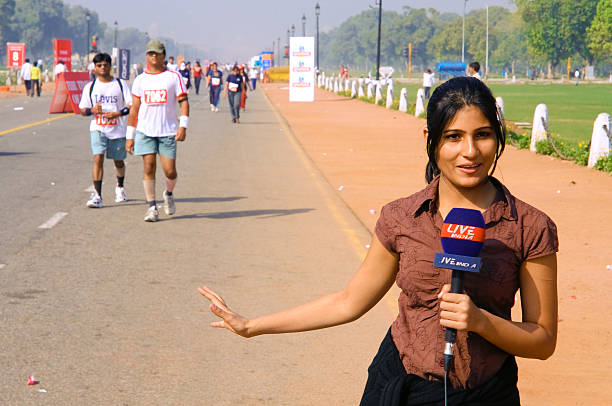
Entry-level individuals who cover local games, write basic match reports, or assist senior journalists with research. They gain initial experience...

0.0LPA
Sports Journalist

Sports Journalist

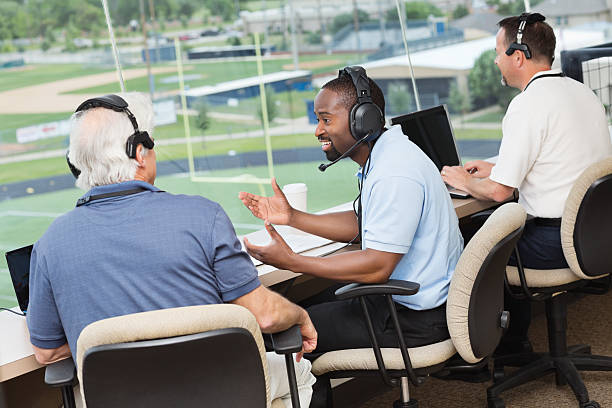
Early-career professionals who report on sports events, conduct interviews, and produce content under editorial guidance. They focus on specific...

0.0LPA

Senior Sports Journalist

Senior Sports Journalist

Mid-level professionals who independently cover major events, write in-depth features, and offer expert analysis. They handle complex stories and...

0.0LPA

Interested in this career?

Take the next step and explore more about Sports Journalist.