Sculptor

Summary

A Sculptor is a creative and technical artist who specializes in creating three-dimensional artworks by shaping materials such as stone, metal, clay, wood, or modern composites. ies such as fine arts, public art, arch...

Share :
✨ Radial Mind Map - Sculptor
Nodes arranged in concentric circles

Loading radial mind map...

Overview

A Sculptor is a creative and technical artist who specializes in creating three-dimensional artworks by shaping materials such as stone, metal, clay, wood, or modern composites. They work in industries such as fine arts, public art, architecture, and design, collaborating with curators, architects, and clients. Sculptors play a crucial role in cultural expression by producing tangible, often monumental works that inspire, commemorate, or provoke thought in an era where art continues to shape public and private spaces.
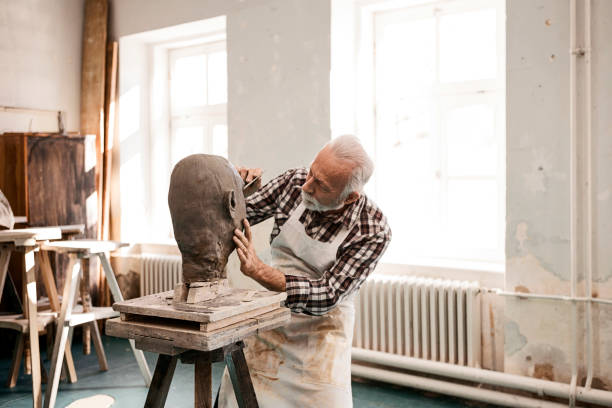
Sculptors are innovative artisans responsible for designing and crafting sculptures that align with artistic visions, client commissions, or cultural narratives. Their role includes conceptualizing designs, working with diverse materials, and addressing challenges ranging from structural integrity to meeting project deadlines. They combine skills in creativity, technical expertise, and perseverance, working across various settings to produce impactful three-dimensional art. As key contributors to the arts and cultural sectors, Sculptors drive aesthetic innovation and historical documentation in a landscape increasingly valuing unique and meaningful artistic contributions.

Roles and Responsibilities

💼
Sculptor
Roles and Responsibilities
Concept Development and Design
Create concepts, sketches, or maquettes for sculptures based on personal inspiration or client briefs.
Plan the scale, materials, and techniques to ensure feasibility and alignment with artistic goals.
Material Shaping and Creation
Sculpt three-dimensional forms using tools and techniques like carving, modeling, casting, or welding.
Select and prepare materials such as clay, stone, metal, or mixed media for durability and aesthetic impact.
Trend Research and Analysis
Stay updated on art trends, cultural themes, and audience preferences to create relevant works.
Analyze historical and contemporary sculpture styles to ensure creations resonate with target contexts.
Technical Execution and Finishing
Apply finishing techniques like polishing, painting, or patination to enhance the sculpture’s appearance.
Ensure structural stability and safety, especially for large-scale or public installations.
Consistency and Quality Assurance
Ensure artistic and thematic consistency across a body of work or specific project.
Review and refine sculptures to meet high standards of craftsmanship and emotional resonance.
Project Management
Manage timelines and deliverables for commissioned works or exhibitions to ensure timely completion.
Coordinate with stakeholders to balance artistic goals with budgetary and spatial constraints.
Innovation and Experimentation
Incorporate emerging technologies like 3D printing or digital modeling into sculptural processes.
Experiment with unconventional materials or methods to push creative and technical boundaries in sculpture.
Creative Foundation:
Strong knowledge of form, composition, and artistic expression is essential for sculpture.
Technical Skills:
Proficiency in material handling, tools, and sculpting techniques is critical for professional work.
Specialized Training:
Certifications or workshops in specific areas like bronze casting or digital sculpting offer niche expertise.
Industry Awareness:
Understanding trends in public art, gallery exhibitions, and cultural themes improves relevance.
Interdisciplinary Knowledge:
Familiarity with architecture, design, or digital arts enhances outcomes.
Certification Importance:
Industry-recognized certifications or residencies can enhance employability for advanced roles.
Continuing Education:
Regular workshops and courses are necessary to stay updated on sculptural tools and trends.
Global Standards:
Compliance with international art and conservation standards enhances opportunities.
Attention to Detail:
Precision in carving, modeling, and finishing is critical for high-quality results.
Entrance Examination Success:
Certain programs may require entrance tests or specific qualifications for admission.
International Testing Requirements:
For global opportunities, certifications or qualifications from recognized art bodies may be needed.
Michelangelo Buonarroti (Historical, Italy):
Sculptor since the 1490s. Creator ofDavidandPietà, his work epitomizes Renaissance mastery. His vision drives perfection. His impact shapes Western art history.
Auguste Rodin (Historical, France):
Sculptor since the 1860s. Known forThe ThinkerandThe Gates of Hell, redefining expressive sculpture. His artistry fosters emotion. His contributions influence modern sculpture.
Henry Moore (Historical, UK):
Sculptor since the 1920s. His abstract, organic forms likeReclining Figurerevolutionized public art. His vision drives innovation. His impact shapes 20th-century sculpture.
Louise Bourgeois (Historical, France/USA):
Sculptor since the 1940s. Her works likeMamanexplore trauma and femininity through surreal forms. Her creativity inspires introspection. Her work impacts feminist art.
Anish Kapoor (Contemporary, UK/India):
Sculptor since the 1980s. Known forCloud Gateand reflective works, blending art and architecture. His vision fosters wonder. His contributions influence public art.
Jeff Koons (Contemporary, USA):
Sculptor since the 1980s. His pop-art sculptures likeBalloon Dogchallenge traditional art norms. His creativity inspires debate. His impact shapes contemporary culture.
Ai Weiwei (Contemporary, China):
Sculptor since the 1990s. His installations likeSunflower Seedscritique politics through art. His vision drives activism. His work impacts global discourse.
Ram VanjiSutar (Contemporary, India):
Sculptor since the 1950s. Creator of theStatue of Unity, the world’s tallest statue, honoring cultural icons. His vision captures heritage. His impact shapes Indian monumental art.
Barbara Hepworth (Historical, UK):
Sculptor since the 1920s. Her pierced, abstract forms explore space and nature. Her creativity inspires harmony. Her contributions influence modernist sculpture.
Sudarshan Sahoo (Contemporary, India):
Sculptor since the 1960s. Renowned for stone carvings and temple art, preserving Indian traditions. His vision fosters spirituality. His work impacts cultural craftsmanship.

Roles and Responsibilities

  • Concept Development and Design
    • Create concepts, sketches, or maquettes for sculptures based on personal inspiration or client briefs.
    • Plan the scale, materials, and techniques to ensure feasibility and alignment with artistic goals.
  • Material Shaping and Creation
    • Sculpt three-dimensional forms using tools and techniques like carving, modeling, casting, or welding.
    • Select and prepare materials such as clay, stone, metal, or mixed media for durability and aesthetic impact.
  • Trend Research and Analysis
    • Stay updated on art trends, cultural themes, and audience preferences to create relevant works.
    • Analyze historical and contemporary sculpture styles to ensure creations resonate with target contexts.
  • Technical Execution and Finishing
    • Apply finishing techniques like polishing, painting, or patination to enhance the sculpture’s appearance.
    • Ensure structural stability and safety, especially for large-scale or public installations.
  • Consistency and Quality Assurance
    • Ensure artistic and thematic consistency across a body of work or specific project.
    • Review and refine sculptures to meet high standards of craftsmanship and emotional resonance.
  • Project Management
    • Manage timelines and deliverables for commissioned works or exhibitions to ensure timely completion.
    • Coordinate with stakeholders to balance artistic goals with budgetary and spatial constraints.
  • Innovation and Experimentation
    • Incorporate emerging technologies like 3D printing or digital modeling into sculptural processes.
    • Experiment with unconventional materials or methods to push creative and technical boundaries in sculpture.


Study Route & Eligibility Criteria

RouteSteps
Route 11. 10+2 in any stream (preferably with Art or Visual Studies subjects)
2. Bachelor’s degree in Fine Arts or Sculpture (3-4 years)
3. Internship or practical training (3-6 months)
4. Practice as Junior Sculptor or Studio Assistant
Route 21. 10+2 in any stream
2. Diploma or Certificate in Sculpture or Fine Arts (6 months-2 years)
3. Build hands-on experience through projects
4. Work as Freelance or Junior Sculptor
Route 31. 10+2 in any stream
2. Bachelor’s degree in Fine Arts or Sculpture (3-4 years)
3. Master’s degree in Fine Arts or Sculpture (2 years)
4. Work as Senior Sculptor or Art Instructor
Route 41. 10+2 in any stream
2. Advanced international training or certification in Sculpture (1-2 years)
3. Master’s or specialized courses as per country requirements
4. Practice abroad or in India


Significant Observations (Academic Related Points)

  • Creative Foundation: Strong knowledge of form, composition, and artistic expression is essential for sculpture.
  • Technical Skills: Proficiency in material handling, tools, and sculpting techniques is critical for professional work.
  • Specialized Training: Certifications or workshops in specific areas like bronze casting or digital sculpting offer niche expertise.
  • Industry Awareness: Understanding trends in public art, gallery exhibitions, and cultural themes improves relevance.
  • Interdisciplinary Knowledge: Familiarity with architecture, design, or digital arts enhances outcomes.
  • Certification Importance: Industry-recognized certifications or residencies can enhance employability for advanced roles.
  • Continuing Education: Regular workshops and courses are necessary to stay updated on sculptural tools and trends.
  • Global Standards: Compliance with international art and conservation standards enhances opportunities.
  • Attention to Detail: Precision in carving, modeling, and finishing is critical for high-quality results.
  • Entrance Examination Success: Certain programs may require entrance tests or specific qualifications for admission.
  • International Testing Requirements: For global opportunities, certifications or qualifications from recognized art bodies may be needed.


Internships & Practical Exposure

  • Mandatory practical training during degree or diploma programs in fine arts or sculpture departments.
  • Rotations in art studios, galleries, or foundries for hands-on experience with real-world projects.
  • Internships under senior sculptors or art directors for exposure to professional workflows.
  • Observerships in restoration or public art units for experience in conservation and installation.
  • Participation in mock sculpture projects or client commissions for practical skill development.
  • Training in collaborative projects through real-world exhibitions or architectural initiatives.
  • Exposure to industry-standard tools, materials, and casting techniques during internships.
  • Project-based learning focusing on diverse sculptural genres and material challenges.
  • Public outreach initiatives like assisting in community art projects or cultural installations.
  • International attachments or artist residencies for global exposure to sculptural practices.


Courses & Specializations to Enter the Field

  • Certificate in Sculpture and Modeling.
  • Bachelor’s in Fine Arts with Sculpture Focus.
  • Master’s in Fine Arts (Sculpture Specialization).
  • Specialization in Stone Carving and Monumental Sculpture.
  • Certification in Bronze Casting and Metalwork.
  • Workshops on Clay Modeling and Figure Sculpture.
  • Training in Digital Sculpting and 3D Printing.
  • Specialization in Public Art and Installation Sculpture.
  • Certification in Wood Carving and Mixed Media Sculpture.
  • Short Courses in Sculpture Trends and Material Mastery.


Top Institutes for Sculptor Education (India)

InstituteCourse/ProgramOfficial Link
Faculty of Fine Arts, Maharaja Sayajirao University, BarodaBFA/MFA in Sculpturehttps://www.msubaroda.ac.in/
College of Art, University of Delhi, New DelhiBFA/MFA in Sculpturehttps://colart.delhigovt.nic.in/
Sir J.J. School of Art, MumbaiBFA/MFA in Sculpturehttps://www.sirjjschoolofart.in/
Kala Bhavana, Visva-Bharati University, SantiniketanBFA/MFA in Sculpturehttps://www.visvabharati.ac.in/
Banaras Hindu University (BHU), VaranasiBFA/MFA in Sculpturehttps://www.bhu.ac.in/
Government College of Fine Arts, ChennaiBFA in Sculpturehttps://www.gcfachennai.com/
Jawaharlal Nehru Architecture and Fine Arts University (JNAFAU), HyderabadBFA in Sculpturehttps://www.jnafau.ac.in/
Triveni Kala Sangam, New DelhiCertificate in Sculpturehttps://www.trivenikalasangam.org/
Rabindra Bharati University, KolkataBFA/MFA in Sculpturehttps://rbu.ac.in/
Chitrakala Parishath, BangaloreBFA in Sculpturehttps://karnatakachitrakalaparishath.com/


Top International Institutes

InstitutionCourseCountryOfficial Link
Rhode Island School of Design (RISD)BFA/MFA in SculptureUSAhttps://www.risd.edu/
School of the Art Institute of Chicago (SAIC)BFA/MFA in SculptureUSAhttps://www.saic.edu/
Royal College of Art (RCA)MA in SculptureUKhttps://www.rca.ac.uk/
Central Saint Martins, University of the Arts LondonBA/MA in Fine Art (Sculpture Focus)UKhttps://www.arts.ac.uk/colleges/central-saint-martins
California College of the Arts (CCA)BFA/MFA in SculptureUSAhttps://www.cca.edu/
École Nationale Supérieure des Beaux-ArtsDiploma in Fine Arts (Sculpture)Francehttps://www.beauxartsparis.fr/
Academy of Fine Arts, FlorenceDiploma in SculptureItalyhttps://www.accademia.firenze.it/
University of the Arts HelsinkiBA/MA in Fine Arts (Sculpture)Finlandhttps://www.uniarts.fi/
Victorian College of the Arts (VCA), University of MelbourneBFA/MFA in SculptureAustraliahttps://finearts-music.unimelb.edu.au/
Emily Carr University of Art + DesignBFA in SculptureCanadahttps://www.ecuad.ca/


Entrance Tests Required

India:

  • BHU UET/PET (Banaras Hindu University Entrance Test): Conducted for admission to BHU for fine arts programs.
  • JNAFAU Entrance Exam: For admission to Jawaharlal Nehru Architecture and Fine Arts University for sculpture programs.
  • Delhi College of Art Entrance Exam: For admission to sculpture programs at College of Art, Delhi.
  • MSU Baroda Entrance Exam: For admission to fine arts programs at Maharaja Sayajirao University.


International:

  • SAT (Scholastic Aptitude Test): Required for undergraduate programs in countries like the USA.
  • TOEFL (Test of English as a Foreign Language): Minimum score of 80-100 required for non-native speakers applying to programs in English-speaking countries.
  • IELTS (International English Language Testing System): Minimum score of 6.0-7.0 required for admission to universities in the UK, Australia, and other English-speaking regions.
  • PTE Academic (Pearson Test of English Academic): Accepted by many international institutes as an alternative to TOEFL or IELTS for English proficiency.
  • Duolingo English Test: Accepted by some institutions as a convenient alternative for English language proficiency testing.


Ideal Progressing Career Path 

Junior Sculptor → Sculptor → Senior Sculptor → Lead Sculptor → Art Director → Curator → Studio Owner → Independent Art Consultant


Major Areas of Employment

  • Fine arts sector for creating gallery exhibitions and personal collections.
  • Public art projects for monuments, memorials, and urban installations.
  • Architecture and design firms for integrating sculptures into buildings or landscapes.
  • Film and gaming industries for creating props, sets, or digital 3D models.
  • Freelance opportunities for independent commissions or personal projects.
  • Museums and cultural institutions for restoration and curatorial roles.
  • Educational institutions for teaching sculpture and fine arts.
  • Religious and cultural organizations for creating symbolic or ceremonial works.
  • Interior design for custom decorative sculptures in private or commercial spaces.
  • Non-profit organizations for community art initiatives or cultural preservation.


Prominent Employers

IndiaInternational
National Gallery of Modern ArtThe Metropolitan Museum of Art, USA
Lalit Kala AkademiThe British Museum, UK
Indian Council for Cultural Relations (ICCR)Musée du Louvre, France
Archaeological Survey of India (ASI)Getty Center, USA
Crafts Museum, New DelhiTate Modern, UK
Jehangir Art Gallery, MumbaiMuseum of Modern Art (MoMA), USA
Kiran Nadar Museum of ArtVictoria and Albert Museum, UK
India Habitat CentreSmithsonian Institution, USA
Chhatrapati Shivaji Maharaj Vastu SangrahalayaRijksmuseum, Netherlands
Kala Ghoda Arts FestivalGuggenheim Museum, USA


Pros and Cons of the Profession

ProsCons
Opportunity to work on creative and culturally significant projectsPhysically demanding work due to handling heavy materials and tools
High value placed on unique sculptures in art and public spacesLong hours, especially during large-scale projects or tight deadlines
Rewarding impact through tangible, lasting artistic expressionsRisk of creative burnout from constant innovation and critique
Diverse career paths across fine arts, public art, and digital mediaLimited job security in freelance or commission-based roles
Strong potential for personal branding with signature sculptural stylesDependency on expensive materials and studio costs impacting workflow


Industry Trends and Future Outlook

  • Growing adoption of digital sculpting and 3D printing in art creation.
  • Rising demand for Sculptors due to increasing interest in public art and cultural preservation.
  • Advancements in sustainable materials for eco-friendly sculptural practices.
  • Heightened focus on interactive and kinetic sculptures for modern exhibitions.
  • Expansion of sculpture roles in virtual reality and gaming industries.
  • Development of collaborative public art projects involving community input.
  • Increased emphasis on diversity and inclusivity in sculptural themes.
  • Enhanced collaboration between sculptors and architects for integrated designs.
  • Growing need for continuous training to master emerging sculptural technologies.
  • Focus on global art standards to align practices internationally.


Salary Expectations

Career LevelIndia (₹ per annum)International (USD per annum)
Junior Sculptor (Early Career)1,50,000 - 3,50,00020,000 - 35,000
Sculptor (Mid-Career)3,50,000 - 7,00,00035,000 - 60,000
Senior Sculptor/Lead Sculptor7,00,000 - 12,00,00060,000 - 90,000
Art Director/Curator12,00,000 - 20,00,00090,000 - 130,000
Studio Owner/Independent Consultant20,00,000+130,000+
Note: Salaries vary based on location, experience, employer, and specialization. International figures are approximate and depend on the country and sector.  


Key Software Tools

  • ZBrush for digital sculpting and 3D modeling.
  • Blender for 3D sculpting and rendering.
  • Mudbox for detailed digital sculpting and texturing.
  • SketchUp for conceptual design and spatial planning.
  • Adobe Photoshop for creating concept art or texture mapping.
  • AutoCAD for technical drawings and structural planning of large sculptures.
  • Meshmixer for preparing 3D models for printing or fabrication.
  • Project Management Tools like Trello or Asana for project coordination.
  • Microsoft Office Suite for documentation and client communication.
  • Cloud Storage Tools like Google Drive or Dropbox for file sharing and backups.


Professional Organizations and Networks

  • Lalit Kala Akademi, India.
  • Indian Society of Artists, India.
  • International Sculpture Center (ISC), USA.
  • Royal British Society of Sculptors (RBSS), UK.
  • National Sculpture Society (NSS), USA.
  • Association of Sculptors of Victoria, Australia.
  • Women Sculptors Network, Global.
  • European Artists e.V., Europe.
  • Art Students League of New York (Sculpture Programs), USA.
  • World Crafts Council (WCC), Global.


Notable Sculptors and Industry Leaders (Top 10)

  • Michelangelo Buonarroti (Historical, Italy): Sculptor since the 1490s. Creator of David and Pietà, his work epitomizes Renaissance mastery. His vision drives perfection. His impact shapes Western art history.
     
  • Auguste Rodin (Historical, France): Sculptor since the 1860s. Known for The Thinker and The Gates of Hell, redefining expressive sculpture. His artistry fosters emotion. His contributions influence modern sculpture.
     
  • Henry Moore (Historical, UK): Sculptor since the 1920s. His abstract, organic forms like Reclining Figure revolutionized public art. His vision drives innovation. His impact shapes 20th-century sculpture.
     
  • Louise Bourgeois (Historical, France/USA): Sculptor since the 1940s. Her works like Maman explore trauma and femininity through surreal forms. Her creativity inspires introspection. Her work impacts feminist art.
     
  • Anish Kapoor (Contemporary, UK/India): Sculptor since the 1980s. Known for Cloud Gate and reflective works, blending art and architecture. His vision fosters wonder. His contributions influence public art.
     
  • Jeff Koons (Contemporary, USA): Sculptor since the 1980s. His pop-art sculptures like Balloon Dog challenge traditional art norms. His creativity inspires debate. His impact shapes contemporary culture.
     
  • Ai Weiwei (Contemporary, China): Sculptor since the 1990s. His installations like Sunflower Seeds critique politics through art. His vision drives activism. His work impacts global discourse.
     
  • Ram VanjiSutar (Contemporary, India): Sculptor since the 1950s. Creator of the Statue of Unity, the world’s tallest statue, honoring cultural icons. His vision captures heritage. His impact shapes Indian monumental art.
     
  • Barbara Hepworth (Historical, UK): Sculptor since the 1920s. Her pierced, abstract forms explore space and nature. Her creativity inspires harmony. Her contributions influence modernist sculpture.
     
  • Sudarshan Sahoo (Contemporary, India): Sculptor since the 1960s. Renowned for stone carvings and temple art, preserving Indian traditions. His vision fosters spirituality. His work impacts cultural craftsmanship.
     

Advice for Aspiring Sculptors

  • Build a strong foundation in form, anatomy, and material techniques to understand sculpture.
  • Seek early exposure to art studios or foundries through internships to confirm interest in the field.
  • Prepare thoroughly for entrance exams or portfolio requirements specific to your chosen program or region.
  • Pursue advanced certifications in specific sculptural techniques like casting or digital modeling to gain expertise.
  • Stay updated on art trends and cultural themes by attending exhibitions and industry events.
  • Develop hands-on skills in sculpture through personal projects or client commissions.
  • Engage in art challenges or community projects to build real-world experience.
  • Join professional associations like the International Sculpture Center for networking and resources.
  • Work on precision and creative thinking to ensure high-quality sculptural outputs.
  • Explore international sculpture programs or residencies for exposure to diverse standards.
  • Volunteer in community art or restoration projects to understand cultural needs and build experience.
  • Cultivate adaptability to handle complex artistic and material challenges.
  • Attend continuing education programs to stay abreast of evolving sculptural methodologies.
  • Build a network with sculptors and art professionals for collaborative efforts.
  • Develop resilience to manage the physical and creative demands of sculpture projects.
  • Balance project work with continuous learning to adapt to advancements in sculptural technology.


A career as a Sculptor offers a unique opportunity to contribute to cultural storytelling, aesthetic innovation, and historical preservation by crafting meaningful three-dimensional artworks for diverse applications. From enhancing public spaces and galleries to revolutionizing personal and communal narratives, Sculptors play a pivotal role in modern artistic and cultural landscapes. This field combines artistic expertise, technical skills, and a commitment to solving complex creative challenges, offering diverse paths in fine arts, public installations, digital media, and beyond. For those passionate about creativity, adapting to evolving trends, and addressing cultural needs in an era of artistic evolution, a career as a Sculptor provides an intellectually stimulating and professionally rewarding journey with the potential to make significant contributions to society by advancing the art and application of sculpture worldwide.


Study Route & Eligibility Criteria

Study Route & Eligibility Criteria
Sculptor
Route 1
🎓
1
10+2 in any stream
🏛️
2
Bachelor’s degree in Fine Arts or Sculpture
3-4 years
💼
3
Internship or practical training
3-6 months
💼
4
Practice as Junior Sculptor or Studio Assistant
Route 2
🎓
1
10+2 in any stream
🎓
2
Diploma or Certificate in Sculpture or Fine Arts
💼
3
Build hands-on experience through projects
💼
4
Work as Freelance or Junior Sculptor
Route 3
🎓
1
10+2 in any stream
🏛️
2
Bachelor’s degree in Fine Arts or Sculpture
3-4 years
🏛️
3
Master’s degree in Fine Arts or Sculpture
2 years
💼
4
Work as Senior Sculptor or Art Instructor
Route 4
🎓
1
10+2 in any stream
🏛️
2
Advanced international training or certification in Sculpture
1-2 years
🎓
3
Master’s or specialized courses as per country requirements
💼
4
Practice abroad or in India
🎯 Sculptor - Professional

Significant Observations (Academic Related Points)

💡
Sculptor
Academic Related Points
1
Creative Foundation:
Strong knowledge of form, composition, and artistic expression is essential for sculpture.
2
Technical Skills:
Proficiency in material handling, tools, and sculpting techniques is critical for professional work.
3
Specialized Training:
Certifications or workshops in specific areas like bronze casting or digital sculpting offer niche expertise.
4
Industry Awareness:
Understanding trends in public art, gallery exhibitions, and cultural themes improves relevance.
5
Interdisciplinary Knowledge:
Familiarity with architecture, design, or digital arts enhances outcomes.
6
Certification Importance:
Industry-recognized certifications or residencies can enhance employability for advanced roles.
7
Continuing Education:
Regular workshops and courses are necessary to stay updated on sculptural tools and trends.
8
Global Standards:
Compliance with international art and conservation standards enhances opportunities.
9
Attention to Detail:
Precision in carving, modeling, and finishing is critical for high-quality results.
10
Entrance Examination Success:
Certain programs may require entrance tests or specific qualifications for admission.
11
International Testing Requirements:
For global opportunities, certifications or qualifications from recognized art bodies may be needed.
12
Michelangelo Buonarroti (Historical, Italy):
Sculptor since the 1490s. Creator ofDavidandPietà, his work epitomizes Renaissance mastery. His vision drives perfection. His impact shapes Western art history.
13
Auguste Rodin (Historical, France):
Sculptor since the 1860s. Known forThe ThinkerandThe Gates of Hell, redefining expressive sculpture. His artistry fosters emotion. His contributions influence modern sculpture.
14
Henry Moore (Historical, UK):
Sculptor since the 1920s. His abstract, organic forms likeReclining Figurerevolutionized public art. His vision drives innovation. His impact shapes 20th-century sculpture.
15
Louise Bourgeois (Historical, France/USA):
Sculptor since the 1940s. Her works likeMamanexplore trauma and femininity through surreal forms. Her creativity inspires introspection. Her work impacts feminist art.
16
Anish Kapoor (Contemporary, UK/India):
Sculptor since the 1980s. Known forCloud Gateand reflective works, blending art and architecture. His vision fosters wonder. His contributions influence public art.
17
Jeff Koons (Contemporary, USA):
Sculptor since the 1980s. His pop-art sculptures likeBalloon Dogchallenge traditional art norms. His creativity inspires debate. His impact shapes contemporary culture.
18
Ai Weiwei (Contemporary, China):
Sculptor since the 1990s. His installations likeSunflower Seedscritique politics through art. His vision drives activism. His work impacts global discourse.
19
Ram VanjiSutar (Contemporary, India):
Sculptor since the 1950s. Creator of theStatue of Unity, the world’s tallest statue, honoring cultural icons. His vision captures heritage. His impact shapes Indian monumental art.
20
Barbara Hepworth (Historical, UK):
Sculptor since the 1920s. Her pierced, abstract forms explore space and nature. Her creativity inspires harmony. Her contributions influence modernist sculpture.
21
Sudarshan Sahoo (Contemporary, India):
Sculptor since the 1960s. Renowned for stone carvings and temple art, preserving Indian traditions. His vision fosters spirituality. His work impacts cultural craftsmanship.

Internships & Practical Exposure

💼
Sculptor
Internships & Practical Experience
1
Mandatory practical training during degree or diploma programs in fine arts or sculpture departments.
2
Rotations in art studios, galleries, or foundries for hands-on experience with real-world projects.
3
Internships under senior sculptors or art directors for exposure to professional workflows.
4
Observerships in restoration or public art units for experience in conservation and installation.
5
Participation in mock sculpture projects or client commissions for practical skill development.
6
Training in collaborative projects through real-world exhibitions or architectural initiatives.
7
Exposure to industry-standard tools, materials, and casting techniques during internships.
8
Project-based learning focusing on diverse sculptural genres and material challenges.
9
Public outreach initiatives like assisting in community art projects or cultural installations.
10
International attachments or artist residencies for global exposure to sculptural practices.
11
Certificate in Sculpture and Modeling.
12
Bachelor’s in Fine Arts with Sculpture Focus.
13
Master’s in Fine Arts (Sculpture Specialization).
14
Specialization in Stone Carving and Monumental Sculpture.
15
Certification in Bronze Casting and Metalwork.
16
Workshops on Clay Modeling and Figure Sculpture.
17
Training in Digital Sculpting and 3D Printing.
18
Specialization in Public Art and Installation Sculpture.
19
Certification in Wood Carving and Mixed Media Sculpture.
20
Short Courses in Sculpture Trends and Material Mastery.
21
BHU UET/PET (Banaras Hindu University Entrance Test): Conducted for admission to BHU for fine arts programs.
22
JNAFAU Entrance Exam: For admission to Jawaharlal Nehru Architecture and Fine Arts University for sculpture programs.
23
Delhi College of Art Entrance Exam: For admission to sculpture programs at College of Art, Delhi.
24
MSU Baroda Entrance Exam: For admission to fine arts programs at Maharaja Sayajirao University.
25
SAT (Scholastic Aptitude Test): Required for undergraduate programs in countries like the USA.
26
TOEFL (Test of English as a Foreign Language): Minimum score of 80-100 required for non-native speakers applying to programs in English-speaking countries.
27
IELTS (International English Language Testing System): Minimum score of 6.0-7.0 required for admission to universities in the UK, Australia, and other English-speaking regions.
28
PTE Academic (Pearson Test of English Academic): Accepted by many international institutes as an alternative to TOEFL or IELTS for English proficiency.
29
Duolingo English Test: Accepted by some institutions as a convenient alternative for English language proficiency testing.
30
Fine arts sector for creating gallery exhibitions and personal collections.
31
Public art projects for monuments, memorials, and urban installations.
32
Architecture and design firms for integrating sculptures into buildings or landscapes.
33
Film and gaming industries for creating props, sets, or digital 3D models.
34
Freelance opportunities for independent commissions or personal projects.
35
Museums and cultural institutions for restoration and curatorial roles.
36
Educational institutions for teaching sculpture and fine arts.
37
Religious and cultural organizations for creating symbolic or ceremonial works.
38
Interior design for custom decorative sculptures in private or commercial spaces.
39
Non-profit organizations for community art initiatives or cultural preservation.
40
Growing adoption of digital sculpting and 3D printing in art creation.
41
Rising demand for Sculptors due to increasing interest in public art and cultural preservation.
42
Advancements in sustainable materials for eco-friendly sculptural practices.
43
Heightened focus on interactive and kinetic sculptures for modern exhibitions.
44
Expansion of sculpture roles in virtual reality and gaming industries.
45
Development of collaborative public art projects involving community input.
46
Increased emphasis on diversity and inclusivity in sculptural themes.
47
Enhanced collaboration between sculptors and architects for integrated designs.
48
Growing need for continuous training to master emerging sculptural technologies.
49
Focus on global art standards to align practices internationally.
50
ZBrush for digital sculpting and 3D modeling.
51
Blender for 3D sculpting and rendering.
52
Mudbox for detailed digital sculpting and texturing.
53
SketchUp for conceptual design and spatial planning.
54
Adobe Photoshop for creating concept art or texture mapping.
55
AutoCAD for technical drawings and structural planning of large sculptures.
56
Meshmixer for preparing 3D models for printing or fabrication.
57
Project Management Tools like Trello or Asana for project coordination.
58
Microsoft Office Suite for documentation and client communication.
59
Cloud Storage Tools like Google Drive or Dropbox for file sharing and backups.
60
Lalit Kala Akademi, India.
61
Indian Society of Artists, India.
62
International Sculpture Center (ISC), USA.
63
Royal British Society of Sculptors (RBSS), UK.
64
National Sculpture Society (NSS), USA.
65
Association of Sculptors of Victoria, Australia.
66
Women Sculptors Network, Global.
67
European Artists e.V., Europe.
68
Art Students League of New York (Sculpture Programs), USA.
69
World Crafts Council (WCC), Global.
70
Michelangelo Buonarroti (Historical, Italy):Sculptor since the 1490s. Creator ofDavidandPietà, his work epitomizes Renaissance mastery. His vision drives perfection. His impact shapes Western art history.
71
Auguste Rodin (Historical, France):Sculptor since the 1860s. Known forThe ThinkerandThe Gates of Hell, redefining expressive sculpture. His artistry fosters emotion. His contributions influence modern sculpture.
72
Henry Moore (Historical, UK):Sculptor since the 1920s. His abstract, organic forms likeReclining Figurerevolutionized public art. His vision drives innovation. His impact shapes 20th-century sculpture.
73
Louise Bourgeois (Historical, France/USA):Sculptor since the 1940s. Her works likeMamanexplore trauma and femininity through surreal forms. Her creativity inspires introspection. Her work impacts feminist art.
74
Anish Kapoor (Contemporary, UK/India):Sculptor since the 1980s. Known forCloud Gateand reflective works, blending art and architecture. His vision fosters wonder. His contributions influence public art.
75
Jeff Koons (Contemporary, USA):Sculptor since the 1980s. His pop-art sculptures likeBalloon Dogchallenge traditional art norms. His creativity inspires debate. His impact shapes contemporary culture.
76
Ai Weiwei (Contemporary, China):Sculptor since the 1990s. His installations likeSunflower Seedscritique politics through art. His vision drives activism. His work impacts global discourse.
77
Ram VanjiSutar (Contemporary, India):Sculptor since the 1950s. Creator of theStatue of Unity, the world’s tallest statue, honoring cultural icons. His vision captures heritage. His impact shapes Indian monumental art.
78
Barbara Hepworth (Historical, UK):Sculptor since the 1920s. Her pierced, abstract forms explore space and nature. Her creativity inspires harmony. Her contributions influence modernist sculpture.
79
Sudarshan Sahoo (Contemporary, India):Sculptor since the 1960s. Renowned for stone carvings and temple art, preserving Indian traditions. His vision fosters spirituality. His work impacts cultural craftsmanship.
80
Build a strong foundation in form, anatomy, and material techniques to understand sculpture.
81
Seek early exposure to art studios or foundries through internships to confirm interest in the field.
82
Prepare thoroughly for entrance exams or portfolio requirements specific to your chosen program or region.
83
Pursue advanced certifications in specific sculptural techniques like casting or digital modeling to gain expertise.
84
Stay updated on art trends and cultural themes by attending exhibitions and industry events.
85
Develop hands-on skills in sculpture through personal projects or client commissions.
86
Engage in art challenges or community projects to build real-world experience.
87
Join professional associations like the International Sculpture Center for networking and resources.
88
Work on precision and creative thinking to ensure high-quality sculptural outputs.
89
Explore international sculpture programs or residencies for exposure to diverse standards.
90
Volunteer in community art or restoration projects to understand cultural needs and build experience.
91
Cultivate adaptability to handle complex artistic and material challenges.
92
Attend continuing education programs to stay abreast of evolving sculptural methodologies.
93
Build a network with sculptors and art professionals for collaborative efforts.
94
Develop resilience to manage the physical and creative demands of sculpture projects.
95
Balance project work with continuous learning to adapt to advancements in sculptural technology.

Courses & Specializations to Enter the Field

📚
Sculptor
Courses & Specializations
📖
Certificate in Sculpture and Modeling.
📖
Bachelor’s in Fine Arts with Sculpture Focus.
📖
Master’s in Fine Arts (Sculpture Specialization).
📖
Specialization in Stone Carving and Monumental Sculpture.
📖
Certification in Bronze Casting and Metalwork.
📖
Workshops on Clay Modeling and Figure Sculpture.
📖
Training in Digital Sculpting and 3D Printing.
📖
Specialization in Public Art and Installation Sculpture.
📖
Certification in Wood Carving and Mixed Media Sculpture.
📖
Short Courses in Sculpture Trends and Material Mastery.
📖
BHU UET/PET (Banaras Hindu University Entrance Test): Conducted for admission to BHU for fine arts programs.
📖
JNAFAU Entrance Exam: For admission to Jawaharlal Nehru Architecture and Fine Arts University for sculpture programs.
📖
Delhi College of Art Entrance Exam: For admission to sculpture programs at College of Art, Delhi.
📖
MSU Baroda Entrance Exam: For admission to fine arts programs at Maharaja Sayajirao University.
📖
SAT (Scholastic Aptitude Test): Required for undergraduate programs in countries like the USA.
📖
TOEFL (Test of English as a Foreign Language): Minimum score of 80-100 required for non-native speakers applying to programs in English-speaking countries.
📖
IELTS (International English Language Testing System): Minimum score of 6.0-7.0 required for admission to universities in the UK, Australia, and other English-speaking regions.
📖
PTE Academic (Pearson Test of English Academic): Accepted by many international institutes as an alternative to TOEFL or IELTS for English proficiency.
📖
Duolingo English Test: Accepted by some institutions as a convenient alternative for English language proficiency testing.
📖
Fine arts sector for creating gallery exhibitions and personal collections.
📖
Public art projects for monuments, memorials, and urban installations.
📖
Architecture and design firms for integrating sculptures into buildings or landscapes.
📖
Film and gaming industries for creating props, sets, or digital 3D models.
📖
Freelance opportunities for independent commissions or personal projects.
📖
Museums and cultural institutions for restoration and curatorial roles.
📖
Educational institutions for teaching sculpture and fine arts.
📖
Religious and cultural organizations for creating symbolic or ceremonial works.
📖
Interior design for custom decorative sculptures in private or commercial spaces.
📖
Non-profit organizations for community art initiatives or cultural preservation.
📖
Growing adoption of digital sculpting and 3D printing in art creation.
📖
Rising demand for Sculptors due to increasing interest in public art and cultural preservation.
📖
Advancements in sustainable materials for eco-friendly sculptural practices.
📖
Heightened focus on interactive and kinetic sculptures for modern exhibitions.
📖
Expansion of sculpture roles in virtual reality and gaming industries.
📖
Development of collaborative public art projects involving community input.
📖
Increased emphasis on diversity and inclusivity in sculptural themes.
📖
Enhanced collaboration between sculptors and architects for integrated designs.
📖
Growing need for continuous training to master emerging sculptural technologies.
📖
Focus on global art standards to align practices internationally.
📖
ZBrush for digital sculpting and 3D modeling.
📖
Blender for 3D sculpting and rendering.
📖
Mudbox for detailed digital sculpting and texturing.
📖
SketchUp for conceptual design and spatial planning.
📖
Adobe Photoshop for creating concept art or texture mapping.
📖
AutoCAD for technical drawings and structural planning of large sculptures.
📖
Meshmixer for preparing 3D models for printing or fabrication.
📖
Project Management Tools like Trello or Asana for project coordination.
📖
Microsoft Office Suite for documentation and client communication.
📖
Cloud Storage Tools like Google Drive or Dropbox for file sharing and backups.
📖
Lalit Kala Akademi, India.
📖
Indian Society of Artists, India.
📖
International Sculpture Center (ISC), USA.
📖
Royal British Society of Sculptors (RBSS), UK.
📖
National Sculpture Society (NSS), USA.
📖
Association of Sculptors of Victoria, Australia.
📖
Women Sculptors Network, Global.
📖
European Artists e.V., Europe.
📖
Art Students League of New York (Sculpture Programs), USA.
📖
World Crafts Council (WCC), Global.
📖
Michelangelo Buonarroti (Historical, Italy):Sculptor since the 1490s. Creator ofDavidandPietà, his work epitomizes Renaissance mastery. His vision drives perfection. His impact shapes Western art history.
📖
Auguste Rodin (Historical, France):Sculptor since the 1860s. Known forThe ThinkerandThe Gates of Hell, redefining expressive sculpture. His artistry fosters emotion. His contributions influence modern sculpture.
📖
Henry Moore (Historical, UK):Sculptor since the 1920s. His abstract, organic forms likeReclining Figurerevolutionized public art. His vision drives innovation. His impact shapes 20th-century sculpture.
📖
Louise Bourgeois (Historical, France/USA):Sculptor since the 1940s. Her works likeMamanexplore trauma and femininity through surreal forms. Her creativity inspires introspection. Her work impacts feminist art.
📖
Anish Kapoor (Contemporary, UK/India):Sculptor since the 1980s. Known forCloud Gateand reflective works, blending art and architecture. His vision fosters wonder. His contributions influence public art.
📖
Jeff Koons (Contemporary, USA):Sculptor since the 1980s. His pop-art sculptures likeBalloon Dogchallenge traditional art norms. His creativity inspires debate. His impact shapes contemporary culture.
📖
Ai Weiwei (Contemporary, China):Sculptor since the 1990s. His installations likeSunflower Seedscritique politics through art. His vision drives activism. His work impacts global discourse.
📖
Ram VanjiSutar (Contemporary, India):Sculptor since the 1950s. Creator of theStatue of Unity, the world’s tallest statue, honoring cultural icons. His vision captures heritage. His impact shapes Indian monumental art.
📖
Barbara Hepworth (Historical, UK):Sculptor since the 1920s. Her pierced, abstract forms explore space and nature. Her creativity inspires harmony. Her contributions influence modernist sculpture.
📖
Sudarshan Sahoo (Contemporary, India):Sculptor since the 1960s. Renowned for stone carvings and temple art, preserving Indian traditions. His vision fosters spirituality. His work impacts cultural craftsmanship.
📖
Build a strong foundation in form, anatomy, and material techniques to understand sculpture.
📖
Seek early exposure to art studios or foundries through internships to confirm interest in the field.
📖
Prepare thoroughly for entrance exams or portfolio requirements specific to your chosen program or region.
📖
Pursue advanced certifications in specific sculptural techniques like casting or digital modeling to gain expertise.
📖
Stay updated on art trends and cultural themes by attending exhibitions and industry events.
📖
Develop hands-on skills in sculpture through personal projects or client commissions.
📖
Engage in art challenges or community projects to build real-world experience.
📖
Join professional associations like the International Sculpture Center for networking and resources.
📖
Work on precision and creative thinking to ensure high-quality sculptural outputs.
📖
Explore international sculpture programs or residencies for exposure to diverse standards.
📖
Volunteer in community art or restoration projects to understand cultural needs and build experience.
📖
Cultivate adaptability to handle complex artistic and material challenges.
📖
Attend continuing education programs to stay abreast of evolving sculptural methodologies.
📖
Build a network with sculptors and art professionals for collaborative efforts.
📖
Develop resilience to manage the physical and creative demands of sculpture projects.
📖
Balance project work with continuous learning to adapt to advancements in sculptural technology.

Prominent Employers

🏢
Sculptor
🌟 Top Companies & Organizations
🇮🇳 India
🏛️
National Gallery of Modern Art
🏛️
Lalit Kala Akademi
🏛️
Indian Council for Cultural Relations (ICCR)
🏛️
Archaeological Survey of India (ASI)
🏛️
Crafts Museum, New Delhi
🏛️
Jehangir Art Gallery, Mumbai
🏛️
Kiran Nadar Museum of Art
🏛️
India Habitat Centre
🏛️
Chhatrapati Shivaji Maharaj Vastu Sangrahalaya
🏛️
Kala Ghoda Arts Festival
🌍 International
🌐
The Metropolitan Museum of Art, USA
🌐
The British Museum, UK
🌐
Musée du Louvre, France
🌐
Getty Center, USA
🌐
Tate Modern, UK
🌐
Museum of Modern Art (MoMA), USA
🌐
Victoria and Albert Museum, UK
🌐
Smithsonian Institution, USA
🌐
Rijksmuseum, Netherlands
🌐
Guggenheim Museum, USA

Advice for Aspiring Sculptors

💡
Sculptor
🌟 Tips for Students & Parents
1
Build a strong foundation in form, anatomy, and material techniques to understand sculpture.
2
Seek early exposure to art studios or foundries through internships to confirm interest in the field.
3
Prepare thoroughly for entrance exams or portfolio requirements specific to your chosen program or region.
4
Pursue advanced certifications in specific sculptural techniques like casting or digital modeling to gain expertise.
5
Stay updated on art trends and cultural themes by attending exhibitions and industry events.
6
Develop hands-on skills in sculpture through personal projects or client commissions.
7
Engage in art challenges or community projects to build real-world experience.
8
Join professional associations like the International Sculpture Center for networking and resources.
9
Work on precision and creative thinking to ensure high-quality sculptural outputs.
10
Explore international sculpture programs or residencies for exposure to diverse standards.
11
Volunteer in community art or restoration projects to understand cultural needs and build experience.
12
Cultivate adaptability to handle complex artistic and material challenges.
13
Attend continuing education programs to stay abreast of evolving sculptural methodologies.
14
Build a network with sculptors and art professionals for collaborative efforts.
15
Develop resilience to manage the physical and creative demands of sculpture projects.
16
Balance project work with continuous learning to adapt to advancements in sculptural technology.
🎓 Final Message
A career as a Sculptor offers a unique opportunity to contribute to cultural storytelling, aesthetic innovation, and historical preservation by crafting meaningful three-dimensional artworks for diverse applications. From enhancing public spaces and galleries to revolutionizing personal and communal narratives, Sculptors play a pivotal role in modern artistic and cultural landscapes. This field combines artistic expertise, technical skills, and a commitment to solving complex creative challenges, offering diverse paths in fine arts, public installations, digital media, and beyond. For those passionate about creativity, adapting to evolving trends, and addressing cultural needs in an era of artistic evolution, a career as a Sculptor provides an intellectually stimulating and professionally rewarding journey with the potential to make significant contributions to society by advancing the art and application of sculpture worldwide.
Knowledge & Skills You Will Learn
1
Pursue advanced certifications in specific sculptural techniques like casting or digital modeling to gain expertise.
2
Develop hands-on skills in sculpture through personal projects or client commissions.
3
Cultivate adaptability to handle complex artistic and material challenges.
Junior Sculptor:

Junior Sculptor:

Early-career professionals assist in basic sculpting and studio tasks with increasing autonomy. They hone skills in specific materials while...

0.0LPA

Sculptor:

Sculptor:

Experienced professionals manage comprehensive sculpture projects with high accuracy, using advanced skills. They offer expertise in specific...

0.0LPA

Senior Sculptor:

Senior Sculptor:

Specialists oversee complex sculpture projects with exceptional competence. They integrate deep artistic knowledge with expertise in specific...

0.0LPA

Interested in this career?

Take the next step and explore more about Sculptor.