
Reporter

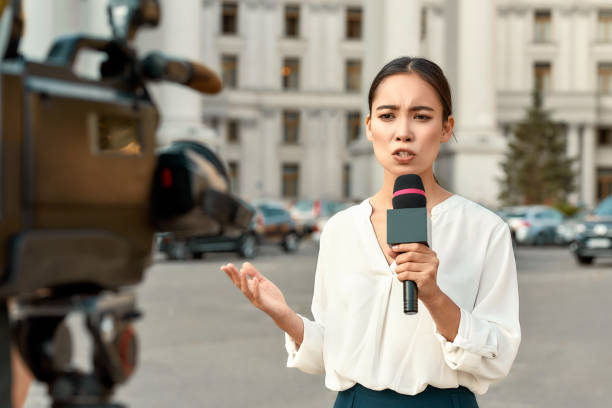
A Reporter is a professional who gathers, investigates, and presents news and information to the public through various media platforms such as newspapers, television, radio, or online outlets. They work in newsrooms, on-field assignments, or freelance roles, collaborating with editors, photographers, and media organizations. Reporters play a crucial role in informing society, uncovering truths, and shaping public opinion in a sector focused on journalism, communication, and current affairs.
Share :
Career tree mind map (horizontal) — Reporter
Colored branches, hub circles, and underlined topics — same style as counselor course classic (types 18–19 in admin).
Loading mind map…

Reporters are inquisitive and resourceful professionals who seek out and deliver timely news stories, often working in fast-paced environments like newsrooms or conflict zones. Their role involves researching events, conducting interviews, and crafting reports, frequently facing challenges such as tight deadlines or ethical dilemmas. They combine expertise in storytelling, fact-checking, and media ethics to address issues ranging from local incidents to global crises. As key contributors to public awareness and accountability, they help shape information flow in an industry increasingly driven by digital media, real-time updates, and multimedia content.

  • News Gathering and Investigation
    • Research and identify newsworthy events through sources, tips, or on-ground observation.
    • Investigate stories by collecting data, verifying facts, and uncovering hidden details.
  • Interviewing and Source Building
    • Conduct interviews with individuals, experts, or officials to gather firsthand information.
    • Build and maintain a network of reliable sources for credible reporting.
  • Story Writing and Editing
    • Write clear, concise, and engaging news articles or scripts for broadcast.
    • Edit content to meet editorial standards, deadlines, and platform-specific formats.
  • Multimedia Reporting
    • Capture photos, videos, or audio to complement written stories for digital or broadcast media.
    • Adapt content for multiple platforms, including social media and online portals.
  • On-Field Coverage
    • Report live from events, disasters, or breaking news locations under varying conditions.
    • Provide real-time updates or analysis during unfolding situations.
  • Ethical Journalism
    • Adhere to journalistic ethics by ensuring accuracy, fairness, and impartiality in reporting.
    • Protect the confidentiality of sources and handle sensitive topics responsibly.
  • Audience Engagement
    • Respond to audience feedback or queries through social media or public forums.
    • Tailor content to meet the interests and needs of specific demographics.
  • Collaboration and Coordination
    • Work with editors, producers, and technical teams to refine and publish stories.
    • Coordinate with other reporters for comprehensive coverage of large-scale events.

RouteSteps
Route 11. 10+2 in any stream
 2. Bachelor’s degree in Journalism or Mass Communication (3-4 years)
 3. Internship at a news organization or media house (3-6 months)
 4. Practice as Junior Reporter or Stringer
Route 21. 10+2 in any stream
 2. Diploma or Certificate in Journalism or Media Studies (6-12 months)
 3. Internship at a newspaper, TV channel, or online portal (3-6 months)
 4. Work as Reporter or Freelance Journalist
Route 31. 10+2 in any stream
 2. Bachelor’s degree in Journalism or Mass Communication (3-4 years)
 3. Master’s degree in Journalism or Media Studies (1-2 years)
 4. Practice as Senior Reporter or Special Correspondent
Route 41. 10+2 in any stream
 2. Short-term workshop or certification in News Reporting or Digital Journalism (1-3 months)
 3. Internship or freelance role in local news or online media
 4. Practice as Reporter domestically or internationally

  • Mandatory internships during degree programs at news organizations for real-world experience.
  • Rotations in newsrooms or field assignments for hands-on experience with story development.
  • Internships under senior reporters for exposure to investigative techniques and deadline pressures.
  • Observerships at press conferences or media events for experience in live coverage.
  • Participation in mock news reporting for practical skill development in writing and presentation.
  • Training in multimedia tools through real-world projects like video journalism.
  • Exposure to breaking news coverage during internships for on-the-spot reporting skills.
  • Volunteer roles in local newspapers or online portals during training to build a portfolio.
  • Community engagement initiatives for reporting on grassroots issues or local events.
  • International media attachments for global exposure to diverse journalistic practices.

  • Certificate in Journalism or News Reporting.
  • Bachelor’s in Journalism, Mass Communication, or Media Studies.
  • Master’s in Journalism, Broadcast Journalism, or Digital Media.
  • Diploma in Investigative Journalism.
  • Specialization in Political Reporting.
  • Certification in Multimedia Journalism.
  • Workshops on Ethical Journalism Practices.
  • Training in Data Journalism and Visualization.
  • Specialization in Sports or Entertainment Reporting.
  • Certification in Conflict and War Reporting.

InstituteCourse/ProgramOfficial Link
Indian Institute of Mass Communication (IIMC), New DelhiPG Diploma in Journalismhttps://www.iimc.nic.in/
Jamia Millia Islamia, New DelhiMA in Mass Communicationhttps://www.jmi.ac.in/
Symbiosis Institute of Media & Communication (SIMC), PuneMBA in Communication Managementhttps://www.simc.edu/
Xavier Institute of Communications (XIC), MumbaiDiploma in Journalism & Mass Communicationhttps://www.xic.edu/
University of Delhi, DelhiBA/MA in Journalismhttps://www.du.ac.in/
Manipal Academy of Higher Education, ManipalBA in Media & Communicationhttps://manipal.edu/
Amity School of Communication, NoidaBA/MA in Journalism & Mass Communicationhttps://www.amity.edu/
Makhanlal Chaturvedi National University of Journalism, BhopalBA/MA in Journalismhttps://www.mcu.ac.in/
IGNOU (Indira Gandhi National Open University), New DelhiPG Diploma in Journalism & Mass Communicationhttp://www.ignou.ac.in/
Asian College of Journalism (ACJ), ChennaiPG Diploma in Journalismhttps://www.asianmedia.org.in/

InstitutionCourseCountryOfficial Link
Columbia UniversityMA in JournalismUSAhttps://www.columbia.edu/
New York University (NYU)BA/MA in JournalismUSAhttps://www.nyu.edu/
University of Southern California (USC)BA/MA in JournalismUSAhttps://www.usc.edu/
University of WestminsterBA/MA in JournalismUKhttps://www.westminster.ac.uk/
City, University of LondonMA in Investigative JournalismUKhttps://www.city.ac.uk/
University of SydneyBachelor of Media and CommunicationsAustraliahttps://www.sydney.edu.au/
Ryerson UniversityBA in JournalismCanadahttps://www.ryerson.ca/
University of AmsterdamBA/MA in Media and JournalismNetherlandshttps://www.uva.nl/
Nanyang Technological University (NTU)BA in Communication StudiesSingaporehttps://www.ntu.edu.sg/
University of MissouriBA/MA in JournalismUSAhttps://www.missouri.edu/

India:

  • IIMC Entrance Exam: For admission to diploma programs at Indian Institute of Mass Communication.
  • JMI Entrance Exam: For admission to mass communication programs at Jamia Millia Islamia.
  • SIMC SET (Symbiosis Entrance Test): For admission to programs at Symbiosis Institute of Media & Communication.
  • University-Specific Tests: Many institutes like Xavier Institute of Communications conduct their own entrance exams or interviews.
  • Amity JEE (Joint Entrance Examination): For admission to communication programs at Amity University.


International:

  • SAT (Scholastic Assessment Test): Required for undergraduate admissions in countries like the USA.
  • ACT (American College Testing): Alternative to SAT for undergraduate admissions in the USA.
  • TOEFL (Test of English as a Foreign Language): Minimum score of 80-100 required for non-native speakers applying to programs in English-speaking countries.
  • IELTS (International English Language Testing System): Minimum score of 6.0-7.0 required for admission to universities in the UK, Australia, and other English-speaking regions.
  • PTE Academic (Pearson Test of English Academic): Accepted by many international institutes as an alternative to TOEFL or IELTS for English proficiency.

Trainee → Junior Reporter → Reporter → Senior Reporter → Special Correspondent → Bureau Chief → Editor

  • Newspapers and magazines for print journalism and feature writing.
  • Television channels for broadcast reporting and live coverage.
  • Radio stations for audio news reporting and updates.
  • Online news portals for digital journalism and multimedia content.
  • News agencies for wire services and syndicated reporting.
  • Government media outlets for public information and policy coverage.
  • Corporate sectors for internal communications or PR-related reporting.
  • Non-profit organizations for advocacy journalism and issue-based reporting.
  • Freelance journalism for independent investigations or niche beats.
  • Educational institutions for training or managing campus media.

IndiaInternational
The Times of IndiaThe New York Times, USA
The HinduBBC News, UK
Hindustan TimesCNN, USA
Indian ExpressReuters, Global
NDTVThe Guardian, UK
India TodayAl Jazeera, Qatar
Zee NewsThe Washington Post, USA
Press Trust of India (PTI)Associated Press (AP), USA
ANI (Asian News International)Bloomberg News, USA
Doordarshan (Prasar Bharati)Agence France-Presse (AFP), France

ProsCons
Opportunity to inform and influence public opinionOften requires irregular hours and tight deadlines
High intellectual satisfaction in uncovering truthsLimited job security in a competitive and shrinking traditional media landscape
Rewarding impact on societal awareness and accountabilityCan involve high stress and risk, especially in conflict zones
Diverse career paths across print, broadcast, and digital mediaRisk of burnout due to constant pressure for breaking news
Strong potential for growth with the rise of digital journalismLimited public recognition compared to other high-profile media roles

Career LevelIndia (₹ per annum)International (USD per annum)
Trainee/Junior Reporter (Early Career)1,80,000 - 3,50,00025,000 - 40,000
Reporter (Mid-Career)3,50,000 - 6,00,00040,000 - 60,000
Senior Reporter/Special Correspondent6,00,000 - 10,00,00060,000 - 85,000
Bureau Chief/Editor10,00,000 - 20,00,00085,000 - 150,000
Celebrity Journalist/Anchor15,00,000+100,000+
Note: Salaries may vary based on location, employer, experience, and media platform.  

  • Content Management Systems (e.g., WordPress, Drupal) for online publishing.
  • Audio Editing Software (e.g., Audacity, Adobe Audition) for radio or podcast reporting.
  • Video Editing Tools (e.g., Adobe Premiere, Final Cut Pro) for multimedia journalism.
  • Data Visualization Software (e.g., Tableau, Google Data Studio) for data journalism.
  • Social Media Tools (e.g., Hootsuite, TweetDeck) for news dissemination and engagement.
  • Transcription Software (e.g., Otter.ai) for converting interviews to text.
  • News Aggregation Tools (e.g., Feedly, Google News) for tracking stories and trends.
  • Fact-Checking Platforms (e.g., Snopes, FactCheck.org) for verifying information.
  • Project Management Software (e.g., Trello, Asana) for coordinating assignments.
  • Mobile Journalism Apps (e.g., Filmic Pro) for on-the-go reporting and filming.

  • Press Club of India (PCI).
  • Indian Women’s Press Corps (IWPC).
  • National Union of Journalists (NUJ), India.
  • International Federation of Journalists (IFJ).
  • Committee to Protect Journalists (CPJ), USA.
  • Reporters Without Borders (RSF), France.
  • Society of Professional Journalists (SPJ), USA.
  • National Association of Black Journalists (NABJ), USA.
  • European Journalism Centre (EJC).
  • Asian American Journalists Association (AAJA).

  • Walter Cronkite (Broadcast Journalism, USA): Known as "the most trusted man in America" for CBS Evening News. His reporting shaped television journalism. His impact influences broadcast credibility.
     
  • Christiane Amanpour (International Reporting, UK/Iran): Pioneer in war and crisis reporting for CNN. Her work redefined global journalism. Her contributions drive conflict coverage.
     
  • Bob Woodward (Investigative Journalism, USA): Known for uncovering the Watergate scandal with Carl Bernstein. His investigations set standards for accountability. His impact shapes investigative reporting.
     
  • Ravish Kumar (Television Journalism, India): Renowned for critical reporting on social issues at NDTV. His style challenges power structures. His contributions enhance Indian journalism.
     
  • BarkhaDutt (Conflict Reporting, India): Known for frontline reporting during the Kargil War. Her courage redefined war journalism in India. Her impact drives field reporting.
     
  • ArnabGoswami (Broadcast Journalism, India): Expert in high-energy news anchoring and debates on Republic TV. His approach polarized opinions but boosted viewership. His contributions shape opinion journalism.
     
  • Prannoy Roy (Television Journalism, India): Co-founder of NDTV, known for pioneering private news broadcasting in India. His vision transformed media landscapes. His impact influences news credibility.
     
  • Anderson Cooper (Broadcast Journalism, USA): Renowned for empathetic and on-ground reporting for CNN. His coverage spans disasters and politics. His contributions redefine field journalism.
     
  • Marie Colvin (War Reporting, USA/UK): Known for fearless reporting from conflict zones for The Sunday Times. Her sacrifice highlighted journalistic risks. Her impact drives war correspondence.
     
  • Glenn Greenwald (Investigative Journalism, USA): Expert in exposing government surveillance through the Snowden leaks. His work champions press freedom. His contributions shape digital-era reporting.
     

  • Build a strong foundation in journalistic ethics and storytelling to report effectively.
  • Seek early exposure to newsrooms through internships or local reporting to confirm interest in the field.
  • Prepare thoroughly for entrance exams or portfolio requirements specific to your chosen program or organization.
  • Pursue short courses in digital journalism or multimedia skills to gain expertise in niche areas.
  • Stay updated on current affairs by following reliable news sources and attending media workshops.
  • Develop hands-on skills in writing, fact-checking, and multimedia tools through practical projects.
  • Engage in real-world reporting or volunteer for community news to build experience.
  • Join professional associations like PCI or IFJ for networking and resources.
  • Work on accuracy and ethical precision to ensure credible news delivery.
  • Explore international journalism opportunities for exposure to diverse reporting styles.
  • Volunteer in local media or investigative projects to understand practical challenges.
  • Cultivate adaptability to handle various beats and evolving media platforms.
  • Attend continuing education programs to stay abreast of digital tools and journalistic trends.
  • Build a network with editors, sources, and media professionals for collaborative efforts.
  • Develop resilience to manage the high-pressure and often unpredictable nature of news reporting.
  • Balance factual rigor with engaging storytelling to adapt to rapid advancements in digital journalism and global news needs.

A career as a Reporter offers a dynamic opportunity to uncover truths, inform the public, and shape societal discourse through the power of journalism, contributing to transparency and accountability. Reporters are the frontline chroniclers of history, using their investigative skills to bring critical stories to light and foster informed communities. This profession blends curiosity with communication, providing pathways in print, broadcast, digital media, and beyond. For those passionate about current affairs, driven by a desire to reveal facts, and eager to navigate the evolving landscape of real-time news and multimedia platforms, becoming a Reporter is a profoundly impactful journey. It empowers individuals to challenge narratives, amplify voices, and advance public knowledge through the relentless pursuit of truth in journalism.

Knowledge & Skills You Will Learn
1
Rising Demand:Growing need for reporters skilled in multimedia and data journalism.
2
Skill Development Needs:Growing necessity for training in digital tools and mobile journalism.
Junior Reporter

Junior Reporter

Early-career professionals handle basic reporting tasks with increasing autonomy. They hone skills in story writing and source building while...

0.0LPA
Senior Reporter

Senior Reporter

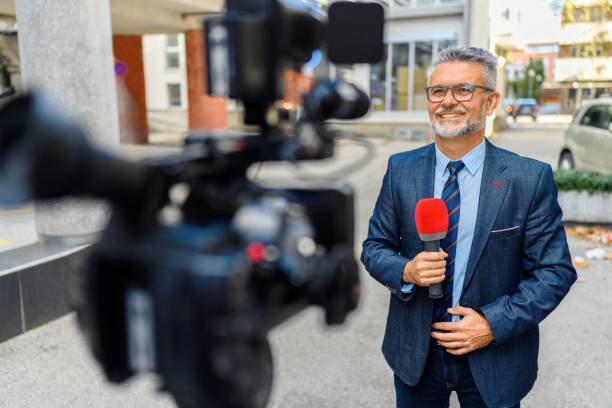
Specialists oversee major stories or beats with exceptional competence. They integrate deep source networks with expertise in storytelling for...

0.0LPA
Special Correspondent

Special Correspondent

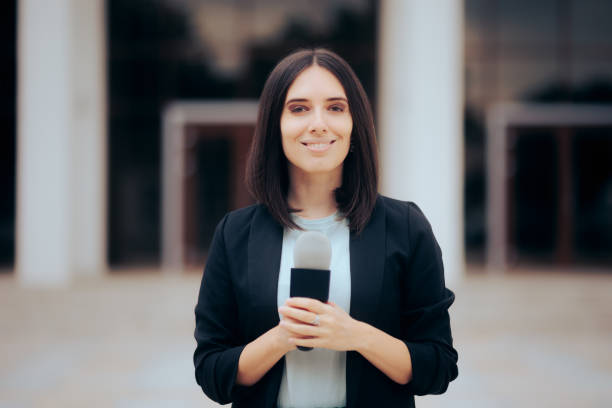
Senior professionals specialize in niche areas or regions, ensuring in-depth coverage. They provide leadership by managing high-profile...

0.0LPA

Interested in this career?

Take the next step and explore more about Reporter.