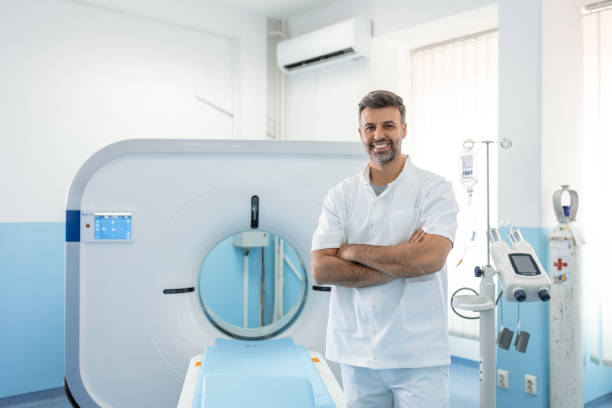
CT-Scan Technologist
Certified CT-Scan Technician
Explore CareerA Rehabilitation Engineer is a skilled professional who designs, develops, and implements technological solutions and devices to assist individuals with disabilities or injuries, enhancing their quality of life and independence. They work in diverse settings such as hospitals, rehabilitation centers, research institutions, and private companies. Rehabilitation Engineers apply expertise in engineering, biomechanics, and healthcare to address challenges faced by people with physical, sensory, or cognitive impairments, driving innovations in assistive technology and accessibility. Combining knowledge of mechanical design, electronics, and human physiology, they play a crucial role in creating adaptive solutions in a world increasingly focused on inclusivity and personalized care.
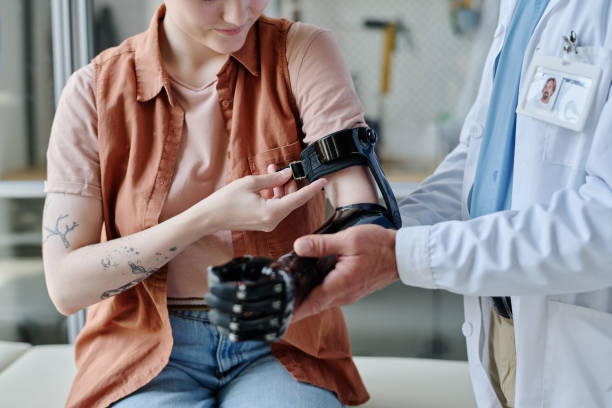
A Rehabilitation Engineer is a skilled professional who designs, develops, and implements technological solutions and devices to assist individuals with disabilities or injuries, enhancing their quality of life and independence. They work in diverse settings such as hospitals, rehabilitation centers, research institutions, and private companies. Rehabilitation Engineers apply expertise in engineering, biomechanics, and healthcare to address challenges faced by people with physical, sensory, or cognitive impairments, driving innovations in assistive technology and accessibility. Combining knowledge of mechanical design, electronics, and human physiology, they play a crucial role in creating adaptive solutions in a world increasingly focused on inclusivity and personalized care.
Rehabilitation Engineers are specialists who focus on creating and customizing assistive devices, prosthetics, and rehabilitation systems to help individuals regain or improve functionality, applying their technical skills to enhance mobility and daily living. Their work involves collaborating with healthcare professionals, designing innovative tools, and ensuring solutions meet individual needs through iterative testing and user feedback. They often operate in clinical, academic, or industrial environments, balancing technical innovation with patient-centered design. Rehabilitation Engineers are vital to fields like assistive technology, medical device development, and accessibility engineering, serving as key contributors to improving lives through tailored solutions, advancing technological breakthroughs, and ensuring inclusivity. They tackle critical challenges through methodical problem-solving and improve outcomes through evidence-based design in a landscape where accessibility remains essential for societal well-being.
Roles and Responsibilities:
Study Route & Eligibility Criteria:
| Route | Steps |
| Route 1 | 1. 10+2 with Physics, Chemistry, and Mathematics (PCM). 2. Bachelor's degree in Biomedical Engineering or Mechanical Engineering (4 years). 3. Master's degree in Rehabilitation Engineering or Biomedical Engineering (2 years). 4. PhD in Rehabilitation Technology or Assistive Technology (3-5 years, optional). 5. Postdoctoral research or industry experience in specialized areas (optional). |
| Route 2 | 1. 10+2 with Physics, Chemistry, and Mathematics (PCM). 2. Bachelor's degree in Electrical Engineering or Electronics Engineering (4 years). 3. Master's degree in Rehabilitation Engineering or related field (2 years). 4. Specialized training in assistive technology design (6 months-1 year). 5. Practical experience through internships or industry projects. |
| Route 3 | 1. 10+2 with Physics, Chemistry, and Mathematics (PCM). 2. Bachelor's degree in Mechatronics or Robotics Engineering (4 years). 3. Master's degree in Rehabilitation Engineering or Biomechanics (2 years). 4. Certification or short-term training in assistive device development (6 months-1 year). 5. Field experience in rehabilitation technology settings. |
| Route 4 | 1. 10+2 with Physics, Chemistry, and Mathematics (PCM). 2. Bachelor's degree from India in relevant engineering field (4 years). 3. Master's or PhD in Rehabilitation Engineering or Assistive Technology abroad (2-5 years). 4. Training or postdoctoral research in international programs (1-3 years). 5. Certification or licensure for international practice (if applicable). |
Significant Observations (Academic Related Points):
Internships & Practical Exposure:
Courses & Specializations to Enter the Field:
Top Institutes for Rehabilitation Engineering Education (India):
| Institute | Course/Program | Official Link |
| Indian Institute of Technology (IIT), Delhi | B.Tech/M.Tech in Biomedical Engineering | https://home.iitd.ac.in/ |
| Indian Institute of Technology (IIT), Madras | B.Tech/M.Tech in Mechanical Engineering | https://www.iitm.ac.in/ |
| National Institute of Technology (NIT), Warangal | B.Tech/M.Tech in Biomedical Engineering | https://www.nitw.ac.in/ |
| Vellore Institute of Technology (VIT), Vellore | B.Tech/M.Tech in Biomedical Engineering | https://vit.ac.in/ |
| Manipal Institute of Technology (MIT), Manipal | B.Tech/M.Tech in Biomedical Engineering | https://www.manipal.edu/ |
| Birla Institute of Technology and Science (BITS), Pilani | B.E./M.E. in Mechanical Engineering | https://www.bits-pilani.ac.in/ |
| Anna University, Chennai | B.E./M.E. in Biomedical Engineering | https://www.annauniv.edu/ |
| Jadavpur University, Kolkata | B.E./M.E. in Mechanical Engineering | https://www.jaduniv.edu.in/ |
| SRM Institute of Science and Technology, Chennai | B.Tech/M.Tech in Biomedical Engineering | https://www.srmist.edu.in/ |
| All India Institute of Medical Sciences (AIIMS), New Delhi | Training in Rehabilitation Technology | https://www.aiims.edu/ |
Top International Institutes:
| Institution | Course | Country | Official Link |
| Massachusetts Institute of Technology (MIT) | MS/PhD in Biomedical Engineering | USA | https://www.mit.edu/ |
| University of Oxford | MSc/PhD in Engineering Science | UK | https://www.ox.ac.uk/ |
| University of Melbourne | Master of Biomedical Engineering | Australia | https://www.unimelb.edu.au/ |
| University of Toronto | MASc/PhD in Biomedical Engineering | Canada | https://www.utoronto.ca/ |
| ETH Zurich | MS/PhD in Robotics and Rehabilitation | Switzerland | https://ethz.ch/en.html |
| Stanford University | MS/PhD in Bioengineering | USA | https://www.stanford.edu/ |
| University of British Columbia | MASc/PhD in Biomedical Engineering | Canada | https://www.ubc.ca/ |
| Imperial College London | MEng/PhD in Biomedical Engineering | UK | https://www.imperial.ac.uk/ |
| University of Queensland | Master of Engineering (Biomedical) | Australia | https://www.uq.edu.au/ |
| Delft University of Technology | MSc/PhD in Biomedical Engineering | Netherlands | https://www.tudelft.nl/en/ |
Entrance Tests Required:
India:
International:
Ideal Progressing Career Path
Undergraduate Student → Graduate Trainee (Master's) → Junior Rehabilitation Engineer → Established Rehabilitation Engineer → Senior Rehabilitation Engineer/Team Lead → Research Director/Technology Consultant
Major Areas of Employment:
Prominent Employers:
| India | International |
| All India Institute of Medical Sciences (AIIMS), New Delhi | World Health Organization (WHO), Global |
| Indian Institute of Technology (IIT), Delhi | Medtronic, USA |
| National Institute for Locomotor Disabilities (NILD), Kolkata | Ottobock, Germany |
| HCL Healthcare, Pan-India | Stryker Corporation, USA |
| Apollo Hospitals, Pan-India | Boston Scientific, USA |
| Fortis Healthcare, Pan-India | Ekso Bionics, USA |
| Manipal Hospitals, Pan-India | ReWalk Robotics, Israel |
| Narayana Health, Pan-India | Hocoma, Switzerland |
| Tata Memorial Centre, Mumbai | Invacare Corporation, USA |
| Sankara Nethralaya, Chennai | Disability Rights International, Global |
Pros and Cons of the Profession:
| Pros | Cons |
| Significant contribution to improving quality of life through innovative assistive technologies for individuals with disabilities. | Emotionally challenging work, especially when solutions fail to meet patient expectations or needs. |
| Intellectually stimulating work combining engineering, biomechanics, and healthcare innovation. | High pressure to meet strict safety and regulatory standards in device design and implementation. |
| High demand due to increasing focus on accessibility and inclusive technology across demographics. | Requires continuous learning to keep up with rapidly evolving technologies and engineering practices. |
| Opportunities for specialization in diverse areas like prosthetics, robotics, or accessibility design. | Limited immediate impact as device development and user adaptation can be slow and vary by case. |
| Growing relevance due to rising emphasis on disability inclusion, personalized care, and technological advancements. | Potential for burnout due to the intensive, detail-oriented nature of design and testing processes. |
Industry Trends and Future Outlook:
Salary Expectations:
| Career Level | India (₹ per annum) | International (US$ per annum) |
| Trainee/Graduate Student | 3,00,000 - 5,00,000 | $30,000 - $40,000 |
| Junior Rehabilitation Engineer | 5,00,000 - 8,00,000 | $45,000 - $60,000 |
| Established Rehabilitation Engineer | 8,00,000 - 12,00,000 | $60,000 - $80,000 |
| Senior Rehabilitation Engineer/Team Lead | 12,00,000 - 20,00,000 | $80,000 - $100,000 |
| Research Director/Technology Consultant | 20,00,000 - 30,00,000 | $100,000 - $130,000 |
Key Software Tools:
Professional Organizations and Networks:
Notable Rehabilitation Engineers and Industry Leaders (Top 10):
Advice for Aspiring Rehabilitation Engineers:
A career as a Rehabilitation Engineer offers a unique opportunity to impact individual lives and societal inclusivity by addressing challenges faced by people with disabilities through innovative technology. From designing prosthetics to developing smart assistive devices, Rehabilitation Engineers play a pivotal role in enhancing independence and quality of life for diverse populations. This field combines technical innovation, interdisciplinary collaboration, and patient-centered design, offering diverse paths in medical technology, research, and accessibility advocacy. For those passionate about engineering, problem-solving, and improving human functionality, a career as a Rehabilitation Engineer provides a deeply rewarding journey with significant potential for making meaningful contributions to society in an era where assistive technology and inclusivity continue to shape healthcare strategies, technological innovations, and global responses across all sectors.

Undergraduate students complete foundational education in engineering fields like biomedical or mechanical, learning core concepts while gaining...
0.0LPA

Trainees in Master's programs focus on advanced studies in rehabilitation engineering, learning design and testing techniques under supervision....
0.0LPA
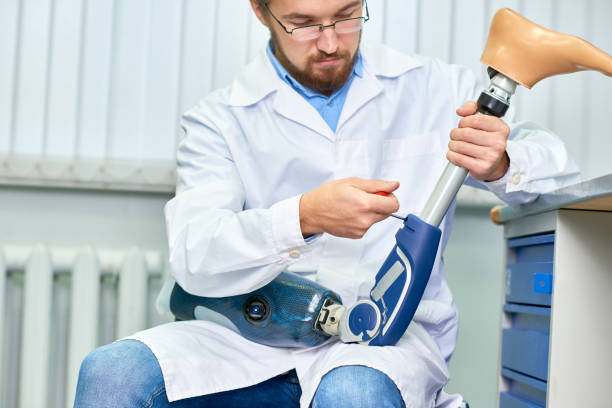
Early-career engineers establish roles in clinical or industrial settings while developing their expertise in assistive device design. They build...
0.0LPA
Take the next step and explore more about Rehabilitation Engineer.
Explore similar career paths that might interest you