Pulmonologist

A pulmonologist is a medical specialist who diagnoses and treats diseases and disorders of the respiratory system, including the lungs, airways, and related structures. They manage conditions such as asthma, chronic obstructive pulmonary disease (COPD), pneumonia, and lung cancer, often working in hospitals, clinics, or private practices. Pulmonologists play a critical role in critical care settings, particularly with ventilatory support and respiratory emergencies. By addressing respiratory health, they contribute significantly to improving patient quality of life and combating the global burden of respiratory diseases, which are increasingly prevalent due to factors like pollution, smoking, and aging populations.
Share :
Career tree mind map (horizontal) — Pulmonologist
Colored branches, hub circles, and underlined topics — same style as counselor course classic (types 18–19 in admin).
Loading mind map…

Pulmonologists are highly trained physicians dedicated to the prevention, diagnosis, and treatment of respiratory illnesses, ranging from common conditions like bronchitis to complex disorders such as pulmonary fibrosis or tuberculosis. Their work involves performing diagnostic tests like spirometry or bronchoscopy, prescribing medications or therapies, and managing critical care for patients with severe respiratory failure. They often balance clinical practice with research or teaching, collaborating with other specialists to provide comprehensive care. Pulmonologists are essential to healthcare, serving as experts in lung health, advancing treatments for respiratory conditions, and contributing to public health initiatives in a landscape where respiratory diseases remain a leading cause of morbidity and mortality worldwide.

  • Diagnosis of Respiratory Conditions
    • Conduct patient assessments through medical history and physical exams
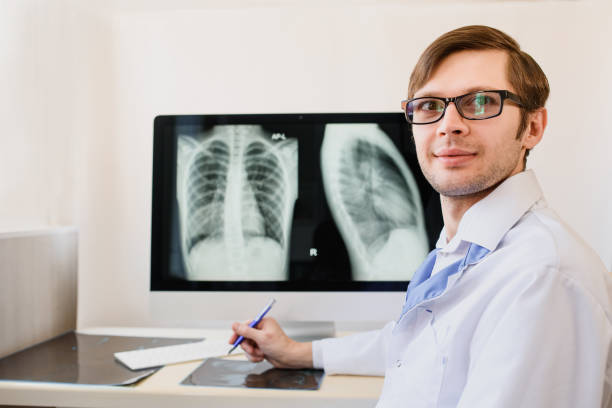
    • Order and interpret diagnostic tests like chest X-rays, CT scans, and pulmonary function tests
  • Treatment and Management
    • Prescribe medications, inhalers, or oxygen therapy for respiratory disorders
    • Develop treatment plans for chronic conditions like asthma or COPD
  • Procedural Interventions
    • Perform bronchoscopies to examine airways or obtain tissue samples
    • Manage ventilators and other life-support systems in critical care settings
  • Critical Care Management
    • Treat patients in intensive care units (ICUs) with acute respiratory distress
    • Provide emergency care for conditions like pneumothorax or respiratory failure
  • Patient Education and Counselling
    • Educate patients on managing respiratory conditions and lifestyle modifications
    • Advise on smoking cessation and environmental risk reduction
  • Referral and Collaboration
    • Coordinate with thoracic surgeons or oncologists for complex cases like lung cancer
    • Work with multidisciplinary teams for integrated patient care
  • Research and Development
    • Conduct studies on respiratory diseases to improve diagnostic or therapeutic approaches
    • Contribute to clinical trials for new respiratory medications or devices
  • Public Health Advocacy
    • Promote awareness of respiratory health issues like air pollution or occupational hazards
    • Participate in vaccination campaigns for diseases like influenza or pneumonia

RouteSteps
Route 11. 10+2 with Physics, Chemistry, Biology (PCB)
2. MBBS degree (5.5 years including internship)
3. MD in Pulmonary Medicine or Respiratory Medicine (3 years)
4. Clinical practice as Pulmonologist
Route 21. 10+2 with Physics, Chemistry, Biology (PCB)
2. MBBS degree (5.5 years including internship)
3. MD in General Medicine (3 years)
4. DM in Pulmonary Medicine (3 years)
5. Specialized clinical or academic position
Route 31. 10+2 with Physics, Chemistry, Biology (PCB)
2. MBBS degree (5.5 years including internship)
3. Diploma in Tuberculosis and Chest Diseases (DTCD) (2 years)
4. Practice in respiratory care settings
Route 41. 10+2 with Physics, Chemistry, Biology (PCB)
2. MBBS degree (5.5 years including internship)
3. International fellowship or residency in Pulmonary Medicine (1-3 years)
4. Clinical role abroad or in India

  • Mandatory internship during MBBS in hospital settings across specialties
  • Rotations in internal medicine, critical care, and pulmonology during internship
  • Postgraduate residency in pulmonary medicine for hands-on patient management
  • Observerships with experienced pulmonologists in hospitals or clinics
  • Participation in respiratory health camps for community outreach
  • Training in bronchoscopy, ventilator management, and other respiratory procedures
  • Exposure to chronic respiratory disease management through patient follow-ups
  • Clinical projects on respiratory conditions during medical training
  • Public health initiatives for awareness on smoking cessation or air pollution
  • International clinical attachments for global exposure to pulmonary practices

  • MBBS (Bachelor of Medicine and Bachelor of Surgery)
  • MD in Pulmonary Medicine or Respiratory Medicine
  • DM in Pulmonary Medicine and Critical Care
  • Diploma in Tuberculosis and Chest Diseases (DTCD)
  • Certificate Course in Critical Care Medicine
  • Fellowship in Interventional Pulmonology
  • Training in Sleep Medicine
  • Specialization in Paediatric Pulmonology
  • Workshops on Ventilator Management and Respiratory Emergencies
  • Short Courses on Thoracic Imaging and Diagnostics

InstituteCourse/ProgramOfficial Link
All India Institute of Medical Sciences (AIIMS), New DelhiMD/DM Pulmonary Medicinehttps://www.aiims.edu/
Postgraduate Institute of Medical Education and Research (PGIMER), ChandigarhMD/DM Pulmonary Medicinehttps://pgimer.edu.in/
Christian Medical College (CMC), VelloreMD Pulmonary Medicinehttps://www.cmch-vellore.edu/
Maulana Azad Medical College (MAMC), New DelhiMD Pulmonary Medicinehttps://www.mamc.ac.in/
Armed Forces Medical College (AFMC), PuneMD Pulmonary Medicinehttps://www.afmc.nic.in/
Jawaharlal Institute of Postgraduate Medical Education & Research (JIPMER), PuducherryMD Pulmonary Medicinehttps://www.jipmer.edu.in/
Seth GS Medical College & KEM Hospital, MumbaiMD Pulmonary Medicinehttps://www.kem.edu/
Madras Medical College (MMC), ChennaiMD Pulmonary Medicinehttps://www.mmc.ac.in/
King George’s Medical University (KGMU), LucknowMD Pulmonary Medicinehttps://www.kgmu.org/
Vallabhbhai Patel Chest Institute (VPCI), DelhiMD Pulmonary Medicinehttps://www.vpci.org.in/

InstitutionCourseCountryOfficial Link
Harvard Medical SchoolFellowship in Pulmonary MedicineUSAhttps://www.harvard.edu/
Johns Hopkins UniversityPulmonary and Critical Care FellowshipUSAhttps://www.jhu.edu/
University College London (UCL)MSc Respiratory MedicineUKhttps://www.ucl.ac.uk/
University of California, San Francisco (UCSF)Pulmonary Medicine FellowshipUSAhttps://www.ucsf.edu/
University of OxfordClinical Research in Respiratory MedicineUKhttps://www.ox.ac.uk/
McGill UniversityPulmonary Medicine ResidencyCanadahttps://www.mcgill.ca/
University of MelbourneAdvanced Training in Respiratory MedicineAustraliahttps://www.unimelb.edu.au/
Karolinska InstitutetResearch Program in Respiratory MedicineSwedenhttps://ki.se/en
University of TorontoPulmonary Medicine FellowshipCanadahttps://www.utoronto.ca/
Stanford UniversityPulmonary and Critical Care FellowshipUSAhttps://www.stanford.edu/

India:

  • NEET Super Speciality (NEET-SS) for DM in Pulmonary Medicine
  • AIIMS MBBS Entrance Examination (now merged with NEET-UG)
  • JIPMER MBBS Entrance Exam (now merged with NEET-UG)
  • State-level medical entrance exams for MBBS admissions
  • INI-CET (Institute of National Importance Combined Entrance Test) for postgraduate courses
  • University-specific entrance tests for diploma or certificate programs

International:

  • United States Medical Licensing Examination (USMLE) for residency in the USA
  • Medical College Admission Test (MCAT) for MD programs in the USA and Canada
  • Professional and Linguistic Assessments Board (PLAB) for practice in the UK
  • Australian Medical Council (AMC) exams for practice in Australia
  • Medical Council of Canada Qualifying Examination (MCCQE) for Canada
  • Test of English as a Foreign Language (TOEFL) with a minimum score of 100-110
  • International English Language Testing System (IELTS) with a minimum score of 7.0-7.5
  • Pearson Test of English Academic (PTE Academic)
  • Duolingo English Test (accepted by some institutions)

Medical Student → Intern → Junior Resident → Pulmonologist → Senior Pulmonologist → Pulmonary Department Head/Academic Faculty → Hospital Administrator/Research Director

  • Hospitals for acute and chronic respiratory care
  • Private clinics for outpatient pulmonary consultations
  • Intensive care units (ICUs) for critical respiratory management
  • Academic institutions for teaching and research in pulmonology
  • Government health departments for respiratory disease control programs
  • Research institutes for studying lung diseases and treatments
  • Rehabilitation centers for chronic respiratory condition management
  • Telemedicine platforms for remote respiratory consultations
  • Public health organizations for air quality and respiratory health initiatives
  • Diagnostic centers for pulmonary testing and imaging services

IndiaInternational
All India Institute of Medical Sciences (AIIMS)Mayo Clinic, USA
Postgraduate Institute of Medical Education and Research (PGIMER)Cleveland Clinic, USA
Apollo HospitalsJohns Hopkins Hospital, USA
Fortis HealthcareMassachusetts General Hospital, USA
Max HealthcareRoyal Brompton Hospital, UK
Christian Medical College (CMC), VelloreToronto General Hospital, Canada
Medanta – The MedicitySt Thomas’ Hospital, UK
Narayana HealthMount Sinai Hospital, USA
Manipal HospitalsRoyal Melbourne Hospital, Australia
Vallabhbhai Patel Chest Institute (VPCI)Stanford Health Care, USA

ProsCons
Opportunity to save lives through respiratory careHigh stress from managing critical and emergency cases
High demand for pulmonologists due to rising respiratory issuesLong working hours, often in high-pressure ICU settings
Rewarding work in improving breathing and quality of lifeEmotional toll from dealing with chronic or terminal illnesses
Diverse roles in clinical care, research, and critical careRisk of burnout due to intense patient care demands
Opportunity for specialization in areas like sleep medicineExposure to occupational hazards like infectious diseases

Career LevelIndia (₹ per annum)International (US$ per annum)
Intern/Junior Resident3,00,000 - 6,00,000$50,000 - $60,000
Pulmonologist (Early Career)8,00,000 - 15,00,000$150,000 - $200,000
Senior Pulmonologist15,00,000 - 25,00,000$200,000 - $300,000
Pulmonary Department Head/Academic Faculty25,00,000 - 35,00,000$300,000 - $400,000
Hospital Administrator/Research Director35,00,000+$400,000+

  • Electronic Medical Record (EMR) systems for patient data management
  • Pulmonary function testing software for diagnostic assessments
  • Imaging software for analyzing chest X-rays and CT scans
  • Ventilator management systems for critical care settings
  • Telehealth platforms like Teladoc for virtual consultations
  • Diagnostic support tools for clinical decision-making
  • Billing and coding software for administrative tasks
  • Research databases like PubMed for staying updated
  • Microsoft Office Suite for documentation and presentations
  • Secure messaging tools for communication with healthcare teams

  • Indian Chest Society (ICS)
  • National College of Chest Physicians (NCCP), India
  • American Thoracic Society (ATS)
  • European Respiratory Society (ERS)
  • British Thoracic Society (BTS)
  • American College of Chest Physicians (CHEST)
  • World Association for Bronchology and Interventional Pulmonology (WABIP)
  • Asia Pacific Society of Respirology (APSR)
  • International Union Against Tuberculosis and Lung Disease (The Union)
  • Canadian Thoracic Society (CTS)

  • Dr. William Welch (Historical, USA): Pioneer in pulmonary pathology, contributed to understanding lung diseases since the late 1800s.
     
  • Dr. René Laennec (Historical, France): Inventor of the stethoscope, revolutionized respiratory diagnostics since the early 1800s.
     
  • Dr.ZarirUdwadia (Contemporary, India): Renowned for research on multidrug-resistant tuberculosis since the 1990s.
     
  • Dr. Dean Schraufnagel (Contemporary, USA): Leader in respiratory health advocacy and education since the 1980s.
     
  • Dr. S.K. Jindal (Contemporary, India): Expert in pulmonary medicine and chronic respiratory diseases since the 1970s.
     
  • Dr. Sonia Buist (Contemporary, USA): Advocate for global respiratory health and COPD research since the 1970s.
     
  • Dr.Dheeraj Gupta (Contemporary, India): Specialist in interventional pulmonology and lung care since the 1990s.
     
  • Dr. Peter Barnes (Contemporary, UK): Leader in asthma and COPD research since the 1980s.
     
  • Dr.RandeepGuleria (Contemporary, India): Noted pulmonologist and former AIIMS director, focused on respiratory care since the 1980s.
     
  • Dr. Marc Humbert (Contemporary, France): Expert in pulmonary hypertension and rare lung diseases since the 1990s.
     

  • Build a strong foundation in medical sciences during undergraduate (MBBS) studies with a focus on clinical skills.
  • Seek early clinical exposure through internships and rotations in respiratory and critical care departments.
  • Develop diagnostic and procedural skills to effectively manage a wide range of respiratory conditions.
  • Pursue postgraduate training (MD or DM) in pulmonary medicine for advanced expertise.
  • Engage in community health initiatives to understand public respiratory health challenges.
  • Cultivate empathy and communication skills to build trust and support patients and families.
  • Attend workshops and CME programs to stay updated on medical advancements and respiratory care guidelines.
  • Build a network with healthcare professionals for referrals and interdisciplinary collaboration.
  • Develop resilience to handle the emotional and professional demands of critical respiratory care.
  • Balance clinical practice with continuous learning to adapt to evolving healthcare needs and technologies.

A career as a Pulmonologist offers a profound opportunity to serve as a cornerstone of respiratory healthcare, providing essential medical care to individuals suffering from lung and airway disorders. From diagnosing and treating a wide array of respiratory conditions to managing critical care in life-threatening situations, pulmonologists play a vital role in enhancing patient well-being. This field combines clinical expertise, procedural skills, and a commitment to improving respiratory health, offering diverse paths in hospitals, private practice, and research. For those passionate about making a direct impact on individual lives and addressing the global burden of respiratory diseases, a career as a Pulmonologist provides an emotionally and professionally rewarding journey with the potential to make significant contributions to medicine and society by enhancing the quality of life for countless individuals worldwide.


Knowledge & Skills You Will Learn
1
Diagnostic skills for identifying respiratory conditions through tests and imaging
2
Proficiency in respiratory procedures like bronchoscopy and ventilator management
3
Critical thinking for developing effective treatment plans in emergencies
4
Empathy and communication for patient and family interactions
5
Time management for handling multiple patients and critical cases
6
Adaptability for addressing diverse and acute respiratory issues
7
Interpersonal skills for building trust with patients
8
Problem-solving for managing complex or unclear diagnoses
9
Organizational skills for maintaining patient records and coordinating care
10
Emotional resilience for handling challenging medical situations
Medical Student

Medical Student

Students complete foundational medical training with exposure to various specialties. They build clinical basics. Their education forms a medical...

0.0LPA

Intern

Intern

Early-career doctors gain hands-on experience in hospital settings across departments. They develop clinical skills. Their rotations provide broad...

0.0LPA
Junior Resident

Junior Resident

Trainees focus on pulmonary or internal medicine, building expertise in respiratory care. They gain practical knowledge. Their training hones...

0.0LPA

Interested in this career?

Take the next step and explore more about Pulmonologist.