Public Prosecutor

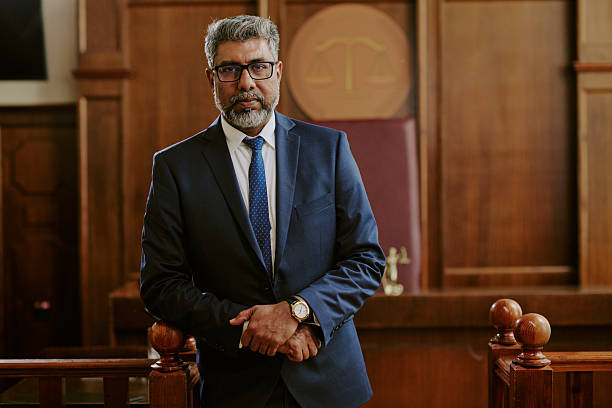
A Public Prosecutor is a legal professional dedicated to serving as a representative of the state or government under the Government of India, responsible for prosecuting criminal cases on behalf of the public in courts of law. They work in the judicial and legal sectors, collaborating with law enforcement agencies, judges, and defense counsels to ensure justice and uphold the rule of law. Public Prosecutors play a critical role in driving the criminal justice system in a country focused on maintaining law and order, protecting public interest, and ensuring fair trials at various judicial levels.
Share :
Career tree mind map (horizontal) — Public Prosecutor
Colored branches, hub circles, and underlined topics — same style as counselor course classic (types 18–19 in admin).
Loading mind map…

Public Prosecutors are government-appointed legal officers responsible for representing the state in criminal proceedings, ensuring that offenders are brought to justice, and safeguarding public interest by presenting evidence and arguments in court. Their role involves meticulous legal research, case preparation, and courtroom advocacy, often working in settings such as district courts, high courts, or sessions courts. They combine expertise in criminal law, procedural codes, and ethical practices to tackle issues like crime prevention, victim protection, and judicial delays. As key contributors to societal justice, they help state governments and communities thrive in an era prioritizing legal accountability, transparency, and responsive criminal justice systems.

  • Representation of the State in Criminal Cases
    • Act as the legal representative of the state or government in criminal proceedings in various courts.
    • Prosecute accused individuals by presenting evidence, witnesses, and legal arguments to ensure justice.
  • Case Preparation and Legal Research
    • Analyze case files, police reports, and evidence to build a strong prosecution case against the accused.
    • Conduct thorough legal research on relevant laws, precedents, and statutes under the Indian Penal Code (IPC) and Criminal Procedure Code (CrPC).
  • Courtroom Advocacy
    • Argue cases before judges, cross-examine defense witnesses, and present opening and closing statements in court.
    • Ensure that the prosecution’s case is presented logically and persuasively to secure convictions.
  • Coordination with Law Enforcement
    • Collaborate with police and investigative agencies to gather evidence, ensure proper filing of chargesheets, and address procedural lapses.
    • Advise law enforcement on legal aspects during investigations to strengthen cases.
  • Protection of Public Interest and Victim Rights
    • Uphold public interest by ensuring that criminal acts are prosecuted effectively to deter future offenses.
    • Advocate for victims’ rights and ensure their concerns are addressed during legal proceedings.
  • Compliance with Legal and Ethical Standards
    • Adhere to legal protocols and ethical guidelines to ensure fair trials and avoid misuse of authority.
    • Maintain impartiality and avoid personal bias while prosecuting cases on behalf of the state.
  • Documentation and Reporting
    • Prepare detailed legal briefs, affidavits, and other court documents required for prosecution.
    • Submit reports to senior legal authorities or government bodies on case progress and outcomes.
  • Mentorship and Advisory Role
    • Guide junior prosecutors or assistant public prosecutors in case handling and courtroom techniques.
    • Provide legal opinions to government departments or agencies on criminal matters when required.

RouteSteps
Route 1

1. 10+2 in any stream (Science/Commerce/Arts).

2. Bachelor’s degree in Law (LL.B) from a recognized university (3 years after graduation or 5 years integrated course).

3. Enroll with the Bar Council of India or State Bar Council and obtain a license to practice law (6 months-1 year).

4. Prepare for and clear state-level recruitment exams conducted by State Public Service Commissions for Public Prosecutor roles (1-2 years).

Route 2

1. 10+2 in any stream (Science/Commerce/Arts).

2. Bachelor’s degree in Law (LL.B) from a recognized university (3 years after graduation or 5 years integrated course).

3. Gain experience as a practicing lawyer in criminal law (2-5 years, optional).

4. Apply for Public Prosecutor positions through State PSC exams or direct appointments by state governments (1-2 years).

Route 3

1. 10+2 in any stream (Science/Commerce/Arts).

2. Bachelor’s degree in Law (LL.B) from a recognized university (3 years after graduation or 5 years integrated course).

3. Master’s degree in Law (LL.M) with specialization in Criminal Law (1-2 years, optional).

4. Prepare for and clear State PSC exams or apply for Public Prosecutor roles through government notifications (1-2 years).

Route 4

1. 10+2 in any stream (Science/Commerce/Arts).

2. Bachelor’s degree in Law (LL.B) from a recognized university (3 years after graduation or 5 years integrated course).

3. Join coaching institutes for structured preparation for State PSC exams for legal services (1-2 years).

4. Gain practical exposure through internships or clerkships in criminal law (6 months-1 year, optional).

5. Clear State PSC exams or secure appointment as Public Prosecutor through service tenure or direct recruitment (1-2 years).

  • Voluntary work with legal aid organizations or NGOs for real-world insights into criminal justice and public interest litigation.
  • Participation in moot court competitions or mock trials during law school for hands-on advocacy experience.
  • Internships with senior advocates, public prosecutors, or law firms specializing in criminal law for exposure to case preparation and courtroom proceedings.
  • Observerships in district or sessions courts to understand prosecution processes and judicial interactions.
  • Engagement in student-led legal clinics or pro bono initiatives for practical skill development in client interaction and legal drafting.
  • Training through government schemes like internships at district legal services authorities for understanding public prosecution workflows.
  • Exposure to criminal case documentation or evidence analysis under practicing lawyers for grassroots-level legal experience.
  • Fieldwork on legal awareness campaigns or victim support programs to understand societal needs and justice delivery challenges.
  • Community outreach programs to engage with local issues like domestic violence or cybercrime and build problem-solving skills.
  • Participation in state-level workshops or seminars on criminal law for exposure to prosecution strategies and legal challenges.

  • Certificate in Criminal Law and Procedure
  • Bachelor’s in Law (LL.B) with focus on Criminal Law
  • Master’s in Law (LL.M) with specialization in Criminal Law
  • Diploma in Criminal Justice Administration
  • Specialization in Prosecution and Courtroom Advocacy
  • Certificate in Evidence Law and Forensic Science
  • Workshops on Criminal Procedure Code (CrPC) and Indian Penal Code (IPC)
  • Training in Legal Research and Case Analysis
  • Specialization in Cybercrime and Digital Evidence
  • Certificate in Ethics and Professional Conduct in Law

InstituteCourse/ProgramOfficial Link
National Law School of India University (NLSIU), BangaloreLL.B/LL.M in Criminal Lawhttps://www.nls.ac.in/
National Law University (NLU), DelhiLL.B/LL.M in Criminal Lawhttps://nludelhi.ac.in/
NALSAR University of Law, HyderabadLL.B/LL.M in Criminal Lawhttps://www.nalsar.ac.in/
West Bengal National University of Juridical Sciences (WBNUJS), KolkataLL.B/LL.M in Criminal Lawhttps://www.nujs.edu/
National Law University (NLU), JodhpurLL.B/LL.M in Criminal Lawhttps://www.nlujodhpur.ac.in/
Gujarat National Law University (GNLU), GandhinagarLL.B/LL.M in Criminal Lawhttps://www.gnlu.ac.in/
Symbiosis Law School (SLS), PuneLL.B/LL.M in Criminal Lawhttps://www.symlaw.ac.in/
ILS Law College, PuneLL.B in Criminal Lawhttps://ilslaw.edu/
Faculty of Law, University of DelhiLL.B/LL.M in Criminal Lawhttps://law.du.ac.in/
Amity Law School, NoidaLL.B/LL.M in Criminal Lawhttps://www.amity.edu/als/

India:

  • State Public Service Commission Exams (e.g., UPPSC Judiciary, MPPSC Legal Services): Conducted by respective state commissions for recruitment to Public Prosecutor or Assistant Public Prosecutor roles (Prelims, Mains, Interview).
  • Combined Competitive Examination (CCE) by State PSCs: For states like Bihar (BPSC), Jharkhand (JPSC), etc., to select candidates for legal posts leading to Public Prosecutor through promotions or direct recruitment.
  • Tamil Nadu Public Service Commission (TNPSC) Group I/II Exam: For recruitment to legal services roles in Tamil Nadu, with potential progression to Public Prosecutor.
  • Maharashtra Public Service Commission (MPSC) Legal Services Exam: For legal positions in Maharashtra state government, leading to Public Prosecutor with experience.
  • Rajasthan Public Service Commission (RPSC) Legal Services Exam: For recruitment to Public Prosecutor or related roles in Rajasthan state government.

Note: Eligibility criteria such as age limits (generally 21-35 years for State PSC with relaxations for reserved categories), educational qualifications (LL.B degree), and number of attempts vary by exam and state. Candidates must check specific state PSC notifications for details. Progression to Public Prosecutor may require prior experience as an Assistant Public Prosecutor or practicing lawyer, along with clearing state recruitment processes or direct appointments.

Law Graduate/Practicing Lawyer → Assistant Public Prosecutor → Public Prosecutor → Senior Public Prosecutor → Director of Public Prosecutions → Additional Director General (Legal Services) → Legal Advisor to Government → Policy Consultant/Academician

  • Criminal prosecution for representing the state in criminal cases at district, sessions, or higher courts.
  • Legal research for analyzing evidence, statutes, and precedents to build prosecution cases under state jurisdiction.
  • Courtroom advocacy for arguing cases, cross-examining witnesses, and ensuring convictions in judicial settings.
  • Victim support for advocating victims’ rights and ensuring their representation in criminal proceedings.
  • Law enforcement coordination for working with police to gather evidence and strengthen investigations.
  • Public interest litigation for addressing societal issues like corruption or human rights violations through prosecution.
  • Legal documentation for preparing briefs, affidavits, and reports for court and government submissions.
  • Policy advisory for providing legal opinions to state governments on criminal justice matters.
  • Training and mentorship for guiding junior prosecutors in legal strategies and courtroom skills.
  • Judicial coordination for collaborating with judges and defense counsels to ensure fair trial processes.

India (State Governments and Legal Departments)

  • Uttar Pradesh State Government (UPPSC), Lucknow
  • Madhya Pradesh State Government (MPPSC), Bhopal
  • Rajasthan State Government (RPSC), Jaipur
  • Tamil Nadu State Government (TNPSC), Chennai
  • Maharashtra State Government (MPSC), Mumbai
  • Karnataka State Government (KPSC), Bangalore
  • Bihar State Government (BPSC), Patna
  • West Bengal State Government (WBPSC), Kolkata
  • Andhra Pradesh State Government (APPSC), Vijayawada
  • Telangana State Government (TSPSC), Hyderabad

ProsCons
Direct impact on society through prosecuting criminals and ensuring justice for victimsHigh-pressure role due to accountability for securing convictions and handling sensitive cases
Job security and prestige due to government employment and societal respect as a legal officerChallenges in addressing judicial delays, inadequate evidence, or defense tactics
Opportunity to uphold public interest and contribute to a safer society through legal actionEmotional stress from dealing with violent crimes, victim trauma, or case failures
Varied responsibilities in case preparation, courtroom advocacy, and legal coordinationLong working hours, often requiring preparation late into the night or during trials
Potential for societal change through impactful prosecutions and deterrence of crimeLimited immediate visibility of impact, as legal proceedings can take years to conclude

Career LevelIndia (₹ per annum)
Law Graduate/Practicing Lawyer (Early Career)3,00,000 - 5,00,000
Assistant Public Prosecutor (APP)5,00,000 - 7,00,000
Public Prosecutor7,00,000 - 9,00,000
Senior Public Prosecutor9,00,000 - 12,00,000
Director of Public Prosecutions/Additional Director General (Legal Services)/Legal Advisor/Policy Consultant/Academician12,00,000 - 18,00,000+

Note: Salaries may vary based on state, seniority, postings, and additional allowances (e.g., HRA, DA). Figures are updated estimates based on current pay scales under the 7th Pay Commission as of 2025, reflecting revisions, inflation, and state-specific variations for state legal service officers progressing to Public Prosecutor roles in India. Data is sourced from government notifications, State PSC reports, and public sector trends. These are approximations and may differ based on real-time policy changes or state-specific rules.

  • E-Court Platforms (e.g., eCourts Services by NIC) for managing case filings and court proceedings digitally.
  • Legal Research Tools (e.g., Manupatra, SCC Online) for accessing statutes, case laws, and legal precedents.
  • Document Management Systems (e.g., MS Word, e-Office by NIC) for drafting and storing legal briefs and affidavits.
  • Data Analysis Tools (e.g., MS Excel) for organizing case data and evidence timelines.
  • Case Management Software (e.g., state-specific judicial systems) for tracking case progress and court schedules.
  • Communication Platforms (e.g., WhatsApp for Business, NIC Email) for coordinating with legal teams and law enforcement.
  • Cybercrime Tools (e.g., basic forensic software, IP tracking tools) for investigating digital offenses.
  • Public Grievance Portals (e.g., CPGRAMS, state-specific portals) for addressing victim or citizen complaints online.
  • Evidence Presentation Tools (e.g., PowerPoint, digital projectors) for courtroom demonstrations.
  • Training Platforms (e.g., iGOT Karmayogi) for continuous learning and skill development in criminal law.

  • Bar Council of India (BCI), Delhi
  • State Bar Councils (State-Specific, e.g., Bar Council of Uttar Pradesh)
  • Indian Law Institute (ILI), Delhi
  • National Judicial Academy (NJA), Bhopal
  • State Judicial Academies (e.g., Uttar Pradesh State Judicial Training & Research Institute)
  • Criminal Lawyers Association of India
  • Public Prosecutors’ Association (State-Specific)
  • Legal Services Network, India
  • Indian Society of Criminology, Delhi
  • Law and Justice Research Forum, India

  • Build a strong foundation in criminal law, legal procedures, and current affairs to excel in competitive state legal service exams.
  • Seek early exposure to criminal justice through internships or moot courts to confirm interest in prosecution roles.
  • Prepare thoroughly for State PSC exams with a focus on written tests, legal knowledge, and interview stages for selection.
  • Pursue structured coaching or self-study plans to gain expertise in criminal law, evidence analysis, and courtroom advocacy.
  • Stay updated on amendments in criminal laws, judicial precedents, and current events through legal journals and news.
  • Develop hands-on skills in legal research, case preparation, and public speaking through practical legal engagements.
  • Engage in criminal law internships or clerkships to build real-world experience in handling prosecution cases.
  • Join professional forums like the Indian Law Institute for resources and networking with legal professionals.
  • Work on analytical and ethical skills to ensure impactful prosecution solutions and judicial fairness.
  • Explore state-specific legal challenges for exposure to local judicial structures and cultural nuances.
  • Volunteer in legal aid or NGO initiatives to understand victim needs and societal impacts of prosecution.
  • Cultivate adaptability to handle diverse case types, challenging court environments, and evolving legal requirements.
  • Attend state-sponsored legal training or workshops to stay abreast of new prosecution tools and forensic techniques.
  • Build a network with current prosecutors, mentors, and peers for guidance and collaborative learning opportunities.
  • Develop resilience to manage the high-pressure demands and emotional challenges of criminal prosecution.
  • Balance legal precision with empathy to drive justice impact and adapt to societal changes.

A career as a Public Prosecutor offers a unique opportunity to contribute to societal progress by leading criminal prosecutions that ensure justice and public safety across diverse regions of India. From representing the state in court to safeguarding victim rights, Public Prosecutors play a pivotal role in the criminal justice system and citizen protection. This field combines expertise in legal advocacy, criminal law, and a commitment to societal fairness, offering diverse paths in prosecution, public interest litigation, legal advisory, and state judicial services. For those passionate about shaping the future of criminal justice, adapting to dynamic legal challenges, and addressing critical public safety needs in an era of increasing focus on accountability and fairness, a career as a Public Prosecutor provides an intellectually stimulating and professionally rewarding journey with the potential to make significant contributions to society by advancing legal compliance, crime deterrence, and effective justice delivery across India.


Knowledge & Skills You Will Learn
1
Criminal Justice Focus: Growing emphasis on speedy trials in India, necessitating expertise in efficient prosecution at all levels.
2
Judicial Backlog Issues: Growth of case pendency in India, driving demand for skilled prosecutors to expedite legal proceedings.
3
Citizen-Centric Reforms: Push for transparency and accountability in prosecution, creating opportunities for ethical legal practice.
4
Legal Talent Demand: High demand for skilled legal professionals in India, pushing for competitive recruitment to Public Prosecutor roles.
5
Skill Development Needs: Demand for training in digital evidence, international law, and victim advocacy for future Public Prosecutors.
Law Graduate/Practicing Lawyer

Law Graduate/Practicing Lawyer

Entry-level legal professionals practice criminal law under state bar councils, often in district or sessions courts, focusing on building...

0.0LPA

Assistant Public Prosecutor (APP)

Assistant Public Prosecutor (APP)

APPs represent the state in lower courts under state government jurisdiction, prosecuting minor to mid-level criminal cases in district or...

0.0LPA

Public Prosecutor

Public Prosecutor

Public Prosecutors manage significant criminal cases on behalf of the state in sessions or district courts under state government legal services,...

0.0LPA

Interested in this career?

Take the next step and explore more about Public Prosecutor.