
Professors and Lecturers

Professors and Lecturers are professionals dedicated to imparting knowledge, conducting research, and fostering critical thinking in higher education settings, ensuring academic excellence and intellectual growth for students. In India, the demand for professors and lecturers remains steady due to the expansion of universities, the focus on quality education under the National Education Policy (NEP) 2020, and the rise of online and hybrid learning platforms. With roots in traditional academia and modern advancements such as digital teaching tools, interdisciplinary research, and global collaboration, this career is vital for shaping future generations, advancing knowledge, and contributing to societal development. Professionals in this field are crucial for teaching and mentoring in universities, colleges, and professional institutes, contributing to opportunities in education, research, and policy-making. This career drives progress through trends like technology integration, experiential learning, and a focus on skill-based, outcome-oriented education.

Share :
Career tree mind map (horizontal) — Professors and Lecturers
Colored branches, hub circles, and underlined topics — same style as counselor course classic (types 18–19 in admin).
Loading mind map…

Professors and Lecturers work in diverse settings such as universities, colleges, research institutes, online education platforms, or as guest faculty, often collaborating with students, researchers, administrators, and industry experts across various demographics. Their roles encompass delivering lectures, designing curricula, conducting research, and mentoring students while addressing challenges like adapting to digital tools, managing diverse learner needs, and balancing teaching with research demands in India’s evolving academic landscape. They face issues such as limited funding for research, bureaucratic constraints, and the pressure to publish amidst varying institutional priorities. By leveraging expertise in their subject area, pedagogy, research methodologies, and educational technology, they create impactful learning environments that foster academic and personal growth. As key contributors to India’s higher education ecosystem, they propel progress through trends like online education, interdisciplinary studies, and global academic partnerships.

  • Teaching and Course Delivery
    • Deliver lectures, seminars, and tutorials to undergraduate, postgraduate, or doctoral students in specialized subjects.
    • Develop and update course materials, syllabi, and teaching plans aligned with academic standards and industry needs.
  • Curriculum Design and Assessment
    • Design curricula and learning outcomes in collaboration with academic boards to ensure relevance and rigor.
    • Create and evaluate assignments, exams, and projects to assess student performance and provide constructive feedback.
  • Research and Scholarly Activities
    • Conduct original research in their field of expertise, publish papers in journals, and present findings at conferences.
    • Secure grants, collaborate on interdisciplinary projects, and contribute to academic knowledge advancement.
  • Student Mentorship and Guidance
    • Mentor students on academic projects, career paths, and personal development through one-on-one advising.
    • Supervise theses, dissertations, and research work for postgraduate and doctoral candidates.
  • Administrative and Committee Work
    • Participate in departmental meetings, curriculum committees, and university governance to shape academic policies.
    • Organize academic events, workshops, and seminars to enhance institutional reputation and student engagement.
  • Technology Integration in Teaching
    • Utilize digital tools, Learning Management Systems (LMS), and online platforms to deliver hybrid or remote classes.
    • Incorporate multimedia, simulations, and interactive methods to enhance student learning experiences.
  • Professional Development and Networking
    • Stay updated on subject advancements, teaching methodologies, and educational policies through continuous learning.
    • Build networks with industry, academia, and research bodies for collaborations, internships, and placements.
  • Community and Societal Contribution
    • Engage in outreach programs, public lectures, or consultancy to apply academic expertise for societal benefit.
    • Contribute to policy-making or educational reforms through expertise in specialized domains.

Route Steps
Route 1: Bachelor’s to Master’s - Direct Entry

1. Complete 10+2 in relevant stream with minimum 50-60% marks

2. Pursue Bachelor’s in chosen subject (3-4 years)

3. Complete Master’s in relevant field (1-2 years)

4. Qualify for NET/SET or pursue Ph.D. for lectureship roles

5. Join as Assistant Professor or Lecturer in colleges/universities

Route 2: Master’s to Ph.D. - Research Focus

1. Complete Bachelor’s and Master’s in relevant subject

2. Pursue Ph.D. (3-5 years) with original research and publications

3. Qualify for NET/SET if not Ph.D. holder for eligibility

4. Join as Assistant Professor with potential for higher roles like Associate Professor or Professor

Route 3: Professional Degree to Teaching

1. Complete professional degrees like B.Tech, MBBS, or CA with relevant work experience

2. Pursue Master’s or certifications in teaching/education (1-2 years)

3. Qualify for NET/SET if required

4. Join as Lecturer or Guest Faculty in professional courses

Route 4: International Education Path

1. Complete 10+2 and clear relevant entrance/language proficiency tests

2. Pursue advanced degrees (Master’s/Ph.D.) from international universities

3. Gain global exposure through research and teaching methodologies

4. Return to India or work internationally as faculty in reputed institutions

Route 5: Short-Term Courses and Adjunct Roles

1. Complete Bachelor’s/Master’s in relevant field

2. Enroll in short-term teaching certifications (3-6 months) like CELTA or educational pedagogy

3. Gain experience as Guest Lecturer or Adjunct Faculty

4. Pursue formal qualifications like NET/Ph.D. for permanent roles

  • Exposure through teaching assistantships or guest lectures at colleges and universities for hands-on classroom experience.
  • Training workshops on pedagogy, digital teaching tools, and research methodologies with academic experts.
  • Participation in real-world projects like curriculum development or research studies under senior faculty supervision.
  • Observerships at reputed institutions to understand academic administration, student engagement, and teaching challenges.
  • Involvement in academic conferences, seminars, or workshops for networking and knowledge sharing.
  • Exposure to LMS platforms like Moodle or digital tools like Zoom during teaching internships or online courses.
  • Workshops on integrating experiential learning and interdisciplinary approaches for specialized teaching expertise.
  • Volunteer roles as tutors or mentors in NGOs or community programs to build initial teaching experience and portfolios.
  • Collaborative research projects with faculty or industry for interdisciplinary insights and real-world academic challenges.

  • Bachelor’s and Master’s in specific subject areas (e.g., Sciences, Humanities, Engineering) for foundational expertise.
  • Ph.D. in relevant field for advanced research, teaching, and senior roles like Associate Professor or Professor.
  • Postgraduate Diploma or Certificate in Education (PGDE/PGCE) or Teaching Methodology for pedagogical skills.
  • Specialization in Areas like Online Education, Interdisciplinary Studies, Research Methodology, or Subject-Specific Expertise.
  • Short-term courses on Digital Teaching Tools, Curriculum Design, and Student Assessment Strategies.
  • Training in National Educational Standards (NEP 2020) and Global Teaching Frameworks for alignment expertise.
  • Certifications in Online Teaching (e.g., Coursera, edX) or Educational Leadership for professional credibility.

Institute Course/Program Official Link
University of Delhi, Delhi MA/M.Phil./Ph.D. in Various Disciplines https://www.du.ac.in/
Jawaharlal Nehru University (JNU), New Delhi MA/M.Phil./Ph.D. in Humanities & Sciences https://www.jnu.ac.in/
Indian Institute of Technology (IIT), Multiple Locations M.Tech./Ph.D. in Engineering & Sciences (Bombay as ref)
Banaras Hindu University (BHU), Varanasi MA/M.Phil./Ph.D. in Various Fields https://www.bhu.ac.in/
University of Calcutta, Kolkata MA/M.Phil./Ph.D. in Arts & Sciences https://www.caluniv.ac.in/
Tata Institute of Social Sciences (TISS), Mumbai MA/Ph.D. in Social Sciences & Education https://www.tiss.edu/
University of Hyderabad, Hyderabad MA/M.Phil./Ph.D. in Multiple Disciplines https://uohyd.ac.in/
Jamia Millia Islamia, New Delhi MA/M.Phil./Ph.D. in Education & Humanities https://www.jmi.ac.in/
Aligarh Muslim University (AMU), Aligarh MA/M.Phil./Ph.D. in Various Subjects https://www.amu.ac.in/
Azim Premji University, Bangalore MA in Education (Teaching Focus) https://azimpremjiuniversity.edu.in/

Institution Course Country Official Link
Harvard University, Cambridge Ph.D./Ed.D. in Education & Various Fields USA https://www.harvard.edu/
University of Oxford, Oxford D.Phil. in Various Disciplines UK https://www.ox.ac.uk/
Stanford University, Stanford Ph.D. in Education & Subject Areas USA https://www.stanford.edu/
University of Cambridge, Cambridge Ph.D./M.Phil. in Multiple Fields UK https://www.cam.ac.uk/
Massachusetts Institute of Technology (MIT), Cambridge Ph.D. in Engineering & Sciences USA https://www.mit.edu/
University of Toronto, Toronto Ph.D./Ed.D. in Education & Disciplines Canada https://www.utoronto.ca/
University of Melbourne, Melbourne Ph.D. in Education & Various Fields Australia https://www.unimelb.edu.au/
ETH Zurich, Zurich Ph.D. in Sciences & Engineering Switzerland https://ethz.ch/
University College London (UCL), London Ph.D./M.Phil. in Education & Humanities UK https://www.ucl.ac.uk/
National University of Singapore (NUS), Singapore Ph.D. in Multiple Disciplines Singapore https://www.nus.edu.sg/

India:

  • UGC-NET (National Eligibility Test): Mandatory for Assistant Professor roles in colleges and universities.
  • CSIR-NET: Required for science stream candidates aspiring to teach or conduct research in sciences.
  • State Eligibility Test (SET): Alternative to NET for state-level college teaching eligibility in specific states.
  • GATE (Graduate Aptitude Test in Engineering): Often required for teaching roles in technical institutes like IITs for engineering fields.
  • University-Specific Entrance Tests: For M.Phil./Ph.D. admissions in institutes like JNU, DU, or BHU.

International (for Relevant Studies or Exposure):

  • Graduate Record Examination (GRE): Required for Ph.D. programs in most international universities, especially in the USA.
  • IELTS (International English Language Testing System): Minimum score of 6.5-7.5 for non-native speakers applying to programs in the UK, Canada, etc.
  • TOEFL (Test of English as a Foreign Language): Minimum score of 90-110 for programs in English-speaking countries like the USA.
  • Subject-Specific Tests or Interviews: Often required for Ph.D. or teaching-focused programs to assess expertise and research potential.

Lecturer/Guest Faculty → Assistant Professor → Associate Professor → Professor → Department Head → Dean/Director of Academic Affairs → Vice-Chancellor/Research Director

  • Universities and Colleges for teaching undergraduate, postgraduate, and doctoral students in various disciplines.
  • Professional Institutes for delivering specialized courses in fields like engineering, medicine, law, or management.
  • Research Institutions for combining teaching with advanced research and innovation in specific domains.
  • EdTech Companies for creating and delivering online courses, lectures, and educational content.
  • Government Agencies for contributing to educational policy, training programs, and public sector teaching roles.
  • International Academic Bodies for teaching or research collaborations in global universities or programs.
  • Non-Governmental Organizations (NGOs) for educational outreach and teaching in community development projects.
  • Private Tutoring/Coaching Centers for offering specialized lectures or preparatory courses for competitive exams.

India (Firms/Organizations) International Collaborations
University Grants Commission (UGC), New Delhi Global Academic Networks
Indian Institute of Technology (IIT), Multiple Locations International Research Collaborations
Indian Institute of Management (IIM), Multiple Locations Global Business Education Networks
University of Delhi, Delhi International University Partnerships
Jawaharlal Nehru University (JNU), New Delhi Global Humanities Research Networks
Byju’s, Remote Global EdTech Networks
Unacademy, Remote Global Online Learning Platforms
Azim Premji Foundation, Bangalore Global Education Reform Networks
National Institute of Open Schooling (NIOS), Noida Regional Education Partnerships
All India Council for Technical Education (AICTE), New Delhi Global Technical Education Networks

Pros Cons
High societal impact by shaping future generations and advancing knowledge Often requires balancing heavy teaching loads with research and administrative duties
Stable career with opportunities for lifelong learning and intellectual growth Pressure to publish research regularly for promotions and academic credibility
Rewarding role in mentoring students and contributing to academic excellence Challenges in securing research funding or navigating bureaucratic constraints
Diverse career paths across teaching, research, administration, and EdTech Risk of stagnation in lower ranks without Ph.D. or significant research output
Opportunity to work globally or remotely through international collaborations and online platforms Limited immediate financial rewards compared to corporate or industry roles

Career Level (Private/Public Sector Example) India (₹ per annum) International (USD per annum, Tentative)
Lecturer/Guest Faculty (Entry) 3,00,000 - 5,00,000 $30,000 - $45,000
Assistant Professor (Early-Mid) 5,00,000 - 8,00,000 $45,000 - $60,000
Associate Professor (Mid-Level) 8,00,000 - 12,00,000 $60,000 - $80,000
Professor (Senior) 12,00,000 - 18,00,000 $80,000 - $100,000
Department Head/Dean (Top) 18,00,000 - 25,00,000+ $100,000 - $130,000+
Note: Salaries are indicative and vary based on location (metro vs. non-metro for India; country/region for international roles), sector, and experience; public sector often follows UGC pay scales in India.    

  • Learning Management Systems: Moodle, Blackboard, Canvas for managing courses and student interactions.
  • Virtual Classroom Platforms: Zoom, Google Meet, Microsoft Teams for delivering online or hybrid lectures.
  • Research Software: SPSS, MATLAB, EndNote for data analysis, simulations, and reference management.
  • Content Creation Tools: PowerPoint, Canva, Prezi for designing engaging lecture materials and presentations.
  • Assessment Tools: Google Forms, Turnitin, Quizizz for creating exams and checking plagiarism.
  • Collaboration Platforms: Microsoft Teams, Slack, Trello for coordinating with students and faculty.
  • Digital Libraries: JSTOR, Google Scholar, SpringerLink for accessing research papers and academic resources.
  • E-Book and Publishing Tools: Adobe InDesign, LaTeX for creating academic content and research publications.
  • Data Visualization Tools: Tableau, Excel for presenting research findings or academic data.
  • Online Course Platforms: Coursera, edX for developing and delivering specialized lectures or MOOCs.

  • University Grants Commission (UGC), India.
  • Association of Indian Universities (AIU), India.
  • American Association of University Professors (AAUP), USA.
  • European University Association (EUA), Europe.
  • Association of Commonwealth Universities (ACU), Global.
  • Indian Science Congress Association (ISCA), India.
  • International Association of Universities (IAU), Global.
  • British Educational Research Association (BERA), UK.
  • Australian Association for Research in Education (AARE), Australia.
  • Asia-Pacific Educational Research Association (APERA), Asia.

  • John Dewey (USA, 1859-1952): Advocate of progressive education, influencing modern teaching through experiential learning. His philosophy reshaped academic delivery. His impact drives student-centered education globally.
     
  • Paulo Freire (Brazil, 1921-1997): Known for “Pedagogy of the Oppressed,” emphasizing critical pedagogy in teaching. His ideas influence transformative education. His impact fosters social justice in academia.
     
  • Maria Montessori (Italy, 1870-1952): Developer of the Montessori Method, focusing on self-directed learning in education. Her approach shapes innovative teaching. Her impact supports individualized learning.
     
  • Rabindranath Tagore (India, 1861-1941): Founder of Visva-Bharati, promoting holistic education beyond traditional classrooms. His vision reshaped Indian academia. His impact fosters creative learning.
     
  • Savitribai Phule (India, 1831-1897): Pioneer of women’s education in India, influencing inclusive teaching practices. Her efforts pioneered equity in education. Her impact uplifts marginalized communities.
     
  • Amartya Sen (India, 1933-): Nobel Laureate economist and professor, contributing to development economics and education policy. His research shapes academic discourse. His impact drives global policy education.
     
  • Linda Darling-Hammond (USA, 1951-): Expert in education policy and teaching quality, influencing faculty development globally. Her work shapes teacher training. Her impact strengthens academic standards.
     
  • C.N.R. Rao (India, 1934-): Renowned chemist and professor, contributing to science education and research in India. His mentorship inspires academic excellence. His impact advances scientific learning.
     
  • Sugata Mitra (India, 1952-): Known for the “Hole in the Wall” experiment, redefining self-learning through technology in education. His research influences digital teaching. His impact fosters independent learning.
     
  • Azim Premji (India, 1945-): Founder of Azim Premji University, focusing on teacher education and systemic reform in India. His initiatives transform academia. His impact strengthens educational quality.

  • Build a strong academic foundation through advanced degrees like Master’s or Ph.D. for credibility in higher education.
  • Pursue teaching assistantships or guest lectures at colleges to gain hands-on classroom and mentoring experience.
  • Create a portfolio showcasing teaching plans, research publications, or student feedback to demonstrate academic impact.
  • Stay updated on subject advancements, NEP 2020 policies, and digital teaching trends through journals and workshops.
  • Develop proficiency in LMS platforms, research software, and online tools for competitive, modern teaching solutions.
  • Join reputed programs at institutes like DU, JNU, or international platforms for quality education and networking.
  • Work on communication and mentorship skills to engage diverse students and foster critical thinking effectively.
  • Explore entry-level lecturer or adjunct roles if permanent positions are delayed to build teaching experience.
  • Network with academic professionals through associations like UGC or IAU for resources, mentorship, and collaboration.
  • Cultivate research skills to publish consistently in journals, enhancing credibility and career progression.
  • Engage in community outreach or NGO teaching programs to understand practical challenges and contribute socially.
  • Explore international exposure or certifications for advanced methodologies in pedagogy and interdisciplinary teaching.
  • Attend continuing education programs to stay abreast of digital tools, research trends, and educational reforms.
  • Focus on societal impact by inspiring students, advancing knowledge, and addressing educational gaps through teaching.


A career as a Professor or Lecturer offers a profound opportunity to shape intellectual growth, empower future leaders, and drive academic innovation, opening doors to impactful contributions in a knowledge-driven world. These professionals are the architects of higher education, using their expertise and passion to craft learning environments that inspire curiosity and achievement across diverse contexts. This profession blends a dedication to teaching with research and mentorship, providing diverse pathways in universities, research institutes, EdTech, policy-making, and beyond. For those passionate about imparting knowledge, driven by a desire to advance academic excellence, and eager to navigate the evolving landscape of digital education and interdisciplinary research, becoming a Professor or Lecturer is a deeply rewarding journey. It empowers individuals to transform lives by equipping others with the tools to think, innovate, and succeed through impactful, accessible, and innovative educational experiences.

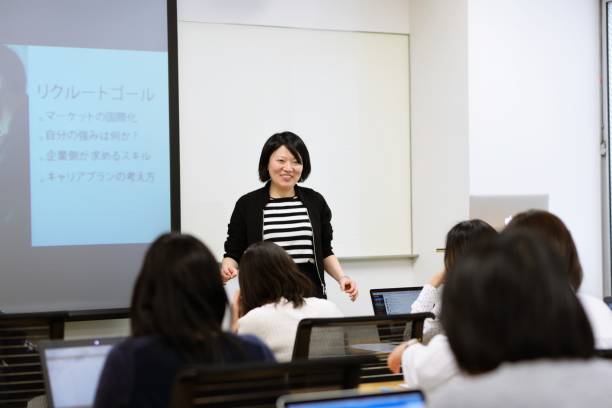
Knowledge & Skills You Will Learn
1
NEP 2020 Focus: Emphasis on multidisciplinary education, research innovation, and skill-based learning in India.
2
Hybrid Learning Models: Blending online and in-person teaching, requiring proficiency in digital tools and platforms.
3
Faculty Development Programs: Enhanced focus on upskilling professors through training in pedagogy and technology.
4
Sustainability and Ethics Focus: Incorporating environmental education and ethical practices into academic curricula.
Lecturer/Guest Faculty (Entry Level)

Lecturer/Guest Faculty (Entry Level)

Entry-level professionals who deliver lectures on a contractual or part-time basis, focusing on teaching under supervision. They build skills by...

0.0LPA

Assistant Professor (Early-Mid Level)

Assistant Professor (Early-Mid Level)

Early-to-mid-level professionals who teach, conduct research, and assist in curriculum design with greater autonomy. They assist in academic...

0.0LPA

Associate Professor (Mid-Level)

Associate Professor (Mid-Level)

Mid-level professionals who lead advanced courses, publish research, and mentor junior faculty with increased responsibility. They balance...

0.0LPA

Interested in this career?

Take the next step and explore more about Professors and Lecturers.