Orthotist and Prosthetist

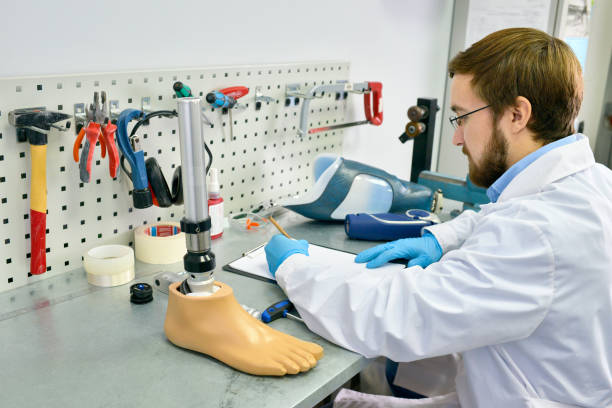
An Orthotist/Prosthetist is a specialized healthcare professional who designs, fabricates, and fits orthotic devices (braces and supports) and prosthetic limbs to assist individuals with physical disabilities, injuries, or limb loss, enhancing their mobility and quality of life. They work in diverse settings such as hospitals, rehabilitation centers, private clinics, and manufacturing facilities. Orthotists/Prosthetists apply expertise in biomechanics, materials science, and patient care to address functional challenges faced by their clients, driving advancements in assistive technology. Combining technical skills with an understanding of human anatomy, they play a crucial role in rehabilitation and accessibility in a world increasingly focused on inclusivity and personalized medical solutions.
Share :
Career tree mind map (horizontal) — Orthotist and Prosthetist
Colored branches, hub circles, and underlined topics — same style as counselor course classic (types 18–19 in admin).
Loading mind map…

Orthotists/Prosthetists are experts who focus on creating and customizing orthotic and prosthetic devices to support or replace body parts, helping individuals regain or improve mobility and functionality, and applying their skills to enhance daily living. Their work involves assessing patient needs, designing tailored solutions, and ensuring devices meet individual requirements through iterative fitting and adjustments. They often operate in clinical, industrial, or community environments, balancing technical precision with patient-centered care. Orthotists/Prosthetists are vital to fields like rehabilitation, medical device development, and mobility support, serving as key contributors to improving lives through customized solutions, advancing technological innovations, and ensuring inclusivity. They tackle critical physical challenges through methodical problem-solving and improve outcomes through evidence-based design in a landscape where accessibility remains essential for societal well-being.

  • Patient Assessment and Evaluation
    • Conduct thorough evaluations of patients’ physical conditions, mobility needs, and lifestyle goals through clinical assessments and consultations.
    • Analyze medical histories, physician prescriptions, and diagnostic data to determine appropriate orthotic or prosthetic interventions.
  • Design and Fabrication
    • Create custom orthotic devices (e.g., braces, splints) and prosthetic limbs using biomechanical principles and advanced materials.
    • Utilize computer-aided design (CAD) software and 3D printing for precise device modeling and prototyping.
  • Fitting and Adjustment
    • Fit devices to patients, ensuring comfort, alignment, and functionality through hands-on adjustments.
    • Modify designs based on patient feedback and clinical outcomes to optimize performance and prevent discomfort or injury.
  • Collaboration with Healthcare Teams
    • Work with physicians, physical therapists, and rehabilitation specialists to integrate devices into comprehensive treatment plans.
    • Provide technical expertise during patient evaluations to recommend suitable devices or modifications.
  • Training and Education
    • Educate patients and caregivers on the proper use, maintenance, and limitations of orthotic and prosthetic devices.
    • Offer guidance on rehabilitation exercises to maximize device effectiveness and user independence.
  • Maintenance and Repair
    • Perform regular maintenance checks and repairs on devices to ensure long-term usability and safety.
    • Address wear-and-tear issues or damage through technical adjustments or component replacements.
  • Research and Innovation
    • Engage in research on emerging technologies like robotics, lightweight materials, or smart prosthetics to improve device functionality.
    • Contribute to studies evaluating the effectiveness of orthotic and prosthetic solutions in rehabilitation.
  • Customization for Unique Needs
    • Tailor devices to meet specific patient requirements, considering factors like age, activity level, and environmental conditions.
    • Design ergonomic solutions to enhance comfort and prevent secondary complications like pressure sores.
  • Regulatory Compliance and Documentation
    • Ensure all devices comply with medical and safety regulations such as FDA or ISO standards.
    • Maintain detailed records of assessments, design processes, and patient progress for accountability and follow-up care.
  • Advocacy and Accessibility Support
    • Advocate for patient access to high-quality devices and inclusive design in public spaces or workplaces.
    • Consult on mobility solutions and accessibility standards to promote universal usability.

RouteSteps
Route 11. 10+2 with Physics, Chemistry, and Biology/Mathematics (PCB/PCM). 
2. Bachelor's degree in Prosthetics and Orthotics (4 years).
3. Master's degree in Prosthetics and Orthotics or Rehabilitation Sciences (2 years, optional).
4. PhD in Rehabilitation Technology or Assistive Devices (3-5 years, optional). 
5. Postdoctoral research or industry experience in specialized areas (optional).
Route 21. 10+2 with Physics, Chemistry, and Biology/Mathematics (PCB/PCM). 
2. Diploma in Prosthetics and Orthotics (2-3 years). 
3. Bachelor's degree in Prosthetics and Orthotics (lateral entry, 2-3 years). 
4. Specialized training in advanced prosthetic design (6 months-1 year). 
5. Practical experience through internships or clinical practice.
Route 31. 10+2 with Physics, Chemistry, and Biology/Mathematics (PCB/PCM). 
2. Bachelor's degree in Biomedical Engineering or Mechanical Engineering (4 years). 
3. Master's degree in Prosthetics and Orthotics or Biomechanics (2 years). 
4. Certification or short-term training in assistive device fabrication (6 months-1 year). 
5. Field experience in rehabilitation settings.
Route 41. 10+2 with Physics, Chemistry, and Biology/Mathematics (PCB/PCM). 
2. Bachelor's degree from India in relevant field (4 years). 
3. Master's or PhD in Prosthetics and Orthotics abroad (2-5 years). 
4. Training or licensure for international practice (1-2 years). 
5. Certification in international programs or standards (if applicable).

  • Internships in hospitals or rehabilitation centers focusing on orthotic and prosthetic fitting.
  • Clinical placements in settings addressing mobility and disability support.
  • Observerships in multidisciplinary teams to understand holistic rehabilitation approaches.
  • Participation in university-based research projects on prosthetic and orthotic innovations.
  • Training in CAD software and fabrication techniques under expert supervision.
  • Experience in patient fittings and device adjustments for real-world application.
  • Involvement in community outreach programs providing mobility solutions.
  • Attendance at orthotics and prosthetics conferences and workshops.
  • Exposure to 3D printing and material labs for custom device development.
  • Collaborative field work in international prosthetic and orthotic projects for global exposure.

  • Bachelor’s in Prosthetics and Orthotics.
  • Bachelor’s in Biomedical Engineering with focus on assistive devices.
  • Diploma in Prosthetics and Orthotics.
  • Master’s in Prosthetics and Orthotics or Biomechanics.
  • PhD in Rehabilitation Technology or Assistive Device Design.
  • Certification courses in Advanced Prosthetic Fabrication.
  • Training in Pediatric Orthotics and Custom Device Development.
  • Specialized courses in Robotic Prosthetics and Smart Devices.
  • Master’s in Rehabilitation Sciences with Prosthetics Focus.
  • Continuing Education courses in Emerging Orthotic Technologies.

InstituteCourse/ProgramOfficial Link
All India Institute of Physical Medicine and Rehabilitation (AIIPMR), MumbaiBachelor’s/Master’s in Prosthetics and Orthoticshttps://aiipmr.gov.in/
National Institute for Locomotor Disabilities (NILD), KolkataBachelor’s/Master’s in Prosthetics and Orthoticshttps://www.niohkol.nic.in/
Pt. Deendayal Upadhyaya National Institute for Persons with Physical Disabilities (PDUNIPPD), New DelhiBachelor’s in Prosthetics and Orthoticshttps://www.iphnewdelhi.in/
Swami Vivekanand National Institute of Rehabilitation Training and Research (SVNIRTAR), CuttackBachelor’s/Master’s in Prosthetics and Orthoticshttps://svnirtar.nic.in/
Christian Medical College (CMC), VelloreDiploma/Bachelor’s in Prosthetics and Orthoticshttps://www.cmch-vellore.edu/
Sri Ramachandra Institute of Higher Education and Research, ChennaiBachelor’s in Prosthetics and Orthoticshttps://www.sriramachandra.edu.in/
Manipal Academy of Higher Education (MAHE), ManipalBachelor’s in Prosthetics and Orthoticshttps://www.manipal.edu/
ISIC Institute of Rehabilitation Sciences, New DelhiBachelor’s in Prosthetics and Orthoticshttps://www.isiconline.org/
Hamdard Institute of Medical Sciences and Research, New DelhiTraining in Prosthetics and Orthoticshttps://www.himsr.co.in/
Apollo College of Physiotherapy, HyderabadDiploma in Prosthetics and Orthoticshttps://www.apollohospitals.com/

InstitutionCourseCountryOfficial Link
Northwestern UniversityMaster of Prosthetics and OrthoticsUSAhttps://www.northwestern.edu/
University of StrathclydeMSc in Prosthetics and OrthoticsUKhttps://www.strath.ac.uk/
University of MelbourneMaster of Clinical Prosthetics and OrthoticsAustraliahttps://www.unimelb.edu.au/
University of TorontoTraining in Prosthetics and OrthoticsCanadahttps://www.utoronto.ca/
University of PittsburghMaster of Science in Prosthetics and OrthoticsUSAhttps://www.pitt.edu/
University of SalfordMSc in Prosthetics and OrthoticsUKhttps://www.salford.ac.uk/
University of British ColumbiaTraining in Prosthetics and OrthoticsCanadahttps://www.ubc.ca/
La Trobe UniversityMaster of Clinical Prosthetics and OrthoticsAustraliahttps://www.latrobe.edu.au/
Georgia Institute of TechnologyMS in Prosthetics and OrthoticsUSAhttps://www.gatech.edu/
Delft University of TechnologyMSc in Biomedical Engineering (Prosthetics Focus)Netherlandshttps://www.tudelft.nl/en/

India:

  • National Eligibility cum Entrance Test (NEET) for Bachelor’s programs in some institutes.
  • University-specific entrance exams for Bachelor's and Master's programs in Prosthetics and Orthotics.
  • Common Entrance Test (CET) for Diploma and Degree programs in certain states or institutes.
  • SVNIRTAR Entrance Exam for programs at SVNIRTAR and NILD.
  • AIIPMR Entrance Exam for admission to All India Institute of Physical Medicine and Rehabilitation.

International:

  • Graduate Record Examination (GRE) for postgraduate programs in Prosthetics and Orthotics in the USA and Canada.
  • International English Language Testing System (IELTS) with a minimum score of 6.5-7.0 for international programs.
  • Test of English as a Foreign Language (TOEFL) with a minimum score of 90-100 for programs in English-speaking countries.
  • University-specific entrance exams for international Master's or certification programs in related fields.
  • Australian Education Assessment Services for programs in Australia.
  • Specific licensure or certification exams for international practice in orthotics and prosthetics.

Undergraduate/Diploma Student → Graduate Trainee (Bachelor’s/Master's) → Junior Orthotist/Prosthetist → Established Orthotist/Prosthetist → Senior Orthotist/Prosthetist/Team Lead → Clinical Director/Technology Consultant

  • Hospitals and rehabilitation centers implementing orthotic and prosthetic solutions.
  • Medical device companies designing and manufacturing assistive equipment.
  • Private clinics offering personalized orthotic and prosthetic services.
  • Research institutions studying biomechanics and mobility device innovations.
  • Universities and academic centers focusing on prosthetics and orthotics education.
  • Government agencies promoting accessibility standards and disability support.
  • Non-profit organizations supporting mobility inclusion and technology access.
  • Sports rehabilitation centers providing specialized devices for athletes.
  • Technology startups developing innovative prosthetic and orthotic tools.
  • International organizations addressing global mobility and rehabilitation challenges.

IndiaInternational
All India Institute of Physical Medicine and Rehabilitation (AIIPMR), MumbaiWorld Health Organization (WHO), Global
National Institute for Locomotor Disabilities (NILD), KolkataOttobock, Germany
Pt. Deendayal Upadhyaya National Institute for Persons with Physical Disabilities (PDUNIPPD), New DelhiÖssur, Iceland
Apollo Hospitals, Pan-IndiaHanger, Inc., USA
Fortis Healthcare, Pan-IndiaBlatchford, UK
Manipal Hospitals, Pan-IndiaFillauer, USA
Narayana Health, Pan-IndiaEndolite, UK
Indian Spinal Injuries Centre (ISIC), New DelhiProsthetic Orthotic Associates, USA
Sankara Nethralaya, ChennaiFreedom Innovations, USA
Tata Memorial Centre, MumbaiDisability Rights International, Global

ProsCons
Significant contribution to improving quality of life through mobility solutions for individuals with disabilities.Physically demanding work, often requiring long hours of standing or manual fabrication tasks.
Intellectually stimulating work combining biomechanics, engineering, and patient care.High precision required, with little room for error in device design or fitting, which can be stressful.
High demand due to increasing awareness of rehabilitation needs and advancements in assistive technology.Requires ongoing education and training to stay updated with rapidly evolving technologies and materials.
Opportunities for specialization in diverse areas like pediatric orthotics, sports devices, or bionic prosthetics.Limited immediate impact as device adaptation and patient adjustment can take time and vary by individual.
Growing relevance due to rising focus on accessibility, personalized healthcare, and technological innovation.Potential for emotional strain due to working with patients facing significant physical and emotional challenges.

Career LevelIndia (₹ per annum)International (US$ per annum)
Trainee/Graduate Student2,50,000 - 4,50,000$30,000 - $40,000
Junior Orthotist/Prosthetist4,50,000 - 7,00,000$45,000 - $60,000
Established Orthotist/Prosthetist7,00,000 - 10,00,000$60,000 - $80,000
Senior Orthotist/Prosthetist/Team Lead10,00,000 - 18,00,000$80,000 - $100,000
Clinical Director/Technology Consultant18,00,000 - 25,00,000$100,000 - $130,000

  • CAD Software: Tools like SolidWorks and AutoCAD for designing orthotic and prosthetic devices.
  • 3D Printing Software: Applications like Cura and Simplify3D for prototyping custom devices.
  • Biomechanical Simulation Tools: Software like OpenSim and ANSYS for modeling movement and stress analysis.
  • Patient Management Software: Platforms like Cliniko and Practice Fusion for scheduling and tracking patient progress.
  • Gait Analysis Systems: Tools like Vicon and Motion Analysis for assessing movement patterns in device design.
  • Material Selection Software: Applications like Granta CES for choosing optimal materials for durability and comfort.
  • Data Analysis Tools: Software like Excel and MATLAB for evaluating device performance and user feedback.
  • Project Management Platforms: Tools like Trello and Microsoft Project for coordinating fabrication and clinical projects.
  • Programming Environments: Languages like Python for developing software for smart prosthetic devices.
  • Collaboration Platforms: Tools like Microsoft Teams and Slack for interdisciplinary teamwork and communication with stakeholders.

  • International Society for Prosthetics and Orthotics (ISPO)
  • American Academy of Orthotists and Prosthetists (AAOP)
  • Rehabilitation Engineering and Assistive Technology Society of North America (RESNA)
  • Indian Association of Prosthetists and Orthotists (IAPO)
  • British Association of Prosthetists and Orthotists (BAPO)
  • Australian Orthotic Prosthetic Association (AOPA)
  • Canadian Association of Prosthetists and Orthotists (CAPO)
  • European Network for Accessible Tourism (ENAT)
  • International Federation for Medical and Biological Engineering (IFMBE)

  • Dr. Dudley S. Childress (Historical, USA): Known for pioneering work in prosthetic technology and biomechanics, active from the 1960s to 2000s.
     
  • Dr. John W. Michael (Contemporary, USA): Recognized for advancements in prosthetic education and clinical practice, active since the 1980s.
     
  • Dr. David Boone (Contemporary, USA): Noted for contributions to pediatric prosthetics and outcome measurements, active since the 1990s.
     
  • Dr.StefaniaFatone (Contemporary, USA): Known for research in orthotic and prosthetic outcomes at Northwestern University, active since the 2000s.
     
  • Dr. Robert Gailey (Contemporary, USA): Recognized for work on gait analysis and prosthetic rehabilitation, active since the 1990s.
     
  • Dr.SaeedZahedi (Contemporary, UK): Noted for innovations in prosthetic limb design at Blatchford, active since the 1980s.
     
  • Dr. Brian Hafner (Contemporary, USA): Known for research on prosthetic user outcomes and mobility, active since the 2000s.
     
  • Dr. Jacqueline Perry (Historical, USA): Recognized for foundational contributions to gait analysis in orthotics, active from the 1950s to 1990s.
     
  • Dr. Elaine Figgins (Contemporary, UK): Noted for advancements in orthotic clinical practice and education, active since the 2000s.
     
  • Dr. Andrew Hansen (Contemporary, USA): Known for contributions to prosthetic foot design and biomechanics, active since the 2000s.
     
  • Dr. P.K. Sethi (Historical, India): Renowned for developing the Jaipur Foot, a low-cost prosthetic limb that revolutionized mobility solutions for amputees, active from the 1960s to 2000s.
     
  • Dr. M.K. Mathur (Contemporary, India): Known for contributions to prosthetic and orthotic education and clinical practice in India, associated with leading institutes like AIIPMR, active since the 1980s.

  • Build a strong foundation in biomechanics, physics, and biology during undergraduate studies to prepare for specialized learning.
  • Seek early exposure through internships or clinical rotations to gain practical experience in device fabrication and fitting.
  • Develop skills in CAD software, 3D printing, and patient assessment during Bachelor's or Diploma programs for a competitive edge.
  • Engage in interdisciplinary learning by exploring rehabilitation sciences, engineering, and patient care alongside technical studies.
  • Pursue research opportunities or fellowships to deepen expertise in niche areas like robotic prosthetics or pediatric orthotics.
  • Cultivate mentoring relationships with established orthotists/prosthetists for career guidance and networking opportunities.
  • Stay updated with advancements in 3D printing, smart materials, and AI as they apply to assistive device development.
  • Publish research findings or device innovations in professional journals to establish credibility and contribute to the field.
  • Consider international exposure through collaborative projects, conferences, or advanced training abroad to broaden perspectives.
  • Balance technical expertise with empathy and communication skills to understand patient needs and explain complex designs effectively.

A career as an Orthotist/Prosthetist offers a unique opportunity to impact individual lives and societal inclusivity by addressing mobility challenges faced by people with disabilities through innovative and personalized devices. From designing custom braces to developing advanced prosthetic limbs, Orthotists/Prosthetists play a pivotal role in enhancing independence and quality of life for diverse populations. This field combines technical innovation, interdisciplinary collaboration, and patient-centered design, offering diverse paths in medical technology, clinical care, and accessibility advocacy. For those passionate about engineering, problem-solving, and improving human functionality, a career as an Orthotist/Prosthetist provides a deeply rewarding journey with significant potential for making meaningful contributions to society in an era where assistive technology and inclusivity continue to shape healthcare strategies, technological innovations, and global responses across all sectors.


Knowledge & Skills You Will Learn
1
Technical expertise in designing and fabricating orthotic and prosthetic devices using specialized tools and software
2
Observational accuracy in assessing patient anatomy, gait, and mobility needs for precise device customization
3
In-depth knowledge of biomechanics, human anatomy, and material science for effective device development
4
Critical thinking to solve complex mobility challenges through innovative design and fitting solutions
5
Attention to detail to ensure devices align with patient needs and prevent discomfort or secondary injuries
6
Time management to handle multiple patient cases and meet fabrication or fitting deadlines
7
Adaptability to learn and integrate new technologies like 3D printing or robotic prosthetics into practice
8
Interpersonal skills for effective collaboration with patients, healthcare professionals, and technical teams
9
Empathy and emotional intelligence to understand patient concerns and build trust during the rehabilitation process
10
Communication skills to explain device usage, limitations, and care instructions to patients and caregivers
11
Problem-solving ability to address fitting issues, material limitations, and unique patient challenges
12
Ethical awareness to prioritize patient safety, comfort, and inclusivity in device design and care delivery
Undergraduate/Diploma Student

Undergraduate/Diploma Student

Students complete foundational education in prosthetics and orthotics or related fields, learning core concepts while gaining initial exposure to...

0.0LPA
Graduate Trainee (Bachelor’s/Master's)

Graduate Trainee (Bachelor’s/Master's)

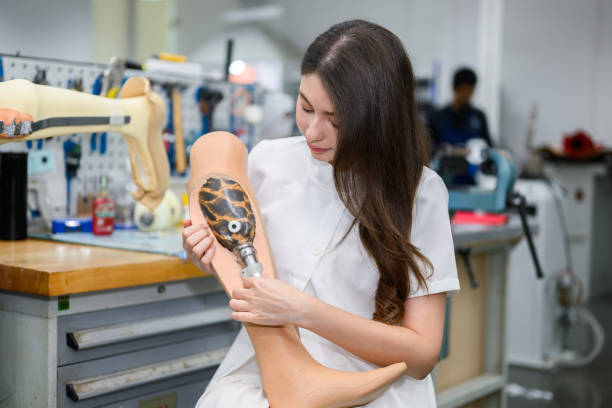
Trainees in advanced programs focus on specialized studies in prosthetics and orthotics, learning design and fitting techniques under supervision....

0.0LPA
Junior Orthotist / Prosthetist

Junior Orthotist / Prosthetist

Early-career professionals establish roles in clinical or industrial settings while developing their expertise in device design and fitting. They...

0.0LPA

Interested in this career?

Take the next step and explore more about Orthotist and Prosthetist.