CT-Scan Technologist
Certified CT-Scan Technician
Explore Career
A Neurobiologist is a specialized scientist who studies the nervous system, including the brain, spinal cord, and peripheral nerves. They investigate neural structure, function, development, and disorders, working to understand how the nervous system processes information and controls behavior. Neurobiologists conduct research on neurological conditions, develop treatments for brain disorders, and contribute to our understanding of cognitive processes, often working in laboratories, research institutions, universities, pharmaceutical companies, and hospitals. Combining scientific expertise with analytical skills, they play a crucial role in advancing neuroscience knowledge in a world where neurological and psychiatric disorders affect millions globally, requiring specialized research for proper understanding, prevention, and treatment.

A Neurobiologist is a specialized scientist who studies the nervous system, including the brain, spinal cord, and peripheral nerves. They investigate neural structure, function, development, and disorders, working to understand how the nervous system processes information and controls behavior. Neurobiologists conduct research on neurological conditions, develop treatments for brain disorders, and contribute to our understanding of cognitive processes, often working in laboratories, research institutions, universities, pharmaceutical companies, and hospitals. Combining scientific expertise with analytical skills, they play a crucial role in advancing neuroscience knowledge in a world where neurological and psychiatric disorders affect millions globally, requiring specialized research for proper understanding, prevention, and treatment.
Neurobiologists are scientific specialists who focus on studying the nervous system at various levels, from molecular mechanisms to cellular interactions to systems-level function. Their work involves designing and conducting experiments to investigate neural development, structure, and function; analyzing complex neurological data using advanced computational tools; developing models to explain neural processes and predict outcomes; and publishing research findings in scientific journals. They often operate in research settings, balancing laboratory investigations with grant writing and interdisciplinary collaboration. Neurobiologists are essential to scientific advancement, serving as experts in complex neural mechanisms, providing insights into debilitating neurological conditions, developing potential treatments for disorders like Alzheimer's and Parkinson's disease, and improving understanding of brain function through evidence-based research and ongoing investigation in a scientific landscape where neuroscience continues to expand in scope and importance.
Roles and Responsibilities
Study Route & Eligibility Criteria
| Route | Steps |
|---|---|
| Route 1 | 1. 10+2 with Physics, Chemistry, Biology (PCB) 2. Bachelor's degree in Neuroscience, Biology, or related field (4 years) 3. Ph.D. in Neurobiology or Neuroscience (5-6 years) 4. Post-doctoral research training (2-4 years) 5. Research position in academia or industry |
| Route 2 | 1. 10+2 with Physics, Chemistry, Biology (PCB) 2. Bachelor's degree in Biology, Psychology, or related field (3-4 years) 3. Master's degree in Neuroscience or Neurobiology (2 years) 4. Ph.D. in Neurobiology or Neuroscience (4-5 years) 5. Post-doctoral research training (2-4 years) |
| Route 3 | 1. 10+2 with Physics, Chemistry, Biology (PCB) 2. MBBS degree (5.5 years including internship) 3. MD in Physiology or related field (3 years) 4. Research training in Neurobiology (2-3 years) 5. Academic or research position |
| Route 4 | 1. 10+2 with Physics, Chemistry, Mathematics/Biology 2. Bachelor's degree in Biomedical Engineering or related field (4 years) 3. Master's in Neural Engineering or Computational Neuroscience (2 years) 4. Ph.D. in Neuroscience with computational focus (4-5 years) 5. Research position in computational neurobiology |
Significant Observations (Academic Related Points)
Internships & Practical Exposure
Courses & Specializations to Enter the Field
Top Institutes for Neurobiologist Education (India)
| Institute | Course/Program | Official Link |
|---|---|---|
| National Brain Research Centre (NBRC), Manesar | Ph.D. in Neuroscience | https://www.nbrc.ac.in/ |
| Indian Institute of Science (IISc), Bangalore | Ph.D. in Neuroscience | https://www.iisc.ac.in/ |
| Tata Institute of Fundamental Research (TIFR), Mumbai | Ph.D. in Neuroscience | https://www.tifr.res.in/ |
| All India Institute of Medical Sciences (AIIMS), New Delhi | Ph.D. in Neuroscience | https://www.aiims.edu/ |
| Jawaharlal Nehru University (JNU), New Delhi | M.Sc./Ph.D. in Neuroscience | https://www.jnu.ac.in/ |
| Jiwaji University, Gwalior | M.Sc. in Neuroscience | https://www.jiwaji.edu/ |
| University of Madras, Chennai | M.Sc. in Neuroscience | https://www.unom.ac.in/ |
| Amrita Vishwa Vidyapeetham, Kerala | M.Sc. in Neuroscience | https://www.amrita.edu/ |
| Savitribai Phule Pune University | M.Sc. in Neuroscience | http://www.unipune.ac.in/ |
| Centre for Cellular and Molecular Biology (CCMB), Hyderabad | Ph.D. with Neurobiology focus | https://www.ccmb.res.in/ |
Top International Institutes
| Institution | Course | Country | Official Link |
|---|---|---|---|
| Harvard University | Ph.D. in Neuroscience | USA | https://www.harvard.edu/ |
| Stanford University | Ph.D. in Neuroscience | USA | https://www.stanford.edu/ |
| University College London (UCL) | MSc/Ph.D. in Neuroscience | UK | https://www.ucl.ac.uk/ |
| Massachusetts Institute of Technology (MIT) | Ph.D. in Brain and Cognitive Sciences | USA | https://www.mit.edu/ |
| University of Oxford | D.Phil. in Neuroscience | UK | https://www.ox.ac.uk/ |
| California Institute of Technology (Caltech) | Ph.D. in Neurobiology | USA | https://www.caltech.edu/ |
| Max Planck Institute for Brain Research | Ph.D. in Neuroscience | Germany | https://brain.mpg.de/ |
| University of Tokyo | Graduate Program in Neuroscience | Japan | https://www.u-tokyo.ac.jp/en/ |
| McGill University | Integrated Program in Neuroscience | Canada | https://www.mcgill.ca/ |
| Karolinska Institutet | Doctoral Program in Neuroscience | Sweden | https://ki.se/en |
Entrance Tests Required
India:
International:
Ideal Progressing Career Path
Undergraduate Student → Research Assistant → Graduate Student → Ph.D. Candidate → Postdoctoral Researcher → Assistant Professor/Junior Scientist → Associate Professor/Senior Scientist → Full Professor/Principal Investigator → Research Director/Department Chair
Major Areas of Employment
Prominent Employers
| India | International |
|---|---|
| National Brain Research Centre (NBRC) | National Institutes of Health (NIH), USA |
| Indian Institute of Science (IISc) | Harvard University, USA |
| Tata Institute of Fundamental Research (TIFR) | Max Planck Institutes, Germany |
| All India Institute of Medical Sciences (AIIMS) | Allen Institute for Brain Science, USA |
| Centre for Cellular and Molecular Biology (CCMB) | Roche, Switzerland |
| Jawaharlal Nehru Centre for Advanced Scientific Research | Pfizer, USA |
| National Centre for Biological Sciences (NCBS) | Janssen Pharmaceuticals, Belgium |
| Indian Institute of Technology (IITs) | University College London, UK |
| Central Drug Research Institute (CDRI) | Salk Institute for Biological Studies, USA |
| Institute of Genomics and Integrative Biology (IGIB) | RIKEN Brain Science Institute, Japan |
Pros and Cons of the Profession
| Pros | Cons |
|---|---|
| Contributing to understanding of brain function and neurological disorders | Lengthy training period requiring 8-12 years after undergraduate degree |
| Intellectually stimulating work at the frontier of science | Highly competitive funding environment with grant writing pressure |
| Diverse career paths in academia, industry, and government | Long hours in laboratory settings with experiment failures |
| Potential to develop treatments for devastating neurological conditions | Publication pressure and "publish or perish" academic culture |
| Opportunities for international collaboration and recognition | Relatively modest compensation compared to clinical neurology |
Industry Trends and Future Outlook
Salary Expectations
| Career Level | India (₹ per annum) | International (US$ per annum) |
|---|---|---|
| Research Assistant | 3,00,000 - 5,00,000 | $30,000 - $45,000 |
| Ph.D. Student | 4,00,000 - 6,00,000 | $25,000 - $35,000 |
| Postdoctoral Researcher | 6,00,000 - 12,00,000 | $50,000 - $65,000 |
| Assistant Professor/Junior Scientist | 10,00,000 - 18,00,000 | $70,000 - $90,000 |
| Associate Professor/Senior Scientist | 15,00,000 - 25,00,000 | $90,000 - $120,000 |
Key Software Tools
Professional Organizations and Networks
Notable Neurobiologists and Industry Leaders (Top 10)
Advice for Aspiring Neurobiologists
A career as a Neurobiologist offers the profound opportunity to unravel the mysteries of the brain and nervous system, contributing to our understanding of human cognition, behavior, and neurological disorders. From conducting groundbreaking research on neural mechanisms to developing potential treatments for devastating brain conditions, neurobiologists play a crucial role in advancing our knowledge of the most complex organ in the human body. This field combines scientific rigor, technological innovation, and creative problem-solving, offering diverse paths in academic research, pharmaceutical development, and emerging neurotechnology. For those passionate about understanding brain function, neural development, and the biological basis of behavior, a career as a Neurobiologist provides an intellectually stimulating journey with significant potential for making meaningful contributions to science and medicine through discoveries that could ultimately improve the lives of millions affected by neurological and psychiatric conditions worldwide.


Students complete foundational coursework in biology, chemistry, and neuroscience while gaining initial laboratory experience. They learn basic...
0.0LPA

Entry-level researchers assist with laboratory experiments, data collection, and basic analysis in neuroscience laboratories. They support ongoing...
0.0LPA
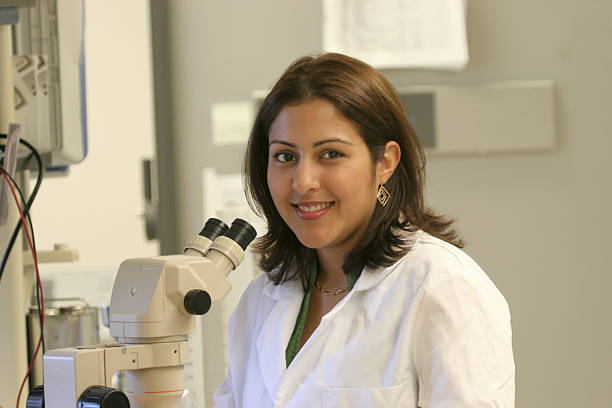
Ph.D. students conduct original research on neural mechanisms while completing advanced coursework in neuroscience. They develop independent...
0.0LPA
Take the next step and explore more about Neurobiologist.
Explore similar career paths that might interest you