Mental Health App Developer

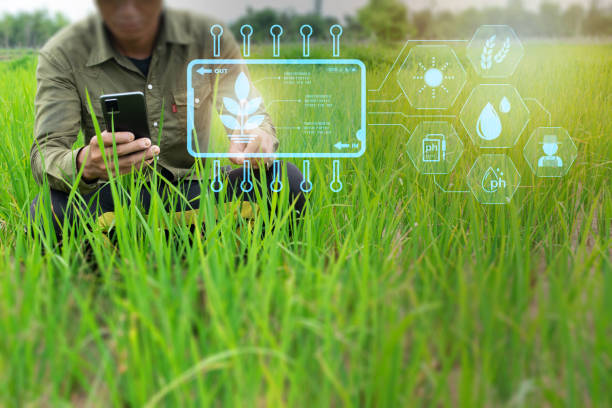
A Mental Health App Developer is a specialized technology professional who designs, builds, and maintains mobile or web applications focused on supporting mental health and well-being. Combining expertise in software development with an understanding of psychological principles, they create tools for therapy, mindfulness, mood tracking, and crisis intervention. This career falls under the Health Technology and Software Development career cluster, emphasizing digital innovation, user experience, and the growing need for accessible mental health resources in a tech-driven world.
Share :
Career tree mind map (horizontal) — Mental Health App Developer
Colored branches, hub circles, and underlined topics — same style as counselor course classic (types 18–19 in admin).
Loading mind map…

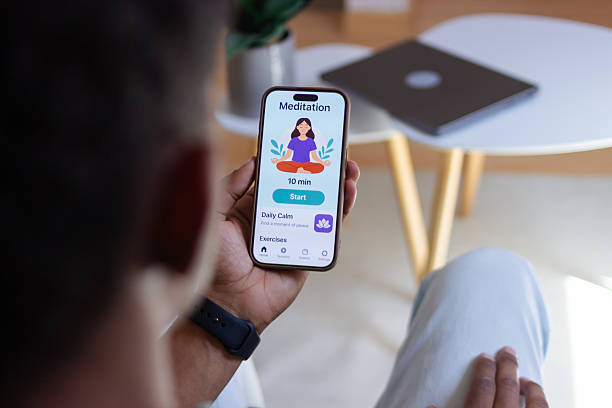
Mental Health App Developers play a critical role in making mental health support more accessible by creating user-friendly applications that offer features like guided meditation, cognitive behavioural therapy (CBT) exercises, or real-time chat with therapists. Their work involves collaborating with psychologists, UX designers, and healthcare providers to ensure apps are both technically robust and therapeutically effective. They often work for health tech startups, established companies, or as independent developers, balancing coding skills with empathy for end-users. These professionals are essential in addressing the global mental health crisis, providing scalable solutions that reach individuals who might otherwise lack access to traditional care.

  • App Design and Development:
    • Code and develop mobile or web applications using programming languages like JavaScript, Python, or Swift to support mental health needs.
    • Implement features such as mood trackers, journaling tools, or chatbot-based therapy sessions for user engagement.
  • User Experience (UX) Optimization:
    • Design intuitive interfaces that prioritize ease of use and emotional safety for users experiencing mental health challenges.
    • Conduct user testing to refine app functionality based on feedback from diverse populations.
  • Collaboration with Mental Health Experts:
    • Work with psychologists, therapists, and counselors to ensure content and features align with evidence-based mental health practices.
    • Integrate therapeutic frameworks like CBT or mindfulness into app functionalities.
  • Data Security and Privacy:
    • Implement robust encryption and data protection measures to safeguard sensitive user information, adhering to regulations like HIPAA (USA) or GDPR (Europe).
    • Ensure anonymity options for users to encourage safe disclosure of personal struggles.
  • Feature Innovation:
    • Develop innovative tools such as AI-driven mood analysis, crisis alerts, or gamified mental health challenges to enhance user retention.
    • Stay updated on mental health trends to incorporate relevant features like stress management for specific demographics.
  • Maintenance and Updates:
    • Regularly update apps to fix bugs, improve performance, and add new features based on user needs or technological advancements.
    • Monitor app analytics to assess usage patterns and identify areas for improvement.
  • Integration with Health Systems:
    • Enable connectivity with electronic health records (EHRs) or teletherapy platforms for seamless user care coordination.
    • Facilitate integration with wearables for tracking sleep or stress metrics relevant to mental health.
  • User Support and Education:
    • Provide in-app resources or tutorials to help users navigate mental health tools effectively.
    • Offer technical support to address user issues and ensure a positive app experience.
  • Ethical and Cultural Considerations:
    • Design apps with cultural sensitivity to cater to diverse user backgrounds and mental health stigmas.
    • Address ethical concerns by avoiding exploitative features like excessive monetization of vulnerable users.

RouteSteps
Route 1 (Computer Science Background)

1. Bachelor’s degree in Computer Science, Software Engineering, or IT (3-4 years)

2. Master’s in Health Informatics or Human-Computer Interaction (optional, 1-2 years)

3. Certificate or Short Course in Mental Health Technology or UX Design (3-6 months)

4. Practical experience through app development projects or internships (1-2 years)

Route 2 (Psychology and Tech Hybrid Path)

1. Bachelor’s degree in Psychology, Behavioral Science, or related field (3-4 years)

2. Certificate or Diploma in Software Development or Programming (6-12 months)

3. Short course in Digital Mental Health or Health Tech (3-6 months)

4. Hands-on experience via mental health tech projects or collaborations (1-2 years)

Route 3 (Health Tech Focus)

1. Bachelor’s degree in Health Informatics, Biomedical Engineering, or IT (3-4 years)

2. Master’s in Digital Health or Health Technology (optional, 1-2 years)

3. Certificate in Mental Health App Development or UX for Health Apps (3-6 months)

4. Internship or project work with health tech companies (1-2 years)

Route 4 (Self-Taught/Entrepreneurial Path)

1. Self-study or online courses in Programming (e.g., JavaScript, Python) (6-12 months)

2. Online certifications in Mental Health Basics or Digital Wellness (3-6 months)

3. Build personal mental health app projects or contribute to open-source platforms (1-2 years)

4. Networking and freelancing to gain real-world experience (1-2 years)

Route 5 (International Path)

1. Bachelor’s degree in relevant field (Computer Science, Psychology, or Health Tech) (3-4 years)

2. Master’s in Digital Health or Software Development from an international university (1-2 years)

3. Certification in Global Health Tech or Mental Health Innovation (3-6 months)

4. Work or internships with global mental health tech firms (1-2 years)

  • Diverse Entry Points: Allows entry from technology, psychology, or health sciences, reflecting the interdisciplinary nature of the role.
  • Technology-Centric Career: Demands strong coding and design skills alongside an understanding of mental health needs.
  • Flexible Training Duration: Ranges from short online courses (3-6 months) to advanced degrees (5-6 years).
  • User-Focused Role: Prioritizes empathy and user experience to create supportive tools for vulnerable populations.
  • Global Demand: Offers opportunities to work with international health tech companies addressing mental health challenges.
  • Interdisciplinary Collaboration: Combines technical development with psychological and medical insights for effective apps.
  • Ethical Responsibility: Requires careful handling of sensitive user data and emotional well-being.
  • Rapidly Growing Field: Driven by increasing mental health awareness and digital health adoption worldwide.
  • Impactful Work: Directly supports individuals struggling with mental health through accessible, scalable solutions.
  • Continuous Innovation: Necessitates staying updated on mental health research and tech advancements for relevant app features.

  • Internships with health tech startups like Woebot or Talkspace for real-world app development experience.
  • Practical projects in university labs focusing on human-computer interaction for health applications.
  • Collaboration with mental health professionals to test app features for therapeutic accuracy.
  • Participation in hackathons or coding challenges focused on mental health solutions.
  • Exposure to UX design through roles in companies creating wellness or therapy apps.
  • Internships with digital health firms to understand data privacy in mental health contexts.
  • Involvement in open-source projects contributing to mental health tech tools.
  • Attendance at mental health tech conferences for networking and industry insights.
  • Building personal mental health app prototypes to showcase skills to potential employers.
  • Engagement with user feedback groups to refine app usability for mental health support.

  • Bachelor’s or Master’s in Computer Science with a focus on Health Tech Applications
  • Master’s in Health Informatics or Digital Health
  • Bachelor’s or Master’s in Psychology with additional Programming Certifications
  • Certificate in Mobile App Development (iOS/Android)
  • Certification in UX/UI Design for Health Apps
  • Short Course in Mental Health Technology and Digital Wellness
  • Training in Data Privacy and Cybersecurity for Health Apps
  • Online Courses in Behavioral Science for App Content Development
  • Certification in AI and Machine Learning for Health Tech Innovations
  • Continuing Education in Teletherapy and Digital Mental Health Interventions

InstituteCourse/ProgramOfficial Link
Indian Institute of Technology (IIT), BombayComputer Science and Health Techhttps://www.iitb.ac.in/
Indian Institute of Information Technology (IIIT), HyderabadSoftware Engineering and IThttps://www.iiit.ac.in/
National Institute of Mental Health and Neurosciences (NIMHANS), BangaloreDigital Mental Health Researchhttps://nimhans.ac.in/
Tata Institute of Social Sciences (TISS), MumbaiPsychology and Digital Healthhttps://www.tiss.edu/
Birla Institute of Technology and Science (BITS), PilaniComputer Science and Health Applicationshttps://www.bits-pilani.ac.in/
Amrita Vishwa Vidyapeetham, KochiHealth Informatics and Technologyhttps://www.amrita.edu/
Manipal Academy of Higher EducationDigital Health and Software Developmenthttps://manipal.edu/
Symbiosis Institute of Health Sciences, PuneHealth Technology and Informaticshttps://www.sihspune.org/
Vellore Institute of Technology (VIT)Computer Science and Health Techhttps://vit.ac.in/
IGNOU (Indira Gandhi National Open University)Certificate in IT and Health Applicationshttp://www.ignou.ac.in/

InstitutionCourseCountryOfficial Link
Massachusetts Institute of Technology (MIT)Computer Science and Health TechUSAhttps://www.mit.edu/
Stanford UniversityHuman-Computer Interaction and HealthUSAhttps://www.stanford.edu/
University of California, BerkeleyHealth Informatics and Software DesignUSAhttps://www.berkeley.edu/
University College London (UCL)Digital Health and Behavioral TechUKhttps://www.ucl.ac.uk/
University of TorontoHealth Informatics and App DevelopmentCanadahttps://www.utoronto.ca/
Carnegie Mellon UniversityHuman-Computer Interaction for HealthUSAhttps://www.cmu.edu/
University of MelbourneDigital Health and Software EngineeringAustraliahttps://www.unimelb.edu.au/
ETH ZurichHealth Technology and InformaticsSwitzerlandhttps://ethz.ch/en.html
National University of Singapore (NUS)Computer Science and Health InnovationSingaporehttps://www.nus.edu.sg/
University of California, San DiegoHealth Tech and Behavioral DesignUSAhttps://ucsd.edu/

India:

  • Joint Entrance Examination (JEE) for undergraduate programs in computer science or engineering at premier institutes like IITs.
  • Graduate Aptitude Test in Engineering (GATE) for Master’s programs in computer science or health informatics.
  • Institute-specific entrance exams or interviews for postgraduate and certificate courses in digital health or app development.
  • No entrance tests required for many short-term or online certifications in programming or mental health tech (direct or merit-based admission).

International:

  • Graduate Record Examination (GRE) for Master’s programs in the USA and Canada.
  • Graduate Management Admission Test (GMAT) for certain health tech or business-focused programs (if applicable).
  • International English Language Testing System (IELTS) with a minimum score of 6.5-7.0.
  • Test of English as a Foreign Language (TOEFL) with a minimum score of 90-100 for US/UK programs.
  • Specific university entrance assessments for specialized health tech or software development programs.

Mental Health App Developer → Senior Mental Health App Developer → Lead Mental Health Tech Engineer → Mental Health Product Manager → Director of Mental Health Technology

  • Health tech startups for developing innovative mental health applications.
  • Established software companies with a focus on wellness and therapy apps.
  • Mental health organizations for creating tools to support therapy and outreach.
  • Telehealth platforms for integrating mental health features into broader services.
  • Academic institutions for research-driven mental health tech projects.
  • Government health agencies for public mental health digital initiatives.
  • Non-profit organizations for affordable or free mental health app solutions.
  • Freelance or independent development for custom mental health app projects.
  • Healthcare providers for in-house mental health support tools.
  • International digital health firms for global mental health tech solutions.

IndiaInternational
HealthifyMeHeadspace, USA
WysaCalm, USA
YourDostTalkspace, USA
Tattva (Mental Health App)Woebot Health, USA
Mind.fit (by Cult.fit)BetterHelp, USA
1to1helpMindstrong, USA
InnerHourYouper, USA
SeranitiHappify Health, USA
ePsyclinicSanvello, USA
Manah WellnessGinger, USA

ProsCons
Significant societal impact by improving mental health accessHigh responsibility to protect sensitive user data and privacy
Opportunity to blend technology with meaningful human supportChallenges in ensuring app content is therapeutically accurate
Growing demand due to rising mental health awarenessPressure to balance user engagement with ethical monetization
Flexible work environments, often remote or hybridRapid tech changes require constant skill updates and learning
Creative freedom to innovate solutions for mental wellnessPotential emotional toll from working on sensitive user issues

(Figures are approximate and based on the latest available data and projections for 2026, subject to change. Indian figures reflect urban market trends and the growing digital health sector focused on mental wellness. International figures are based on US/UK markets with adjustments for demand and innovation in health tech.)

Career LevelIndia (₹ per annum)International (US$ per annum)
Senior Mental Health App Developer10,00,000 - 18,00,000$80,000 - $110,000
Lead Mental Health Tech Engineer20,00,000 - 30,00,000$120,000 - $150,000
Mental Health Product Manager25,00,000 - 40,00,000$130,000 - $170,000
Director of Mental Health Technology45,00,000 - 70,00,000$180,000 - $250,000
Mental Health Tech Innovator/Founder15,00,000 - 50,00,000 (variable based on business success)$100,000 - $300,000 (variable based on business success)

  • Development frameworks like React Native or Flutter for cross-platform app creation.
  • Programming environments like Android Studio or Xcode for mobile app development.
  • UX design tools like Figma or Adobe XD for creating user-friendly interfaces.
  • Cloud platforms like AWS or Google Cloud for secure data storage and app scalability.
  • AI and NLP tools like TensorFlow or Dialogflow for chatbot and mood analysis features.
  • Analytics platforms like Google Analytics or Mixpanel for tracking user engagement.
  • Cybersecurity software for ensuring data encryption and user privacy.
  • APIs for integrating teletherapy services or wearable device data.
  • Content management systems (CMS) for updating mental health resources within apps.
  • Collaboration tools like Slack or Jira for team coordination during app development.

  • Digital Health India Association (DHIA)
  • Health Information and Management Systems Society (HIMSS) India Chapter
  • American Psychological Association (APA) Digital Health Division
  • International Society for Mental Health Online (ISMHO)
  • European Connected Health Alliance (ECHAlliance)
  • Asia-Pacific Telemedicine Network (APTN)
  • Digital Health Canada
  • World Health Organization (WHO) Digital Health Network
  • Australian Digital Health Agency Network
  • Mental Health Technology Transfer Center (MHTTC) Network

  • Ranganathan Ramakrishnan (India): Co-founder of Wysa, Ramakrishnan has pioneered AI-driven mental health support since the 2010s. Based in Bangalore, his app offers accessible therapy globally. His innovation addresses mental health stigma.
     
  • Alex Katz (USA): Founder of Woebot Health, Katz has advanced chatbot therapy since the 2010s. Based in San Francisco, his AI tool supports millions with mental wellness. His vision blends tech with empathy.
     
  • Joe Green (USA): Co-founder of Headspace, Green has shaped mindfulness apps since the 2010s. Based in Santa Monica, his platform reaches a global audience. His work promotes daily mental health practices.
     
  • Sean Duffy (USA): Co-founder of Omada Health, Duffy has integrated mental health into digital wellness since the 2010s. Based in San Francisco, his tools support behavioral change. His leadership drives health tech impact.
     
  • Deepali Naair (India): Chief Marketing Officer at Wysa, Naair has expanded mental health app reach in India since the 2010s. Based in Bangalore, she bridges tech with user needs. Her strategies enhance accessibility.
     
  • Oliver Harrison (UK): Founder of Koa Health, Harrison has developed mental health apps since the 2010s. Based in London, his platforms focus on workplace wellness. His innovation supports employee mental health.
     
  • Anandhi Chandrasekaran (India): Co-founder of YourDost, Chandrasekaran has built mental health platforms since the 2010s. Based in Bangalore, her app offers anonymous counseling. Her mission tackles cultural barriers.
     
  • Rich Pierson (UK): Co-founder of Headspace, Pierson has driven digital mindfulness since the 2010s. Based in Santa Monica, his app transforms mental health access. His efforts normalize self-care.
     
  • Aaron Michelfelder (USA): A health tech innovator, Michelfelder has contributed to mental health app integration since the 2010s. Based in Chicago, his work focuses on clinical validity. His insights ensure therapeutic impact.
     
  • Naomi Allen (UK): A digital health researcher, Allen has influenced mental health app design since the 2010s via Oxford University. Based in Oxford, her studies enhance app effectiveness. Her research shapes user-focused solutions.
     

  • Build a strong foundation in programming or software development to create robust applications.
  • Gain exposure to mental health app projects through internships or collaborative initiatives.
  • Develop empathy and understanding of mental health challenges to design supportive tools.
  • Pursue certifications in UX design or health tech to enhance app usability and relevance.
  • Stay updated on mental health trends and digital health technologies through research and forums.
  • Network with psychologists and health tech professionals for interdisciplinary insights.
  • Focus on data privacy and ethical design to build trust with vulnerable users.
  • Learn to integrate AI or analytics for personalized mental health support features.
  • Consider specializing in niche areas like workplace stress or youth mental health apps.
  • Balance technical skills with a passion for improving mental wellness through innovation.

A career as a Mental Health App Developer offers a unique opportunity to merge technology with compassion, creating digital tools that empower individuals to manage their mental well-being in an increasingly connected world. These professionals are vital in breaking down barriers to mental health care, leveraging coding and design to provide accessible, impactful solutions. With opportunities spanning health tech startups, established firms, and independent ventures, this field is perfect for those driven by a desire to blend innovation with social good. For individuals eager to make a difference in mental health through technology, this career presents a dynamic and deeply rewarding path with the potential to transform countless lives.

Knowledge & Skills You Will Learn
1
Project management
2
Problem-Solving skills
3
Communication and Collaboration
4
UI/UX Design Knowledge
5
User Research Acumen
6
Programming Proficiency
7
Mental Health Awareness
8
Data Security Expertise
9
AI and Analytics Integration
10
Ethical Sensitivity
Senior Mental Health App Developer

Senior Mental Health App Developer

Oversees the development of complex mental health applications, ensuring technical excellence and therapeutic relevance while mentoring less...

0.0LPA
Lead Mental Health Tech Engineer

Lead Mental Health Tech Engineer

Manages a team of developers and engineers to create cutting-edge mental health tech solutions, focusing on integrating AI or advanced data...

0.0LPA

Mental Health Product Manager

Mental Health Product Manager

Directs the overall vision, strategy, and roadmap for mental health apps, balancing user needs, business goals, and technical feasibility while...

0.0LPA

Interested in this career?

Take the next step and explore more about Mental Health App Developer.