Armed Forces Medical Services (AFMS)
Medical Officer (Lieutenant/Captain)
Explore Career
The Indian Army is the land-based branch of the Indian Armed Forces, responsible for protecting the nation’s territorial integrity, maintaining internal security, and supporting disaster relief operations. Established as one of the largest and most formidable armies in the world, the Indian Army plays a pivotal role in national defence, counter-terrorism, and peacekeeping missions both domestically and internationally. Indian Army personnel are critical to ensuring sovereignty, fostering stability, and providing humanitarian aid. This career is vital to national security, social harmony, and global military cooperation. Army professionals contribute to advancements through trends such as modernization of weaponry, integration of technology in warfare, and focus on joint military operations.
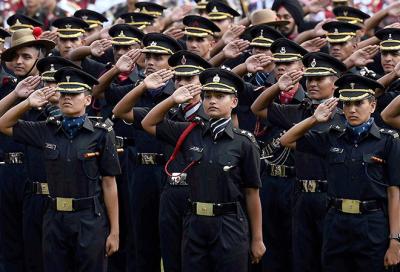
Indian Army personnel work in diverse settings such as border outposts, operational theatres, command headquarters, and training institutes, often collaborating with other branches of the armed forces, government agencies, and international allies. Their roles include combat operations, logistics management, engineering support, and medical services. They face challenges like high-risk deployments, extreme physical demands, and prolonged separations from family. By leveraging expertise in military strategy, engineering, and leadership, Indian Army officers and soldiers ensure national safety and operational readiness. As key contributors to India’s defence, they drive progress through trends like indigenous defence production, cybersecurity in military operations, and advanced training methodologies.
| Route | Steps |
| Route 1: NDA Entry (Officer Cadre) |
1. Complete 10+2 in any stream with minimum 50-60% marks 2. Clear NDA Entrance Exam conducted by UPSC and SSB Interview 3. Undergo 3-year training at National Defence Academy (NDA), Khadakwasla 4. Join Indian Army as a Permanent Commission Officer after specialized training at Indian Military Academy (IMA), Dehradun |
| Route 2: CDS Entry (Officer Cadre) |
1. Complete a Bachelor’s degree in any discipline 2. Clear Combined Defence Services (CDS) Exam by UPSC and SSB Interview 3. Train at Indian Military Academy (IMA), Dehradun for 1-1.5 years 4. Join Indian Army as a Permanent or Short Service Commission Officer |
| Route 3: Technical Entry Scheme (TES) (Officer Cadre) |
1. Complete 10+2 with Physics, Chemistry, and Mathematics (PCM) with minimum 60% marks 2. Clear SSB Interview (no written test for TES) 3. Undergo 5-year training including engineering degree and military training 4. Join as Permanent Commission Officer in technical branches like Engineering Corps |
| Route 4: Short Service Commission (SSC) via AFCAT/Direct Entry |
1. Complete a Bachelor’s degree (specific criteria for branches like Medical or Technical) 2. Clear relevant exams (e.g., AFCAT for specific roles) or direct SSB Interview 3. Train at Officers Training Academy (OTA), Chennai for 49 weeks 4. Join as Short Service Commission Officer with option for extension or Permanent Commission |
| Route 5: Soldier/Jawan Entry (Non-Officer Cadre) |
1. Complete 10th/10+2 (depending on trade) with minimum 45-50% marks 2. Clear Indian Army Soldier Recruitment Rally tests (Physical, Medical, Written) 3. Undergo training at regimental centers based on trade 4. Join as Soldier in technical or non-technical trades with potential for promotion |
| Institute | Course/Program | Official Link |
| National Defence Academy (NDA), Khadakwasla, Pune | 3-Year Training for Army Officer Cadets | https://www.nda.nic.in/ |
| Indian Military Academy (IMA), Dehradun | Officer Training for Permanent Commission | https://indianarmy.nic.in/ |
| Officers Training Academy (OTA), Chennai | Short Service Commission Officer Training | https://indianarmy.nic.in/ |
| Rashtriya Indian Military College (RIMC), Dehradun | Preparatory Training for Defence Entry | https://www.rimc.gov.in/ |
| Sainik Schools (Multiple Locations, e.g., Kapurthala, Ghorakhal) | Preparatory Education for NDA/CDS | https://www.sainikschooltvm.nic.in/ |
| College of Military Engineering (CME), Pune | Engineering Training for Technical Roles | https://indianarmy.nic.in/ |
| Defence Services Staff College (DSSC), Wellington | Advanced Military Leadership Training | https://dssc.gov.in/ |
| Army War College, Mhow, Madhya Pradesh | Strategic and Tactical Training for Officers | https://indianarmy.nic.in/ |
| Military College of Telecommunication Engineering (MCTE), Mhow | Signals and Communication Training | https://indianarmy.nic.in/ |
| Armed Forces Medical College (AFMC), Pune | MBBS and Medical Training for Army Doctors | https://www.afmc.nic.in/ |
| Institution | Course | Country | Official Link |
| United States Military Academy (West Point), New York | Bachelor of Science in Military Studies | USA | https://www.westpoint.edu/ |
| Royal Military Academy Sandhurst, Camberley | Officer Training for Military Leadership | UK | https://www.army.mod.uk/ |
| Australian Defence Force Academy (ADFA), Canberra | Bachelor of Arts/Science (Military Focus) | Australia | https://www.defence.gov.au/adfa/ |
| French Military Academy, Saint-Cyr Coëtquidan | Officer Training in Military Strategy | France | https://www.st-cyr.terre.defence.gouv.fr/ |
| Canadian Forces College, Toronto | Advanced Military and Strategic Studies | Canada | https://www.cfc.forces.gc.ca/ |
| German Armed Forces University, Munich | Military Leadership and Defence Studies | Germany | https://www.unibw.de/ |
| Japan Ground Self-Defence Force Academy, Yokosuka | Military Officer Training | Japan | https://www.mod.go.jp/gsdf/ |
| Royal Military College of Canada, Kingston | Bachelor of Military Arts and Science | Canada | https://www.rmc-cmr.ca/ |
| Italian Military Academy, Modena | Military Leadership and Tactical Training | Italy | https://www.esercito.difesa.it/ |
| Netherlands Defence Academy, Breda | Military Strategy and Defence Studies | Netherlands | https://www.defensie.nl/ |
India:
International (for Relevant Studies or Exposure):
Lieutenant → Captain → Major → Lieutenant Colonel → Colonel → Brigadier → Major General → Lieutenant General → General/Chief of Army Staff
| India (Government/Defence Bodies) | International Collaborations |
| Indian Army Headquarters, New Delhi | United Nations Peacekeeping Missions, Global |
| Ministry of Defence, Government of India | North Atlantic Treaty Organization (NATO), Global (Exercises) |
| Defence Research and Development Organisation (DRDO), New Delhi | United States Army, USA (Joint Exercises) |
| Bharat Electronics Limited (BEL), Bangalore | British Army, UK (Collaboration) |
| Ordnance Factory Board (OFB), Kolkata | French Army, France (Joint Training) |
| Army Training Command (ARTRAC), Shimla | Russian Ground Forces, Russia (Historical Ties) |
| Union Public Service Commission (UPSC), New Delhi | Israeli Defence Forces, Israel (Technology Sharing) |
| Pros | Cons |
| High societal impact through national defence and disaster response | High risk of injury or loss of life during combat or training |
| Prestigious role with job security, benefits, and honor | Physically and mentally demanding with rigorous training |
| Access to advanced training and leadership opportunities | Frequent relocations and long separations from family |
| Opportunity to serve in international missions and collaborations | Strict hierarchical structure with limited personal freedom |
| Contribution to nation-building and humanitarian efforts | Stressful conditions during wartime or counter-insurgency operations |
| Career Level (Officer Cadre) | India (₹ per annum) | Note on International Roles |
| Lieutenant (Entry) | 6,00,000 - 8,00,000 | International roles not typical for base salary |
| Captain (Early-Mid) | 8,00,000 - 10,00,000 | Salaries based on Indian pay scales |
| Major (Mid-Level) | 10,00,000 - 13,00,000 | Additional field and risk allowances |
| Lieutenant Colonel (Senior) | 13,00,000 - 16,00,000 | Perks include housing and travel |
| Colonel/Brigadier and Above | 16,00,000 - 22,50,000+ | Apex scale with significant benefits |
| Note: Salaries are based on the 7th Pay Commission scales for Indian Army officers and may vary with allowances (e.g., field area pay), postings, and seniority. Soldier/Jawan salaries range from ₹3,00,000 to ₹6,00,000 per annum based on rank and trade. |
A career in the Indian Army offers a unique opportunity to defend the nation’s borders by mastering military strategy and technology, fostering security through dedicated service, and empowering the country with every mission accomplished. Indian Army personnel are the protectors of India’s territorial integrity, using their expertise and commitment to ensure national safety, uphold justice, and combat threats across diverse terrains. This profession blends combat readiness with leadership, providing pathways in infantry, engineering, logistics, and medical services. For those passionate about defence, driven by a desire to serve the nation through military service, and eager to embrace the evolving landscape of warfare, joining the Indian Army is a deeply rewarding journey. It empowers individuals to address critical national and global security needs, maintain territorial dominance, and advance human safety through the transformative power of military dedication.
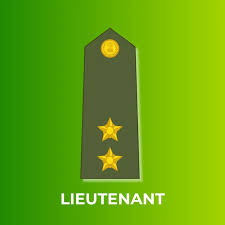
Entry-level officers who lead small units like platoons in combat or field operations under senior guidance. They execute tactical missions and...
0.0LPA
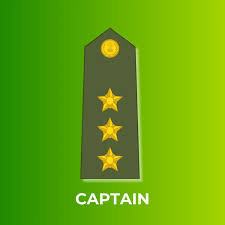
Early-to-mid-level officers who command companies, manage larger teams, and assist in operational planning. They oversee field duties and soldier...
0.0LPA
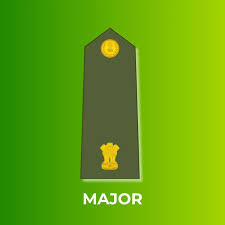
Mid-level officers who lead battalions or handle staff roles, focusing on strategy and coordination during operations. They balance command with...
0.0LPA
Take the next step and explore more about Indian Army.
Explore similar career paths that might interest you