Ag-FinTech Product Manager
Junior Ag-FinTech Product Manager
Explore Career
A Forest Officer, often referred to as a Range Forest Officer (RFO) or Forest Range Officer in many regions, is a professional responsible for the management, protection, and conservation of forest resources and wildlife. They work under government forest departments or environmental agencies to ensure sustainable use of forest ecosystems, prevent illegal activities like poaching and deforestation, and promote biodiversity. This career is crucial to combating climate change, preserving natural habitats, and supporting rural livelihoods dependent on forest resources. Forest Officers play a pivotal role in balancing ecological conservation with developmental needs, addressing challenges like habitat loss and human-wildlife conflict in an era shaped by environmental policies and global sustainability goals.
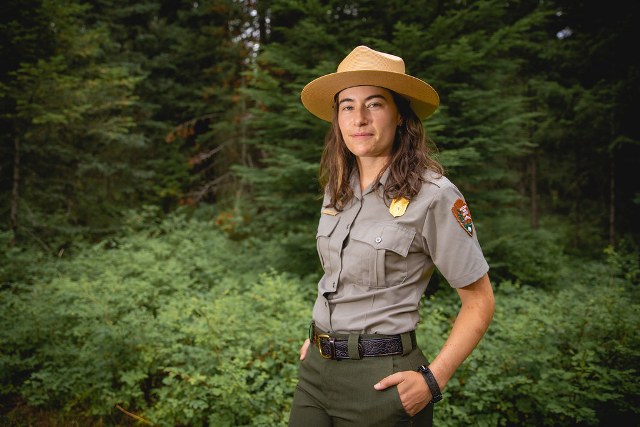
Forest Officers operate in diverse and often challenging environments such as dense forests, wildlife sanctuaries, and national parks, collaborating with local communities, government officials, and conservationists. Their roles include monitoring forest health, enforcing environmental laws, managing wildlife protection, and implementing afforestation programs. They face challenges like working in remote areas, dealing with illegal logging or poaching, and resolving conflicts between human needs and conservation goals. By leveraging expertise in forestry, ecology, and law enforcement, Forest Officers safeguard natural resources and biodiversity. As key contributors to environmental protection, they drive conservation efforts amidst trends like climate adaptation, community-based forestry, and technological integration in monitoring systems.
| Route | Steps |
| Route 1: Undergraduate Degree (Direct Entry) |
1. 10+2 in Science (Physics, Chemistry, Biology/Mathematics) with minimum 50-60% marks 2. Pursue a B.Sc. in Forestry, Environmental Science, or related field (3 years) 3. Apply for Forest Officer exams like State Forest Service (SFS) or Indian Forest Service (IFS) 4. Undergo training at forestry academies post-selection 5. Start as a Range Forest Officer or Assistant Conservator of Forests |
| Route 2: Postgraduate Specialization |
1. Complete a Bachelor’s degree in Forestry, Agriculture, or related Science field 2. Pursue M.Sc. in Forestry, Wildlife Management, or Environmental Science (2 years) 3. Appear for competitive exams like IFS or SFS for higher entry levels 4. Work as a Forest Officer or in specialized conservation roles |
| Route 3: Diploma/Certification for Support Roles |
1. 10+2 pass with minimum 45-50% marks in any stream 2. Complete a Diploma in Forestry or Wildlife Conservation (1-2 years) 3. Gain field experience through internships or entry-level positions 4. Work as Forest Guard or support staff, with potential to rise through experience |
| Institute | Course/Program | Official Link |
| Forest Research Institute (FRI), Dehradun | M.Sc. Forestry, Wood Science, Environment Mgmt. | https://www.fri.icfre.gov.in/ |
| Indian Institute of Forest Management (IIFM), Bhopal | PGDFM (Post Graduate Diploma in Forest Mgmt.) | https://www.iifm.ac.in/ |
| Wildlife Institute of India (WII), Dehradun | M.Sc. Wildlife Science, Short-term Courses | https://www.wii.gov.in/ |
| College of Forestry, Kerala Agricultural University, Thrissur | B.Sc. Forestry, M.Sc. Forestry | https://www.kau.in/ |
| College of Forestry, Dr. Yashwant Singh Parmar University, Solan | B.Sc. Forestry, M.Sc. Forestry | https://www.yspuniversity.ac.in/ |
| College of Forestry, Navsari Agricultural University, Gujarat | B.Sc. Forestry, M.Sc. Forestry | https://www.nau.in/ |
| Tamil Nadu Agricultural University, Coimbatore | B.Sc. Forestry, M.Sc. Forestry | https://www.tnau.ac.in/ |
| Punjab Agricultural University, Ludhiana | B.Sc. Forestry, M.Sc. Forestry | https://www.pau.edu/ |
| University of Agricultural Sciences, Dharwad, Karnataka | B.Sc. Forestry, M.Sc. Forestry | https://www.uasd.edu/ |
| North Eastern Regional Institute of Science and Technology (NERIST), Arunachal Pradesh | B.Sc. Forestry, Diploma in Forestry | https://www.nerist.ac.in/ |
| Institution | Course | Country | Official Link |
| University of British Columbia, Faculty of Forestry | BSc/MSc in Forestry, Natural Resource Mgmt. | Canada | https://www.ubc.ca/ |
| Yale School of the Environment, Yale University | Master of Forestry, Environmental Management | USA | https://environment.yale.edu/ |
| Swedish University of Agricultural Sciences (SLU) | MSc in Forestry, Sustainable Forest Mgmt. | Sweden | https://www.slu.se/en/ |
| University of Melbourne, School of Ecosystem and Forest Sciences | MSc in Forest Ecosystem Science | Australia | https://www.unimelb.edu.au/ |
| University of Freiburg, Faculty of Environment and Natural Resources | MSc in Forest Sciences | Germany | https://www.uni-freiburg.de/ |
| Wageningen University & Research, Forest and Nature Conservation | MSc in Forest and Nature Conservation | Netherlands | https://www.wur.nl/ |
| University of Oxford, Department of Plant Sciences | MSc in Biodiversity, Conservation & Mgmt. | UK | https://www.ox.ac.uk/ |
| University of Helsinki, Department of Forest Sciences | MSc in Forest Sciences | Finland | https://www.helsinki.fi/en |
| Oregon State University, College of Forestry | BS/MS in Forestry, Natural Resources | USA | https://www.forestry.oregonstate.edu/ |
| University of Canterbury, School of Forestry | Bachelor/Master of Forestry Science | New Zealand | https://www.canterbury.ac.nz/ |
India:
International:
Forest Guard → Range Forest Officer → Assistant Conservator of Forests (ACF) → Deputy Conservator of Forests (DCF) → Chief Conservator of Forests (CCF)
| India | International |
| Ministry of Environment, Forest and Climate Change (MoEFCC), New Delhi | World Wildlife Fund (WWF), Global |
| State Forest Departments (e.g., Maharashtra, Karnataka, Uttarakhand) | International Union for Conservation of Nature (IUCN), Global |
| Wildlife Institute of India (WII), Dehradun | United Nations Environment Programme (UNEP), Global |
| Forest Survey of India (FSI), Dehradun | Greenpeace International, Global |
| National Afforestation and Eco-Development Board, New Delhi | Conservation International, USA |
| Indian Council of Forestry Research and Education (ICFRE), Dehradun | The Nature Conservancy, USA |
| Project Tiger/National Tiger Conservation Authority (NTCA), New Delhi | Fauna & Flora International, UK |
| Pros | Cons |
| High societal impact through environmental conservation | Physically demanding with work in remote, harsh terrains |
| Opportunity to work closely with nature and wildlife | Risk of encounters with dangerous animals or poachers |
| Job security due to government employment in most roles | Limited work-life balance due to field postings and emergencies |
| Contribution to combating climate change and biodiversity loss | Bureaucratic challenges and slow policy implementation |
| Diverse roles from fieldwork to policy-making | Emotional stress from human-wildlife conflict resolutions |
| Career Level | India (₹ per annum) | International (USD per annum) |
| Forest Guard (Early Career) | 2,00,000 - 3,50,000 | 10,000 - 20,000 |
| Range Forest Officer (RFO) (Mid-Career) | 4,00,000 - 6,00,000 | 20,000 - 30,000 |
| Assistant Conservator of Forests (ACF) | 6,00,000 - 9,00,000 | 30,000 - 45,000 |
| Deputy Conservator of Forests (DCF) | 9,00,000 - 12,00,000 | 45,000 - 60,000 |
| Chief Conservator of Forests (CCF) | 12,00,000+ | 60,000 - 80,000+ |
| Note: Salaries may vary based on government pay scales, location, experience, and country-specific standards. Indian salaries reflect government service pay bands. |
A career as a Forest Officer offers a unique opportunity to protect the planet’s natural heritage by safeguarding forests and wildlife, fostering ecological balance through dedicated conservation, and ensuring sustainable resource use with every initiative undertaken. Forest Officers are the guardians of nature, using their scientific knowledge and field skills to preserve biodiversity, combat environmental degradation, and support community livelihoods across diverse ecosystems. This profession blends passion for nature with public service, providing pathways in forest management, wildlife protection, policy-making, and research. For those passionate about the environment, driven by a desire to conserve natural resources, and eager to embrace the evolving landscape of ecological sustainability, becoming a Forest Officer is a deeply rewarding journey. It empowers individuals to address critical environmental challenges, maintain ecosystem health, and advance global conservation through the transformative power of dedicated service.

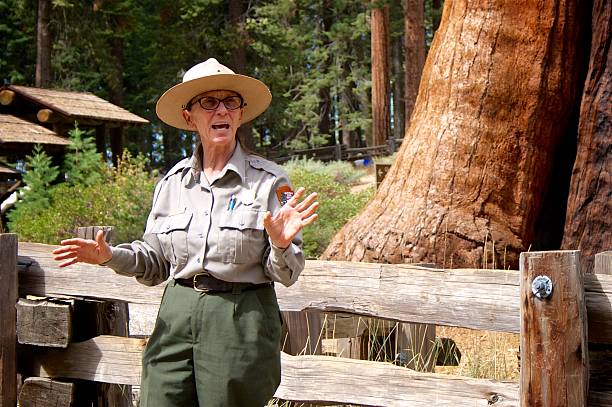
Entry-level professionals who patrol forests, monitor wildlife, and report illegal activities. They assist senior officers in basic conservation...
0.0LPA
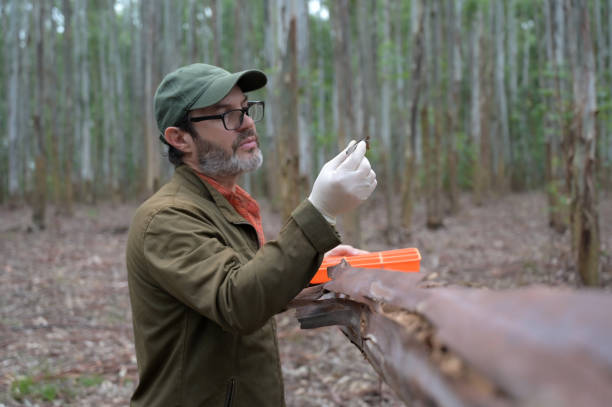
Early-career officers who manage specific forest ranges, oversee staff, and enforce laws. They handle local conservation projects, community...
0.0LPA

Mid-level experts who supervise multiple ranges, plan conservation strategies, and coordinate with state authorities. They manage budgets,...
0.0LPA
Take the next step and explore more about Forest Officer.
Explore similar career paths that might interest you