Food Safety Officer

A Food Safety Officer is a professional dedicated to ensuring the safety and quality of food products by enforcing regulations, conducting inspections, and implementing safety standards to protect public health from foodborne illnesses and contamination. They work in government agencies, food regulatory bodies, private food industries, research institutions, and public health organizations, collaborating with food producers, scientists, and policymakers. Food Safety Officers play a critical role in safeguarding food supply chains and maintaining consumer trust in a world increasingly focused on food security, quality assurance, and health safety standards.

Share :
Career tree mind map (horizontal) — Food Safety Officer
Colored branches, hub circles, and underlined topics — same style as counselor course classic (types 18–19 in admin).
Loading mind map…

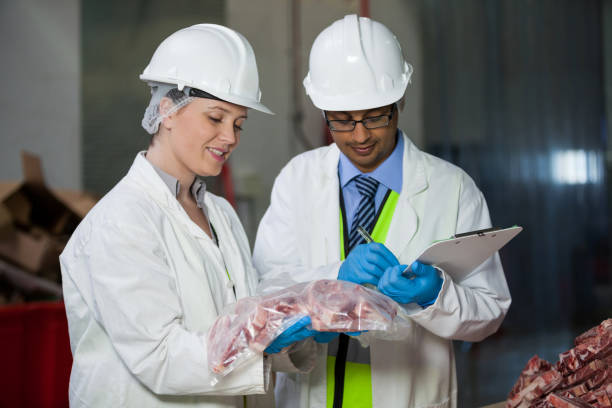
Food Safety Officers are experts in food science and regulatory compliance, responsible for inspecting food production facilities, monitoring food handling practices, and ensuring adherence to safety standards to prevent contamination and ensure public health. Their role involves conducting audits, testing food samples, and investigating food safety violations, often working in diverse settings such as food processing plants, restaurants, laboratories, or government offices. They combine expertise in microbiology, chemistry, and food safety laws to address issues like food adulteration, improper storage, and unhygienic practices. As key contributors to public health, they help maintain food safety in an era prioritizing consumer protection, global food trade, and stringent regulatory frameworks.

  • Food Safety Inspections
    • Conduct regular inspections of food establishments, including restaurants, processing units, and retail outlets, to ensure compliance with safety standards.
    • Evaluate hygiene practices, storage conditions, and equipment sanitation during inspections.
  • Sample Collection and Testing
    • Collect food samples for laboratory analysis to detect contaminants, pathogens, or adulterants.
    • Interpret test results to identify safety violations and recommend corrective actions.
  • Regulatory Compliance Enforcement
    • Ensure adherence to national and international food safety laws, such as the Food Safety and Standards Act in India.
    • Issue notices, fines, or closure orders for non-compliant food businesses.
  • Investigation of Foodborne Illnesses
    • Investigate outbreaks of foodborne illnesses to trace contamination sources and prevent further spread.
    • Collaborate with health departments to manage public health crises related to food safety.
  • Training and Education
    • Train food handlers and business owners on proper food safety practices and hygiene standards.
    • Educate the public on safe food handling and the importance of food safety regulations.
  • Documentation and Reporting
    • Maintain detailed records of inspections, test results, and enforcement actions for regulatory reporting.
    • Prepare reports for government bodies or legal proceedings related to food safety violations.
  • Policy and Standard Development Support
    • Provide input for the development of food safety policies and guidelines based on field observations.
    • Stay updated on evolving food safety standards to ensure compliance across sectors.
  • Risk Assessment and Mitigation
    • Assess potential food safety risks in production and supply chains to recommend preventive measures.
    • Implement hazard analysis and critical control points (HACCP) systems in food establishments.

RouteSteps
Route 1

1. 10+2 with Physics, Chemistry, Biology (PCB) or Mathematics (PCM).

2. Bachelor’s degree in Food Science, Microbiology, or Chemistry (3-4 years).

3. Gain practical experience through internships or training in food safety or quality control (3-6 months).

4. Pursue entry-level roles like Food Safety Inspector or Quality Control Assistant (1-2 years).

Route 2

1. 10+2 with PCB or PCM.

2. Bachelor’s degree in Biotechnology, Food Technology, or Home Science (3-4 years).

3. Master’s degree in Food Safety, Food Science, or Public Health (2 years, optional).

4. Work in food safety monitoring or laboratory analysis roles to gain experience (1-2 years).

5. Transition to Food Safety Officer roles with enhanced skills and knowledge.

Route 3

1. 10+2 with PCB or PCM.

2. Bachelor’s degree in Food Science, Microbiology, or related field (3-4 years).

3. Pursue professional certifications like Certified Food Safety Professional or HACCP Auditor (1-2 years).

4. Gain hands-on experience through roles in food safety audits or inspections (1-2 years).

5. Establish a career as a Food Safety Officer in government agencies or private industries.

Route 4

1. 10+2 with PCB or PCM.

2. Bachelor’s degree from India in Food Technology, Microbiology, or related field (3-4 years).

3. Pursue international food safety certifications or advanced degrees abroad (1-2 years).

4. Gain exposure through roles in global food safety projects or international organizations (1-2 years).

5. Work as a Food Safety Officer in international markets or multinational food companies.

  • Mandatory practical training during degree programs in food processing units or laboratories for safety testing.
  • Rotations in food safety departments of government or private firms for hands-on experience in inspections.
  • Internships under senior food safety officers for exposure to real-time audits and outbreak investigations.
  • Observerships in public health or food regulatory bodies for insights into compliance enforcement.
  • Participation in food safety audits and quality control simulations for practical skill development.
  • Training in laboratory techniques for food testing through real-world engagements.
  • Exposure to tools like microbial testing kits, pH meters, and safety audit checklists during internships.
  • Field projects on food safety risk assessments or hygiene standard implementation during training.
  • Community outreach programs to educate food vendors on safety practices and regulations.
  • International food safety attachments for global exposure to diverse food safety standards and practices.

  • Certificate in Food Safety and Quality Management
  • Bachelor’s in Food Science, Microbiology, or Food Technology
  • Master’s in Food Safety, Food Science and Technology, or Public Health
  • Ph.D. in Food Safety or Food Microbiology
  • Specialization in Foodborne Pathogen Detection
  • Certification in Hazard Analysis and Critical Control Points (HACCP)
  • Workshops on Food Safety Auditing and Inspection
  • Training in Food Regulatory Compliance
  • Specialization in Food Supply Chain Safety
  • Certification in ISO 22000 Food Safety Management Systems

InstituteCourse/ProgramOfficial Link
National Institute of Food Technology Entrepreneurship and Management (NIFTEM), SonepatB.Tech/M.Tech in Food Technology and Managementhttps://www.niftem.ac.in/
Punjab Agricultural University (PAU), LudhianaB.Sc./M.Sc. in Food Science and Technologyhttps://www.pau.edu/
University of Delhi, DelhiM.Sc. in Food and Nutritionhttps://www.du.ac.in/
Banaras Hindu University (BHU), VaranasiM.Sc. in Food Science and Technologyhttps://www.bhu.ac.in/
Amity University, NoidaB.Sc./M.Sc. in Food Science and Technologyhttps://www.amity.edu/
Indian Agricultural Research Institute (IARI), New DelhiM.Sc. in Food Sciencehttps://www.iari.res.in/
Tamil Nadu Agricultural University (TNAU), CoimbatoreB.Tech/M.Tech in Food Process Engineeringhttps://www.tnau.ac.in/
Savitribai Phule Pune University, PuneM.Sc. in Food Sciencehttps://www.unipune.ac.in/
University of Madras, ChennaiM.Sc. in Food Science and Nutritionhttps://www.unom.ac.in/
Annamalai University, Tamil NaduM.Sc. in Food Science and Technologyhttps://www.annamalaiuniversity.ac.in/

InstitutionCourseCountryOfficial Link
Cornell UniversityFood Science and TechnologyUSAhttps://www.cornell.edu/
University of California, DavisFood Science and SafetyUSAhttps://www.ucdavis.edu/
Wageningen University & ResearchFood Safety and Quality ManagementNetherlandshttps://www.wur.nl/
University of ReadingFood Science and NutritionUKhttps://www.reading.ac.uk/
Massachusetts Institute of Technology (MIT)Food Systems and TechnologyUSAhttps://www.mit.edu/
University of MelbourneFood Science and SafetyAustraliahttps://www.unimelb.edu.au/
University of British ColumbiaFood ScienceCanadahttps://www.ubc.ca/
ETH ZurichFood Science and NutritionSwitzerlandhttps://www.ethz.ch/
University of CopenhagenFood Science and SafetyDenmarkhttps://www.ku.dk/
National University of Singapore (NUS)Food Science and TechnologySingaporehttps://www.nus.edu.sg/

India:

  • NIFTEM Entrance Exam: For admission to B.Tech/M.Tech programs in Food Technology at National Institute of Food Technology Entrepreneurship and Management.
  • ICAR AIEEA (All India Entrance Examination for Admission): For admissions in food science programs at agricultural universities like IARI.
  • State-Level Entrance Exams: Various states conduct exams for admission to food science or technology programs in state universities.
  • NET (National Eligibility Test): For research fellowships or lectureship roles in food safety.
  • FSSAI Recruitment Exam: For government positions as Food Safety Officer under the Food Safety and Standards Authority of India (FSSAI).

International:

  • TOEFL (Test of English as a Foreign Language): Minimum score of 80-100 required for non-native speakers applying to programs in English-speaking countries.
  • IELTS (International English Language Testing System): Minimum score of 6.0-7.0 required for admission to universities in the UK, Australia, and other regions.
  • PTE Academic (Pearson Test of English Academic): Accepted by many international institutes as an alternative to TOEFL or IELTS for English proficiency.

Food Safety Inspector → Food Safety Officer → Senior Food Safety Officer → Food Safety Manager → Food Safety Consultant → Food Safety Program Director → Academician/Researcher

  • Government food regulatory bodies for enforcing food safety laws and standards.
  • Public health departments for investigating foodborne illnesses and outbreaks.
  • Food processing industries for ensuring safety and quality in production.
  • Research institutions for studying food safety technologies and contamination risks.
  • Non-profit organizations for advocating food safety awareness and education.
  • Academic institutions for teaching and researching food safety practices.
  • Retail and hospitality sectors for monitoring food handling and hygiene standards.
  • International food safety agencies for global food trade compliance initiatives.
  • Quality control laboratories for testing food samples and detecting contaminants.
  • Consultancy firms for providing food safety audits and compliance solutions.

IndiaInternational
Food Safety and Standards Authority of India (FSSAI)World Health Organization (WHO), Global
Ministry of Health and Family Welfare, IndiaFood and Agriculture Organization (FAO), Global
National Institute of Food Technology Entrepreneurship and Management (NIFTEM)U.S. Food and Drug Administration (FDA), USA
State Food Safety Departments (e.g., Tamil Nadu, Delhi)European Food Safety Authority (EFSA), Europe
Nestlé IndiaNestlé, Global
Hindustan Unilever Limited (HUL)Unilever, Global
Amul (Gujarat Cooperative Milk Marketing Federation)Mondelez International, USA
ITC Limited (Foods Division)PepsiCo, Global
Mother DairyCoca-Cola Company, Global
Parle AgroKraft Heinz, USA

ProsCons
Direct impact on public health by ensuring safe food consumptionHigh-pressure role due to public health risks and potential outbreaks
Growing demand due to increasing food safety regulations and consumer awarenessPhysically demanding with frequent travel and long hours during inspections
Opportunity to contribute to food quality and prevent foodborne illnessesEmotional stress from handling serious violations or public health crises
Varied career paths in government, industry, consultancy, and researchResistance from food businesses to comply with strict safety regulations
Potential for societal change through improved food safety standardsNeed for constant updates on evolving food safety laws and technologies

Career LevelIndia (₹ per annum)International (USD per annum)
Food Safety Inspector (Early Career)3,00,000 - 5,00,00040,000 - 55,000
Food Safety Officer (Mid-Career)5,00,000 - 8,00,00055,000 - 70,000
Senior Food Safety Officer8,00,000 - 12,00,00070,000 - 85,000
Food Safety Manager/Food Safety Auditor12,00,000 - 16,00,00085,000 - 100,000
Food Safety Consultant/Food Safety Program Director/Academician/Researcher16,00,000 - 22,00,000100,000 - 120,000+

Note: Salaries may vary based on location, employer, experience, and specialization. Indian figures are updated estimates based on current industry trends, government pay scales (e.g., FSSAI roles under 7th Pay Commission), and private sector data as of 2025, reflecting inflation and demand growth in food safety sectors. International figures are based on data from the U.S., Canada, and Europe as of 2025, adjusted for market trends in food safety roles, sourced from industry reports and salary surveys like Glassdoor and PayScale. Due to the speculative nature of future data, these are approximations and may differ based on real-time economic factors.

  • Food Safety Management Software (e.g., FoodLogiQ, SafetyChain) for tracking compliance and inspections.
  • Laboratory Information Management Systems (LIMS) for managing food sample test data.
  • Data Analytics Tools (e.g., Excel, Tableau) for analyzing food safety trends and outbreak patterns.
  • Traceability Software (e.g., TraceLink, IBM Food Trust) for monitoring food supply chains.
  • Mobile Inspection Apps for real-time reporting and documentation during field audits.
  • Teleconferencing tools like Zoom for collaboration with food safety teams and regulators.
  • Cloud Platforms (e.g., Google Cloud) for storing and sharing food safety inspection data.
  • Microsoft Office Suite for documentation and safety compliance presentations.
  • Project Management Tools (e.g., Trello, Monday.com) for coordinating food safety initiatives.
  • Statistical Software (e.g., SPSS, R) for advanced analysis of food contamination data.

  • Food Safety and Standards Authority of India (FSSAI)
  • Ministry of Health and Family Welfare, India
  • Association of Food Scientists and Technologists India (AFSTI)
  • International Food Protection Training Institute (IFPTI)
  • International Association for Food Protection (IAFP)
  • Institute of Food Technologists (IFT), USA
  • Global Food Safety Initiative (GFSI)
  • Codex Alimentarius Commission

  • Dr.Pawan Kumar Agarwal (Contemporary, India): Former CEO of FSSAI, instrumental in strengthening food safety regulations in India. His leadership shaped national food standards. His policies enhanced public health. He drove key safety campaigns.
     
  • Dr. V.K. Paul (Contemporary, India): Member of NITI Aayog, known for contributions to public health and food safety policies in India. His work integrates safety with nutrition. His advocacy shapes health policy. He authored key health reports.
     
  • Dr. Kamala Krishnaswamy (Contemporary, India): Former Director of National Institute of Nutrition, focusing on food safety and nutritional security. Her research addresses contamination risks. Her leadership influences policy. She authored significant nutrition texts.
     
  • Dr.Dhir Singh (Contemporary, India): Former Director General of ICAR, known for advancing food safety in agricultural produce. His work ensures farm-level safety. His policies support farmers. He mentored food safety experts.
     
  • Dr. Amrita Patel (Contemporary, India): Former Chairperson of National Dairy Development Board, focusing on dairy food safety standards. Her initiatives improved milk safety. Her leadership shaped cooperative models. She advocated for quality control.
     
  • Dr. Margaret Chan (Contemporary, China/Hong Kong): Former Director-General of WHO, known for global food safety advocacy and outbreak management. Her policies shaped international standards. Her leadership drove health safety. She addressed global food crises.
     
  • Dr. Frank Yiannas (Contemporary, USA): Former FDA Deputy Commissioner for Food Policy, focusing on food safety modernization. His work pioneered traceability tech. His books inspire safety innovation. He shaped U.S. food policy.
     
  • Dr. Barbara Kowalcyk (Contemporary, USA): Food safety advocate and researcher at Ohio State University, known for work on foodborne illness prevention. Her advocacy drives policy change. Her leadership shapes safety research. She founded key safety initiatives.
     
  • Dr. Jose Emilio Esteban (Contemporary, USA): Chief Scientist at USDA Food Safety and Inspection Service, focusing on meat and poultry safety. His research enhances inspection methods. His policies protect consumers. He drives safety innovation.
     
  • Dr. Stella Kyriakides (Contemporary, Cyprus/EU): EU Commissioner for Health and Food Safety, known for shaping European food safety policies. Her leadership ensures strict standards. Her work addresses global trade. She advocates for consumer protection.
     

  • Build a strong foundation in food science, microbiology, and chemistry to understand food safety risks.
  • Seek early exposure to food safety inspections or quality control through internships to confirm interest in the field.
  • Prepare thoroughly for entrance exams or certification requirements specific to your chosen program or government role.
  • Pursue certifications in HACCP, ISO 22000, or food safety auditing to gain expertise in compliance.
  • Stay updated on advancements in food safety regulations by attending industry conferences and workshops.
  • Develop hands-on skills in food testing, inspection, and regulatory enforcement through practical training.
  • Engage in food safety audits or outbreak investigation projects to build real-world experience.
  • Join professional associations like the Association of Food Scientists and Technologists India (AFSTI) for resources and networking.
  • Work on precision and ethical judgment to ensure accurate safety assessments and fair enforcement.
  • Explore international food safety projects for exposure to diverse standards and global food trade challenges.
  • Volunteer in community food safety awareness programs to understand local hygiene and safety needs.
  • Cultivate adaptability to handle diverse food establishments and evolving safety challenges.
  • Attend continuing education programs to stay abreast of new food safety technologies and regulations.
  • Build a network with food safety experts, regulators, and industry leaders for collaborative efforts.
  • Develop resilience to manage the high-pressure demands and public health responsibilities of food safety work.
  • Balance scientific skills with communication to educate stakeholders and adapt to rapid changes in food safety priorities.

A career as a Food Safety Officer offers a unique opportunity to contribute to public health and consumer protection by ensuring the safety and quality of food across diverse supply chains. From inspecting food establishments to shaping regulatory compliance, Food Safety Officers play a pivotal role in modern health stewardship and food security. This field combines scientific expertise, regulatory enforcement, and a commitment to societal well-being, offering diverse paths in government, industry, consultancy, and research. For those passionate about safeguarding food quality, adapting to global health challenges, and addressing critical safety needs in an era of increasing food safety urgency, a career as a Food Safety Officer provides an intellectually stimulating and professionally rewarding journey with the potential to make significant contributions to society by enhancing public health and food safety standards worldwide.

Knowledge & Skills You Will Learn
1
Technological Advancements: Adoption of rapid testing kits, blockchain for traceability, and AI for risk prediction, creating new skill demands.
2
Sustainability Linkages: Integration of food safety with sustainable practices, such as reducing chemical contaminants in food production.
3
Skill Development Needs: Demand for training in advanced food testing technologies and interdisciplinary safety approaches.
Food Safety Inspector

Food Safety Inspector

Entry-level professionals conduct basic inspections and sample collections under supervision in organizations like the Food Safety and Standards...

0.0LPA
Senior Food Safety Officer

Senior Food Safety Officer

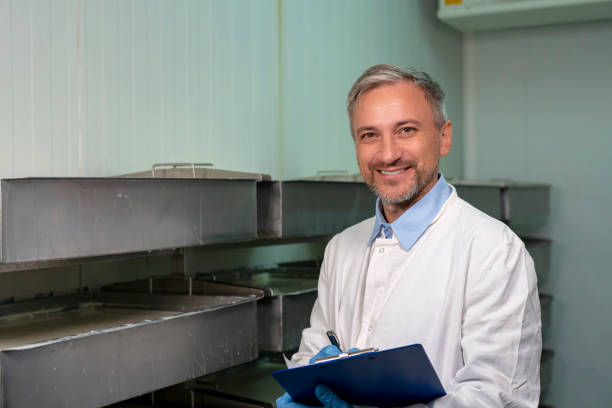
Experienced officers lead inspection teams, handle complex cases like foodborne outbreaks, and mentor junior staff in regulatory bodies like FSSAI...

0.0LPA

Food Safety Manager

Food Safety Manager

Professionals manage food safety programs, develop internal safety protocols, and oversee compliance for private food companies like Nestlé India...

0.0LPA

Interested in this career?

Take the next step and explore more about Food Safety Officer.