Fine Artist

Summary

A Fine Artist is a creative professional who specializes in producing original works of art, such as paintings, sculptures, drawings, and mixed media, primarily for aesthetic and expressive purposes rather than commercial application....

Share :
✨ Radial Mind Map - Fine Artist
Nodes arranged in concentric circles

Loading radial mind map...

Overview


A Fine Artist is a creative professional who specializes in producing original works of art, such as paintings, sculptures, drawings, and mixed media, primarily for aesthetic and expressive purposes rather than commercial application. They work in diverse settings, including personal studios, galleries, and educational institutions, often collaborating with curators, art dealers, and other artists. Fine Artists play a crucial role in cultural expression and societal reflection by creating thought-provoking and visually captivating works in an era where art serves as a medium for personal identity, historical documentation, and emotional connection.
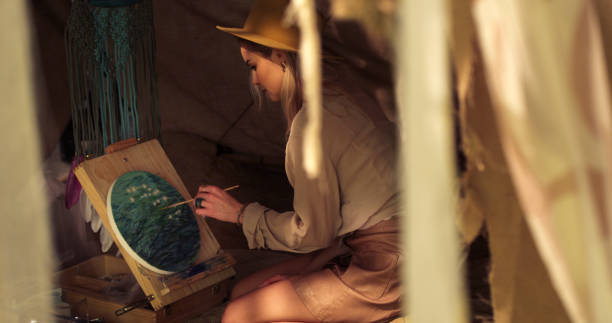
Fine Artists are visionary creators responsible for conceptualizing and producing artworks that convey personal, cultural, or social messages through various mediums. Their role includes experimenting with techniques, showcasing their work in exhibitions, and addressing challenges ranging from balancing personal expression with market demands to securing funding or recognition. They combine skills in creativity, technical mastery, and perseverance, working across various settings to produce impactful art. As key contributors to the cultural landscape, Fine Artists drive inspiration and dialogue in a world increasingly valuing individuality and artistic innovation.

Roles and Responsibilities

💼
Fine Artist
Roles and Responsibilities
Concept Development
Create original ideas and themes for artworks that reflect personal vision or societal issues.
Develop sketches, drafts, or proposals to visualize concepts for potential projects or exhibitions.
Artistic Creation
Produce artworks using various mediums, such as painting, sculpture, printmaking, or digital tools.
Experiment with materials, techniques, and styles to achieve desired aesthetic or emotional effects.
Trend Research and Analysis
Stay updated on art movements, cultural shifts, and audience preferences to create relevant works.
Analyze art market trends to understand demand and opportunities for exposure or sales.
Technical Mastery and Innovation
Refine skills in specific mediums or techniques to ensure high-quality execution of artistic vision.
Create prototypes or test pieces to explore new methods or materials before finalizing works.
Collaboration with Teams
Work with gallery owners, curators, and art dealers to exhibit and promote artworks.
Collaborate with other artists or organizations for joint projects, installations, or community initiatives.
Personal Branding and Consistency
Develop a unique artistic style or signature that reflects personal identity and builds recognition.
Ensure consistency in thematic or stylistic elements across a body of work for cohesive portfolios.
Project Management
Manage timelines and budgets for art projects, from creation to exhibition or sale.
Coordinate with galleries, suppliers, or clients to meet deadlines and logistical requirements.
Cultural Impact and Experimentation
Incorporate social, political, or environmental themes into art to provoke thought or inspire change.
Experiment with unconventional mediums or formats to push boundaries in artistic expression.
Creative Foundation:
Strong knowledge of art history, composition, and aesthetics is essential for fine art.
Technical Skills:
Proficiency in specific mediums like painting, sculpture, or printmaking is critical for effective work.
Specialized Training:
Certifications or workshops in niche techniques like mural art or ceramics offer expertise.
Industry Awareness:
Understanding trends in the art world and gallery expectations improves visibility.
Interdisciplinary Knowledge:
Familiarity with curation, art criticism, or digital art enhances outcomes.
Certification Importance:
Industry-recognized certifications or residencies can enhance employability for advanced roles.
Continuing Education:
Regular workshops and exhibitions are necessary to stay updated on artistic trends and techniques.
Global Standards:
Compliance with international art exhibition and preservation standards enhances opportunities.
Attention to Detail:
Precision in technique, color, and form is critical for high-quality results.
Entrance Examination Success:
Certain programs may require entrance tests or specific qualifications for admission.
International Testing Requirements:
For global opportunities, certifications or qualifications from recognized art bodies may be needed.
Pablo Picasso (Historical, Spain):
Fine Artist since the early 1900s. His pioneering Cubism and works likeGuernicaredefined modern art. His vision drives innovation. His impact shapes global aesthetics.
Frida Kahlo (Historical, Mexico):
Fine Artist since the 1930s. Her surreal self-portraits explore identity and pain, inspiring feminist art. Her artistry fosters emotion. Her contributions influence cultural dialogue.
Vincent van Gogh (Historical, Netherlands):
Fine Artist since the 1880s. His expressive works likeStarry Nightshaped Post-Impressionism. His creativity inspires passion. His impact endures in art history.
Damien Hirst (Contemporary, UK):
Fine Artist since the 1980s. His provocative installations likeThe Physical Impossibility of Deathchallenge norms. His vision drives controversy. His work impacts contemporary markets.
Yayoi Kusama (Contemporary, Japan):
Fine Artist since the 1960s. Her infinity mirror rooms and polka dot motifs explore obsession and infinity. Her creativity fosters immersion. Her contributions influence global art.
AnishKapoor (Contemporary, India/UK):
Fine Artist since the 1980s. His sculptures likeCloud Gateblend form and reflection, earning global acclaim. His vision shapes public art. His impact influences spatial design.
Amrita Sher-Gil (Historical, India):
Fine Artist since the 1930s. Her paintings blending Indian and Western styles pioneered modern Indian art. Her artistry drives heritage. Her contributions shape national identity.
Banksy (Contemporary, UK):
Fine Artist since the 1990s. His anonymous street art critiques society with wit and political depth. His vision fosters rebellion. His impact shapes urban art culture.
Jeff Koons (Contemporary, USA):
Fine Artist since the 1980s. His pop-inspired sculptures likeBalloon Dogredefine kitsch in fine art. His creativity inspires playfulness. His work impacts commercial art.
M.F. Husain (Historical, India):
Fine Artist since the 1940s. His bold paintings of Indian themes earned him the title “Picasso of India.” His vision drives cultural pride. His contributions influence Indian modernism.

Roles and Responsibilities

  • Concept Development
    • Create original ideas and themes for artworks that reflect personal vision or societal issues.
    • Develop sketches, drafts, or proposals to visualize concepts for potential projects or exhibitions.
  • Artistic Creation
    • Produce artworks using various mediums, such as painting, sculpture, printmaking, or digital tools.
    • Experiment with materials, techniques, and styles to achieve desired aesthetic or emotional effects.
  • Trend Research and Analysis
    • Stay updated on art movements, cultural shifts, and audience preferences to create relevant works.
    • Analyze art market trends to understand demand and opportunities for exposure or sales.
  • Technical Mastery and Innovation
    • Refine skills in specific mediums or techniques to ensure high-quality execution of artistic vision.
    • Create prototypes or test pieces to explore new methods or materials before finalizing works.
  • Collaboration with Teams
    • Work with gallery owners, curators, and art dealers to exhibit and promote artworks.
    • Collaborate with other artists or organizations for joint projects, installations, or community initiatives.
  • Personal Branding and Consistency
    • Develop a unique artistic style or signature that reflects personal identity and builds recognition.
    • Ensure consistency in thematic or stylistic elements across a body of work for cohesive portfolios.
  • Project Management
    • Manage timelines and budgets for art projects, from creation to exhibition or sale.
    • Coordinate with galleries, suppliers, or clients to meet deadlines and logistical requirements.
  • Cultural Impact and Experimentation
    • Incorporate social, political, or environmental themes into art to provoke thought or inspire change.
    • Experiment with unconventional mediums or formats to push boundaries in artistic expression.


Study Route & Eligibility Criteria

RouteSteps
Route 11. 10+2 in any stream (preferably with Art or Fine Arts subjects)
2. Bachelor’s degree in Fine Arts (BFA) or related field (3-4 years)
3. Internship or practical training (3-6 months)
4. Practice as Emerging Artist or Gallery Assistant
Route 21. 10+2 in any stream
2. Diploma or Certificate in Fine Arts (6 months-2 years)
3. Build hands-on experience through projects
4. Work as Freelance or Emerging Artist
Route 31. 10+2 in any stream
2. Bachelor’s degree in Fine Arts (BFA) (3-4 years)
3. Master’s degree in Fine Arts (MFA) (2 years)
4. Work as Established Artist or Art Instructor
Route 41. 10+2 in any stream
2. Advanced international training or certification in Fine Arts (1-2 years)
3. Master’s or specialized courses as per country requirements
4. Practice abroad or in India


Significant Observations (Academic Related Points)

  • Creative Foundation: Strong knowledge of art history, composition, and aesthetics is essential for fine art.
  • Technical Skills: Proficiency in specific mediums like painting, sculpture, or printmaking is critical for effective work.
  • Specialized Training: Certifications or workshops in niche techniques like mural art or ceramics offer expertise.
  • Industry Awareness: Understanding trends in the art world and gallery expectations improves visibility.
  • Interdisciplinary Knowledge: Familiarity with curation, art criticism, or digital art enhances outcomes.
  • Certification Importance: Industry-recognized certifications or residencies can enhance employability for advanced roles.
  • Continuing Education: Regular workshops and exhibitions are necessary to stay updated on artistic trends and techniques.
  • Global Standards: Compliance with international art exhibition and preservation standards enhances opportunities.
  • Attention to Detail: Precision in technique, color, and form is critical for high-quality results.
  • Entrance Examination Success: Certain programs may require entrance tests or specific qualifications for admission.
  • International Testing Requirements: For global opportunities, certifications or qualifications from recognized art bodies may be needed.


Internships & Practical Exposure

  • Mandatory practical training during degree or diploma programs in fine arts departments.
  • Rotations in art galleries, studios, or cultural organizations for hands-on experience with real-world projects.
  • Internships under established artists or curators for exposure to professional workflows.
  • Observerships in art restoration or exhibition setups for experience in art handling and presentation.
  • Participation in mock art projects or group exhibitions for practical skill development.
  • Training in collaborative projects through real-world commissions or public art initiatives.
  • Exposure to industry-standard tools and materials during internships or residencies.
  • Project-based learning focusing on diverse artistic expressions and market challenges.
  • Public outreach initiatives like assisting in community art programs or cultural festivals.
  • International attachments or online collaborations for global exposure to fine art practices.


Courses & Specializations to Enter the Field

  • Certificate in Fine Arts Techniques.
  • Bachelor’s in Fine Arts (BFA) with Painting Specialization.
  • Master’s in Fine Arts (MFA) with Sculpture Focus.
  • Specialization in Printmaking and Etching.
  • Certification in Mixed Media Art.
  • Workshops on Contemporary Art Practices.
  • Training in Art Restoration and Preservation.
  • Specialization in Installation Art.
  • Certification in Drawing and Illustration.
  • Short Courses in Art History and Criticism.


Top Institutes for Fine Artist Education (India)

InstituteCourse/ProgramOfficial Link
Sir J.J. School of Art, MumbaiBFA/MFA in Fine Artshttps://www.sirjjschoolofart.in/
Faculty of Fine Arts, Maharaja Sayajirao University, BarodaBFA/MFA in Fine Artshttps://www.msubaroda.ac.in/
College of Art, University of Delhi, New DelhiBFA/MFA in Fine Artshttps://colart.delhigovt.nic.in/
Visva-Bharati University, SantiniketanBFA/MFA in Fine Artshttps://www.visvabharati.ac.in/
Banaras Hindu University (BHU), VaranasiBFA/MFA in Fine Artshttps://www.bhu.ac.in/
Kala Bhavana, SantiniketanBFA/MFA in Fine Artshttps://www.visvabharati.ac.in/
Government College of Fine Arts, ChennaiBFA/MFA in Fine Artshttps://www.gcfachennai.com/
Amity School of Fine Arts, NoidaBFA/MFA in Fine Artshttps://www.amity.edu/
Srishti Manipal Institute of Art, Design and Technology, BangaloreBFA in Fine Artshttps://srishti.ac.in/
Jamia Millia Islamia, New DelhiBFA/MFA in Fine Artshttps://www.jmi.ac.in/


Top International Institutes

InstitutionCourseCountryOfficial Link
Royal College of Art (RCA)MA in Fine ArtsUKhttps://www.rca.ac.uk/
School of the Art Institute of Chicago (SAIC)BFA/MFA in Fine ArtsUSAhttps://www.saic.edu/
Rhode Island School of Design (RISD)BFA/MFA in Fine ArtsUSAhttps://www.risd.edu/
Slade School of Fine Art, UCLBA/MA in Fine ArtsUKhttps://www.ucl.ac.uk/slade/
École des Beaux-ArtsDiploma in Fine ArtsFrancehttps://www.beauxartsparis.fr/
California Institute of the Arts (CalArts)BFA/MFA in Fine ArtsUSAhttps://www.calarts.edu/
Central Saint Martins, University of the Arts LondonBA/MA in Fine ArtsUKhttps://www.arts.ac.uk/colleges/central-saint-martins
Academy of Fine Arts ViennaDiploma in Fine ArtsAustriahttps://www.akbild.ac.at/
Pratt InstituteBFA/MFA in Fine ArtsUSAhttps://www.pratt.edu/
RMIT UniversityBachelor of Arts (Fine Art)Australiahttps://www.rmit.edu.au/


Entrance Tests Required

India:

  • BHU UET (Banaras Hindu University Undergraduate Entrance Test): Conducted for admission to BHU for fine arts programs.
  • JMI Entrance Exam (Jamia Millia Islamia): Conducted for admission to fine arts programs at JMI.
  • Sir J.J. School of Art Entrance Exam: For admission to fine arts programs at Sir J.J. School of Art.
  • MSU Baroda Fine Arts Entrance Test: For admission to fine arts programs at Maharaja Sayajirao University.


International:

  • SAT (Scholastic Aptitude Test): Required for undergraduate programs in countries like the USA.
  • TOEFL (Test of English as a Foreign Language): Minimum score of 80-100 required for non-native speakers applying to programs in English-speaking countries.
  • IELTS (International English Language Testing System): Minimum score of 6.0-7.0 required for admission to universities in the UK, Australia, and other English-speaking regions.
  • PTE Academic (Pearson Test of English Academic): Accepted by many international institutes as an alternative to TOEFL or IELTS for English proficiency.
  • Duolingo English Test: Accepted by some institutions as a convenient alternative for English language proficiency testing.


Ideal Progressing Career Path Emerging Artist → Fine Artist → Established Artist → Lead Artist/Curator → Art Director → Gallery Owner → Art Consultant → Independent Art Entrepreneur


Major Areas of Employment

  • Personal studios for creating independent artworks.
  • Art galleries for exhibiting and selling original works.
  • Museums for contributing to exhibitions or restoration projects.
  • Educational institutions for teaching fine arts or conducting workshops.
  • Freelance opportunities for commissioned art projects.
  • Public art initiatives for creating murals or installations in community spaces.
  • Art residencies for focused creation and cultural exchange.
  • Auction houses for art valuation and sales collaboration.
  • Non-profit organizations for cultural preservation or community art programs.
  • Corporate sector for commissioned artworks or office installations.


Prominent Employers

IndiaInternational
National Gallery of Modern ArtThe Metropolitan Museum of Art, USA
Jehangir Art GalleryThe Louvre, France
India Habitat CentreTate Modern, UK
Kiran Nadar Museum of ArtMuseum of Modern Art (MoMA), USA
Delhi Art GalleryGuggenheim Museum, USA
Chhatrapati Shivaji Maharaj Vastu SangrahalayaCentre Pompidou, France
SaffronartSotheby’s, UK/USA
Art IndiaChristie’s, UK/USA
Kalakriti Art GalleryGagosian Gallery, USA
Gallery EspacePace Gallery, USA


Pros and Cons of the Profession

ProsCons
Opportunity to work on deeply personal and culturally significant projectsHigh uncertainty in income due to fluctuating art market and recognition
High potential for self-expression and societal impact through artLong periods of solitude and self-motivation required for creation
Rewarding impact through unique works and cultural dialogueRisk of creative burnout from constant need for originality and critique
Diverse career paths across galleries, education, and public artLimited job security in freelance or independent roles
Strong potential for personal branding with signature artistic stylesDependency on funding, grants, or sales for financial stability


Industry Trends and Future Outlook

  • Growing adoption of digital platforms for virtual art exhibitions and NFT sales.
  • Rising demand for Fine Artists due to increasing interest in cultural preservation and personal expression.
  • Advancements in mixed media and technology integration in traditional art forms.
  • Heightened focus on inclusive and socially relevant themes in contemporary art.
  • Expansion of art in online marketplaces and blockchain-based ownership models.
  • Development of AI tools for art creation and inspiration, complementing traditional skills.
  • Increased emphasis on cross-cultural collaborations for global art dialogue.
  • Enhanced collaboration between artists and institutions for public art projects.
  • Growing need for continuous learning to master emerging artistic technologies.
  • Focus on global art standards to align practices internationally.


Salary Expectations

Career LevelIndia (₹ per annum)International (USD per annum)
Emerging Artist (Early Career)1,50,000 - 3,00,00020,000 - 40,000
Fine Artist (Mid-Career)3,00,000 - 8,00,00040,000 - 70,000
Established Artist/Lead Artist8,00,000 - 15,00,00070,000 - 120,000
Art Director/Gallery Owner15,00,000 - 25,00,000120,000 - 200,000
Art Consultant/Independent Entrepreneur25,00,000+200,000+
Note: Salaries vary based on location, experience, recognition, and sales. International figures are approximate and depend on the country and market.  


Key Software Tools

  • Adobe Photoshop for digital art creation and editing.
  • Adobe Illustrator for vector-based illustrations or preparatory sketches.
  • Procreate for digital painting and drawing on tablets.
  • Blender for 3D art or sculpture visualization.
  • Corel Painter for realistic digital painting techniques.
  • Microsoft Office Suite for documentation and project proposals.
  • Project Management Tools like Trello or Asana for exhibition coordination.
  • Social Media Platforms like Instagram for portfolio showcasing and networking.
  • ArtStation for presenting digital portfolios to potential buyers or galleries.
  • NFT Platforms like OpenSea for digital art sales and blockchain integration.


Professional Organizations and Networks

  • Lalit Kala Akademi, India.
  • Artists’ Guild of India, India.
  • National Association of Fine Artists, India.
  • Royal Academy of Arts, UK.
  • National Endowment for the Arts (NEA), USA.
  • International Artists Network, Global.
  • Women in the Arts, Global.
  • Art Dealers Association of America (ADAA), USA.
  • European Fine Art Foundation (TEFAF), Europe.
  • Asia Art Collective, Asia.


Notable Fine Artists and Industry Leaders (Top 10)

  • Pablo Picasso (Historical, Spain): Fine Artist since the early 1900s. His pioneering Cubism and works like Guernica redefined modern art. His vision drives innovation. His impact shapes global aesthetics.
     
  • Frida Kahlo (Historical, Mexico): Fine Artist since the 1930s. Her surreal self-portraits explore identity and pain, inspiring feminist art. Her artistry fosters emotion. Her contributions influence cultural dialogue.
     
  • Vincent van Gogh (Historical, Netherlands): Fine Artist since the 1880s. His expressive works like Starry Night shaped Post-Impressionism. His creativity inspires passion. His impact endures in art history.
     
  • Damien Hirst (Contemporary, UK): Fine Artist since the 1980s. His provocative installations like The Physical Impossibility of Death challenge norms. His vision drives controversy. His work impacts contemporary markets.
     
  • Yayoi Kusama (Contemporary, Japan): Fine Artist since the 1960s. Her infinity mirror rooms and polka dot motifs explore obsession and infinity. Her creativity fosters immersion. Her contributions influence global art.
     
  • AnishKapoor (Contemporary, India/UK): Fine Artist since the 1980s. His sculptures like Cloud Gate blend form and reflection, earning global acclaim. His vision shapes public art. His impact influences spatial design.
     
  • Amrita Sher-Gil (Historical, India): Fine Artist since the 1930s. Her paintings blending Indian and Western styles pioneered modern Indian art. Her artistry drives heritage. Her contributions shape national identity.
     
  • Banksy (Contemporary, UK): Fine Artist since the 1990s. His anonymous street art critiques society with wit and political depth. His vision fosters rebellion. His impact shapes urban art culture.
     
  • Jeff Koons (Contemporary, USA): Fine Artist since the 1980s. His pop-inspired sculptures like Balloon Dog redefine kitsch in fine art. His creativity inspires playfulness. His work impacts commercial art.
     
  • M.F. Husain (Historical, India): Fine Artist since the 1940s. His bold paintings of Indian themes earned him the title “Picasso of India.” His vision drives cultural pride. His contributions influence Indian modernism.
     

Advice for Aspiring Fine Artists

  • Build a strong foundation in art history and techniques to understand fine art creation.
  • Seek early exposure to galleries or artist studios through internships to confirm interest in the field.
  • Prepare thoroughly for entrance exams or portfolio requirements specific to your chosen program or region.
  • Pursue advanced certifications in specific art mediums or restoration to gain technical expertise.
  • Stay updated on art trends and cultural movements by attending exhibitions and industry events.
  • Develop hands-on skills in art creation through personal projects or commissions.
  • Engage in art challenges or online communities to build real-world experience and visibility.
  • Join professional associations like Lalit Kala Akademi for networking and resources.
  • Work on precision and creative thinking to ensure high-quality artistic outputs.
  • Explore international art programs or residencies for exposure to diverse standards.
  • Volunteer in community art or cultural projects to understand audience needs and build experience.
  • Cultivate adaptability to handle complex creative and market-driven challenges.
  • Attend continuing education programs to stay abreast of evolving artistic methodologies.
  • Build a network with artists and curators for collaborative efforts and opportunities.
  • Develop resilience to manage the creative and financial demands of art projects.
  • Balance project work with continuous learning to adapt to rapid advancements in art technology.


A career as a Fine Artist offers a unique opportunity to contribute to cultural expression, personal identity, and societal dialogue by crafting distinctive artworks for diverse audiences. From enhancing galleries and public spaces to revolutionizing contemporary thought through visual media, Fine Artists play a pivotal role in modern aesthetic and emotional landscapes. This field combines artistic expertise, technical skills, and a commitment to solving complex conceptual challenges, offering diverse paths in personal creation, curation, education, and beyond. For those passionate about creativity, adapting to evolving trends, and addressing cultural needs in an era of rapid artistic evolution, a career as a Fine Artist provides an intellectually stimulating and professionally rewarding journey with the potential to make significant contributions to society by advancing the art and application of fine art worldwide.


Study Route & Eligibility Criteria

Study Route & Eligibility Criteria
Fine Artist
Route 1
🎓
1
10+2 in any stream
🏛️
2
Bachelor’s degree in Fine Arts or related field
3-4 years
💼
3
Internship or practical training
3-6 months
💼
4
Practice as Emerging Artist or Gallery Assistant
Route 2
🎓
1
10+2 in any stream
🎓
2
Diploma or Certificate in Fine Arts
💼
3
Build hands-on experience through projects
💼
4
Work as Freelance or Emerging Artist
Route 3
🎓
1
10+2 in any stream
🏛️
2
Bachelor’s degree in Fine Arts
3-4 years
🏛️
3
Master’s degree in Fine Arts
2 years
💼
4
Work as Established Artist or Art Instructor
Route 4
🎓
1
10+2 in any stream
🏛️
2
Advanced international training or certification in Fine Arts
1-2 years
🎓
3
Master’s or specialized courses as per country requirements
💼
4
Practice abroad or in India
🎯 Fine Artist - Professional

Significant Observations (Academic Related Points)

💡
Fine Artist
Academic Related Points
1
Creative Foundation:
Strong knowledge of art history, composition, and aesthetics is essential for fine art.
2
Technical Skills:
Proficiency in specific mediums like painting, sculpture, or printmaking is critical for effective work.
3
Specialized Training:
Certifications or workshops in niche techniques like mural art or ceramics offer expertise.
4
Industry Awareness:
Understanding trends in the art world and gallery expectations improves visibility.
5
Interdisciplinary Knowledge:
Familiarity with curation, art criticism, or digital art enhances outcomes.
6
Certification Importance:
Industry-recognized certifications or residencies can enhance employability for advanced roles.
7
Continuing Education:
Regular workshops and exhibitions are necessary to stay updated on artistic trends and techniques.
8
Global Standards:
Compliance with international art exhibition and preservation standards enhances opportunities.
9
Attention to Detail:
Precision in technique, color, and form is critical for high-quality results.
10
Entrance Examination Success:
Certain programs may require entrance tests or specific qualifications for admission.
11
International Testing Requirements:
For global opportunities, certifications or qualifications from recognized art bodies may be needed.
12
Pablo Picasso (Historical, Spain):
Fine Artist since the early 1900s. His pioneering Cubism and works likeGuernicaredefined modern art. His vision drives innovation. His impact shapes global aesthetics.
13
Frida Kahlo (Historical, Mexico):
Fine Artist since the 1930s. Her surreal self-portraits explore identity and pain, inspiring feminist art. Her artistry fosters emotion. Her contributions influence cultural dialogue.
14
Vincent van Gogh (Historical, Netherlands):
Fine Artist since the 1880s. His expressive works likeStarry Nightshaped Post-Impressionism. His creativity inspires passion. His impact endures in art history.
15
Damien Hirst (Contemporary, UK):
Fine Artist since the 1980s. His provocative installations likeThe Physical Impossibility of Deathchallenge norms. His vision drives controversy. His work impacts contemporary markets.
16
Yayoi Kusama (Contemporary, Japan):
Fine Artist since the 1960s. Her infinity mirror rooms and polka dot motifs explore obsession and infinity. Her creativity fosters immersion. Her contributions influence global art.
17
AnishKapoor (Contemporary, India/UK):
Fine Artist since the 1980s. His sculptures likeCloud Gateblend form and reflection, earning global acclaim. His vision shapes public art. His impact influences spatial design.
18
Amrita Sher-Gil (Historical, India):
Fine Artist since the 1930s. Her paintings blending Indian and Western styles pioneered modern Indian art. Her artistry drives heritage. Her contributions shape national identity.
19
Banksy (Contemporary, UK):
Fine Artist since the 1990s. His anonymous street art critiques society with wit and political depth. His vision fosters rebellion. His impact shapes urban art culture.
20
Jeff Koons (Contemporary, USA):
Fine Artist since the 1980s. His pop-inspired sculptures likeBalloon Dogredefine kitsch in fine art. His creativity inspires playfulness. His work impacts commercial art.
21
M.F. Husain (Historical, India):
Fine Artist since the 1940s. His bold paintings of Indian themes earned him the title “Picasso of India.” His vision drives cultural pride. His contributions influence Indian modernism.

Internships & Practical Exposure

💼
Fine Artist
Internships & Practical Experience
1
Mandatory practical training during degree or diploma programs in fine arts departments.
2
Rotations in art galleries, studios, or cultural organizations for hands-on experience with real-world projects.
3
Internships under established artists or curators for exposure to professional workflows.
4
Observerships in art restoration or exhibition setups for experience in art handling and presentation.
5
Participation in mock art projects or group exhibitions for practical skill development.
6
Training in collaborative projects through real-world commissions or public art initiatives.
7
Exposure to industry-standard tools and materials during internships or residencies.
8
Project-based learning focusing on diverse artistic expressions and market challenges.
9
Public outreach initiatives like assisting in community art programs or cultural festivals.
10
International attachments or online collaborations for global exposure to fine art practices.
11
Certificate in Fine Arts Techniques.
12
Bachelor’s in Fine Arts (BFA) with Painting Specialization.
13
Master’s in Fine Arts (MFA) with Sculpture Focus.
14
Specialization in Printmaking and Etching.
15
Certification in Mixed Media Art.
16
Workshops on Contemporary Art Practices.
17
Training in Art Restoration and Preservation.
18
Specialization in Installation Art.
19
Certification in Drawing and Illustration.
20
Short Courses in Art History and Criticism.
21
BHU UET (Banaras Hindu University Undergraduate Entrance Test): Conducted for admission to BHU for fine arts programs.
22
JMI Entrance Exam (Jamia Millia Islamia): Conducted for admission to fine arts programs at JMI.
23
Sir J.J. School of Art Entrance Exam: For admission to fine arts programs at Sir J.J. School of Art.
24
MSU Baroda Fine Arts Entrance Test: For admission to fine arts programs at Maharaja Sayajirao University.
25
SAT (Scholastic Aptitude Test): Required for undergraduate programs in countries like the USA.
26
TOEFL (Test of English as a Foreign Language): Minimum score of 80-100 required for non-native speakers applying to programs in English-speaking countries.
27
IELTS (International English Language Testing System): Minimum score of 6.0-7.0 required for admission to universities in the UK, Australia, and other English-speaking regions.
28
PTE Academic (Pearson Test of English Academic): Accepted by many international institutes as an alternative to TOEFL or IELTS for English proficiency.
29
Duolingo English Test: Accepted by some institutions as a convenient alternative for English language proficiency testing.
30
Personal studios for creating independent artworks.
31
Art galleries for exhibiting and selling original works.
32
Museums for contributing to exhibitions or restoration projects.
33
Educational institutions for teaching fine arts or conducting workshops.
34
Freelance opportunities for commissioned art projects.
35
Public art initiatives for creating murals or installations in community spaces.
36
Art residencies for focused creation and cultural exchange.
37
Auction houses for art valuation and sales collaboration.
38
Non-profit organizations for cultural preservation or community art programs.
39
Corporate sector for commissioned artworks or office installations.
40
Growing adoption of digital platforms for virtual art exhibitions and NFT sales.
41
Rising demand for Fine Artists due to increasing interest in cultural preservation and personal expression.
42
Advancements in mixed media and technology integration in traditional art forms.
43
Heightened focus on inclusive and socially relevant themes in contemporary art.
44
Expansion of art in online marketplaces and blockchain-based ownership models.
45
Development of AI tools for art creation and inspiration, complementing traditional skills.
46
Increased emphasis on cross-cultural collaborations for global art dialogue.
47
Enhanced collaboration between artists and institutions for public art projects.
48
Growing need for continuous learning to master emerging artistic technologies.
49
Focus on global art standards to align practices internationally.
50
Adobe Photoshop for digital art creation and editing.
51
Adobe Illustrator for vector-based illustrations or preparatory sketches.
52
Procreate for digital painting and drawing on tablets.
53
Blender for 3D art or sculpture visualization.
54
Corel Painter for realistic digital painting techniques.
55
Microsoft Office Suite for documentation and project proposals.
56
Project Management Tools like Trello or Asana for exhibition coordination.
57
Social Media Platforms like Instagram for portfolio showcasing and networking.
58
ArtStation for presenting digital portfolios to potential buyers or galleries.
59
NFT Platforms like OpenSea for digital art sales and blockchain integration.
60
Lalit Kala Akademi, India.
61
Artists’ Guild of India, India.
62
National Association of Fine Artists, India.
63
Royal Academy of Arts, UK.
64
National Endowment for the Arts (NEA), USA.
65
International Artists Network, Global.
66
Women in the Arts, Global.
67
Art Dealers Association of America (ADAA), USA.
68
European Fine Art Foundation (TEFAF), Europe.
69
Asia Art Collective, Asia.
70
Pablo Picasso (Historical, Spain):Fine Artist since the early 1900s. His pioneering Cubism and works likeGuernicaredefined modern art. His vision drives innovation. His impact shapes global aesthetics.
71
Frida Kahlo (Historical, Mexico):Fine Artist since the 1930s. Her surreal self-portraits explore identity and pain, inspiring feminist art. Her artistry fosters emotion. Her contributions influence cultural dialogue.
72
Vincent van Gogh (Historical, Netherlands):Fine Artist since the 1880s. His expressive works likeStarry Nightshaped Post-Impressionism. His creativity inspires passion. His impact endures in art history.
73
Damien Hirst (Contemporary, UK):Fine Artist since the 1980s. His provocative installations likeThe Physical Impossibility of Deathchallenge norms. His vision drives controversy. His work impacts contemporary markets.
74
Yayoi Kusama (Contemporary, Japan):Fine Artist since the 1960s. Her infinity mirror rooms and polka dot motifs explore obsession and infinity. Her creativity fosters immersion. Her contributions influence global art.
75
AnishKapoor (Contemporary, India/UK):Fine Artist since the 1980s. His sculptures likeCloud Gateblend form and reflection, earning global acclaim. His vision shapes public art. His impact influences spatial design.
76
Amrita Sher-Gil (Historical, India):Fine Artist since the 1930s. Her paintings blending Indian and Western styles pioneered modern Indian art. Her artistry drives heritage. Her contributions shape national identity.
77
Banksy (Contemporary, UK):Fine Artist since the 1990s. His anonymous street art critiques society with wit and political depth. His vision fosters rebellion. His impact shapes urban art culture.
78
Jeff Koons (Contemporary, USA):Fine Artist since the 1980s. His pop-inspired sculptures likeBalloon Dogredefine kitsch in fine art. His creativity inspires playfulness. His work impacts commercial art.
79
M.F. Husain (Historical, India):Fine Artist since the 1940s. His bold paintings of Indian themes earned him the title “Picasso of India.” His vision drives cultural pride. His contributions influence Indian modernism.
80
Build a strong foundation in art history and techniques to understand fine art creation.
81
Seek early exposure to galleries or artist studios through internships to confirm interest in the field.
82
Prepare thoroughly for entrance exams or portfolio requirements specific to your chosen program or region.
83
Pursue advanced certifications in specific art mediums or restoration to gain technical expertise.
84
Stay updated on art trends and cultural movements by attending exhibitions and industry events.
85
Develop hands-on skills in art creation through personal projects or commissions.
86
Engage in art challenges or online communities to build real-world experience and visibility.
87
Join professional associations like Lalit Kala Akademi for networking and resources.
88
Work on precision and creative thinking to ensure high-quality artistic outputs.
89
Explore international art programs or residencies for exposure to diverse standards.
90
Volunteer in community art or cultural projects to understand audience needs and build experience.
91
Cultivate adaptability to handle complex creative and market-driven challenges.
92
Attend continuing education programs to stay abreast of evolving artistic methodologies.
93
Build a network with artists and curators for collaborative efforts and opportunities.
94
Develop resilience to manage the creative and financial demands of art projects.
95
Balance project work with continuous learning to adapt to rapid advancements in art technology.

Courses & Specializations to Enter the Field

📚
Fine Artist
Courses & Specializations
📖
Certificate in Fine Arts Techniques.
📖
Bachelor’s in Fine Arts (BFA) with Painting Specialization.
📖
Master’s in Fine Arts (MFA) with Sculpture Focus.
📖
Specialization in Printmaking and Etching.
📖
Certification in Mixed Media Art.
📖
Workshops on Contemporary Art Practices.
📖
Training in Art Restoration and Preservation.
📖
Specialization in Installation Art.
📖
Certification in Drawing and Illustration.
📖
Short Courses in Art History and Criticism.
📖
BHU UET (Banaras Hindu University Undergraduate Entrance Test): Conducted for admission to BHU for fine arts programs.
📖
JMI Entrance Exam (Jamia Millia Islamia): Conducted for admission to fine arts programs at JMI.
📖
Sir J.J. School of Art Entrance Exam: For admission to fine arts programs at Sir J.J. School of Art.
📖
MSU Baroda Fine Arts Entrance Test: For admission to fine arts programs at Maharaja Sayajirao University.
📖
SAT (Scholastic Aptitude Test): Required for undergraduate programs in countries like the USA.
📖
TOEFL (Test of English as a Foreign Language): Minimum score of 80-100 required for non-native speakers applying to programs in English-speaking countries.
📖
IELTS (International English Language Testing System): Minimum score of 6.0-7.0 required for admission to universities in the UK, Australia, and other English-speaking regions.
📖
PTE Academic (Pearson Test of English Academic): Accepted by many international institutes as an alternative to TOEFL or IELTS for English proficiency.
📖
Duolingo English Test: Accepted by some institutions as a convenient alternative for English language proficiency testing.
📖
Personal studios for creating independent artworks.
📖
Art galleries for exhibiting and selling original works.
📖
Museums for contributing to exhibitions or restoration projects.
📖
Educational institutions for teaching fine arts or conducting workshops.
📖
Freelance opportunities for commissioned art projects.
📖
Public art initiatives for creating murals or installations in community spaces.
📖
Art residencies for focused creation and cultural exchange.
📖
Auction houses for art valuation and sales collaboration.
📖
Non-profit organizations for cultural preservation or community art programs.
📖
Corporate sector for commissioned artworks or office installations.
📖
Growing adoption of digital platforms for virtual art exhibitions and NFT sales.
📖
Rising demand for Fine Artists due to increasing interest in cultural preservation and personal expression.
📖
Advancements in mixed media and technology integration in traditional art forms.
📖
Heightened focus on inclusive and socially relevant themes in contemporary art.
📖
Expansion of art in online marketplaces and blockchain-based ownership models.
📖
Development of AI tools for art creation and inspiration, complementing traditional skills.
📖
Increased emphasis on cross-cultural collaborations for global art dialogue.
📖
Enhanced collaboration between artists and institutions for public art projects.
📖
Growing need for continuous learning to master emerging artistic technologies.
📖
Focus on global art standards to align practices internationally.
📖
Adobe Photoshop for digital art creation and editing.
📖
Adobe Illustrator for vector-based illustrations or preparatory sketches.
📖
Procreate for digital painting and drawing on tablets.
📖
Blender for 3D art or sculpture visualization.
📖
Corel Painter for realistic digital painting techniques.
📖
Microsoft Office Suite for documentation and project proposals.
📖
Project Management Tools like Trello or Asana for exhibition coordination.
📖
Social Media Platforms like Instagram for portfolio showcasing and networking.
📖
ArtStation for presenting digital portfolios to potential buyers or galleries.
📖
NFT Platforms like OpenSea for digital art sales and blockchain integration.
📖
Lalit Kala Akademi, India.
📖
Artists’ Guild of India, India.
📖
National Association of Fine Artists, India.
📖
Royal Academy of Arts, UK.
📖
National Endowment for the Arts (NEA), USA.
📖
International Artists Network, Global.
📖
Women in the Arts, Global.
📖
Art Dealers Association of America (ADAA), USA.
📖
European Fine Art Foundation (TEFAF), Europe.
📖
Asia Art Collective, Asia.
📖
Pablo Picasso (Historical, Spain):Fine Artist since the early 1900s. His pioneering Cubism and works likeGuernicaredefined modern art. His vision drives innovation. His impact shapes global aesthetics.
📖
Frida Kahlo (Historical, Mexico):Fine Artist since the 1930s. Her surreal self-portraits explore identity and pain, inspiring feminist art. Her artistry fosters emotion. Her contributions influence cultural dialogue.
📖
Vincent van Gogh (Historical, Netherlands):Fine Artist since the 1880s. His expressive works likeStarry Nightshaped Post-Impressionism. His creativity inspires passion. His impact endures in art history.
📖
Damien Hirst (Contemporary, UK):Fine Artist since the 1980s. His provocative installations likeThe Physical Impossibility of Deathchallenge norms. His vision drives controversy. His work impacts contemporary markets.
📖
Yayoi Kusama (Contemporary, Japan):Fine Artist since the 1960s. Her infinity mirror rooms and polka dot motifs explore obsession and infinity. Her creativity fosters immersion. Her contributions influence global art.
📖
AnishKapoor (Contemporary, India/UK):Fine Artist since the 1980s. His sculptures likeCloud Gateblend form and reflection, earning global acclaim. His vision shapes public art. His impact influences spatial design.
📖
Amrita Sher-Gil (Historical, India):Fine Artist since the 1930s. Her paintings blending Indian and Western styles pioneered modern Indian art. Her artistry drives heritage. Her contributions shape national identity.
📖
Banksy (Contemporary, UK):Fine Artist since the 1990s. His anonymous street art critiques society with wit and political depth. His vision fosters rebellion. His impact shapes urban art culture.
📖
Jeff Koons (Contemporary, USA):Fine Artist since the 1980s. His pop-inspired sculptures likeBalloon Dogredefine kitsch in fine art. His creativity inspires playfulness. His work impacts commercial art.
📖
M.F. Husain (Historical, India):Fine Artist since the 1940s. His bold paintings of Indian themes earned him the title “Picasso of India.” His vision drives cultural pride. His contributions influence Indian modernism.
📖
Build a strong foundation in art history and techniques to understand fine art creation.
📖
Seek early exposure to galleries or artist studios through internships to confirm interest in the field.
📖
Prepare thoroughly for entrance exams or portfolio requirements specific to your chosen program or region.
📖
Pursue advanced certifications in specific art mediums or restoration to gain technical expertise.
📖
Stay updated on art trends and cultural movements by attending exhibitions and industry events.
📖
Develop hands-on skills in art creation through personal projects or commissions.
📖
Engage in art challenges or online communities to build real-world experience and visibility.
📖
Join professional associations like Lalit Kala Akademi for networking and resources.
📖
Work on precision and creative thinking to ensure high-quality artistic outputs.
📖
Explore international art programs or residencies for exposure to diverse standards.
📖
Volunteer in community art or cultural projects to understand audience needs and build experience.
📖
Cultivate adaptability to handle complex creative and market-driven challenges.
📖
Attend continuing education programs to stay abreast of evolving artistic methodologies.
📖
Build a network with artists and curators for collaborative efforts and opportunities.
📖
Develop resilience to manage the creative and financial demands of art projects.
📖
Balance project work with continuous learning to adapt to rapid advancements in art technology.

Prominent Employers

🏢
Fine Artist
🌟 Top Companies & Organizations
🇮🇳 India
🏛️
National Gallery of Modern Art
🏛️
Jehangir Art Gallery
🏛️
India Habitat Centre
🏛️
Kiran Nadar Museum of Art
🏛️
Delhi Art Gallery
🏛️
Chhatrapati Shivaji Maharaj Vastu Sangrahalaya
🏛️
Saffronart
🏛️
Art India
🏛️
Kalakriti Art Gallery
🏛️
Gallery Espace
🌍 International
🌐
The Metropolitan Museum of Art, USA
🌐
The Louvre, France
🌐
Tate Modern, UK
🌐
Museum of Modern Art (MoMA), USA
🌐
Guggenheim Museum, USA
🌐
Centre Pompidou, France
🌐
Sotheby’s, UK/USA
🌐
Christie’s, UK/USA
🌐
Gagosian Gallery, USA
🌐
Pace Gallery, USA

Advice for Aspiring Fine Artists

💡
Fine Artist
🌟 Tips for Students & Parents
1
Build a strong foundation in art history and techniques to understand fine art creation.
2
Seek early exposure to galleries or artist studios through internships to confirm interest in the field.
3
Prepare thoroughly for entrance exams or portfolio requirements specific to your chosen program or region.
4
Pursue advanced certifications in specific art mediums or restoration to gain technical expertise.
5
Stay updated on art trends and cultural movements by attending exhibitions and industry events.
6
Develop hands-on skills in art creation through personal projects or commissions.
7
Engage in art challenges or online communities to build real-world experience and visibility.
8
Join professional associations like Lalit Kala Akademi for networking and resources.
9
Work on precision and creative thinking to ensure high-quality artistic outputs.
10
Explore international art programs or residencies for exposure to diverse standards.
11
Volunteer in community art or cultural projects to understand audience needs and build experience.
12
Cultivate adaptability to handle complex creative and market-driven challenges.
13
Attend continuing education programs to stay abreast of evolving artistic methodologies.
14
Build a network with artists and curators for collaborative efforts and opportunities.
15
Develop resilience to manage the creative and financial demands of art projects.
16
Balance project work with continuous learning to adapt to rapid advancements in art technology.
🎓 Final Message
A career as a Fine Artist offers a unique opportunity to contribute to cultural expression, personal identity, and societal dialogue by crafting distinctive artworks for diverse audiences. From enhancing galleries and public spaces to revolutionizing contemporary thought through visual media, Fine Artists play a pivotal role in modern aesthetic and emotional landscapes. This field combines artistic expertise, technical skills, and a commitment to solving complex conceptual challenges, offering diverse paths in personal creation, curation, education, and beyond. For those passionate about creativity, adapting to evolving trends, and addressing cultural needs in an era of rapid artistic evolution, a career as a Fine Artist provides an intellectually stimulating and professionally rewarding journey with the potential to make significant contributions to society by advancing the art and application of fine art worldwide.
Knowledge & Skills You Will Learn
1
Development of AI tools for art creation and inspiration, complementing traditional skills.
2
Pursue advanced certifications in specific art mediums or restoration to gain technical expertise.
3
Develop hands-on skills in art creation through personal projects or commissions.
4
Cultivate adaptability to handle complex creative and market-driven challenges.
Emerging Artist:

Emerging Artist:

Early-career professionals create basic artworks and build portfolios with increasing autonomy. They hone skills in specific mediums while seeking...

0.0LPA

Fine Artist:

Fine Artist:

Experienced professionals manage comprehensive art projects with high creativity, using advanced skills. They offer expertise in specific styles....

0.0LPA

Established Artist:

Established Artist:

Specialists oversee significant art projects or exhibitions with exceptional competence. They integrate deep artistic knowledge with expertise in...

0.0LPA

Interested in this career?

Take the next step and explore more about Fine Artist.