Epidemiologist

An Epidemiologist is a public health professional who studies the patterns, causes, and effects of diseases and health conditions in populations to prevent and control outbreaks and improve community well-being. They operate within government agencies, research institutions, hospitals, or international health organizations, collaborating with policymakers, physicians, and data scientists to address public health challenges. Epidemiologists play a crucial role in safeguarding global health in an era where infectious diseases, chronic conditions, and pandemics pose significant threats, and data-driven health strategies are central to societal protection.
Share :
Career tree mind map (horizontal) — Epidemiologist
Colored branches, hub circles, and underlined topics — same style as counselor course classic (types 18–19 in admin).
Loading mind map…

Epidemiologists are analytical and research-oriented professionals tasked with designing studies, collecting data, and analyzing trends to understand disease spread, identify risk factors, and develop interventions to mitigate health crises. Their role includes investigating outbreaks, advising on health policies, and addressing challenges ranging from infectious diseases to environmental health hazards. They combine skills in statistics, biology, and communication, working in field settings, laboratories, or offices to provide evidence-based solutions. As key contributors to public health, Epidemiologists drive disease prevention and health equity in a landscape increasingly focused on global health security, big data analytics, and rapid response mechanisms.

  • Disease Surveillance and Data Collection
    • Monitor health trends and collect data on disease incidence and prevalence in populations.
    • Use surveys, medical records, and field investigations to gather relevant health information.
  • Study Design and Research
    • Design observational studies or clinical trials to investigate disease causes and risk factors.
    • Analyze data using statistical methods to identify patterns or correlations.
  • Outbreak Investigation and Response
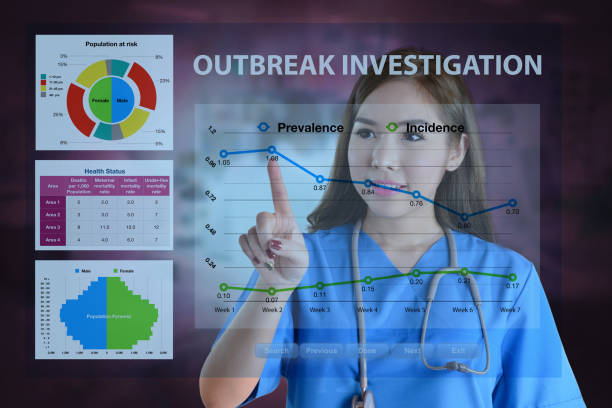
    • Investigate disease outbreaks to determine sources, transmission modes, and affected populations.
    • Recommend control measures like quarantine, vaccination, or public advisories during crises.
  • Public Health Policy and Recommendations
    • Provide evidence-based guidance to governments or organizations for health policy development.
    • Advocate for preventive measures like immunization programs or sanitation improvements.
  • Risk Assessment and Communication
    • Assess health risks associated with environmental, behavioral, or genetic factors.
    • Communicate findings to healthcare providers, policymakers, and the public through reports or presentations.
  • Chronic Disease and Environmental Health Management
    • Study long-term health issues like cancer or diabetes to identify contributing factors.
    • Investigate links between environmental exposures (e.g., pollution) and health outcomes.
  • Trend Monitoring and Adaptation
    • Stay updated on advancements in epidemiological methods, genomic sequencing, and health tech.
    • Adapt strategies to modern demands like real-time disease tracking or digital health tools.
  • Collaboration with Health Teams
    • Work with microbiologists, statisticians, and community health workers for comprehensive solutions.
    • Partner with international bodies like WHO or CDC for global health initiatives.

RouteSteps
Route 11. 10+2 in Science stream with Physics, Chemistry, and Biology (PCB)
 2. Bachelor’s Degree in Public Health, Biology, or related field (3-4 years)
 3. Master’s Degree in Epidemiology or Public Health (MPH) (2 years)
 4. Start as a Junior Epidemiologist in health agencies or research
Route 21. 10+2 in Science stream with Physics, Chemistry, and Biology (PCB)
 2. Bachelor’s Degree in Medicine (MBBS) or related health sciences (5 years)
 3. Master’s Degree in Epidemiology or Community Medicine (2-3 years)
 4. Work as a Clinical Epidemiologist in hospitals or research
Route 31. 10+2 in Science stream with Physics, Chemistry, and Biology (PCB)
 2. Bachelor’s Degree in Statistics, Biology, or Public Health (3-4 years)
 3. Master’s in Epidemiology (MPH) (2 years)
 4. PhD in Epidemiology for research or academic roles (3-5 years)
 5. Work as a Senior Epidemiologist or Researcher
Route 41. 10+2 in Science stream with Physics, Chemistry, and Biology (PCB)
 2. International degree in Public Health or Epidemiology (4-6 years)
 3. Additional certifications or training as per global requirements
 4. Serve as Epidemiologist in multinational health organizations

  • Mandatory fieldwork or internships during MPH programs in public health agencies or hospitals.
  • Practical training in disease surveillance or outbreak investigations for real-world exposure.
  • Internships under senior epidemiologists for experience in data analysis and reporting.
  • Observerships in global health organizations like WHO for specialized learning.
  • Participation in public health surveys or vaccination drives for skill development.
  • Training in collaborative projects through real-world health crisis responses or research studies.
  • Exposure to industry-standard tools like statistical software and disease modeling platforms.
  • Project-based learning focusing on diverse public health challenges.
  • Public health initiatives like assisting in community disease prevention programs.
  • International fellowships or online courses for exposure to global epidemiology practices.

  • Bachelor’s Degree in Public Health, Biology, or Statistics.
  • Master’s in Public Health (MPH) with a focus on Epidemiology.
  • Master of Science (MS) in Epidemiology.
  • PhD in Epidemiology for research or academic roles.
  • Specialization in Infectious Disease Epidemiology.
  • Certification in Chronic Disease Epidemiology.
  • Training in Environmental Epidemiology.
  • Workshops on Biostatistics and Data Analysis.
  • Specialization in Field Epidemiology (e.g., CDC’s Epidemic Intelligence Service).
  • Short Courses in Global Health and Disease Surveillance.

InstituteCourse/ProgramOfficial Link
National Institute of Epidemiology (NIE), ChennaiMPH & PhD in Epidemiologyhttps://nie.gov.in/
All India Institute of Hygiene and Public Health (AIIHPH), KolkataMPH & Diploma in Public Healthhttps://aiihph.gov.in/
Tata Institute of Social Sciences (TISS), MumbaiMPH in Social Epidemiologyhttps://www.tiss.edu/
Public Health Foundation of India (PHFI), Multiple LocationsMPH & Certificate Courseshttps://phfi.org/
Jawaharlal Nehru University (JNU), New DelhiMPH & Research in Public Healthhttps://www.jnu.ac.in/
Christian Medical College (CMC), VelloreMPH with Epidemiology Focushttps://www.cmch-vellore.edu/
Manipal Academy of Higher Education, ManipalMPH in Epidemiologyhttps://manipal.edu/
Indian Institute of Public Health (IIPH), Multiple LocationsMPH & PhD in Public Healthhttps://iiph.org/
University of Hyderabad, HyderabadMPH in Public Healthhttps://www.uohyd.ac.in/
SRM Institute of Science and Technology, ChennaiMPH with Epidemiology Specializationhttps://www.srmist.edu.in/

InstitutionCourseCountryOfficial Link
Johns Hopkins Bloomberg School of Public Health, BaltimoreMPH & PhD in EpidemiologyUSAhttps://www.jhsph.edu/
Harvard T.H. Chan School of Public Health, BostonMPH & Doctoral Programs in EpidemiologyUSAhttps://www.hsph.harvard.edu/
London School of Hygiene & Tropical Medicine (LSHTM)MSc & PhD in EpidemiologyUKhttps://www.lshtm.ac.uk/
University of Toronto, Dalla Lana School of Public HealthMPH & PhD in EpidemiologyCanadahttps://www.dlsph.utoronto.ca/
University of Melbourne, School of Population and Global HealthMPH & Research in EpidemiologyAustraliahttps://mspgh.unimelb.edu.au/
Karolinska Institutet, Department of Global Public HealthMSc & PhD in EpidemiologySwedenhttps://ki.se/en
University of California, Berkeley, School of Public HealthMPH & PhD in EpidemiologyUSAhttps://publichealth.berkeley.edu/
National University of Singapore, Saw Swee Hock School of Public HealthMPH & Research ProgramsSingaporehttps://sph.nus.edu.sg/
University of Copenhagen, Department of Public HealthMSc & PhD in EpidemiologyDenmarkhttps://publichealth.ku.dk/
University of Cape Town, School of Public HealthMPH & PhD in EpidemiologySouth Africahttps://health.uct.ac.za/

India:

  • PHFI Entrance Exam: Conducted by Public Health Foundation of India for MPH programs.
  • TISSNET (Tata Institute of Social Sciences National Entrance Test): For admission to MPH at TISS.
  • University-Specific Entrance Tests: Some institutes like JNU or NIE may have their own exams or interviews.

International:

  • GRE (Graduate Record Examination): Required for admission to MPH or MS programs in the USA and Canada.
  • TOEFL (Test of English as a Foreign Language): Minimum score of 80-100 required for non-native speakers applying to programs in English-speaking countries.
  • IELTS (International English Language Testing System): Minimum score of 6.5-7.5 required for admission to universities in the UK, Australia, and other English-speaking regions.
  • PTE Academic (Pearson Test of English Academic): Accepted by many international institutes as an alternative to TOEFL or IELTS for English proficiency.
  • Country-Specific Certification Exams: Required for certain public health roles in some countries (e.g., CPH in the USA).

Junior Epidemiologist → Epidemiologist → Senior Epidemiologist → Public Health Analyst → Field Epidemiologist → Research Scientist → Public Health Advisor → Global Health Specialist → Program Director → Academic Professor

  • Government health departments for disease surveillance and policy development.
  • International health organizations like WHO or UNICEF for global health programs.
  • Research institutions for epidemiological studies and clinical trials.
  • Hospitals and clinics for clinical epidemiology and infection control.
  • Non-profit organizations for community health initiatives and advocacy.
  • Academic institutions for teaching and public health research.
  • Private sector companies for occupational or environmental health analysis.
  • Public health consultancies for advisory roles on health strategies.
  • Emergency response teams for outbreak investigations and crisis management.
  • Environmental agencies for studying health impacts of pollution or climate change.

IndiaInternational
Indian Council of Medical Research (ICMR)World Health Organization (WHO), Global
National Centre for Disease Control (NCDC)Centers for Disease Control and Prevention (CDC), USA
Public Health Foundation of India (PHFI)UNICEF, Global
Ministry of Health and Family WelfareMédecins Sans Frontières (MSF), Global
National Institute of Epidemiology (NIE)Pan American Health Organization (PAHO), Americas
Tata Institute of Social Sciences (TISS)Bill & Melinda Gates Foundation, Global
All India Institute of Medical Sciences (AIIMS)European Centre for Disease Prevention and Control (ECDC), Europe
Christian Medical College (CMC)National Institutes of Health (NIH), USA
Apollo Hospitals (Research Division)GAVI Alliance, Global
Fortis Healthcare (Public Health Division)Doctors Without Borders, Global

ProsCons
Opportunity to work in impactful public health environments saving livesHigh stress due to urgency of outbreaks and public health crises
High demand for epidemiologists due to rising global health threatsLong and irregular hours during emergencies or field investigations
Rewarding impact through disease prevention and community health improvementRisk of burnout due to intense workload and data complexity
Diverse career paths across research, policy, field work, and educationHigh responsibility with potential for public scrutiny during failures
Strong potential for influence with advancements in health data analyticsDependency on continuous learning to keep up with evolving methodologies

Career LevelIndia (₹ per annum)International (USD per annum)
Junior Epidemiologist (Early Career)4,00,000 - 8,00,00050,000 - 70,000
Epidemiologist (Mid-Career)8,00,000 - 15,00,00070,000 - 100,000
Senior Epidemiologist/Public Health Analyst15,00,000 - 25,00,000100,000 - 130,000
Research Scientist/Global Health Specialist25,00,000 - 40,00,000130,000 - 160,000
Program Director/Academic Professor40,00,000+160,000+

Note: Salaries vary based on location, experience, employer, and specialization. International figures are approximate and depend on the country and health system. Earnings in government or international roles often depend on funding and project scope.

  • Statistical Analysis Software like SPSS or R for data analysis.
  • Geographic Information Systems (GIS) like ArcGIS for mapping disease spread.
  • Epidemiological Modelling Tools like Epi Info for outbreak analysis.
  • Data Visualization Software like Tableau for presenting health trends.
  • Database Management Systems like SQL for handling large datasets.
  • Surveillance Platforms like ProMED-mail for real-time disease tracking.
  • Research Tools like PubMed for staying updated on health literature.
  • Project Management Tools like Asana for coordinating research schedules.
  • Machine Learning Platforms for predictive health analytics.
  • Communication Platforms like Zoom for team coordination and policy briefings.

  • Indian Public Health Association (IPHA), India.
  • American Public Health Association (APHA), USA.
  • European Public Health Association (EUPHA), Europe.
  • International Epidemiological Association (IEA), Global.
  • World Federation of Public Health Associations (WFPHA), Global.
  • Association of Schools of Public Health in the European Region (ASPHER), Europe.
  • Canadian Public Health Association (CPHA), Canada.
  • Australian Public Health Association (APHA), Australia.
  • Society for Epidemiologic Research (SER), USA.
  • Asia-Pacific Academic Consortium for Public Health (APACPH), Asia-Pacific.

  • Dr. John Snow (Historical, UK): Epidemiologist since the 1850s. Known as the "Father of Epidemiology" for cholera outbreak mapping. His vision drives disease tracking. His impact shapes public health history.
     
  • Dr.SoumyaSwaminathan (Contemporary, India): Epidemiologist since the 1980s. Known for WHO leadership and tuberculosis research. Her vision drives global health equity. Her work influences international standards.
     
  • Dr. Richard Doll (Historical, UK): Epidemiologist since the 1940s. Known for linking smoking to lung cancer. His creativity fosters preventive health. His legacy impacts chronic disease research.
     
  • Dr.TedrosAdhanomGhebreyesus (Contemporary, Ethiopia): Epidemiologist since the 1990s. Known for leading WHO during global health crises. His leadership shapes health governance. His impact drives pandemic response.
     
  • Dr. K. Srinath Reddy (Contemporary, India): Epidemiologist since the 1970s. Known for cardiovascular health research and PHFI leadership. His vision drives prevention. His contributions impact Indian health policy.
     
  • Dr. Nancy Messonnier (Contemporary, USA): Epidemiologist since the 1990s. Known for CDC leadership in immunization and COVID-19 response. Her creativity fosters rapid response. Her work influences public safety.
     
  • Dr.AnuragAgrawal (Contemporary, India): Epidemiologist since the 2000s. Known for genomic research and COVID-19 studies at IGIB. His leadership shapes data-driven health. His impact drives precision medicine.
     
  • Dr. Sara Cody (Contemporary, USA): Epidemiologist since the 1990s. Known for early COVID-19 containment in Santa Clara County. Her vision drives local health. Her contributions impact community safety.
     
  • Dr. Alexander Langmuir (Historical, USA): Epidemiologist since the 1940s. Known for founding CDC’s Epidemic Intelligence Service. His creativity fosters outbreak response. His legacy impacts field epidemiology.
     

  • Build a strong foundation in science and statistics to handle complex health research challenges.
  • Seek early exposure to public health projects or internships to confirm interest.
  • Prepare thoroughly for competitive exams like GRE or institute-specific tests for top program admissions.
  • Pursue advanced training in specialties like infectious disease or environmental epidemiology for expertise.
  • Stay updated on health trends by attending conferences and reading journals.
  • Develop hands-on skills in data analysis and field investigations through practical training.
  • Engage in community health projects or outbreak studies to build real-world experience.
  • Join professional associations like IPHA or APHA for networking and resources.
  • Work on analytical precision and communication to ensure impactful health outcomes.
  • Explore international public health programs for exposure to diverse global standards.
  • Volunteer in disease surveillance or community initiatives to understand population needs and build experience.
  • Cultivate adaptability to handle complex research and emergency health challenges.
  • Attend continuing education programs to stay abreast of evolving epidemiological methodologies.
  • Build a network with health researchers, policymakers, and field workers for collaborative efforts.
  • Develop resilience to manage the pressure and emotional toll of public health crises.
  • Balance research duties with continuous learning to adapt to rapid advancements in health technology.

A career as an Epidemiologist offers a unique opportunity to contribute to public health, disease prevention, and global well-being by navigating analytical landscapes for diverse health challenges. From tracking outbreaks to shaping health policies and driving preventive strategies, Epidemiologists play a pivotal role in public health ecosystems. This field combines scientific rigor, data analysis, and a commitment to solving intricate health issues, offering diverse paths in research, policy, field work, and beyond. For those passionate about health science, adapting to dynamic global trends, and addressing population needs in an era of epidemiological evolution, a career as an Epidemiologist provides an intellectually stimulating and professionally rewarding journey with the potential to make significant contributions to society by advancing the art and application of public health worldwide.

Knowledge & Skills You Will Learn
1
Expertise in statistical analysis and research design with precision
2
Observational accuracy in identifying health trends and risk factors
3
In-depth knowledge of disease mechanisms, public health, and biostatistics
4
Critical thinking to solve complex health or outbreak challenges
5
Attention to detail to ensure accuracy in data collection and interpretation
6
Time management to handle multiple studies or emergency responses
7
Adaptability to work across diverse health issues and evolving global trends
8
Interpersonal skills for effective communication with teams and policymakers
9
Problem-solving ability to address unexpected complications in research or outbreaks
10
Emotional resilience to manage high-pressure situations and health crises
Junior Epidemiologist

Junior Epidemiologist

Early-career professionals assist in basic data collection under supervision. They build skills in analysis while ensuring accurate execution....

0.0LPA
Epidemiologist

Epidemiologist

Experienced professionals manage routine health studies with high competence, using research skills. They offer expertise in disease tracking....

0.0LPA
Senior Epidemiologist

Senior Epidemiologist

Specialists oversee complex studies with exceptional competence. They integrate deep research knowledge with expertise in analytics for impactful...

0.0LPA

Interested in this career?

Take the next step and explore more about Epidemiologist.