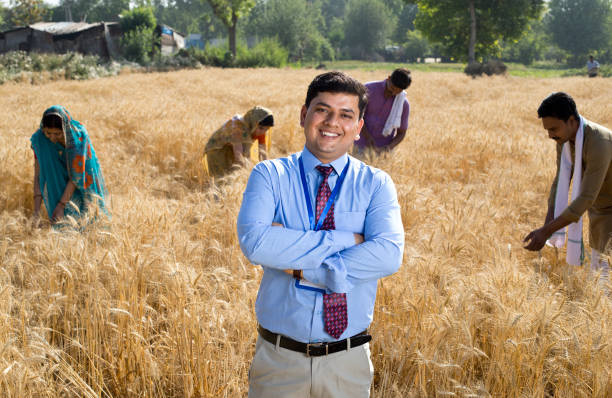
Environmental Restoration Specialist

An Environmental Restoration Specialist is a professional dedicated to rehabilitating degraded, damaged, or contaminated ecosystems, ensuring the recovery of natural habitats, biodiversity, and ecological functions through scientific and sustainable methods. They work in government agencies, environmental consultancies, non-profit organizations, research institutions, and private sectors, collaborating with ecologists, policymakers, and local communities. Environmental Restoration Specialists play a critical role in combating environmental degradation in a world increasingly focused on ecosystem conservation, climate resilience, and sustainable land use.
Share :
Career tree mind map (horizontal) — Environmental Restoration Specialist
Colored branches, hub circles, and underlined topics — same style as counselor course classic (types 18–19 in admin).
Loading mind map…

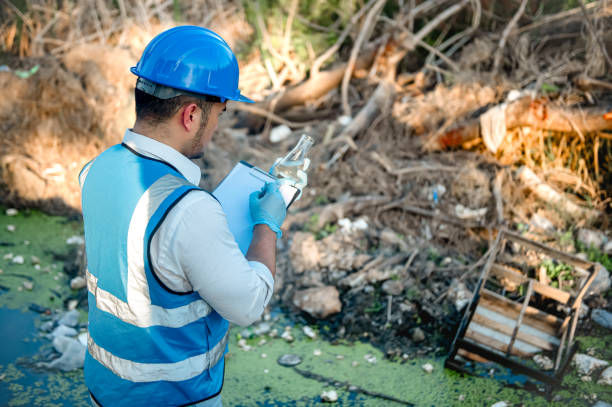
Environmental Restoration Specialists are experts in ecology and environmental science, responsible for designing, implementing, and monitoring projects to restore ecosystems such as wetlands, forests, grasslands, or polluted sites to their natural or functional state. Their role involves field assessments, restoration planning, and project management, often working in diverse settings such as degraded landscapes, urban restoration sites, or research facilities. They combine expertise in ecological principles, soil science, and hydrology to address issues like habitat loss, soil erosion, and water contamination. As key contributors to environmental sustainability, they help revive ecosystems in an era prioritizing biodiversity protection, climate adaptation, and natural resource management.

  • Ecosystem Assessment
    • Conduct field surveys to assess the condition of degraded ecosystems, identifying damage to flora, fauna, soil, and water resources.
    • Analyze historical data to determine the original state of ecosystems for restoration benchmarks.
  • Restoration Planning
    • Develop detailed restoration plans, including species reintroduction, habitat reconstruction, and pollution remediation strategies.
    • Design projects to align with ecological goals, regulatory requirements, and community needs.
  • Project Implementation
    • Oversee the execution of restoration activities, such as reforestation, wetland reconstruction, or soil stabilization.
    • Coordinate with contractors, volunteers, and local communities to carry out restoration tasks.
  • Monitoring and Evaluation
    • Monitor restored sites to evaluate the success of interventions, tracking biodiversity recovery and ecosystem health.
    • Adjust restoration strategies based on monitoring data to ensure long-term sustainability.
  • Pollution Remediation
    • Implement techniques to clean up contaminated sites, such as phytoremediation or bioremediation for polluted soils and water.
    • Address legacy pollution issues, including industrial waste or chemical spills, to restore ecological balance.
  • Stakeholder Collaboration
    • Engage with government bodies, landowners, and indigenous communities to gain support for restoration initiatives.
    • Educate stakeholders on the importance of ecosystem restoration and sustainable land use practices.
  • Regulatory Compliance
    • Ensure restoration projects comply with environmental laws, such as the Environment Protection Act in India, and obtain necessary permits.
    • Prepare reports for regulatory agencies to document restoration progress and outcomes.
  • Research and Innovation
    • Research native species, ecological interactions, and innovative restoration techniques to improve project success.
    • Contribute to scientific studies on restoration ecology to advance best practices in the field.

RouteSteps
Route 1

1. 10+2 with Physics, Chemistry, Biology (PCB) or Mathematics (PCM).

2. Bachelor’s degree in Environmental Science, Ecology, or Forestry (3-4 years).

3. Gain practical experience through internships or training in restoration projects or environmental NGOs (3-6 months).

4. Pursue entry-level roles like Restoration Field Assistant or Junior Ecologist (1-2 years).

Route 2

1. 10+2 with PCB or PCM.

2. Bachelor’s degree in Botany, Zoology, or Environmental Engineering (3-4 years).

3. Master’s degree in Restoration Ecology, Environmental Management, or Wildlife Science (2 years, optional).

4. Work in ecological monitoring or habitat restoration roles to gain experience (1-2 years).

5. Transition to Environmental Restoration Specialist roles with enhanced skills and knowledge.

Route 3

1. 10+2 with PCB or PCM.

2. Bachelor’s degree in Environmental Science, Ecology, or related field (3-4 years).

3. Pursue professional certifications like Certified Ecological Restoration Practitioner (CERP) (1-2 years).

4. Gain hands-on experience through roles in field restoration or conservation projects (1-2 years).

5. Establish a career as an Environmental Restoration Specialist in government or NGOs.

Route 4

1. 10+2 with PCB or PCM.

2. Bachelor’s degree from India in Environmental Science, Forestry, or related field (3-4 years).

3. Pursue international restoration certifications or advanced degrees abroad (1-2 years).

4. Gain exposure through roles in global restoration projects or international organizations (1-2 years).

5. Work as an Environmental Restoration Specialist in international markets or global conservation groups.

  • Mandatory field training during degree programs in degraded ecosystems or conservation sites for restoration assessments.
  • Rotations in environmental NGOs or government projects for hands-on experience in habitat restoration techniques.
  • Internships under senior restoration specialists for exposure to real-time project planning and species reintroduction.
  • Observerships in wildlife or forestry departments for insights into regulatory aspects of restoration.
  • Participation in restoration simulations and reforestation drives for practical skill development.
  • Training in field techniques like soil sampling, plant propagation, and water quality testing through real-world engagements.
  • Exposure to tools like GIS mapping, ecological monitoring equipment, and drone technology during internships.
  • Field projects on wetland restoration, mine reclamation, or urban green space recovery during training.
  • Community outreach programs to involve locals in restoration efforts and sustainable land use education.
  • International restoration attachments for global exposure to diverse ecosystem recovery challenges and methods.

  • Certificate in Ecological Restoration
  • Bachelor’s in Environmental Science, Ecology, or Forestry
  • Master’s in Restoration Ecology, Environmental Management, or Conservation Biology
  • Ph.D. in Ecosystem Restoration or Landscape Ecology
  • Specialization in Wetland Restoration
  • Certification in Soil and Water Conservation
  • Workshops on Native Species Reintroduction
  • Training in Bioremediation and Pollution Cleanup
  • Specialization in Urban Ecosystem Restoration
  • Certification in Landscape Rehabilitation Techniques

InstituteCourse/ProgramOfficial Link
Wildlife Institute of India (WII), DehradunM.Sc. in Wildlife Science (Restoration Focus)https://www.wii.gov.in/
Forest Research Institute (FRI), DehradunM.Sc. in Forestry / Environment Managementhttps://fri.icfre.gov.in/
TERI School of Advanced Studies, New DelhiM.Sc. in Environmental Studies and Resource Managementhttps://www.terisas.ac.in/
Jawaharlal Nehru University (JNU), New DelhiM.Sc. in Environmental Scienceshttps://www.jnu.ac.in/
University of Delhi, DelhiM.Sc. in Environmental Studieshttps://www.du.ac.in/
Indian Institute of Science (IISc), BangaloreM.Sc. in Ecological Scienceshttps://www.iisc.ac.in/
Banaras Hindu University (BHU), VaranasiM.Sc. in Environmental Sciencehttps://www.bhu.ac.in/
Savitribai Phule Pune University, PuneM.Sc. in Environmental Sciencehttps://www.unipune.ac.in/
Amity University, NoidaB.Sc./M.Sc. in Environmental Sciencehttps://www.amity.edu/
Tamil Nadu Agricultural University (TNAU), CoimbatoreM.Sc. in Environmental Sciencehttps://www.tnau.ac.in/

InstitutionCourseCountryOfficial Link
Stanford UniversityEnvironmental Science (Restoration Focus)USAhttps://www.stanford.edu/
University of California, BerkeleyEcology and RestorationUSAhttps://www.berkeley.edu/
Wageningen University & ResearchEcological Restoration and ConservationNetherlandshttps://www.wur.nl/
University of OxfordBiodiversity, Conservation and ManagementUKhttps://www.ox.ac.uk/
Massachusetts Institute of Technology (MIT)Environmental Solutions (Restoration Focus)USAhttps://www.mit.edu/
University of MelbourneEnvironmental Science (Ecosystem Restoration)Australiahttps://www.unimelb.edu.au/
University of British ColumbiaForestry and Ecological RestorationCanadahttps://www.ubc.ca/
ETH ZurichEnvironmental Sciences (Restoration Focus)Switzerlandhttps://www.ethz.ch/
University of CopenhagenEnvironmental Management and EcologyDenmarkhttps://www.ku.dk/
National University of Singapore (NUS)Environmental Studies (Conservation Focus)Singaporehttps://www.nus.edu.sg/

India:

  • WII-NET (Wildlife Institute of India National Entrance Test): For admission to M.Sc. programs at WII.
  • JNU CEEB (Combined Entrance Examination for Biotechnology): For admissions in environmental science programs at JNU.
  • GATE (Graduate Aptitude Test in Engineering): For admission to M.Tech programs in environmental science at certain institutes.
  • State-Level Entrance Exams: Various states conduct exams for admission to environmental or forestry programs in state universities.
  • NET (National Eligibility Test): For research fellowships or lectureship roles in restoration ecology.

International:

  • TOEFL (Test of English as a Foreign Language): Minimum score of 80-100 required for non-native speakers applying to programs in English-speaking countries.
  • IELTS (International English Language Testing System): Minimum score of 6.0-7.0 required for admission to universities in the UK, Australia, and other regions.
  • PTE Academic (Pearson Test of English Academic): Accepted by many international institutes as an alternative to TOEFL or IELTS for English proficiency.

Restoration Field Assistant → Junior Restoration Specialist → Environmental Restoration Specialist → Senior Restoration Specialist → Restoration Project Manager → Restoration Policy Consultant → Academician/Researcher

  • Government environmental and forestry departments for managing national restoration programs.
  • Non-profit organizations for advocating and implementing ecosystem recovery initiatives.
  • Environmental consultancies for designing and executing restoration projects for clients.
  • Research institutions for studying restoration techniques and ecological recovery trends.
  • Academic institutions for teaching and researching restoration ecology and conservation.
  • Wildlife and biodiversity boards for restoring habitats in protected areas and biodiversity hotspots.
  • Mining and industrial sectors for rehabilitating degraded lands post-extraction or operations.
  • International conservation agencies for global restoration and rewilding initiatives.
  • Urban planning bodies for restoring green spaces and urban ecosystems.
  • Community-based organizations for grassroots restoration and sustainable land use projects.

IndiaInternational
Ministry of Environment, Forest and Climate Change (MoEFCC)World Wildlife Fund (WWF), Global
Forest Survey of India (FSI)International Union for Conservation of Nature (IUCN), Global
Wildlife Institute of India (WII), DehradunThe Nature Conservancy, USA
TERI - The Energy and Resources Institute, New DelhiWorld Resources Institute (WRI), Global
National Afforestation and Eco-Development Board (NAEB)Conservation International, USA
WWF-IndiaGreenpeace International, Global
Centre for Science and Environment (CSE), New DelhiUnited Nations Environment Programme (UNEP), Global
State Forestry Departments (e.g., Kerala, Uttarakhand)Society for Ecological Restoration (SER), Global
Ashoka Trust for Research in Ecology and the Environment (ATREE)Rewilding Europe, Europe
Indian Council of Forestry Research and Education (ICFRE)Global Restoration Network, Global

ProsCons
Direct impact on reviving ecosystems and protecting biodiversityPhysically demanding fieldwork in remote or harsh environmental conditions
Growing demand due to increasing focus on climate resilience and habitat conservationSlow visible results, as ecosystem recovery can take years or decades
Opportunity to contribute to sustainable land use and climate change mitigationEmotional stress from witnessing severe environmental degradation
Varied career paths in fieldwork, project management, policy, and researchChallenges in securing funding or community support for long-term projects
Potential for societal change through restoring natural resources for future generationsNeed for constant adaptation to evolving ecological challenges and methods

Career LevelIndia (₹ per annum)International (USD per annum)
Restoration Field Assistant (Early Career)3,00,000 - 5,00,00040,000 - 55,000
Junior Restoration Specialist (Mid-Career)5,00,000 - 8,00,00055,000 - 75,000
Environmental Restoration Specialist8,00,000 - 12,00,00075,000 - 95,000
Senior Restoration Specialist12,00,000 - 16,00,00095,000 - 115,000
Restoration Project Manager/Restoration Policy Consultant/Academician/Researcher16,00,000 - 22,00,000115,000 - 135,000+

Note: Salaries may vary based on location, employer, experience, and specialization. Indian figures are updated estimates based on current industry trends, government pay scales, and NGO/consultancy data as of 2025, reflecting inflation and demand growth in environmental restoration sectors. International figures are based on data from the U.S., Canada, and Europe as of 2025, adjusted for market trends in restoration roles, sourced from industry reports and salary surveys like Glassdoor and PayScale. Due to the speculative nature of future data, these are approximations and may differ based on real-time economic factors.

  • Geographic Information Systems (GIS) Software (e.g., ArcGIS, QGIS) for mapping degraded areas and restoration planning.
  • Remote Sensing Software (e.g., ENVI, ERDAS Imagine) for assessing landscape changes via satellite imagery.
  • Ecological Modeling Tools (e.g., SWAT, InVEST) for predicting restoration outcomes and ecosystem recovery.
  • Data Analytics Tools (e.g., Tableau, Excel) for analyzing biodiversity and environmental monitoring data.
  • Statistical Software (e.g., R, SPSS) for advanced analysis of ecological recovery trends.
  • Teleconferencing tools like Zoom for collaboration with global restoration teams and stakeholders.
  • Cloud Platforms (e.g., Google Cloud) for storing and sharing restoration project data and reports.
  • Microsoft Office Suite for documentation and restoration project presentations.
  • Project Management Tools (e.g., Trello, Monday.com) for coordinating restoration activities and timelines.
  • Drone Mapping Software (e.g., Pix4D, DroneDeploy) for aerial surveys of restoration sites.

  • Indian Society of Ecological Economics (INSEE)
  • Wildlife Institute of India (WII)
  • Society for Ecological Restoration (SER), Global
  • International Union for Conservation of Nature (IUCN)
  • World Resources Institute (WRI)
  • United Nations Environment Programme (UNEP)
  • The Nature Conservancy, Global
  • Global Restoration Network
  • Ecological Society of America (ESA)

  • Dr.Madhav Gadgil (Contemporary, India): Ecologist and founder of the Centre for Ecological Sciences, known for restoration advocacy in the Western Ghats. His reports guide ecosystem recovery. His work protects biodiversity. He chaired key conservation panels.
     
  • Dr. Raman Sukumar (Contemporary, India): Ecologist at Indian Institute of Science, focusing on habitat restoration for elephants and biodiversity. His studies shape recovery strategies. His leadership influences conservation. He authored key ecological texts.
     
  • Dr.Sunita Narain (Contemporary, India): Director of Centre for Science and Environment (CSE), advocating for restoration and sustainable land use policies. Her work addresses degraded landscapes. Her leadership drives recovery. She critiques environmental degradation.
     
  • Dr. P.S. Roy (Contemporary, India): Former Director of Indian Institute of Remote Sensing, known for using GIS in forest restoration and monitoring. His innovations aid recovery projects. His leadership shapes technology use. He mentored restoration experts.
     
  • Dr.Erach Bharucha (Contemporary, India): Director of Bharati Vidyapeeth Institute of Environment Education, focusing on ecological restoration education. His work trains specialists. His leadership shapes conservation. He authored key restoration texts.
     
  • Dr. Robin Chazdon (Contemporary, USA): Ecologist and author on tropical forest restoration, known for global reforestation research. Her frameworks guide recovery. Her leadership shapes policy. She co-authored landmark restoration books.
     
  • Dr. Andrew Balmford (Contemporary, UK): Professor at University of Cambridge, focusing on restoration for biodiversity conservation. His research influences global projects. His leadership drives recovery. He authored key conservation texts.
     
  • Dr. Pedro Brancalion (Contemporary, Brazil): Researcher at University of São Paulo, known for large-scale tropical forest restoration. His innovations aid reforestation. His leadership shapes recovery. He drives global restoration initiatives.
     
  • Dr. Karen Holl (Contemporary, USA): Professor at UC Santa Cruz, focusing on ecological restoration in degraded landscapes. Her studies guide recovery strategies. Her leadership influences practice. She authored foundational restoration texts.
     
  • Dr.Temitope Okunade (Contemporary, Nigeria): Ecologist and restoration advocate, known for African savanna and forest recovery projects. Her work addresses desertification. Her leadership shapes regional efforts. She drives community-based restoration.
     

  • Build a strong foundation in ecology, environmental science, and soil science to understand ecosystem recovery dynamics.
  • Seek early exposure to restoration fieldwork or conservation projects through internships to confirm interest in the field.
  • Prepare thoroughly for entrance exams or certification requirements specific to your chosen program or region.
  • Pursue certifications in ecological restoration or conservation to gain expertise in recovery techniques.
  • Stay updated on advancements in restoration methods by attending industry conferences and workshops.
  • Develop hands-on skills in field surveys, species reintroduction, and project monitoring through practical training.
  • Engage in restoration or conservation projects to build real-world experience in ecosystem recovery.
  • Join professional associations like the Indian Society of Ecological Economics (INSEE) for resources and networking.
  • Work on precision and field skills to ensure accurate assessments and effective restoration planning.
  • Explore international restoration projects for exposure to diverse ecological challenges and global standards.
  • Volunteer in community conservation or reforestation programs to understand local ecosystem recovery needs.
  • Cultivate adaptability to handle diverse ecosystems and evolving environmental restoration challenges.
  • Attend continuing education programs to stay abreast of new restoration technologies and ecological trends.
  • Build a network with ecologists, conservationists, and policymakers for collaborative restoration efforts.
  • Develop resilience to manage the physical demands and long-term nature of ecosystem recovery work.
  • Balance scientific skills with communication to engage communities and adapt to rapid changes in environmental priorities.

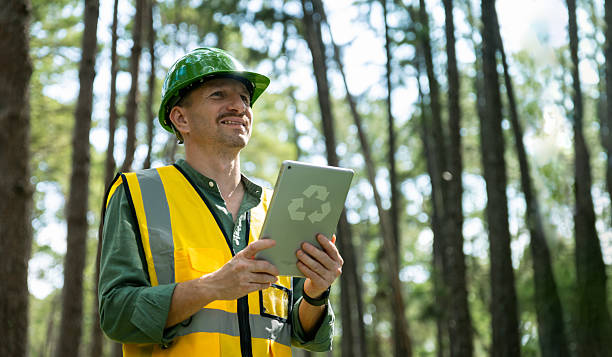
A career as an Environmental Restoration Specialist offers a unique opportunity to contribute to environmental sustainability and biodiversity conservation by rehabilitating degraded ecosystems across diverse landscapes. From assessing damaged habitats to implementing recovery strategies, Environmental Restoration Specialists play a pivotal role in modern ecological stewardship and sustainable land management. This field combines scientific expertise, fieldwork, and a commitment to societal and ecological well-being, offering diverse paths in conservation, project management, policy, and research. For those passionate about reviving nature, adapting to global environmental challenges, and addressing critical conservation needs in an era of increasing ecological urgency, a career as an Environmental Restoration Specialist provides an intellectually stimulating and professionally rewarding journey with the potential to make significant contributions to society by enhancing ecosystem health and sustainable progress worldwide.

Knowledge & Skills You Will Learn
1
Technological Advancements: Adoption of drones, AI, and GIS for precise restoration mapping and monitoring, creating new skill demands.
2
River and Wetland Recovery: Emphasis on reviving rivers like the Ganga and wetlands like Chilika Lake, necessitating specialized expertise.
3
Skill Development Needs: Demand for training in advanced restoration techniques and interdisciplinary conservation approaches.
Restoration Field Assistant

Restoration Field Assistant

Entry-level professionals assist in field surveys, data collection, and basic restoration tasks under supervision in organizations like the Forest...

0.0LPA
Environmental Restoration Specialist

Environmental Restoration Specialist

Professionals design and manage comprehensive restoration projects, monitor outcomes, and engage with communities, employed by entities like the...

0.0LPA
Senior Restoration Specialist

Senior Restoration Specialist

Experienced specialists lead complex restoration initiatives, oversee teams, and innovate techniques in organizations like TERI or state...

0.0LPA

Interested in this career?

Take the next step and explore more about Environmental Restoration Specialist.