Emergency Medicine Doctor

An Emergency Medicine Doctor is a highly trained physician specializing in the immediate diagnosis, treatment, and management of acute illnesses, injuries, and life-threatening conditions. Operating in high-pressure environments such as hospital emergency departments, trauma centers, and pre-hospital settings, these doctors are pivotal in providing rapid medical intervention to stabilize patients and save lives. This career falls under the Health Sciences career cluster, emphasizing urgent care, crisis management, and critical decision-making in unpredictable situations.
Share :
Career tree mind map (horizontal) — Emergency Medicine Doctor
Colored branches, hub circles, and underlined topics — same style as counselor course classic (types 18–19 in admin).
Loading mind map…

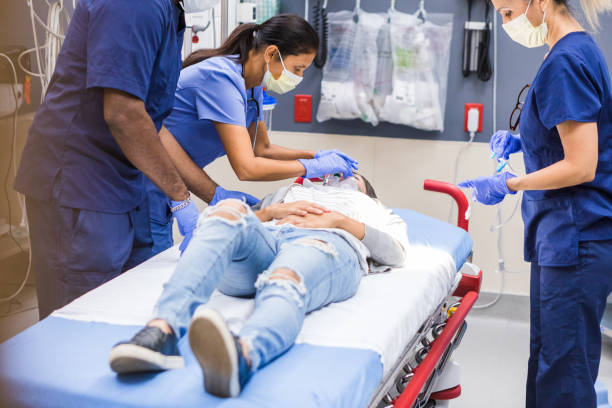
Emergency Medicine Doctors are frontline medical professionals who address a wide spectrum of medical emergencies, from trauma and cardiac arrests to acute infections and poisoning. Their work involves quick assessment of patient conditions, performing life-saving procedures like intubation or CPR, ordering diagnostic tests, and coordinating with specialists for further care. They often work in chaotic, fast-paced settings, balancing multiple cases while maintaining composure. These doctors are integral to healthcare systems, ensuring immediate response to crises, reducing mortality rates, and providing a safety net for communities during emergencies.

  • Patient Assessment and Diagnosis:
    • Perform rapid evaluations of patients with acute conditions.
    • Use clinical skills and diagnostic tools to identify life-threatening issues.
  • Emergency Interventions:
    • Administer life-saving treatments such as resuscitation, wound care, and fracture stabilization.
    • Perform emergency procedures like intubation, chest tube insertion, or defibrillation.
  • Coordination of Care:
    • Collaborate with surgical teams, intensive care units, and other specialists for patient transfers.
    • Direct paramedics and nursing staff during critical situations.
  • Trauma Management:
    • Lead trauma response for accidents, gunshot wounds, or severe injuries.
    • Prioritize treatment based on injury severity in mass casualty events.
  • Patient Stabilization:
    • Stabilize patients for transport or admission to specialized units.
    • Manage pain and prevent further deterioration during initial care.
  • Documentation and Communication:
    • Record patient data accurately for legal and medical purposes.
    • Communicate effectively with families about patient conditions and treatment plans.
  • Disaster Response:
    • Participate in disaster preparedness and response during natural calamities or pandemics.
    • Organize triage systems in large-scale emergencies.
  • Training and Supervision:
    • Mentor junior doctors and medical students in emergency protocols.
    • Conduct simulations and drills to maintain team readiness.

RouteSteps
Route 11. 10+2 with Physics, Chemistry, Biology (PCB)
 2. MBBS degree (5.5 years including internship)
 3. MD/DNB in Emergency Medicine (3 years)
 4. Certification from relevant medical board
Route 21. 10+2 with Physics, Chemistry, Biology (PCB)
 2. MBBS degree (5.5 years including internship)
 3. MS/DNB in General Surgery or Orthopedics (3 years)
 4. Fellowship in Emergency Medicine or Trauma Care (1-2 years)
Route 31. 10+2 with Physics, Chemistry, Biology (PCB)
 2. MBBS degree (5.5 years including internship)
 3. MD in Anesthesiology (3 years)
 4. Specialized training in Emergency and Critical Care (1-2 years)
Route 4 (International)1. 10+2 with Physics, Chemistry, Biology (PCB)
 2. MBBS from India (5.5 years including internship)
 3. USMLE/PLAB or equivalent international licensing exams
 4. Residency in Emergency Medicine in US/UK/Australia (3-5 years)
 5. Board certification in Emergency Medicine
Route 51. 10+2 with Physics, Chemistry, Biology (PCB)
 2. MBBS degree (5.5 years including internship)
 3. Postgraduate Diploma in Emergency Medicine (2 years)
 4. Practical experience in emergency settings

  • Intensive Training Duration: Requires 9-12 years of education and training post-high school.
  • High-Stakes Environment: Involves constant exposure to critical, life-or-death scenarios.
  • Multidisciplinary Knowledge: Demands expertise across trauma, cardiology, pediatrics, and more.
  • Shift-Based Work: Often involves long, irregular hours including nights and weekends.
  • Emotional Resilience: Necessitates coping with patient loss and high-stress situations.
  • Team Leadership: Requires directing diverse medical teams during emergencies.
  • Continuous Skill Upgradation: Needs regular training in advanced life support and new protocols.
  • Physical Demands: Involves sustained alertness and quick physical responses.
  • Public Health Impact: Plays a key role in disaster and epidemic response.
  • Technological Integration: Increasing reliance on point-of-care diagnostics and telemedicine.

  • Clinical rotations in emergency departments during MBBS internship.
  • Hands-on training in trauma care and resuscitation during residency.
  • Exposure to pre-hospital care through ambulance ride-alongs.
  • Participation in disaster response drills and simulations.
  • Supervised practice in performing emergency procedures like suturing or airway management.
  • Observerships in busy trauma centers for real-world experience.
  • Involvement in critical care units for managing unstable patients.
  • Attendance at emergency medicine conferences and workshops.
  • Training in advanced cardiac and trauma life support (ACLS/ATLS).
  • Exposure to pediatric and geriatric emergency care settings.

  • MBBS (Bachelor of Medicine and Bachelor of Surgery)
  • MD/DNB in Emergency Medicine
  • Fellowship in Trauma and Critical Care
  • Certification in Advanced Trauma Life Support (ATLS)
  • Training in Advanced Cardiac Life Support (ACLS)
  • Specialized courses in Disaster Medicine
  • Certification in Pediatric Advanced Life Support (PALS)
  • Fellowship in Pre-Hospital Emergency Medicine
  • Courses in Point-of-Care Ultrasound for Emergency Settings
  • Continuing Medical Education in Emergency Toxicology

InstituteCourse/ProgramOfficial Link
All India Institute of Medical Sciences (AIIMS), New DelhiMD in Emergency Medicinehttps://www.aiims.edu/
Postgraduate Institute of Medical Education and Research (PGIMER), ChandigarhMD in Emergency Medicinehttps://pgimer.edu.in/
Christian Medical College (CMC), VelloreMD in Emergency Medicinehttps://www.cmch-vellore.edu/
King George's Medical University, LucknowMD in Emergency Medicinehttps://www.kgmu.org/
Jawaharlal Institute of Postgraduate Medical Education and Research (JIPMER), PuducherryMD in Emergency Medicinehttps://jipmer.edu.in/
Kasturba Medical College, ManipalMD in Emergency Medicinehttps://manipal.edu/
St. John’s Medical College, BangaloreMD in Emergency Medicinehttps://www.stjohns.in/
Seth GS Medical College and KEM Hospital, MumbaiMD in Emergency Medicinehttps://www.kem.edu/
Madras Medical College, ChennaiMD in Emergency Medicinehttps://www.mmc.ac.in/
Amrita Institute of Medical Sciences, KochiMD in Emergency Medicinehttps://www.amrita.edu/

InstitutionCourseCountryOfficial Link
Johns Hopkins UniversityEmergency Medicine ResidencyUSAhttps://www.hopkinsmedicine.org/
Harvard Medical SchoolEmergency Medicine FellowshipUSAhttps://hms.harvard.edu/
University of TorontoEmergency Medicine ResidencyCanadahttps://www.utoronto.ca/
Imperial College LondonMSc in Emergency MedicineUKhttps://www.imperial.ac.uk/
University of MelbourneEmergency Medicine TrainingAustraliahttps://www.unimelb.edu.au/
Mayo Clinic College of Medicine and ScienceEmergency Medicine ResidencyUSAhttps://college.mayo.edu/
University of Cape TownEmergency Medicine SpecializationSouth Africahttps://www.uct.ac.za/
Karolinska InstitutetEmergency Medicine Research TrainingSwedenhttps://ki.se/en
University of California, San FranciscoEmergency Medicine ResidencyUSAhttps://www.ucsf.edu/
McGill UniversityEmergency Medicine FellowshipCanadahttps://www.mcgill.ca/

India:

  • National Eligibility cum Entrance Test (NEET-UG) for MBBS programs.
  • National Eligibility cum Entrance Test for Postgraduate courses (NEET-PG) for MD/DNB programs.
  • National Eligibility cum Entrance Test for Superspeciality courses (NEET-SS) for advanced fellowships.
  • AIIMS Entrance Examination for MD programs at AIIMS.
  • PGIMER Entrance Examination for postgraduate courses.
  • JIPMER Entrance Examination for MD programs.
  • State-level entrance exams for medical institutions.
  • National Board of Examinations Diplomate of National Board (DNB) entrance tests.
  • Institute-specific exams for fellowships in Emergency Medicine.

International:

  • United States Medical Licensing Examination (USMLE) for practice in the USA.
  • Medical College Admission Test (MCAT) for medical school admission in North America.
  • Professional and Linguistic Assessments Board (PLAB) test for practice in the UK.
  • International English Language Testing System (IELTS) with a minimum score of 7.0-7.5.
  • Test of English as a Foreign Language (TOEFL) with a minimum score of 100-110 for US programs.
  • American Board of Emergency Medicine (ABEM) Certification Examination.
  • Royal College of Emergency Medicine (RCEM) exams in the UK.
  • Australian Medical Council Examination for practice in Australia.
  • Medical Council of Canada Qualifying Examination for practice in Canada.

Medical Student → Emergency Medicine Resident → Junior Emergency Physician → Established Emergency Physician → Senior Emergency Physician/Department Head → Medical Director/Professor of Emergency Medicine

  • Hospital emergency departments for acute patient care.
  • Trauma centers for severe injury management.
  • Pre-hospital emergency medical services (EMS) for on-site care.
  • Academic institutions for teaching and research.
  • Government health agencies for disaster response planning.
  • Military medical units for combat and field emergencies.
  • Private urgent care clinics for non-life-threatening emergencies.
  • International relief organizations for global crisis response.
  • Telemedicine platforms for remote emergency consultations.
  • Public health organizations for epidemic and disaster preparedness.

IndiaInternational
All India Institute of Medical Sciences (AIIMS)Mayo Clinic, USA
Apollo HospitalsJohns Hopkins Hospital, USA
Fortis HealthcareMassachusetts General Hospital, USA
Max HealthcareRoyal London Hospital, UK
Medanta - The MedicityToronto General Hospital, Canada
Sir Ganga Ram HospitalAlfred Hospital, Australia
Kokilaben Dhirubhai Ambani HospitalCharité - Universitätsmedizin, Germany
Narayana HealthSingapore General Hospital, Singapore
Manipal HospitalsKing’s College Hospital, UK
Aster DM HealthcareCleveland Clinic, USA

ProsCons
Direct impact on saving lives in critical momentsHigh-stress environment with emotional toll
Dynamic, fast-paced work with diverse casesLong, irregular hours including night shifts
Opportunity to work in varied settings (hospital, field, disaster zones)Risk of burnout due to intense workload
Strong sense of purpose and societal valueExposure to traumatic situations and patient loss
Growing demand for emergency specialists globallyPhysical and mental fatigue from constant alertness

(Figures are approximate and based on latest available data as of 2026, subject to change.)

Career LevelIndia (₹ per annum)International (US$ per annum)
Emergency Medicine Resident8,00,000 - 12,00,000$60,000 - $75,000
Junior Emergency Physician15,00,000 - 25,00,000$200,000 - $280,000
Established Emergency Physician30,00,000 - 50,00,000$280,000 - $400,000
Senior Emergency Physician/Department Head50,00,000 - 80,00,000$400,000 - $550,000
Medical Director/Professor80,00,000 - 1,50,00,000$550,000 - $700,000

  • Electronic Health Record (EHR) systems for patient data management.
  • Emergency Department Information Systems (EDIS) for workflow efficiency.
  • Point-of-care ultrasound software for rapid diagnostics.
  • Telemedicine platforms for remote emergency support.
  • Triage and patient tracking software for mass casualty events.
  • Simulation software for emergency training and drills.
  • Clinical decision support tools for quick protocol access.
  • Medical imaging software for trauma assessment.
  • Communication apps for team coordination during crises.
  • Disaster response management systems for large-scale emergencies.

  • Society for Emergency Medicine India (SEMI)
  • Indian Medical Association (IMA)
  • American College of Emergency Physicians (ACEP)
  • European Society for Emergency Medicine (EUSEM)
  • International Federation for Emergency Medicine (IFEM)
  • Royal College of Emergency Medicine (RCEM), UK
  • Australasian College for Emergency Medicine (ACEM)
  • Canadian Association of Emergency Physicians (CAEP)
  • World Health Organization (WHO) Emergency Care Network
  • Asian Society for Emergency Medicine (ASEM)

  • Dr.Tamorish Kole (India): Past President of the Asian Society for Emergency Medicine, Dr. Kole has been a trailblazer in establishing emergency medicine as a recognized specialty in India since the early 2000s. Based in Kolkata, he has spearheaded training programs and advocacy efforts to improve emergency care infrastructure across the country. His contributions include developing standardized protocols for trauma care and fostering international collaborations to elevate emergency medicine standards in Asia.
     
  • Dr. V. Anantharaman (India): A veteran in the field, Dr. Anantharaman is renowned for advancing pre-hospital care and Emergency Medical Services (EMS) in India since the 1990s. Working primarily in Chennai, he has been instrumental in setting up structured ambulance systems and training paramedics for effective first response. His research and policy work have significantly reduced response times in urban emergencies, saving countless lives.
     
  • Dr. S. Senthil kumaran (India): A leading figure in emergency toxicology and critical care, Dr. Senthilkumaran has focused on managing snakebites and poisoning cases in India since the 2000s. Based in Tamil Nadu, his extensive research has led to improved treatment protocols for venomous bites, a major public health issue in rural areas. He has published numerous papers and trained healthcare providers in handling such critical emergencies.
     
  • Dr.Maaret Castrén (Finland): As President of the European Society for Emergency Medicine, Dr. Castrén has shaped emergency care protocols across Europe since the 1990s. A professor at the University of Helsinki, she has pioneered research in pre-hospital care and resuscitation techniques, influencing global guidelines. Her leadership has been key in integrating evidence-based practices into emergency systems, enhancing patient outcomes continent-wide.
     
  • Dr.Imron Subhan (India): A key contributor to disaster medicine and trauma care training in India, Dr. Subhan has been active in the field since the early 2000s. Based in Hyderabad, he has worked on preparedness strategies for natural calamities and mass casualty events, training teams for efficient triage. His efforts have strengthened emergency response frameworks in disaster-prone regions of the country.
     
  • Dr. Peter Rosen (USA): Often called the "Father of Emergency Medicine," Dr. Rosen pioneered the specialty in the USA during the 1970s. He was instrumental in defining emergency medicine as a distinct field, founding one of the first residency programs at the University of Chicago. As an author of foundational texts and a mentor to generations of physicians, his legacy continues to shape modern emergency care globally until his passing in 2019.
     
  • Dr. T. S. Srinath Kumar (India): An advocate for emergency medicine education, Dr. Kumar has headed initiatives at major Indian hospitals since the 2000s. Working out of Bangalore, he has played a pivotal role in curriculum development for emergency medicine training programs at national institutes. His focus on simulation-based learning has equipped countless doctors with practical skills for real-world crises.
     
  • Dr. Judith Tintinalli (USA): Editor of the seminal textbook "Tintinalli’s Emergency Medicine," Dr. Tintinalli has been shaping global emergency training since the 1980s. As a professor at the University of North Carolina, she has contributed to standardizing emergency care education through her widely used reference materials. Her work continues to be a cornerstone for residents and practicing physicians worldwide.
     
  • Dr. Ian Stiell (Canada): Developer of the Ottawa Ankle Rules and other clinical decision tools, Dr. Stiell has revolutionized emergency diagnostics since the 1990s. Based at the University of Ottawa, his research focuses on reducing unnecessary testing while improving accuracy in emergency settings. His contributions have streamlined care processes, saving time and resources in emergency departments globally.
     
  • Dr. Sally McCarthy (Australia): Former President of the International Federation for Emergency Medicine, Dr. McCarthy has been a leader in global emergency care advocacy since the 2000s. Working in Sydney, she has driven initiatives to improve emergency systems in low-resource settings worldwide. Her efforts in policy-making and international collaboration have elevated the standard of emergency care on a global scale.
     

  • Build a strong foundation in basic sciences and clinical skills during medical school.
  • Seek early exposure to emergency departments through electives and internships.
  • Develop resilience and stress management techniques to handle high-pressure scenarios.
  • Pursue certifications like ACLS and ATLS to enhance practical skills.
  • Prepare rigorously for competitive residency programs in emergency medicine.
  • Network with experienced emergency physicians for mentorship and guidance.
  • Hone leadership skills to manage teams during critical situations.
  • Stay updated on the latest emergency care protocols and technologies.
  • Consider subspecialties like trauma or disaster medicine for focused expertise.
  • Maintain physical and mental well-being to sustain a demanding career.

A career as an Emergency Medicine Doctor offers a unique chance to be at the forefront of life-saving medical care, tackling urgent and unpredictable challenges with skill and determination. These professionals are essential in bridging the gap between crisis and recovery, blending quick thinking, clinical mastery, and compassionate service. With opportunities spanning hospitals, disaster zones, and academic arenas, this field is ideal for those driven by a passion for urgent care and a commitment to making an immediate difference. For individuals ready to embrace intensity and impact, emergency medicine presents a profoundly fulfilling path in a world where every second counts.

Knowledge & Skills You Will Learn
1
Development of simulation-based training for enhanced skill acquisition.
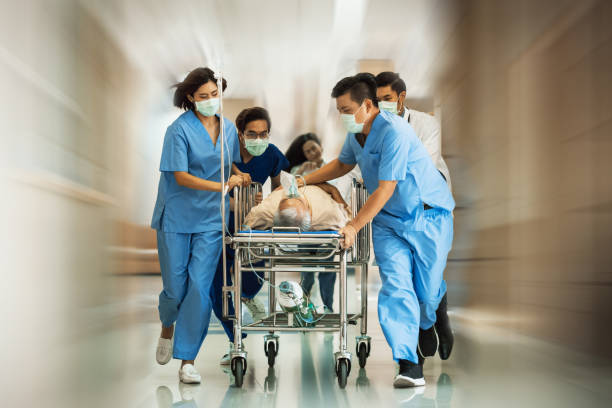
Emergency Medicine Resident

Emergency Medicine Resident

Undergoes intensive training in emergency protocols, handling diverse cases under supervision while mastering critical procedures. This stage...

0.0LPA
Junior Emergency Physician

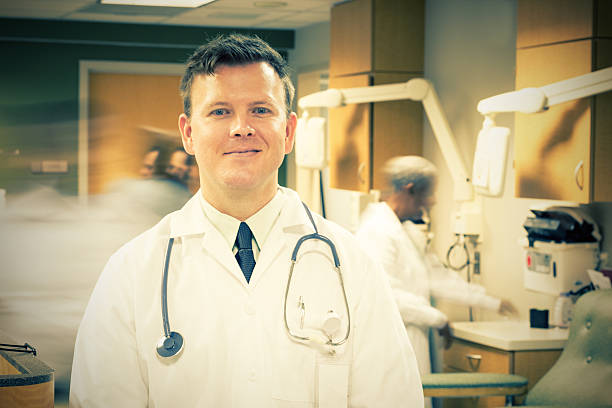
Junior Emergency Physician

Begins independent practice in emergency departments, managing routine and moderately complex cases while building expertise. They often work...

0.0LPA
Established Emergency Physician

Established Emergency Physician

Handles a high volume of critical cases, often serving as a key decision-maker in trauma and acute care settings. They become a reliable resource...

0.0LPA

Interested in this career?

Take the next step and explore more about Emergency Medicine Doctor.