Dairy Technology

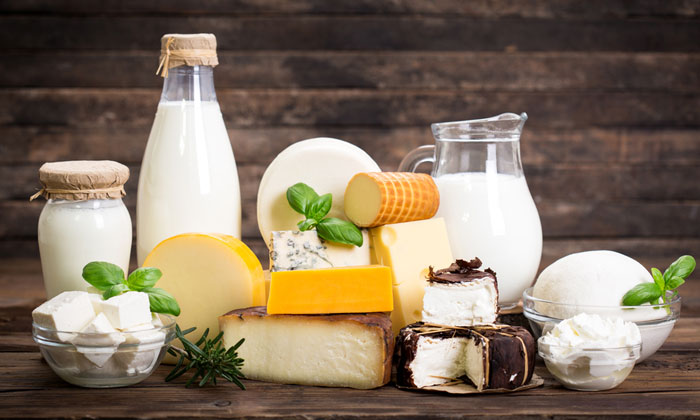
Dairy Technology is a specialized field of food science and technology that focuses on the production, processing, packaging, and distribution of milk and dairy products such as cheese, butter, yogurt, and ice cream. Professionals in this field apply scientific principles and engineering techniques to ensure the safety, quality, and nutritional value of dairy products while meeting consumer demands and regulatory standards. This career is crucial to the global food industry, supporting agricultural economies, ensuring food security, and catering to the growing demand for dairy products worldwide. Dairy technologists play a vital role in innovating sustainable practices, improving product shelf life, and addressing health and environmental concerns in an industry shaped by technological advancements and changing dietary trends.
Share :
Career tree mind map (horizontal) — Dairy Technology
Colored branches, hub circles, and underlined topics — same style as counselor course classic (types 18–19 in admin).
Loading mind map…

Dairy Technology professionals work in diverse environments such as dairy farms, processing plants, research laboratories, and quality control units, often collaborating with farmers, engineers, and food scientists. Their roles involve developing new dairy products, optimizing production processes, ensuring hygiene and safety standards, and managing supply chains. They face challenges like maintaining product consistency, adhering to strict food safety regulations, and adapting to consumer preferences for organic or plant-based alternatives. By leveraging expertise in microbiology, chemistry, and engineering, Dairy Technologists enhance the quality and variety of dairy offerings. As key contributors to the food sector, they drive innovation in processing techniques, sustainability, and nutritional enhancement, responding to global trends like automation, eco-friendly packaging, and health-conscious diets.

  • Milk Processing and Production
    • Oversee the collection, pasteurization, and processing of raw milk into various products.
    • Operate and maintain processing equipment to ensure efficiency and hygiene.
  • Quality Control and Assurance
    • Conduct tests for microbial content, fat percentage, and nutritional value of dairy products.
    • Ensure compliance with food safety standards and certifications like FSSAI or ISO.
  • Product Development and Innovation
    • Develop new dairy products like flavoured milk, low-fat cheese, or probiotic yogurt.
    • Experiment with formulations to meet consumer trends and dietary needs.
  • Equipment and Process Optimization
    • Design and improve processing systems for better yield and reduced waste.
    • Implement automation technologies to enhance production efficiency.
  • Hygiene and Sanitation Management
    • Monitor cleanliness of production facilities to prevent contamination.
    • Enforce sanitation protocols for workers and equipment in dairy plants.
  • Supply Chain and Storage Management
    • Manage cold chain logistics to maintain product freshness during transportation.
    • Coordinate with farmers and distributors for raw material supply and product delivery.
  • Regulatory Compliance and Documentation
    • Ensure adherence to national and international food safety and labeling regulations.
    • Maintain records of production batches, quality tests, and audits for traceability.
  • Research and Sustainability Initiatives
    • Research ways to reduce environmental impact through waste management and energy-efficient processes.
    • Study market trends to align products with consumer health and sustainability preferences.

Route Steps
Route 1: Undergraduate Degree

1. 10+2 in Science (Physics, Chemistry, Biology/Mathematics) with minimum 50-60% marks

2. Pursue B.Tech/B.E. in Dairy Technology (4 years) or B.Sc. in Dairy Science (3 years)

3. Gain practical exposure through internships in dairy plants

4. Start as a Junior Dairy Technologist or Quality Control Assistant

Route 2: Diploma Course

1. 10th or 10+2 pass with minimum 45-50% marks

2. Pursue a Diploma in Dairy Technology (1-2 years) from a recognized institute

3. Complete hands-on training in dairy processing units

4. Work as a Technician or Plant Operator

Route 3: Postgraduate Specialization

1. Complete B.Tech/B.Sc. in Dairy Technology or related field

2. Pursue M.Tech/M.Sc. in Dairy Technology, Dairy Microbiology, or Dairy Chemistry (2 years)

3. Engage in research or advanced internships

4. Work in R&D, Quality Management, or Senior Technical Roles

  • Internships in dairy processing plants for experience in milk handling and product manufacturing.
  • Training under quality control teams to learn testing protocols and safety standards.
  • Rotations in production, packaging, and storage units for comprehensive industry exposure.
  • Observerships in R&D labs to understand product innovation and formulation techniques.
  • Participation in farm-to-table projects to learn about milk sourcing and supply chain logistics.
  • Exposure to live production cycles during training for practical skills in process optimization.
  • Workshops on food safety and hygiene practices for regulatory compliance knowledge.
  • Volunteer roles in dairy cooperatives or food expos to build professional networks.
  • Collaborative projects with dairy brands for real-world problem-solving experience.

  • B.Tech/B.E. in Dairy Technology for comprehensive technical training.
  • B.Sc. in Dairy Science for foundational knowledge in dairy production.
  • Diploma in Dairy Technology for entry-level technical roles.
  • M.Tech/M.Sc. in Dairy Microbiology, Dairy Chemistry, or Dairy Engineering for advanced expertise.
  • Specialization in Dairy Product Development, Quality Control, or Dairy Plant Management.
  • Short-term courses on Food Safety Management Systems (e.g., HACCP, ISO 22000).
  • Training in Packaging Technology for Dairy Products.
  • Workshops on Sustainable Dairy Practices and Waste Management.

Institute Course/Program Official Link
National Dairy Research Institute (NDRI), Karnal B.Tech Dairy Technology, M.Tech, Ph.D. https://www.ndri.res.in/
Anand Agricultural University, Anand, Gujarat B.Tech Dairy Technology, M.Tech https://www.aau.in/
Guru Angad Dev Veterinary and Animal Sciences University (GADVASU), Ludhiana B.Tech Dairy Technology, M.Tech https://www.gadvasu.in/
College of Dairy Science and Technology, Thrissur, Kerala B.Tech Dairy Technology https://www.kvasu.ac.in/
Sanjay Gandhi Institute of Dairy Technology, Patna B.Tech Dairy Technology, Diploma https://www.basu.org.in/
Warner College of Dairy Technology, Sam Higginbottom University, Allahabad B.Tech Dairy Technology, M.Tech https://shuats.edu.in/
College of Dairy Science, Amreli, Gujarat B.Tech Dairy Technology https://www.kamdhenuuni.edu.in/
Rajasthan University of Veterinary and Animal Sciences, Bikaner B.Tech Dairy Technology, Diploma https://rajuvas.org/
Maharashtra Animal and Fishery Sciences University (MAFSU), Nagpur B.Tech Dairy Technology, M.Tech https://www.mafsu.in/
West Bengal University of Animal and Fishery Sciences, Kolkata B.Tech Dairy Technology, M.Tech https://wbuafscl.ac.in/

Institution Course Country Official Link
University of Wisconsin-Madison, Department of Food Science BS/MS in Food Science (Dairy Focus) USA https://www.wisc.edu/
Wageningen University & Research MSc Food Technology (Dairy Specialization) Netherlands https://www.wur.nl/
University of Copenhagen, Department of Food Science MSc Dairy Science and Technology Denmark https://www.ku.dk/english/
Massey University, Institute of Food, Nutrition and Human Health Bachelor/Master in Food Technology (Dairy) New Zealand https://www.massey.ac.nz/
University of Reading, School of Agriculture, Policy and Development MSc Food Science (Dairy Focus) UK https://www.reading.ac.uk/
Cornell University, Department of Food Science BS/MS in Food Science (Dairy Emphasis) USA https://www.cornell.edu/
University of Guelph, Department of Food Science BSc/MSc in Food Science (Dairy Technology) Canada https://www.uoguelph.ca/
Technical University of Munich, Chair of Food Chemistry and Molecular Sensory Science MSc Food Technology (Dairy Focus) Germany https://www.tum.de/en/
University College Cork, School of Food and Nutritional Sciences MSc Food Science (Dairy Science) Ireland https://www.ucc.ie/en/
Aarhus University, Department of Food Science MSc Food Science and Technology (Dairy Focus) Denmark https://international.au.dk/

India:

  • ICAR AIEEA (All India Entrance Examination for Admission): Conducted by the Indian Council of Agricultural Research for admission to B.Tech Dairy Technology at NDRI and other institutes.
  • JEE Main (Joint Entrance Examination Main): For admission to B.Tech Dairy Technology at some universities.
  • State-Level Entrance Exams: Exams like GUJCET (Gujarat), KCET (Karnataka), or EAMCET (Andhra Pradesh/Telangana) for state university admissions.
  • University-Specific Tests: Some institutes like Anand Agricultural University may conduct their own entrance tests.
  • Personal Interviews: Often required for diploma or postgraduate programs to assess candidate suitability.


International:

  • IELTS (International English Language Testing System): Minimum score of 6.0-6.5 for non-native speakers applying to programs in the UK, Canada, etc.
  • TOEFL (Test of English as a Foreign Language): Minimum score of 80-90 for programs in English-speaking countries like the USA.
  • SAT (Scholastic Assessment Test): Required for undergraduate programs in the USA at universities like Cornell or Wisconsin-Madison.
  • GRE (Graduate Record Examination): Needed for postgraduate programs (MSc/M.Tech) in countries like the USA or Canada.
  • Program-Specific Assessments: Some universities may require additional tests or portfolios for food science programs.

Junior Dairy Technologist → Quality Control Officer → Production Supervisor → Dairy Plant Manager → R&D Specialist or Dairy Consultant

  • Dairy processing companies for production and quality control roles.
  • Dairy cooperatives for farm-level milk collection and processing.
  • Food and beverage industry for product development and innovation.
  • Research institutes for advancements in dairy science and technology.
  • Government agencies for food safety inspection and policy implementation.
  • Private consultancies for advisory services on dairy plant setup and operations.
  • Export firms for quality assurance of dairy products in international markets.

India International
Amul (Gujarat Cooperative Milk Marketing Federation) Nestlé, Switzerland
Mother Dairy, Delhi Danone, France
Parag Milk Foods (Gowardhan), Mumbai Fonterra, New Zealand
Hatsun Agro Product Ltd (Arokya), Chennai Arla Foods, Denmark
Kwality Limited, Delhi Lactalis, France
Schreiber Dynamix Dairies, Mumbai Dairy Farmers of America, USA
Heritage Foods, Hyderabad Saputo Inc., Canada

Pros Cons
High demand due to growing dairy consumption globally Physically demanding roles in production environments
Opportunities for innovation in product development Exposure to strict regulatory and compliance pressures
Stable career with scope in both rural and urban areas Risk of workplace hazards like equipment malfunctions
Contribution to food security and nutritional health Limited work-life balance in plant operation roles
Access to diverse roles from technical to managerial Need for continuous upskilling to match industry trends

Career Level India (₹ per annum) International (USD per annum)
Junior Dairy Technologist (Early Career) 2,50,000 - 4,50,000 15,000 - 25,000
Quality Control Officer (Mid-Career) 4,50,000 - 7,00,000 25,000 - 40,000
Production Supervisor 7,00,000 - 10,00,000 40,000 - 55,000
Dairy Plant Manager 10,00,000 - 15,00,000 55,000 - 75,000
R&D Specialist/Dairy Consultant 15,00,000+ 75,000 - 100,000+
Note: Salaries may vary based on employer, location, experience, and specialization.    

  • Dairy Processing Software for production planning and inventory management.
  • Quality Control Systems for microbial and nutritional analysis.
  • ERP (Enterprise Resource Planning) Tools for supply chain and resource management.
  • Traceability Software for tracking milk from farm to consumer.
  • Packaging Design Software for innovative and sustainable packaging solutions.
  • Data Analytics Tools for market trend analysis and consumer preference studies.
  • Simulation Software for optimizing dairy plant layouts and processes.

  • Indian Dairy Association (IDA), India.
  • National Dairy Research Institute (NDRI), India.
  • International Dairy Federation (IDF), Global.
  • Food Safety and Standards Authority of India (FSSAI), India.
  • Dairy Science and Technology Society, Global.
  • Association of Food Scientists and Technologists (India) (AFSTI), India.
  • Dairy Industry Association of Australia (DIAA), Australia.

  • Dr.VergheseKurien (India, 1921-2012): Known as the "Father of the White Revolution," he pioneered Amul and transformed India into a leading milk producer. His vision revolutionized dairy. His impact built cooperatives.
     
  • R.S. Sodhi (India, 1958-): Former Managing Director of Amul, instrumental in expanding its global presence and product range. His leadership scaled markets. His impact boosted exports.
     
  • Dr. R.K. Anand (India, 1940s-): Renowned dairy scientist at NDRI, contributed to advancements in dairy processing technologies in India. His research improved methods. His impact enhanced quality.
     
  • Paul Polman (Netherlands, 1956-): Former CEO of Unilever, drove sustainability in dairy and food sectors globally, influencing eco-friendly practices. His strategies shaped policies. His impact promoted green dairy.
     
  • Emmanuel Besnier (France, 1970-): CEO of Lactalis, the world’s largest dairy company, leading innovation in cheese and milk products. His direction expanded reach. His impact grew portfolios.
     
  • Dr. K. Rathnam (India, 1960s-): Managing Director of Milky Mist, known for scaling dairy product variety and quality in South India. His efforts modernized brands. His impact strengthened markets.
     
  • John Spalvins (Australia, 1936-): Former head of Adelaide Steamship Company, influenced dairy logistics and distribution networks in Australia. His operations streamlined supply. His impact optimized chains.
     
  • Dr.NareshGoyal (India, 1950s-): Dairy technology expert, contributed to training programs and quality standards at Indian institutes. His mentorship built talent. His impact raised benchmarks.
     
  • Hanne Søndergaard (Denmark, 1960s-): Executive at Arla Foods, focused on sustainable dairy farming and global market strategies. Her initiatives drove eco-practices. Her impact fostered growth.
     
  • Dr. P.A. Shankar (India, 1940s-): Former Director of NDRI, advanced research in dairy microbiology and processing in India. His studies innovated techniques. His impact uplifted science.
     

  • Build a strong foundation in science subjects like chemistry and biology to understand dairy processes.
  • Seek early exposure through internships or visits to dairy plants to confirm interest in the field.
  • Prepare thoroughly for entrance exams like ICAR AIEEA with focused study plans.
  • Develop hands-on skills in processing and quality testing through practical training.
  • Stay updated on dairy industry trends by following resources like IDF or IDA publications.
  • Engage in research projects or product development initiatives for innovation experience.
  • Join professional associations like IDA or AFSTI for networking and career resources.
  • Work on analytical skills to excel in quality control and product testing roles.
  • Explore international opportunities for exposure to global dairy standards and technologies.
  • Volunteer in dairy cooperatives or food safety programs to build a professional portfolio.
  • Cultivate adaptability to handle evolving consumer demands and sustainability challenges.
  • Focus on communication skills to effectively collaborate with teams and report findings.


A career in Dairy Technology offers a unique opportunity to contribute to the food industry while ensuring the quality and safety of dairy products, driving nutritional health through innovative processing, and fostering sustainable practices with every product developed. Dairy Technologists are the guardians of dairy excellence, using their scientific and technical skills to enhance milk-based offerings, ensure food safety, and support agricultural economies across diverse sectors. This profession blends science with societal impact, providing pathways in production, quality assurance, research, and consultancy. For those passionate about food science, driven by a desire to innovate in nutrition and sustainability, and eager to embrace the evolving landscape of dairy technology, becoming a Dairy Technologist is a deeply rewarding journey. It empowers individuals to address critical food needs, maintain product excellence, and advance global health through the transformative power of dairy innovation.

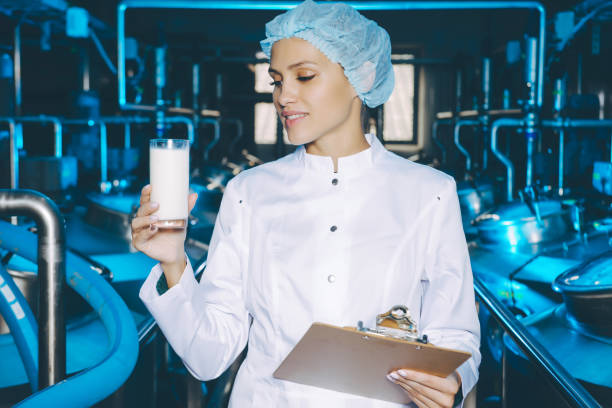
Knowledge & Skills You Will Learn
1
Sustainability Focus:Emphasis on eco-friendly packaging and waste reduction in dairy production.
2
Digital Traceability:Use of blockchain for supply chain transparency and product tracking.
Quality Control Officer

Quality Control Officer

Early-career individuals who test dairy products for safety, nutritional content, and compliance with standards. They conduct lab analyses and...

0.0LPA
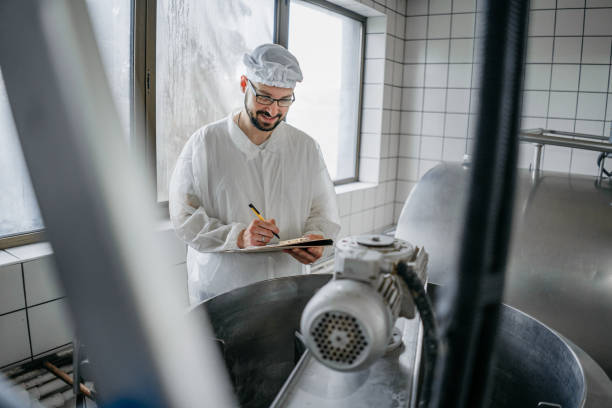
Production Supervisor

Production Supervisor

Mid-level experts who oversee dairy plant operations, manage staff, and ensure production targets are met. They coordinate workflows, troubleshoot...

0.0LPA
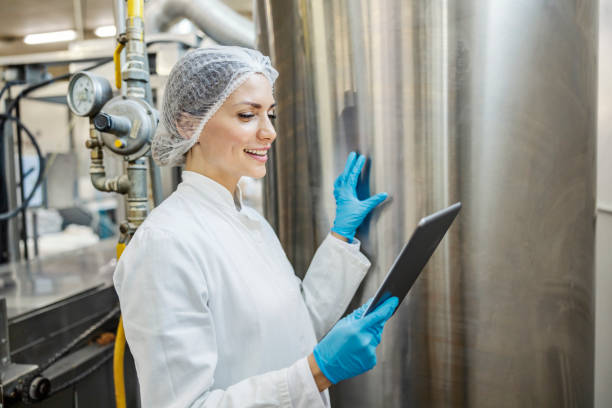
Dairy Plant Manager

Dairy Plant Manager

Experienced professionals who manage entire dairy processing facilities, handling budgets, staff, and compliance. They strategize to improve...

0.0LPA

Interested in this career?

Take the next step and explore more about Dairy Technology.