Craft Designer

A Craft Designer is a creative professional who specializes in designing and creating handmade or artisanal products, blending traditional craftsmanship with contemporary aesthetics to produce functional and decorative items such as textiles, pottery, jewellery, or home decor. In India, craft design is a vibrant field deeply rooted in the country’s rich cultural heritage, supporting livelihoods and preserving traditional skills while adapting to modern markets. With origins in ancient artisanal practices and modern advancements like sustainable materials and digital design tools, this career is vital for sustaining cultural identity and promoting handmade goods. Craft Designers are essential for innovating traditional crafts, enhancing market appeal, and supporting rural economies. This career contributes to advancements through trends such as eco-friendly production, fusion designs, and global export of Indian crafts.
Share :
Career tree mind map (horizontal) — Craft Designer
Colored branches, hub circles, and underlined topics — same style as counselor course classic (types 18–19 in admin).
Loading mind map…

Craft Designers work in diverse settings such as independent studios, craft cooperatives, design firms, NGOs focused on artisan welfare, or as freelancers, often collaborating with artisans, retailers, and clients. Their roles include conceptualizing designs, selecting materials, crafting or overseeing production, and marketing products to domestic and international audiences. They face challenges like balancing tradition with modernity, accessing markets for handmade goods, and ensuring fair compensation for artisans in India. By leveraging expertise in design principles, cultural knowledge, and sustainable practices, they create unique craft pieces that preserve heritage while meeting contemporary demands. As key contributors to India’s craft ecosystem, they drive progress through trends like upcycled materials, digital marketplaces, and cross-cultural design collaborations.

  • Concept Development and Design
    • Create original designs for craft products, incorporating traditional techniques and modern trends.
    • Sketch and prototype concepts using both manual and digital tools to visualize final products.
  • Material Selection and Sourcing
    • Choose sustainable and locally sourced materials like natural fibers, clay, or recycled items for authenticity and eco-friendliness.
    • Test materials for durability, texture, and suitability for specific craft techniques.
  • Craft Production and Artisan Collaboration
    • Craft items using traditional methods like weaving, carving, or embroidery, often working hands-on or guiding artisans.
    • Collaborate with rural or tribal artisans to ensure designs respect cultural significance and skills.
  • Product Innovation and Adaptation
    • Adapt traditional crafts for modern uses, such as creating contemporary home decor from heritage textiles.
    • Innovate by blending multiple craft forms or integrating global design influences for wider appeal.
  • Market Research and Trend Analysis
    • Study consumer preferences, global craft trends, and cultural shifts to design marketable products.
    • Identify niche markets for unique handmade goods, both locally and internationally.
  • Marketing and Branding
    • Promote craft products through exhibitions, online platforms, and social media to reach broader audiences.
    • Build a brand identity that highlights the story, tradition, and sustainability behind each piece.
  • Sustainability and Ethical Practices
    • Focus on eco-friendly production methods and fair trade practices to support artisan communities.
    • Educate consumers about the value of handmade, sustainable crafts over mass-produced items.
  • Training and Community Development
    • Conduct workshops to train artisans in modern design techniques or business skills for better market access.
    • Work with NGOs or government schemes to uplift craft communities and preserve dying art forms.

Route Steps
Route 1: Bachelor’s in Design/Related Field - Direct Entry

1. Complete 10+2 in any stream with minimum 50% marks (Arts preferred by some institutes)

2. Pursue Bachelor’s in Craft Design, Industrial Design, or Fine Arts (3-4 years)

3. Join craft studios, NGOs, or firms after internships

4. Gain experience through entry-level design roles

Route 2: Diploma to Degree Pathway

1. Complete 10+2 and enroll in a 1-2 year Diploma in Craft Design, Textile Design, or Applied Arts

2. Gain lateral entry into degree programs (if eligible) or start working

3. Build skills through practical projects or apprenticeships

4. Join cooperatives or pursue advanced certifications for growth

Route 3: Master’s Specialization (M.Des/MFA)

1. Complete Bachelor’s in Design, Fine Arts, or related field

2. Pursue Master of Design (M.Des) or Master of Fine Arts (MFA) in Craft Design or Textile Design via entrance exams like CEED

3. Gain advanced skills through postgraduate projects or internships

4. Join senior roles in design firms or start own craft studio

Route 4: International Education Path

1. Complete 10+2 and clear relevant entrance exams or language tests

2. Pursue craft design or applied arts degree from international universities (e.g., USA, UK)

3. Gain global exposure through internships abroad

4. Return to India or work internationally with design firms or brands

Route 5: Short-Term Courses and Practical Entry

1. Complete 10+2 or basic education in any stream

2. Enroll in short-term certificate courses (3-6 months) in Craft Design or Specific Crafts (e.g., Pottery, Weaving)

3. Work as apprentices under established artisans for hands-on learning

4. Build portfolio and network to establish roles in studios or freelance work

  • Exposure through internships at craft studios or cooperatives for hands-on design and production experience.
  • Training workshops on traditional crafts like block printing, pottery, or weaving with master artisans.
  • Participation in real projects for practical skills in creating marketable craft products.
  • Observerships at NGOs or government craft initiatives to understand artisan welfare and market access.
  • Involvement in craft fairs or exhibitions for showcasing designs and gaining market feedback.
  • Exposure to digital tools for design and e-commerce during internships with modern craft brands.
  • Workshops on sustainable craft practices and upcycling for modern expertise.
  • Volunteer roles in community craft projects to build initial experience and portfolios.
  • Collaborative projects with retailers or exporters for networking and business insights.

  • Bachelor of Design (B.Des) in Craft Design or Textile Design for foundational training.
  • Master of Design (M.Des) in Craft and Textile Design for advanced creative and business skills.
  • Bachelor of Fine Arts (BFA) with electives in Applied Arts or Crafts for an artistic base.
  • Diploma in Craft Design, Handloom Technology, or Specific Crafts for entry-level practical roles.
  • Specialization in Textile Crafts, Ceramic Design, Jewelry Design, or Sustainable Craft Practices.
  • Short-term courses on Traditional Indian Crafts, Upcycling, and Digital Craft Marketing.
  • Training in Eco-Friendly Craft Production and Fair Trade Practices for sustainability-focused expertise.
  • Certifications in Design Software (e.g., Adobe Suite) and Craft Business Management for professional credibility.

Institute Course/Program Official Link
National Institute of Design (NID), Ahmedabad B.Des/M.Des in Textile & Craft Design https://www.nid.edu/
National Institute of Fashion Technology (NIFT), Delhi B.Des in Textile Design (Craft Focus) https://www.nift.ac.in/
Indian Institute of Crafts & Design (IICD), Jaipur B.Des/M.Des in Craft Design & Technology https://www.iicd.ac.in/
Sir J.J. School of Art, Mumbai BFA in Applied Art (Craft Electives) https://www.sirjjschoolofart.in/
Srishti Institute of Art, Design & Technology, Bangalore B.Des in Industrial Arts & Design Practices https://srishti.ac.in/
Pearl Academy, Delhi Diploma/Bachelor’s in Textile & Craft Design https://pearlacademy.com/
Banaras Hindu University (BHU), Varanasi BFA/MFA in Applied Arts (Craft Focus) https://www.bhu.ac.in/
Kala Bhavana, Visva-Bharati University, Santiniketan BFA/MFA in Design & Crafts https://www.visvabharati.ac.in/
Craft and Design Institute (CDI), Srinagar Diploma in Craft Design & Techniques https://www.cdisrinagar.com/
MIT Institute of Design, Pune B.Des/M.Des in Product Design (Craft Focus) https://www.mitid.edu.in/

Institution Course Country Official Link
Rhode Island School of Design (RISD), Providence BFA/MFA in Textiles & Crafts USA https://www.risd.edu/
Royal College of Art (RCA), London MA in Textiles & Material Crafts UK https://www.rca.ac.uk/
University for the Creative Arts (UCA), Farnham BA/MA in Textiles & Crafts UK https://www.uca.ac.uk/
Parsons School of Design, New York BFA/MFA in Fashion & Textile Design (Craft Focus) USA https://www.newschool.edu/parsons/
Konstfack University of Arts, Crafts and Design, Stockholm MA in Crafts Sweden https://www.konstfack.se/
Australian National University (ANU), Canberra Bachelor of Visual Arts (Craft Focus) Australia https://www.anu.edu.au/
Gerrit Rietveld Academie, Amsterdam BA in Fine Arts & Crafts Netherlands https://www.gerritrietveldacademie.nl/
Aalto University, Espoo MA in Contemporary Design (Craft Focus) Finland https://www.aalto.fi/
Tokyo University of the Arts, Tokyo MFA in Craft Design Japan https://www.geidai.ac.jp/
Emily Carr University of Art + Design, Vancouver BFA in Industrial Design (Craft Focus) Canada https://www.ecuad.ca/

India:

  • NID Design Aptitude Test (DAT): Required for admission to B.Des and M.Des programs at National Institute of Design.
  • Common Entrance Examination for Design (CEED): Required for M.Des programs at IITs and other design institutes.
  • NIFT Entrance Exam: For textile and craft design programs at National Institute of Fashion Technology.
  • Institute-Specific Tests: Many art and design colleges like IICD or Sir J.J. School of Art conduct their own aptitude tests or portfolio reviews.

International (for Relevant Studies or Exposure):

  • IELTS (International English Language Testing System): Minimum score of 6.0-6.5 for non-native speakers applying to programs in the UK, Canada, etc.
  • TOEFL (Test of English as a Foreign Language): Minimum score of 80-90 for programs in English-speaking countries like the USA.
  • SAT (Scholastic Aptitude Test): May be required for undergraduate design programs in the USA.
  • Portfolio Submission: Most international and Indian design programs require a portfolio showcasing artistic and craft skills.

Junior Craft Designer → Craft Designer → Senior Craft Designer → Craft Studio Manager → Craft Brand Owner/Art Director

  • Craft Design Studios for creating custom and artisanal products.
  • Craft Cooperatives and NGOs for supporting artisan communities and traditional crafts.
  • Textile and Apparel Firms for designing handmade fabrics or fashion items.
  • Interior Design Agencies for crafting decorative pieces for homes and offices.
  • Export Companies for designing crafts for international markets.
  • Freelance Consultancy for independent craft design and bespoke commissions.
  • Government Craft Initiatives for preserving and promoting regional crafts.

India (Firms/Brands) International Collaborations
Fabindia, Delhi Global Handmade Retail Networks
Anokhi, Jaipur International Textile Craft Markets
Dastkar, Delhi UNESCO Craft Networks
Craft Council of India, Chennai Asian Craft Associations
Khadi and Village Industries Commission (KVIC), Mumbai Fair Trade Organizations Global
Good Earth, Mumbai Luxury Craft Retail Partnerships
Tribes India, Delhi Tribal Craft Export Networks

Pros Cons
High impact through preserving cultural heritage via crafts Limited market awareness for niche handmade products in India
Opportunity to blend traditional skills with modern design Slow income growth due to dependency on seasonal or export markets
Creative freedom in designing unique, authentic products Physical demands of repetitive crafting tasks or fieldwork
Growing demand for sustainable, handmade goods globally Challenges in scaling production while maintaining quality
Potential to empower rural artisans and support livelihoods Competition from mass-produced, cheaper alternatives

Career Level (Private Sector Example) India (₹ per annum) International Roles (USD per annum, Tentative)
Junior Craft Designer (Entry) 1,80,000 - 3,00,000 $18,000 - $25,000
Craft Designer (Early-Mid) 3,00,000 - 5,50,000 $25,000 - $40,000
Senior Craft Designer (Mid-Level) 5,50,000 - 9,00,000 $40,000 - $60,000
Craft Studio Manager (Senior) 9,00,000 - 15,00,000 $60,000 - $85,000
Craft Brand Owner/Art Director and Above 15,00,000 - 25,00,000+ $85,000 - $120,000+
Note: Salaries are indicative and vary based on location (metro vs. non-metro for India; country/region for international roles), firm size, and project scale.    

  • Adobe Illustrator for conceptualizing and illustrating craft designs.
  • Adobe Photoshop for editing and presenting craft product mock-ups.
  • CorelDRAW for vector-based design of patterns for textiles or carvings.
  • Canva for creating marketing materials and social media content.
  • Trello or Asana for project management and collaboration with artisans.
  • SketchUp for visualizing craft installations in interior spaces.
  • E-commerce Platforms (e.g., Etsy, Shopify) for online sales and brand building.

  • Craft Council of India (CCI), India.
  • Dastkar Society for Crafts & Craftspeople, India.
  • Khadi and Village Industries Commission (KVIC), India.
  • World Crafts Council (WCC), Global.
  • Fair Trade Federation (FTF), USA.
  • Indian Design Council (IDC), India.
  • UNESCO Creative Cities Network (for craft advocacy), Global.

  • Ritu Kumar (India, 1944-): Fashion and craft designer known for reviving Indian textile crafts like block printing. Her vision preserves heritage. Her impact scales tradition.
     
  • Anita Dongre (India, 1963-): Designer whose brand promotes Indian crafts through sustainable fashion. Her efforts empower artisans. Her impact globalizes crafts.
     
  • William Morris (UK, 1834-1896): Pioneer of the Arts and Crafts Movement, inspiring modern craft design globally. His philosophy values handmade. His impact shapes aesthetics.
     
  • Neeru Kumar (India, 1950s-): Textile designer known for innovating with traditional Indian weaves. Her creativity transforms fabrics. Her impact modernizes heritage.
     
  • Sabyasachi Mukherjee (India, 1974-): Designer integrating Indian crafts into luxury fashion and decor. His elegance defines tradition. His impact blends styles.
     
  • Laila Tyabji (India, 1947-): Founder of Dastkar, advocating for Indian artisans and craft sustainability. Her advocacy uplifts communities. Her impact sustains livelihoods.
     
  • Jaya Jaitly (India, 1942-): Craft activist and founder of Dilli Haat, promoting Indian handicrafts. Her initiatives create markets. Her impact preserves skills.
     
  • Shyam Ahuja (India, 1931-2018): Designer whose dhurrie rugs brought Indian crafts to global luxury markets. His designs captivate. His impact exports culture.
     
  • Wendell Rodricks (India, 1960-2020): Fashion designer who incorporated Goan and Indian crafts into modern apparel. His fusion inspires. His impact diversifies design.
     
  • Ashiesh Shah (India, 1970s-): Designer and architect blending Indian crafts with contemporary interiors. His innovations integrate. His impact redefines spaces.
     

  • Build a strong foundation in art, design, and cultural studies for academic success.
  • Pursue internships or apprenticeships early to gain hands-on craft experience with artisans.
  • Create a diverse portfolio showcasing craft designs, techniques, and cultural stories.
  • Stay updated on craft industry trends like sustainability or digital sales through workshops.
  • Develop proficiency in design software and traditional crafting skills for a competitive edge.
  • Join reputed institutes like NID or NIFT for quality education and industry connections.
  • Work on resilience to handle slow market growth and physical crafting demands effectively.
  • Explore freelance or small-scale craft projects to build experience if firm roles are delayed.
  • Network with artisans and attend craft fairs to stay inspired and informed.
  • Cultivate adaptability to work across diverse crafts like textiles, ceramics, or jewelry.
  • Focus on societal impact by delivering designs that preserve culture and empower artisan communities.

A career in Craft Design offers a unique opportunity to shape cultural and sustainable narratives by mastering creativity and craftsmanship, fostering innovation through authentic handmade solutions, and empowering communities with every design crafted. Craft Designers are the visionaries of India’s heritage landscape, using their expertise and passion to ensure captivating craft creations across diverse contexts. This profession blends artistic expression with cultural preservation, providing pathways in textile crafts, ceramic design, sustainable practices, and bespoke products. For those passionate about transforming traditions into art, driven by a desire to create through heritage, and eager to embrace the evolving landscape of craft markets, a career as a Craft Designer is a deeply rewarding journey. It empowers individuals to address cultural and economic needs, enhance artisanal livelihoods, and advance societal appreciation through the transformative power of handmade design.

Knowledge & Skills You Will Learn
1
Creative expertise in designing original craft products with cultural relevance
2
Technical skills for traditional crafting techniques like weaving, carving, or pottery
3
Material knowledge to select and source authentic, sustainable resources
4
Project management to oversee design-to-production timelines and artisan coordination
5
Communication proficiency for client consultations and artisan training
6
Attention to detail for ensuring precision in intricate craft designs
7
Adaptability to incorporate evolving trends like sustainability or digital marketing
8
Problem-solving to address production challenges or market access issues
9
Teamwork for collaborating with artisans, NGOs, and retailers
10
Technological aptitude for using design software and online platforms for marketing
Craft Designer (Early-Mid Level)

Craft Designer (Early-Mid Level)

Early-to-mid-level designers who manage specific craft projects, create original designs, and oversee small-scale production. They supervise...

0.0LPA
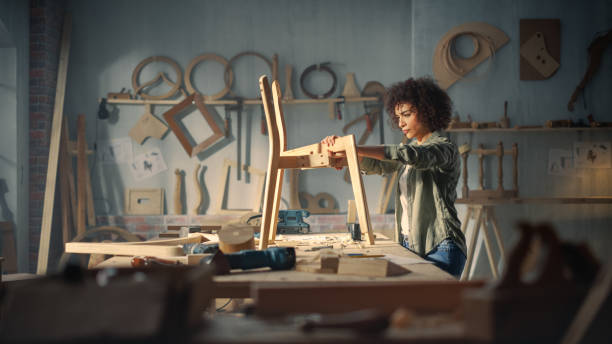
Senior Craft Designer (Mid-Level)

Senior Craft Designer (Mid-Level)

Mid-level professionals who lead complex craft projects, mentor juniors, and handle high-value or export commissions. They balance tradition with...

0.0LPA
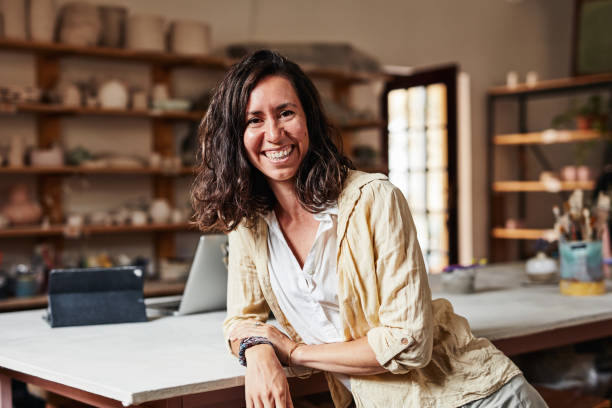
Craft Studio Manager (Senior Level)

Craft Studio Manager (Senior Level)

Senior professionals who oversee multiple craft projects, manage teams, and ensure client satisfaction in studios or cooperatives. They handle...

0.0LPA

Interested in this career?

Take the next step and explore more about Craft Designer.