Concept Artist

Summary

A Concept Artist is a skilled professional who creates visual designs and illustrations to establish the aesthetic foundation for films, video games, animations, theme parks, and other creative projects.

Share :
✨ Radial Mind Map - Concept Artist
Nodes arranged in concentric circles

Loading radial mind map...

Overview

A Concept Artist is a skilled professional who creates visual designs and illustrations to establish the aesthetic foundation for films, video games, animations, theme parks, and other creative projects. They work in industries such as entertainment, gaming, advertising, and product design, collaborating with directors, game designers, and creative teams. Concept Artists play a crucial role in modern visual storytelling and design by shaping the initial vision of characters, environments, and props in an era where immersive and innovative visuals dominate media and technology.
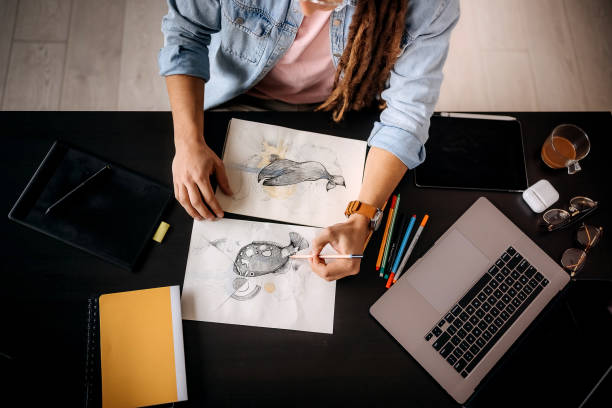
Concept Artists are creative visionaries responsible for conceptualizing and illustrating ideas that guide the visual direction of a project, often before production begins. Their role includes designing characters, settings, and objects, ensuring artistic consistency, and addressing challenges ranging from meeting creative briefs to adapting to evolving project needs. They combine skills in art, imagination, and technical proficiency, working across various settings to produce inspiring visual content. As key contributors to creative industries, Concept Artists drive innovation and storytelling in a landscape increasingly reliant on visually compelling designs.

Roles and Responsibilities

💼
Concept Artist
Roles and Responsibilities
Visual Concept Development
Create original designs for characters, environments, props, and vehicles based on project narratives or themes.
Develop sketches, mood boards, and detailed illustrations to communicate visual ideas to teams.
Character and Environment Design
Design unique characters with distinct personalities, costumes, and traits that align with story requirements.
Illustrate immersive environments, landscapes, and architecture to establish the world of the project.
Storyboarding and Visual Storytelling
Contribute to storyboards by illustrating key scenes or moments to guide narrative flow.
Ensure visual designs enhance storytelling through composition, color, and mood.
Collaboration with Creative Teams
Work with directors, writers, and game designers to align concepts with project goals and vision.
Collaborate with 3D modelers, animators, and art directors to ensure designs are feasible for production.
Research and Reference Gathering
Conduct research on historical, cultural, or thematic elements to inform accurate and authentic designs.
Gather visual references to inspire and ground concepts in realism or specific styles.
Iteration and Feedback Integration
Revise designs based on feedback from creative leads, clients, or stakeholders.
Adapt concepts to meet evolving project requirements or technical constraints.
Digital and Traditional Art Techniques
Use digital tools like Photoshop or Procreate to create polished concept art.
Employ traditional sketching and painting techniques for initial ideas or unique artistic effects.
Presentation and Documentation
Present concepts through detailed art packages or presentations for approval.
Document design processes and ideas for reference by other team members during production.
Creative Foundation:
Strong knowledge of art, design principles, and visual storytelling is essential for concept art.
Technical Skills:
Proficiency in digital illustration tools and artistic techniques is critical for effective work.
Specialized Training:
Certifications in specific concept art styles or software offer niche expertise.
Industry Awareness:
Understanding trends in gaming, film, or animation improves design relevance.
Interdisciplinary Knowledge:
Familiarity with storytelling, 3D modeling, or game design enhances outcomes.
Certification Importance:
Industry-recognized certifications can enhance employability for advanced roles.
Continuing Education:
Regular workshops and courses are necessary to stay updated on design trends.
Global Standards:
Compliance with international art and production standards enhances opportunities.
Attention to Detail:
Precision in design, color, and composition is critical for impactful concepts.
Entrance Examination Success:
Certain programs may require entrance tests or specific qualifications for admission.
International Testing Requirements:
For global opportunities, certifications or qualifications from recognized art bodies may be needed.
NID DAT (National Institute of Design Design Aptitude Test):
Conducted for admission to NID for illustration and design programs.
UCEED (Undergraduate Common Entrance Examination for Design):
For admission to design programs at IITs and other institutes.
MAAC Entrance Test:
For admission to specific animation and game design courses at MAAC institutes.
Pearl Academy Entrance Exam:
For admission to design programs at Pearl Academy.
SAT (Scholastic Aptitude Test):
Required for undergraduate programs in countries like the USA.
TOEFL (Test of English as a Foreign Language):
Minimum score of 80-100 required for non-native speakers applying to programs in English-speaking countries.
IELTS (International English Language Testing System):
Minimum score of 6.0-7.0 required for admission to universities in the UK, Australia, and other English-speaking regions.
PTE Academic (Pearson Test of English Academic):
Accepted by many international institutes as an alternative to TOEFL or IELTS for English proficiency.
Duolingo English Test:
Accepted by some institutions as a convenient alternative for English language proficiency testing.
Ralph McQuarrie (Historical, USA):
Concept Artist since the 1970s. His designs for "Star Wars" defined sci-fi aesthetics. His vision drove cinematic innovation. His impact shapes global film design.
Syd Mead (Historical, USA):
Visual Futurist since the 1960s. His work on "Blade Runner" and "Tron" pioneered futuristic design. His artistry inspires progress. His contributions influence industrial design.
Ian McCaig (Contemporary, USA):
Concept Artist since the 1980s. His designs for "Star Wars" prequels shaped iconic characters like Darth Maul. His creativity fosters excellence. His legacy impacts global cinema.
Feng Zhu (Contemporary, Singapore/USA):
Concept Artist since the 1990s. His work on "Star Wars" and game design redefined environment art. His vision drives innovation. His school, FZD, influences aspiring artists.
John Park (Contemporary, USA):
Concept Artist since the 2000s. His environment designs for games and films showcase atmospheric depth. His creativity inspires growth. His contributions impact digital art trends.
Karla Ortiz (Contemporary, USA):
Concept Artist since the 2010s. Her work on "Black Panther" and games blends cultural depth with fantasy. Her vision fosters diversity. Her advocacy shapes industry inclusivity.
Sparth (Nicolas Bouvier) (Contemporary, France/USA):
Concept Artist since the 2000s. His designs for "Halo" and other games set sci-fi benchmarks. His artistry drives immersion. His impact influences gaming visuals.
Ash Thorp (Contemporary, USA):
Concept Artist since the 2010s. His futuristic designs for "Ghost in the Shell" push visual boundaries. His creativity inspires innovation. His work impacts cinematic aesthetics.
Shaddy Safadi (Contemporary, USA):
Concept Artist since the 2000s. His environment art for "The Last of Us" sets emotional tone. His vision shapes narratives. His contributions influence game design.
Anand PG (Contemporary, India):
Concept Artist since the 2010s. His work in Indian gaming and animation reflects cultural storytelling. His creativity fosters regional growth. His impact shapes national design trends.

Roles and Responsibilities

  • Visual Concept Development
    • Create original designs for characters, environments, props, and vehicles based on project narratives or themes.
    • Develop sketches, mood boards, and detailed illustrations to communicate visual ideas to teams.
  • Character and Environment Design
    • Design unique characters with distinct personalities, costumes, and traits that align with story requirements.
    • Illustrate immersive environments, landscapes, and architecture to establish the world of the project.
  • Storyboarding and Visual Storytelling
    • Contribute to storyboards by illustrating key scenes or moments to guide narrative flow.
    • Ensure visual designs enhance storytelling through composition, color, and mood.
  • Collaboration with Creative Teams
    • Work with directors, writers, and game designers to align concepts with project goals and vision.
    • Collaborate with 3D modelers, animators, and art directors to ensure designs are feasible for production.
  • Research and Reference Gathering
    • Conduct research on historical, cultural, or thematic elements to inform accurate and authentic designs.
    • Gather visual references to inspire and ground concepts in realism or specific styles.
  • Iteration and Feedback Integration
    • Revise designs based on feedback from creative leads, clients, or stakeholders.
    • Adapt concepts to meet evolving project requirements or technical constraints.
  • Digital and Traditional Art Techniques
    • Use digital tools like Photoshop or Procreate to create polished concept art.
    • Employ traditional sketching and painting techniques for initial ideas or unique artistic effects.
  • Presentation and Documentation
    • Present concepts through detailed art packages or presentations for approval.
    • Document design processes and ideas for reference by other team members during production.


Study Route & Eligibility Criteria

RouteSteps
Route 11. 10+2 in any stream (preferably with Art or Fine Arts subjects)
 2. Bachelor’s degree in Fine Arts, Illustration, or related field (3-4 years)
 3. Internship or practical training (3-6 months)
 4. Practice as Junior Concept Artist or Illustrator
Route 21. 10+2 in any stream
 2. Diploma or Certificate in Concept Art or Digital Illustration (6 months-2 years)
 3. Build hands-on experience through projects
 4. Work as Freelance or Junior Visual Designer
Route 31. 10+2 in any stream
 2. Bachelor’s degree in Fine Arts or Visual Communication (3-4 years)
 3. Master’s degree in Illustration or Digital Media (2 years)
 4. Work as Senior Concept Artist or Art Lead
Route 41. 10+2 in any stream
 2. Advanced international training or certification in Concept Art (1-2 years)
 3. Master’s or specialized courses as per country requirements
 4. Practice abroad or in India


Significant Observations (Academic Related Points)

  • Creative Foundation: Strong knowledge of art, design principles, and visual storytelling is essential for concept art.
  • Technical Skills: Proficiency in digital illustration tools and artistic techniques is critical for effective work.
  • Specialized Training: Certifications in specific concept art styles or software offer niche expertise.
  • Industry Awareness: Understanding trends in gaming, film, or animation improves design relevance.
  • Interdisciplinary Knowledge: Familiarity with storytelling, 3D modeling, or game design enhances outcomes.
  • Certification Importance: Industry-recognized certifications can enhance employability for advanced roles.
  • Continuing Education: Regular workshops and courses are necessary to stay updated on design trends.
  • Global Standards: Compliance with international art and production standards enhances opportunities.
  • Attention to Detail: Precision in design, color, and composition is critical for impactful concepts.
  • Entrance Examination Success: Certain programs may require entrance tests or specific qualifications for admission.
  • International Testing Requirements: For global opportunities, certifications or qualifications from recognized art bodies may be needed.


Internships & Practical Exposure

  • Mandatory practical training during degree or diploma programs in fine arts or illustration departments.
  • Rotations in game studios, film production houses, or animation firms for hands-on experience with real-world projects.
  • Internships under senior concept artists or art directors for exposure to professional workflows.
  • Observerships in creative environments for experience in concept development pipelines.
  • Participation in mock design projects or game jams for practical skill development.
  • Training in collaborative projects through real-world client briefs or studio initiatives.
  • Exposure to industry-standard digital art software and tools during internships.
  • Project-based learning focusing on diverse concept art styles and thematic challenges.
  • Public outreach initiatives like assisting in community art or design projects.
  • International attachments or online collaborations for global exposure to concept art practices.


Courses & Specializations to Enter the Field

  • Certificate in Concept Art Fundamentals.
  • Bachelor’s in Fine Arts, Illustration, or Visual Communication.
  • Master’s in Illustration, Digital Media, or Game Design.
  • Specialization in Character Concept Design.
  • Certification in Digital Painting with Photoshop or Procreate.
  • Workshops on Environment Design and World-Building.
  • Training in Concept Art for Video Games.
  • Specialization in Cinematic Concept Art for Film.
  • Certification in 3D Concept Design with Blender.
  • Short Courses in Color Theory and Visual Composition.


Top Institutes for Concept Artist Education (India)

InstituteCourse/ProgramOfficial Link
National Institute of Design (NID), AhmedabadB.Des/M.Des in Illustrationhttps://www.nid.edu/
Sir J.J. Institute of Applied Art, MumbaiBFA/MFA in Applied Arthttps://www.sirjjiaa.org/
Srishti Manipal Institute of Art, Design and Technology, BangaloreB.Des/M.Des in Visual Communicationhttps://srishti.ac.in/
Whistling Woods International, MumbaiBA/MA in Animation and Game Designhttps://www.whistlingwoods.net/
Maya Academy of Advanced Cinematics (MAAC), Multiple LocationsDiploma in Animation & VFXhttps://www.maacindia.com/
Arena Animation, Multiple LocationsDiploma in Animation and Game Designhttps://www.arena-multimedia.com/
Symbiosis Institute of Design, PuneB.Des in Visual Communication Designhttps://sid.edu.in/
Amity School of Fine Arts, NoidaBFA/MFA in Visual Artshttps://www.amity.edu/
Pearl Academy, Multiple LocationsBA/MA in Communication Designhttps://pearlacademy.com/
MIT Institute of Design, PuneB.Des/M.Des in Game Designhttps://www.mitid.edu.in/


Top International Institutes

InstitutionCourseCountryOfficial Link
ArtCenter College of DesignBFA in Illustration (Entertainment Design)USAhttps://www.artcenter.edu/
Savannah College of Art and Design (SCAD)BFA/MFA in Illustration and Game DesignUSAhttps://www.scad.edu/
California Institute of the Arts (CalArts)BFA/MFA in Character AnimationUSAhttps://www.calarts.edu/
Gnomon School of Visual EffectsCertificate in Digital ProductionUSAhttps://www.gnomon.edu/
Central Saint Martins, University of the Arts LondonBA/MA in IllustrationUKhttps://www.arts.ac.uk/colleges/central-saint-martins
Vancouver Film School (VFS)Diploma in Game Design and Concept ArtCanadahttps://vfs.edu/
École Nationale Supérieure des Arts Décoratifs (ENSAD)Diploma in Visual Arts and DesignFrancehttps://www.ensad.fr/
Bournemouth UniversityBA/MA in Illustration and AnimationUKhttps://www.bournemouth.ac.uk/
RMIT UniversityBachelor of Design (Games)Australiahttps://www.rmit.edu.au/
Nanyang Technological University (NTU)BFA in Digital Animation and IllustrationSingaporehttps://www.ntu.edu.sg/


Entrance Tests Required

India:

  • NID DAT (National Institute of Design Design Aptitude Test): Conducted for admission to NID for illustration and design programs.
  • UCEED (Undergraduate Common Entrance Examination for Design): For admission to design programs at IITs and other institutes.
  • MAAC Entrance Test: For admission to specific animation and game design courses at MAAC institutes.
  • Pearl Academy Entrance Exam: For admission to design programs at Pearl Academy.


International:

  • SAT (Scholastic Aptitude Test): Required for undergraduate programs in countries like the USA.
  • TOEFL (Test of English as a Foreign Language): Minimum score of 80-100 required for non-native speakers applying to programs in English-speaking countries.
  • IELTS (International English Language Testing System): Minimum score of 6.0-7.0 required for admission to universities in the UK, Australia, and other English-speaking regions.
  • PTE Academic (Pearson Test of English Academic): Accepted by many international institutes as an alternative to TOEFL or IELTS for English proficiency.
  • Duolingo English Test: Accepted by some institutions as a convenient alternative for English language proficiency testing.


Ideal Progressing Career Path

Junior Concept Artist → Concept Artist → Senior Concept Artist → Lead Concept Artist → Art Director → Creative Director → Independent Concept Designer → Studio Head


Major Areas of Employment

  • Film and television industry for character and set concept designs.
  • Video game companies for environment, character, and asset concepts.
  • Animation studios for visual development and storyboarding.
  • Advertising agencies for conceptual illustrations and branding visuals.
  • Theme park and entertainment design for immersive environment concepts.
  • Publishing industry for book and graphic novel illustrations.
  • Freelance opportunities for independent concept art projects.
  • Product design firms for conceptual visualizations of new products.
  • Virtual reality (VR) and augmented reality (AR) for immersive design concepts.
  • Architectural visualization for conceptual renderings of spaces.


Prominent Employers

IndiaInternational
Technicolor IndiaPixar Animation Studios, USA
Prime FocusWalt Disney Animation Studios, USA
Red Chillies EntertainmentDreamWorks Animation, USA
Green Gold AnimationBlizzard Entertainment, USA
DQ EntertainmentUbisoft, Canada/France
Maya Digital StudiosElectronic Arts (EA), USA
Toonz Media GroupIndustrial Light & Magic (ILM), USA
UTV Software CommunicationsWeta Digital, New Zealand
Crest Animation StudiosSony Pictures Animation, USA
Pentamedia GraphicsRiot Games, USA


Pros and Cons of the Profession

ProsCons
Opportunity to work on creative and visually groundbreaking projectsHigh-pressure environment due to tight deadlines and iterative feedback
High demand for concept artists in entertainment and gaming industriesLong hours, especially during early project phases or crunch times
Rewarding impact through shaping the visual foundation of storiesRisk of creative burnout from constant ideation and revision
Diverse career paths across film, gaming, and animationLimited job security in freelance or contract roles
Strong potential for growth with advancements in digital art technologyDependency on client or director feedback impacting creative vision


Industry Trends and Future Outlook

  • Growing adoption of digital tools in concept art for virtual and augmented reality projects.
  • Rising demand for Concept Artists due to increasing content creation in gaming and film.
  • Advancements in 3D concept design tools for faster and more detailed workflows.
  • Heightened focus on diversity and cultural representation in character and environment designs.
  • Expansion of concept art in non-entertainment fields like product design and architecture.
  • Development of AI-assisted art tools for rapid ideation and prototyping.
  • Increased emphasis on cross-platform designs for mobile, web, and interactive content.
  • Enhanced collaboration between concept artists and 3D modelers for seamless production.
  • Growing need for continuous training to master emerging digital art software.
  • Focus on global design standards to align practices internationally.


Salary Expectations

Career LevelIndia (₹ per annum)International (USD per annum)
Junior Concept Artist (Early Career)2,50,000 - 4,50,00030,000 - 45,000
Concept Artist (Mid-Career)4,50,000 - 7,00,00045,000 - 65,000
Senior Concept Artist/Lead Artist7,00,000 - 12,00,00065,000 - 85,000
Art Director/Creative Lead12,00,000 - 18,00,00085,000 - 110,000
Creative Director/Studio Head18,00,000+110,000+

Note: Salaries vary based on location, experience, employer, and specialization. International figures are approximate and depend on the country and sector.


Key Software Tools

  • Adobe Photoshop for digital painting and concept illustration.
  • Procreate for digital sketching and portable art creation.
  • Corel Painter for realistic painting techniques in concept art.
  • ZBrush for 3D sculpting and detailed concept designs.
  • Blender for 3D modeling and environment visualization.
  • Teleconferencing tools like Zoom for remote collaboration and client meetings.
  • Maya for 3D concept design and integration with production pipelines.
  • Microsoft Office Suite for documentation and project planning.
  • Project Management Tools like Trello or Jira for team coordination.
  • Mood Board Tools like Pinterest or Milanote for visual inspiration.


Professional Organizations and Networks

  • Concept Art Association, Global.
  • Society of Illustrators, USA.
  • Indian Institute of Cartoonists (IIC), India.
  • Visual Effects Society (VES), Global.
  • Game Developers Conference (GDC), Global.
  • SIGGRAPH (Special Interest Group on Computer Graphics), Global.
  • Animation Council of India (ACI), India.
  • Women in Animation (WIA), Global.
  • Art Directors Guild (ADG), USA.
  • International Game Developers Association (IGDA), Global.


Notable Concept Artists and Industry Leaders (Top 10)

  • Ralph McQuarrie (Historical, USA): Concept Artist since the 1970s. His designs for "Star Wars" defined sci-fi aesthetics. His vision drove cinematic innovation. His impact shapes global film design.
     
  • Syd Mead (Historical, USA): Visual Futurist since the 1960s. His work on "Blade Runner" and "Tron" pioneered futuristic design. His artistry inspires progress. His contributions influence industrial design.
     
  • Ian McCaig (Contemporary, USA): Concept Artist since the 1980s. His designs for "Star Wars" prequels shaped iconic characters like Darth Maul. His creativity fosters excellence. His legacy impacts global cinema.
     
  • Feng Zhu (Contemporary, Singapore/USA): Concept Artist since the 1990s. His work on "Star Wars" and game design redefined environment art. His vision drives innovation. His school, FZD, influences aspiring artists.
     
  • John Park (Contemporary, USA): Concept Artist since the 2000s. His environment designs for games and films showcase atmospheric depth. His creativity inspires growth. His contributions impact digital art trends.
     
  • Karla Ortiz (Contemporary, USA): Concept Artist since the 2010s. Her work on "Black Panther" and games blends cultural depth with fantasy. Her vision fosters diversity. Her advocacy shapes industry inclusivity.
     
  • Sparth (Nicolas Bouvier) (Contemporary, France/USA): Concept Artist since the 2000s. His designs for "Halo" and other games set sci-fi benchmarks. His artistry drives immersion. His impact influences gaming visuals.
     
  • Ash Thorp (Contemporary, USA): Concept Artist since the 2010s. His futuristic designs for "Ghost in the Shell" push visual boundaries. His creativity inspires innovation. His work impacts cinematic aesthetics.
     
  • Shaddy Safadi (Contemporary, USA): Concept Artist since the 2000s. His environment art for "The Last of Us" sets emotional tone. His vision shapes narratives. His contributions influence game design.
     
  • Anand PG (Contemporary, India): Concept Artist since the 2010s. His work in Indian gaming and animation reflects cultural storytelling. His creativity fosters regional growth. His impact shapes national design trends.
     

Advice for Aspiring Concept Artists

  • Build a strong foundation in art and design principles to understand visual storytelling.
  • Seek early exposure to game studios or film environments through internships to confirm interest in the field.
  • Prepare thoroughly for entrance exams or portfolio requirements specific to your chosen program or region.
  • Pursue advanced certifications in digital art tools like Photoshop or ZBrush to gain technical expertise.
  • Stay updated on advancements in design trends and production techniques by attending webinars and industry events.
  • Develop hands-on skills in concept art through personal projects or online challenges.
  • Engage in art communities or game jams to build real-world experience.
  • Join professional associations like Concept Art Association or Society of Illustrators for networking and resources.
  • Work on precision and imaginative thinking to ensure high-quality visual concepts.
  • Explore international design programs for exposure to diverse production standards.
  • Volunteer in design startups or community art projects to understand industry challenges and build experience.
  • Cultivate adaptability to handle complex creative and technical challenges.
  • Attend continuing education programs to stay abreast of evolving design methodologies.
  • Build a network with concept artists and creative professionals for collaborative efforts.
  • Develop resilience to manage the creative and deadline demands of concept art projects.
  • Balance project work with continuous learning to adapt to rapid advancements in digital art technology.


A career as a Concept Artist offers a unique opportunity to contribute to visual storytelling, world-building, and creative innovation by crafting foundational designs for diverse applications. From enhancing cinematic narratives to revolutionizing gaming and interactive media, Concept Artists play a pivotal role in modern creativity and entertainment landscapes. This field combines artistic expertise, imaginative skills, and a commitment to solving complex visual challenges, offering diverse paths in film, gaming, animation, and beyond. For those passionate about design, adapting to evolving tools, and addressing creative needs in an era of rapid media evolution, a career as a Concept Artist provides an intellectually stimulating and professionally rewarding journey with the potential to make significant contributions to society by advancing the art and application of visual design worldwide.


Study Route & Eligibility Criteria

Study Route & Eligibility Criteria
Concept Artist
Route 1
🎓
1
10+2 in any stream
Route 2
🎓
1
10+2 in any stream
Route 3
🎓
1
10+2 in any stream
Route 4
🎓
1
10+2 in any stream
🎯 Concept Artist - Professional

Significant Observations (Academic Related Points)

💡
Concept Artist
Academic Related Points
1
Creative Foundation:
Strong knowledge of art, design principles, and visual storytelling is essential for concept art.
2
Technical Skills:
Proficiency in digital illustration tools and artistic techniques is critical for effective work.
3
Specialized Training:
Certifications in specific concept art styles or software offer niche expertise.
4
Industry Awareness:
Understanding trends in gaming, film, or animation improves design relevance.
5
Interdisciplinary Knowledge:
Familiarity with storytelling, 3D modeling, or game design enhances outcomes.
6
Certification Importance:
Industry-recognized certifications can enhance employability for advanced roles.
7
Continuing Education:
Regular workshops and courses are necessary to stay updated on design trends.
8
Global Standards:
Compliance with international art and production standards enhances opportunities.
9
Attention to Detail:
Precision in design, color, and composition is critical for impactful concepts.
10
Entrance Examination Success:
Certain programs may require entrance tests or specific qualifications for admission.
11
International Testing Requirements:
For global opportunities, certifications or qualifications from recognized art bodies may be needed.
12
NID DAT (National Institute of Design Design Aptitude Test):
Conducted for admission to NID for illustration and design programs.
13
UCEED (Undergraduate Common Entrance Examination for Design):
For admission to design programs at IITs and other institutes.
14
MAAC Entrance Test:
For admission to specific animation and game design courses at MAAC institutes.
15
Pearl Academy Entrance Exam:
For admission to design programs at Pearl Academy.
16
SAT (Scholastic Aptitude Test):
Required for undergraduate programs in countries like the USA.
17
TOEFL (Test of English as a Foreign Language):
Minimum score of 80-100 required for non-native speakers applying to programs in English-speaking countries.
18
IELTS (International English Language Testing System):
Minimum score of 6.0-7.0 required for admission to universities in the UK, Australia, and other English-speaking regions.
19
PTE Academic (Pearson Test of English Academic):
Accepted by many international institutes as an alternative to TOEFL or IELTS for English proficiency.
20
Duolingo English Test:
Accepted by some institutions as a convenient alternative for English language proficiency testing.
21
Ralph McQuarrie (Historical, USA):
Concept Artist since the 1970s. His designs for "Star Wars" defined sci-fi aesthetics. His vision drove cinematic innovation. His impact shapes global film design.
22
Syd Mead (Historical, USA):
Visual Futurist since the 1960s. His work on "Blade Runner" and "Tron" pioneered futuristic design. His artistry inspires progress. His contributions influence industrial design.
23
Ian McCaig (Contemporary, USA):
Concept Artist since the 1980s. His designs for "Star Wars" prequels shaped iconic characters like Darth Maul. His creativity fosters excellence. His legacy impacts global cinema.
24
Feng Zhu (Contemporary, Singapore/USA):
Concept Artist since the 1990s. His work on "Star Wars" and game design redefined environment art. His vision drives innovation. His school, FZD, influences aspiring artists.
25
John Park (Contemporary, USA):
Concept Artist since the 2000s. His environment designs for games and films showcase atmospheric depth. His creativity inspires growth. His contributions impact digital art trends.
26
Karla Ortiz (Contemporary, USA):
Concept Artist since the 2010s. Her work on "Black Panther" and games blends cultural depth with fantasy. Her vision fosters diversity. Her advocacy shapes industry inclusivity.
27
Sparth (Nicolas Bouvier) (Contemporary, France/USA):
Concept Artist since the 2000s. His designs for "Halo" and other games set sci-fi benchmarks. His artistry drives immersion. His impact influences gaming visuals.
28
Ash Thorp (Contemporary, USA):
Concept Artist since the 2010s. His futuristic designs for "Ghost in the Shell" push visual boundaries. His creativity inspires innovation. His work impacts cinematic aesthetics.
29
Shaddy Safadi (Contemporary, USA):
Concept Artist since the 2000s. His environment art for "The Last of Us" sets emotional tone. His vision shapes narratives. His contributions influence game design.
30
Anand PG (Contemporary, India):
Concept Artist since the 2010s. His work in Indian gaming and animation reflects cultural storytelling. His creativity fosters regional growth. His impact shapes national design trends.

Internships & Practical Exposure

💼
Concept Artist
Internships & Practical Experience
1
Mandatory practical training during degree or diploma programs in fine arts or illustration departments.
2
Rotations in game studios, film production houses, or animation firms for hands-on experience with real-world projects.
3
Internships under senior concept artists or art directors for exposure to professional workflows.
4
Observerships in creative environments for experience in concept development pipelines.
5
Participation in mock design projects or game jams for practical skill development.
6
Training in collaborative projects through real-world client briefs or studio initiatives.
7
Exposure to industry-standard digital art software and tools during internships.
8
Project-based learning focusing on diverse concept art styles and thematic challenges.
9
Public outreach initiatives like assisting in community art or design projects.
10
International attachments or online collaborations for global exposure to concept art practices.
11
Certificate in Concept Art Fundamentals.
12
Bachelor’s in Fine Arts, Illustration, or Visual Communication.
13
Master’s in Illustration, Digital Media, or Game Design.
14
Specialization in Character Concept Design.
15
Certification in Digital Painting with Photoshop or Procreate.
16
Workshops on Environment Design and World-Building.
17
Training in Concept Art for Video Games.
18
Specialization in Cinematic Concept Art for Film.
19
Certification in 3D Concept Design with Blender.
20
Short Courses in Color Theory and Visual Composition.
21
NID DAT (National Institute of Design Design Aptitude Test):Conducted for admission to NID for illustration and design programs.
22
UCEED (Undergraduate Common Entrance Examination for Design):For admission to design programs at IITs and other institutes.
23
MAAC Entrance Test:For admission to specific animation and game design courses at MAAC institutes.
24
Pearl Academy Entrance Exam:For admission to design programs at Pearl Academy.
25
SAT (Scholastic Aptitude Test):Required for undergraduate programs in countries like the USA.
26
TOEFL (Test of English as a Foreign Language):Minimum score of 80-100 required for non-native speakers applying to programs in English-speaking countries.
27
IELTS (International English Language Testing System):Minimum score of 6.0-7.0 required for admission to universities in the UK, Australia, and other English-speaking regions.
28
PTE Academic (Pearson Test of English Academic):Accepted by many international institutes as an alternative to TOEFL or IELTS for English proficiency.
29
Duolingo English Test:Accepted by some institutions as a convenient alternative for English language proficiency testing.
30
Film and television industry for character and set concept designs.
31
Video game companies for environment, character, and asset concepts.
32
Animation studios for visual development and storyboarding.
33
Advertising agencies for conceptual illustrations and branding visuals.
34
Theme park and entertainment design for immersive environment concepts.
35
Publishing industry for book and graphic novel illustrations.
36
Freelance opportunities for independent concept art projects.
37
Product design firms for conceptual visualizations of new products.
38
Virtual reality (VR) and augmented reality (AR) for immersive design concepts.
39
Architectural visualization for conceptual renderings of spaces.
40
Growing adoption of digital tools in concept art for virtual and augmented reality projects.
41
Rising demand for Concept Artists due to increasing content creation in gaming and film.
42
Advancements in 3D concept design tools for faster and more detailed workflows.
43
Heightened focus on diversity and cultural representation in character and environment designs.
44
Expansion of concept art in non-entertainment fields like product design and architecture.
45
Development of AI-assisted art tools for rapid ideation and prototyping.
46
Increased emphasis on cross-platform designs for mobile, web, and interactive content.
47
Enhanced collaboration between concept artists and 3D modelers for seamless production.
48
Growing need for continuous training to master emerging digital art software.
49
Focus on global design standards to align practices internationally.
50
Adobe Photoshop for digital painting and concept illustration.
51
Procreate for digital sketching and portable art creation.
52
Corel Painter for realistic painting techniques in concept art.
53
ZBrush for 3D sculpting and detailed concept designs.
54
Blender for 3D modeling and environment visualization.
55
Teleconferencing tools like Zoom for remote collaboration and client meetings.
56
Maya for 3D concept design and integration with production pipelines.
57
Microsoft Office Suite for documentation and project planning.
58
Project Management Tools like Trello or Jira for team coordination.
59
Mood Board Tools like Pinterest or Milanote for visual inspiration.
60
Concept Art Association, Global.
61
Society of Illustrators, USA.
62
Indian Institute of Cartoonists (IIC), India.
63
Visual Effects Society (VES), Global.
64
Game Developers Conference (GDC), Global.
65
SIGGRAPH (Special Interest Group on Computer Graphics), Global.
66
Animation Council of India (ACI), India.
67
Women in Animation (WIA), Global.
68
Art Directors Guild (ADG), USA.
69
International Game Developers Association (IGDA), Global.
70
Ralph McQuarrie (Historical, USA):Concept Artist since the 1970s. His designs for "Star Wars" defined sci-fi aesthetics. His vision drove cinematic innovation. His impact shapes global film design.
71
Syd Mead (Historical, USA):Visual Futurist since the 1960s. His work on "Blade Runner" and "Tron" pioneered futuristic design. His artistry inspires progress. His contributions influence industrial design.
72
Ian McCaig (Contemporary, USA):Concept Artist since the 1980s. His designs for "Star Wars" prequels shaped iconic characters like Darth Maul. His creativity fosters excellence. His legacy impacts global cinema.
73
Feng Zhu (Contemporary, Singapore/USA):Concept Artist since the 1990s. His work on "Star Wars" and game design redefined environment art. His vision drives innovation. His school, FZD, influences aspiring artists.
74
John Park (Contemporary, USA):Concept Artist since the 2000s. His environment designs for games and films showcase atmospheric depth. His creativity inspires growth. His contributions impact digital art trends.
75
Karla Ortiz (Contemporary, USA):Concept Artist since the 2010s. Her work on "Black Panther" and games blends cultural depth with fantasy. Her vision fosters diversity. Her advocacy shapes industry inclusivity.
76
Sparth (Nicolas Bouvier) (Contemporary, France/USA):Concept Artist since the 2000s. His designs for "Halo" and other games set sci-fi benchmarks. His artistry drives immersion. His impact influences gaming visuals.
77
Ash Thorp (Contemporary, USA):Concept Artist since the 2010s. His futuristic designs for "Ghost in the Shell" push visual boundaries. His creativity inspires innovation. His work impacts cinematic aesthetics.
78
Shaddy Safadi (Contemporary, USA):Concept Artist since the 2000s. His environment art for "The Last of Us" sets emotional tone. His vision shapes narratives. His contributions influence game design.
79
Anand PG (Contemporary, India):Concept Artist since the 2010s. His work in Indian gaming and animation reflects cultural storytelling. His creativity fosters regional growth. His impact shapes national design trends.
80
Build a strong foundation in art and design principles to understand visual storytelling.
81
Seek early exposure to game studios or film environments through internships to confirm interest in the field.
82
Prepare thoroughly for entrance exams or portfolio requirements specific to your chosen program or region.
83
Pursue advanced certifications in digital art tools like Photoshop or ZBrush to gain technical expertise.
84
Stay updated on advancements in design trends and production techniques by attending webinars and industry events.
85
Develop hands-on skills in concept art through personal projects or online challenges.
86
Engage in art communities or game jams to build real-world experience.
87
Join professional associations like Concept Art Association or Society of Illustrators for networking and resources.
88
Work on precision and imaginative thinking to ensure high-quality visual concepts.
89
Explore international design programs for exposure to diverse production standards.
90
Volunteer in design startups or community art projects to understand industry challenges and build experience.
91
Cultivate adaptability to handle complex creative and technical challenges.
92
Attend continuing education programs to stay abreast of evolving design methodologies.
93
Build a network with concept artists and creative professionals for collaborative efforts.
94
Develop resilience to manage the creative and deadline demands of concept art projects.
95
Balance project work with continuous learning to adapt to rapid advancements in digital art technology.

Courses & Specializations to Enter the Field

📚
Concept Artist
Courses & Specializations
📖
Certificate in Concept Art Fundamentals.
📖
Bachelor’s in Fine Arts, Illustration, or Visual Communication.
📖
Master’s in Illustration, Digital Media, or Game Design.
📖
Specialization in Character Concept Design.
📖
Certification in Digital Painting with Photoshop or Procreate.
📖
Workshops on Environment Design and World-Building.
📖
Training in Concept Art for Video Games.
📖
Specialization in Cinematic Concept Art for Film.
📖
Certification in 3D Concept Design with Blender.
📖
Short Courses in Color Theory and Visual Composition.
📖
NID DAT (National Institute of Design Design Aptitude Test):Conducted for admission to NID for illustration and design programs.
📖
UCEED (Undergraduate Common Entrance Examination for Design):For admission to design programs at IITs and other institutes.
📖
MAAC Entrance Test:For admission to specific animation and game design courses at MAAC institutes.
📖
Pearl Academy Entrance Exam:For admission to design programs at Pearl Academy.
📖
SAT (Scholastic Aptitude Test):Required for undergraduate programs in countries like the USA.
📖
TOEFL (Test of English as a Foreign Language):Minimum score of 80-100 required for non-native speakers applying to programs in English-speaking countries.
📖
IELTS (International English Language Testing System):Minimum score of 6.0-7.0 required for admission to universities in the UK, Australia, and other English-speaking regions.
📖
PTE Academic (Pearson Test of English Academic):Accepted by many international institutes as an alternative to TOEFL or IELTS for English proficiency.
📖
Duolingo English Test:Accepted by some institutions as a convenient alternative for English language proficiency testing.
📖
Film and television industry for character and set concept designs.
📖
Video game companies for environment, character, and asset concepts.
📖
Animation studios for visual development and storyboarding.
📖
Advertising agencies for conceptual illustrations and branding visuals.
📖
Theme park and entertainment design for immersive environment concepts.
📖
Publishing industry for book and graphic novel illustrations.
📖
Freelance opportunities for independent concept art projects.
📖
Product design firms for conceptual visualizations of new products.
📖
Virtual reality (VR) and augmented reality (AR) for immersive design concepts.
📖
Architectural visualization for conceptual renderings of spaces.
📖
Growing adoption of digital tools in concept art for virtual and augmented reality projects.
📖
Rising demand for Concept Artists due to increasing content creation in gaming and film.
📖
Advancements in 3D concept design tools for faster and more detailed workflows.
📖
Heightened focus on diversity and cultural representation in character and environment designs.
📖
Expansion of concept art in non-entertainment fields like product design and architecture.
📖
Development of AI-assisted art tools for rapid ideation and prototyping.
📖
Increased emphasis on cross-platform designs for mobile, web, and interactive content.
📖
Enhanced collaboration between concept artists and 3D modelers for seamless production.
📖
Growing need for continuous training to master emerging digital art software.
📖
Focus on global design standards to align practices internationally.
📖
Adobe Photoshop for digital painting and concept illustration.
📖
Procreate for digital sketching and portable art creation.
📖
Corel Painter for realistic painting techniques in concept art.
📖
ZBrush for 3D sculpting and detailed concept designs.
📖
Blender for 3D modeling and environment visualization.
📖
Teleconferencing tools like Zoom for remote collaboration and client meetings.
📖
Maya for 3D concept design and integration with production pipelines.
📖
Microsoft Office Suite for documentation and project planning.
📖
Project Management Tools like Trello or Jira for team coordination.
📖
Mood Board Tools like Pinterest or Milanote for visual inspiration.
📖
Concept Art Association, Global.
📖
Society of Illustrators, USA.
📖
Indian Institute of Cartoonists (IIC), India.
📖
Visual Effects Society (VES), Global.
📖
Game Developers Conference (GDC), Global.
📖
SIGGRAPH (Special Interest Group on Computer Graphics), Global.
📖
Animation Council of India (ACI), India.
📖
Women in Animation (WIA), Global.
📖
Art Directors Guild (ADG), USA.
📖
International Game Developers Association (IGDA), Global.
📖
Ralph McQuarrie (Historical, USA):Concept Artist since the 1970s. His designs for "Star Wars" defined sci-fi aesthetics. His vision drove cinematic innovation. His impact shapes global film design.
📖
Syd Mead (Historical, USA):Visual Futurist since the 1960s. His work on "Blade Runner" and "Tron" pioneered futuristic design. His artistry inspires progress. His contributions influence industrial design.
📖
Ian McCaig (Contemporary, USA):Concept Artist since the 1980s. His designs for "Star Wars" prequels shaped iconic characters like Darth Maul. His creativity fosters excellence. His legacy impacts global cinema.
📖
Feng Zhu (Contemporary, Singapore/USA):Concept Artist since the 1990s. His work on "Star Wars" and game design redefined environment art. His vision drives innovation. His school, FZD, influences aspiring artists.
📖
John Park (Contemporary, USA):Concept Artist since the 2000s. His environment designs for games and films showcase atmospheric depth. His creativity inspires growth. His contributions impact digital art trends.
📖
Karla Ortiz (Contemporary, USA):Concept Artist since the 2010s. Her work on "Black Panther" and games blends cultural depth with fantasy. Her vision fosters diversity. Her advocacy shapes industry inclusivity.
📖
Sparth (Nicolas Bouvier) (Contemporary, France/USA):Concept Artist since the 2000s. His designs for "Halo" and other games set sci-fi benchmarks. His artistry drives immersion. His impact influences gaming visuals.
📖
Ash Thorp (Contemporary, USA):Concept Artist since the 2010s. His futuristic designs for "Ghost in the Shell" push visual boundaries. His creativity inspires innovation. His work impacts cinematic aesthetics.
📖
Shaddy Safadi (Contemporary, USA):Concept Artist since the 2000s. His environment art for "The Last of Us" sets emotional tone. His vision shapes narratives. His contributions influence game design.
📖
Anand PG (Contemporary, India):Concept Artist since the 2010s. His work in Indian gaming and animation reflects cultural storytelling. His creativity fosters regional growth. His impact shapes national design trends.
📖
Build a strong foundation in art and design principles to understand visual storytelling.
📖
Seek early exposure to game studios or film environments through internships to confirm interest in the field.
📖
Prepare thoroughly for entrance exams or portfolio requirements specific to your chosen program or region.
📖
Pursue advanced certifications in digital art tools like Photoshop or ZBrush to gain technical expertise.
📖
Stay updated on advancements in design trends and production techniques by attending webinars and industry events.
📖
Develop hands-on skills in concept art through personal projects or online challenges.
📖
Engage in art communities or game jams to build real-world experience.
📖
Join professional associations like Concept Art Association or Society of Illustrators for networking and resources.
📖
Work on precision and imaginative thinking to ensure high-quality visual concepts.
📖
Explore international design programs for exposure to diverse production standards.
📖
Volunteer in design startups or community art projects to understand industry challenges and build experience.
📖
Cultivate adaptability to handle complex creative and technical challenges.
📖
Attend continuing education programs to stay abreast of evolving design methodologies.
📖
Build a network with concept artists and creative professionals for collaborative efforts.
📖
Develop resilience to manage the creative and deadline demands of concept art projects.
📖
Balance project work with continuous learning to adapt to rapid advancements in digital art technology.

Prominent Employers

🏢
Concept Artist
🌟 Top Companies & Organizations
🇮🇳 India
🏛️
Technicolor India
🏛️
Prime Focus
🏛️
Red Chillies Entertainment
🏛️
Green Gold Animation
🏛️
DQ Entertainment
🏛️
Maya Digital Studios
🏛️
Toonz Media Group
🏛️
UTV Software Communications
🏛️
Crest Animation Studios
🏛️
Pentamedia Graphics
🌍 International
🌐
Pixar Animation Studios, USA
🌐
Walt Disney Animation Studios, USA
🌐
DreamWorks Animation, USA
🌐
Blizzard Entertainment, USA
🌐
Ubisoft, Canada/France
🌐
Electronic Arts (EA), USA
🌐
Industrial Light & Magic (ILM), USA
🌐
Weta Digital, New Zealand
🌐
Sony Pictures Animation, USA
🌐
Riot Games, USA

Advice for Aspiring Concept Artists

💡
Concept Artist
🌟 Tips for Students & Parents
1
Build a strong foundation in art and design principles to understand visual storytelling.
2
Seek early exposure to game studios or film environments through internships to confirm interest in the field.
3
Prepare thoroughly for entrance exams or portfolio requirements specific to your chosen program or region.
4
Pursue advanced certifications in digital art tools like Photoshop or ZBrush to gain technical expertise.
5
Stay updated on advancements in design trends and production techniques by attending webinars and industry events.
6
Develop hands-on skills in concept art through personal projects or online challenges.
7
Engage in art communities or game jams to build real-world experience.
8
Join professional associations like Concept Art Association or Society of Illustrators for networking and resources.
9
Work on precision and imaginative thinking to ensure high-quality visual concepts.
10
Explore international design programs for exposure to diverse production standards.
11
Volunteer in design startups or community art projects to understand industry challenges and build experience.
12
Cultivate adaptability to handle complex creative and technical challenges.
13
Attend continuing education programs to stay abreast of evolving design methodologies.
14
Build a network with concept artists and creative professionals for collaborative efforts.
15
Develop resilience to manage the creative and deadline demands of concept art projects.
16
Balance project work with continuous learning to adapt to rapid advancements in digital art technology.
🎓 Final Message
A career as a Concept Artist offers a unique opportunity to contribute to visual storytelling, world-building, and creative innovation by crafting foundational designs for diverse applications. From enhancing cinematic narratives to revolutionizing gaming and interactive media, Concept Artists play a pivotal role in modern creativity and entertainment landscapes. This field combines artistic expertise, imaginative skills, and a commitment to solving complex visual challenges, offering diverse paths in film, gaming, animation, and beyond. For those passionate about design, adapting to evolving tools, and addressing creative needs in an era of rapid media evolution, a career as a Concept Artist provides an intellectually stimulating and professionally rewarding journey with the potential to make significant contributions to society by advancing the art and application of visual design worldwide.
Knowledge & Skills You Will Learn
1
Pursue advanced certifications in digital art tools like Photoshop or ZBrush to gain technical expertise.
2
Develop hands-on skills in concept art through personal projects or online challenges.
3
Cultivate adaptability to handle complex creative and technical challenges.
Junior Concept Artist:

Junior Concept Artist:

Early-career professionals assist in basic design tasks and visual ideation with increasing autonomy. They hone skills in specific areas while...

0.0LPA

Concept Artist:

Concept Artist:

Experienced professionals manage comprehensive concept projects with high accuracy, using advanced digital tools. They offer expertise in...

0.0LPA

Senior Concept Artist:

Senior Concept Artist:

Specialists oversee complex concept projects with exceptional competence. They integrate deep artistic knowledge with expertise in specific...

0.0LPA

Interested in this career?

Take the next step and explore more about Concept Artist.