
Cartoonist

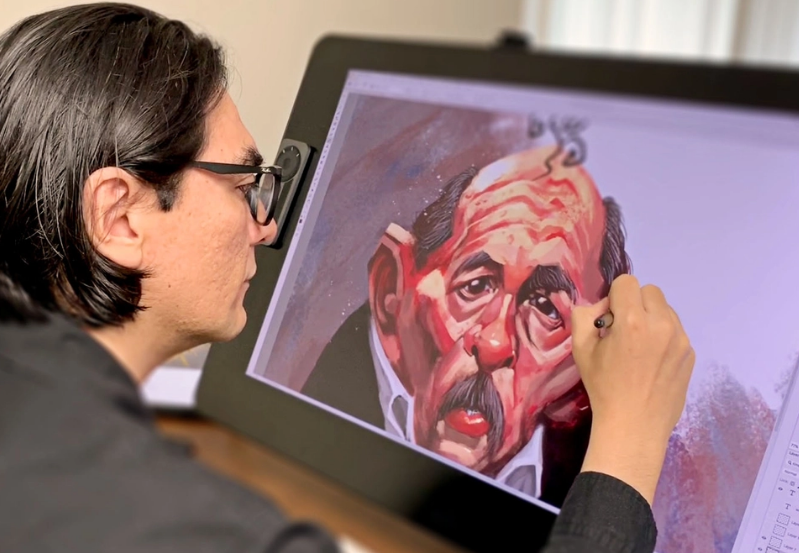
A Cartoonist is a skilled professional who creates humorous, satirical, or illustrative drawings and comics for newspapers, magazines, books, websites, animations, and other media. They work in industries such as publishing, entertainment, advertising, and digital content creation, often collaborating with editors, writers, and creative teams. Cartoonists play a crucial role in modern communication and storytelling by providing visual commentary and entertainment in an era where visual media significantly influences public opinion and engagement.
Share :
Career tree mind map (horizontal) — Cartoonist
Colored branches, hub circles, and underlined topics — same style as counselor course classic (types 18–19 in admin).
Loading mind map…

Cartoonists are creative artists responsible for conceptualizing and producing cartoons, comic strips, or illustrations that convey stories, humor, or social messages through visual art. Their role includes sketching characters, designing narratives, and addressing challenges ranging from meeting editorial deadlines to capturing cultural nuances. They combine skills in drawing, storytelling, and humor, working across various settings to produce engaging content. As key contributors to visual media, Cartoonists drive creativity and cultural reflection in a landscape increasingly reliant on impactful and accessible imagery.

  • Concept Development
    • Create original ideas for cartoons, comic strips, or illustrations based on current events, humor, or client briefs.
    • Develop characters, themes, and narratives that resonate with target audiences.
  • Sketching and Illustration
    • Draw cartoons using traditional tools (pencils, ink) or digital software to create polished artwork.
    • Ensure visual style and tone align with the intended message or publication’s aesthetic.
  • Storyboarding for Comics
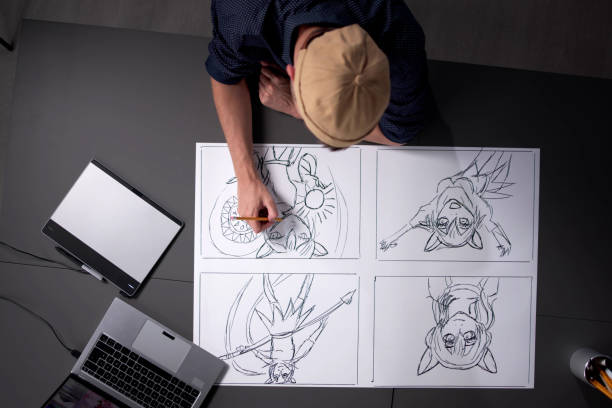
    • Design sequential panels for comic strips or graphic novels to tell cohesive stories.
    • Balance dialogue and visuals to maintain pacing and narrative flow.
  • Social and Political Commentary
    • Craft editorial cartoons that critique or satirize political, social, or cultural issues.
    • Stay informed on current events to ensure relevance and impact in illustrations.
  • Collaboration with Teams
    • Work with editors, writers, and publishers to refine concepts and meet editorial guidelines.
    • Collaborate with animators or designers for projects involving multimedia or adaptations.
  • Digital Content Creation
    • Produce webcomics or social media content tailored for online platforms.
    • Adapt traditional cartooning techniques to digital formats for broader reach.
  • Research and Inspiration
    • Research cultural trends, historical contexts, or specific topics to inform cartoon content.
    • Draw inspiration from other artists and media to develop unique styles.
  • Feedback and Revision
    • Revise artwork based on feedback from editors, clients, or audience reactions.
    • Adjust humor, tone, or visuals to better suit project goals or public sentiment.

Route Steps
Route 1 1. 10+2 in any stream (preferably with Art or Fine Arts subjects)
  2. Bachelor’s degree in Fine Arts, Illustration, or related field (3-4 years)
  3. Internship or practical training (3-6 months)
  4. Practice as Junior Cartoonist or Illustrator
Route 2 1. 10+2 in any stream
  2. Diploma or Certificate in Cartooning or Illustration (6 months-2 years)
  3. Build hands-on experience through projects
  4. Work as Freelance or Junior Comic Artist
Route 3 1. 10+2 in any stream
  2. Bachelor’s degree in Fine Arts or Visual Communication (3-4 years)
  3. Master’s degree in Illustration or Media Arts (2 years)
  4. Work as Senior Cartoonist or Comic Book Artist
Route 4 1. 10+2 in any stream
  2. Advanced international training or certification in Cartooning (1-2 years)
  3. Master’s or specialized courses as per country requirements
  4. Practice abroad or in India

  • Mandatory practical training during degree or diploma programs in fine arts or illustration departments.
  • Rotations in newspapers, magazines, or digital media firms for hands-on experience with real-world projects.
  • Internships under senior cartoonists or editors for exposure to professional workflows.
  • Observerships in editorial environments for experience in creating timely content.
  • Participation in mock comic strips or editorial cartoon projects for practical skill development.
  • Training in collaborative projects through real-world client briefs or publishing initiatives.
  • Exposure to industry-standard illustration software and tools during internships.
  • Project-based learning focusing on diverse cartooning styles and humor techniques.
  • Public outreach initiatives like assisting in community art or satire projects.
  • International attachments or online collaborations for global exposure to cartooning practices.

  • Certificate in Cartooning and Comic Art.
  • Bachelor’s in Fine Arts, Illustration, or Visual Communication.
  • Master’s in Illustration, Graphic Design, or Media Arts.
  • Specialization in Editorial Cartooning.
  • Certification in Digital Illustration with Procreate or Adobe Illustrator.
  • Workshops on Satire and Humor in Visual Art.
  • Training in Webcomic Creation and Storytelling.
  • Specialization in Children’s Book Illustration.
  • Certification in Sequential Art for Comics.
  • Short Courses in Character Design and Caricature.

Institute Course/Program Official Link
National Institute of Design (NID), Ahmedabad B.Des/M.Des in Illustration https://www.nid.edu/
Sir J.J. Institute of Applied Art, Mumbai BFA/MFA in Applied Art https://www.sirjjiaa.org/
Srishti Manipal Institute of Art, Design and Technology, Bangalore B.Des/M.Des in Visual Communication https://srishti.ac.in/
College of Art, Delhi University BFA/MFA in Applied Art https://colart.delhigovt.nic.in/
Amity School of Fine Arts, Noida BFA/MFA in Visual Arts https://www.amity.edu/
Symbiosis Institute of Design, Pune B.Des in Visual Communication Design https://sid.edu.in/
Pearl Academy, Multiple Locations BA/MA in Communication Design https://pearlacademy.com/
MIT Institute of Design, Pune B.Des/M.Des in Communication Design https://www.mitid.edu.in/
Chitrakala Parishath, Bangalore BVA/MVA in Visual Arts https://karnatakachitrakalaparishath.com/
Jamia Millia Islamia, Delhi BFA in Applied Art https://www.jmi.ac.in/

Institution Course Country Official Link
Rhode Island School of Design (RISD) BFA/MFA in Illustration USA https://www.risd.edu/
Savannah College of Art and Design (SCAD) BFA/MFA in Sequential Art USA https://www.scad.edu/
California College of the Arts (CCA) BFA/MFA in Illustration USA https://www.cca.edu/
Central Saint Martins, University of the Arts London BA/MA in Illustration UK https://www.arts.ac.uk/colleges/central-saint-martins
School of Visual Arts (SVA) BFA/MFA in Illustration and Cartooning USA https://sva.edu/
OCAD University Bachelor of Design in Illustration Canada https://www.ocadu.ca/
École Nationale Supérieure des Arts Décoratifs (ENSAD) Diploma in Illustration and Visual Arts France https://www.ensad.fr/
Royal College of Art (RCA) MA in Visual Communication UK https://www.rca.ac.uk/
RMIT University Bachelor of Design (Communication Design) Australia https://www.rmit.edu.au/
Nanyang Technological University (NTU) BFA in Visual Communication Singapore https://www.ntu.edu.sg/

India:

  • NID DAT (National Institute of Design Design Aptitude Test): Conducted for admission to NID for illustration and design programs.
  • UCEED (Undergraduate Common Entrance Examination for Design): For admission to design programs at IITs and other institutes.
  • Pearl Academy Entrance Exam: For admission to design programs at Pearl Academy.
  • Delhi University Entrance Test (for College of Art): For admission to BFA/MFA programs at College of Art.


International:

  • SAT (Scholastic Aptitude Test): Required for undergraduate programs in countries like the USA.
  • TOEFL (Test of English as a Foreign Language): Minimum score of 80-100 required for non-native speakers applying to programs in English-speaking countries.
  • IELTS (International English Language Testing System): Minimum score of 6.0-7.0 required for admission to universities in the UK, Australia, and other English-speaking regions.
  • PTE Academic (Pearson Test of English Academic): Accepted by many international institutes as an alternative to TOEFL or IELTS for English proficiency.
  • Duolingo English Test: Accepted by some institutions as a convenient alternative for English language proficiency testing.

Junior Cartoonist → Cartoonist → Senior Cartoonist → Comic Book Artist → Editorial Cartoonist → Creative Lead → Art Director → Independent Comic Creator

  • Newspapers and magazines for editorial cartoons and comic strips.
  • Publishing houses for children’s books and graphic novels.
  • Advertising agencies for humorous illustrations and branding content.
  • Digital media platforms for webcomics and social media content.
  • Animation studios for storyboard art and character design.
  • Educational content creators for illustrated learning materials.
  • Freelance opportunities for independent cartooning projects.
  • Event management for live caricature and entertainment art.
  • Gaming industry for concept art and illustrative assets.
  • Non-profit organizations for advocacy and awareness illustrations.

India International
The Times of India The New Yorker, USA
Hindustan Times The Washington Post, USA
The Hindu The Guardian, UK
Amar Chitra Katha DC Comics, USA
Tinkle Comics Marvel Comics, USA
Penguin Random House India Scholastic, USA
HarperCollins India HarperCollins, Global
India Today Group Time Magazine, USA
Outlook India Newsweek, USA
Diamond Comics Dark Horse Comics, USA

Pros Cons
Opportunity to express creativity through humor and storytelling High-pressure environment due to tight deadlines and editorial demands
High demand for cartoonists in digital and print media Irregular income, especially in freelance or independent roles
Rewarding impact through social commentary and audience engagement Risk of creative burnout from constant ideation and relevance pressure
Diverse career paths across publishing, webcomics, and animation Limited job security in freelance or contract positions
Strong potential for personal branding with unique artistic styles Dependency on public or editorial feedback impacting creative freedom

Career Level India (₹ per annum) International (USD per annum)
Junior Cartoonist (Early Career) 2,00,000 - 4,00,000 25,000 - 40,000
Cartoonist (Mid-Career) 4,00,000 - 6,00,000 40,000 - 60,000
Senior Cartoonist/Comic Book Artist 6,00,000 - 10,00,000 60,000 - 80,000
Editorial Cartoonist/Creative Lead 10,00,000 - 15,00,000 80,000 - 100,000
Independent Comic Creator/Art Director 15,00,000+ 100,000+

Note: Salaries vary based on location, experience, employer, and specialization. International figures are approximate and depend on the country and sector.

  • Adobe Illustrator for vector-based cartoon illustrations.
  • Procreate for digital drawing and sketching on tablets.
  • Clip Studio Paint for comic strip and manga creation.
  • Photoshop for editing and adding effects to cartoons.
  • Toon Boom Harmony for animation integration with cartoons.
  • Teleconferencing tools like Zoom for remote collaboration and client meetings.
  • CorelDRAW for graphic design and illustrations.
  • Microsoft Office Suite for documentation and project planning.
  • Project Management Tools like Trello or Asana for content coordination.
  • Social Media Tools like Canva for quick online cartoon posts.

  • National Cartoonists Society (NCS), USA.
  • Cartoonists Rights Network International (CRNI), Global.
  • Indian Institute of Cartoonists (IIC), India.
  • Association of American Editorial Cartoonists (AAEC), USA.
  • British Cartoonists’ Association (BCA), UK.
  • Comic Book Legal Defense Fund (CBLDF), USA.
  • Society of Illustrators, USA.
  • Animation Council of India (ACI), India.
  • Women in Comics Collective International (WinC), Global.
  • International Comic Arts Forum (ICAF), Global.

  • R.K. Laxman (Historical, India): Cartoonist since the 1940s. His "Common Man" series in The Times of India became iconic. His satire drove social commentary. His impact shapes Indian cartooning history.
     
  • Charles M. Schulz (Historical, USA): Creator of "Peanuts" since the 1950s. His work on Snoopy and Charlie Brown redefined comic strips. His creativity fosters nostalgia. His legacy influences global audiences.
     
  • Bill Watterson (Contemporary, USA): Creator of "Calvin and Hobbes" since the 1980s. His philosophical humor set new standards for comics. His vision inspires depth. His contributions impact international cartooning.
     
  • Jim Davis (Contemporary, USA): Creator of "Garfield" since the 1970s. His humorous take on a lazy cat became a cultural icon. His creativity drives engagement. His work influences global pop culture.
     
  • Ziraldo (Contemporary, Brazil): Creator of "O Menino Maluquinho" since the 1980s. His children’s cartoons shaped Latin American storytelling. His vision fosters joy. His legacy impacts regional comics.
     
  • SudhirTailang (Historical, India): Editorial Cartoonist since the 1980s. His political satire in major Indian dailies critiqued governance. His wit inspired discourse. His contributions shape national commentary.
     
  • Mario Miranda (Historical, India): Cartoonist and illustrator since the 1950s. His detailed sketches of Goan life became legendary. His artistry drives cultural reflection. His impact influences Indian visual art.
     
  • Scott Adams (Contemporary, USA): Creator of "Dilbert" since the 1980s. His office humor resonated with corporate audiences worldwide. His satire guides relevance. His work impacts professional culture.
     
  • Kate Beaton (Contemporary, Canada): Webcomic creator of "Hark! A Vagrant" since the 2000s. Her historical humor reshapes digital comics. Her vision inspires innovation. Her contributions influence online audiences.
     
  • RainnaRaiChaudhuri (Contemporary, India): Cartoonist and illustrator since the 2010s. Her work in digital and print media reflects modern Indian satire. Her creativity fosters engagement. Her impact shapes regional trends.
     

  • Build a strong foundation in drawing and humor to understand visual storytelling.
  • Seek early exposure to publishing or digital media environments through internships to confirm interest in the field.
  • Prepare thoroughly for entrance exams or portfolio requirements specific to your chosen program or region.
  • Pursue advanced certifications in digital illustration tools like Procreate to gain technical expertise.
  • Stay updated on current events and cultural trends to maintain relevance in your cartoons.
  • Develop hands-on skills in cartooning through personal projects or webcomic series.
  • Engage in cartooning challenges or online communities to build real-world experience.
  • Join professional associations like National Cartoonists Society or Indian Institute of Cartoonists for networking and resources.
  • Work on precision and witty thinking to ensure high-quality humorous content.
  • Explore international cartooning programs for exposure to diverse content standards.
  • Volunteer in community art or satire projects to understand audience reactions and build experience.
  • Cultivate adaptability to handle complex creative and editorial challenges.
  • Attend continuing education programs to stay abreast of evolving illustration methodologies.
  • Build a network with cartoonists and editors for collaborative efforts.
  • Develop resilience to manage the creative and deadline demands of cartooning projects.
  • Balance project work with continuous learning to adapt to rapid advancements in digital content creation.


A career as a Cartoonist offers a unique opportunity to contribute to visual storytelling, social commentary, and creative entertainment by crafting humorous and impactful illustrations for diverse applications. From enhancing editorial narratives to revolutionizing digital content and comics, Cartoonists play a pivotal role in modern communication and cultural landscapes. This field combines artistic expertise, satirical skills, and a commitment to solving complex narrative challenges, offering diverse paths in publishing, webcomics, animation, and beyond. For those passionate about visual art, adapting to evolving platforms, and addressing creative needs in an era of rapid media evolution, a career as a Cartoonist provides an intellectually stimulating and professionally rewarding journey with the potential to make significant contributions to society by advancing the art and application of cartooning worldwide.

Knowledge & Skills You Will Learn
1
Creative expertise in drawing and humour with precision
2
Observational accuracy in capturing cultural and social nuances for cartoons
3
In-depth knowledge of storytelling, character design, and visual composition
4
Critical thinking to solve complex narrative and satirical challenges
5
Attention to detail to ensure visual consistency and punchline delivery
6
Time management to handle multiple projects and meet tight deadlines
7
Adaptability to work across diverse platforms, styles, and audiences
8
Interpersonal skills for effective collaboration with editors and creative teams
9
Problem-solving ability to address creative blocks or content relevance issues
10
Communication skills to convey messages effectively through visual art
Senior Cartoonist

Senior Cartoonist

Specialists oversee complex cartooning projects with exceptional competence. They integrate deep artistic knowledge with expertise in specific...

0.0LPA

Comic Book Artist

Comic Book Artist

Senior professionals create full-length comics or graphic novels with narrative depth. They provide leadership by establishing visual storytelling...

0.0LPA
Editorial Cartoonist

Editorial Cartoonist

Leaders focus on creating impactful cartoons for newspapers or magazines. They provide strategic oversight by aligning visuals with current...

0.0LPA

Interested in this career?

Take the next step and explore more about Cartoonist.