
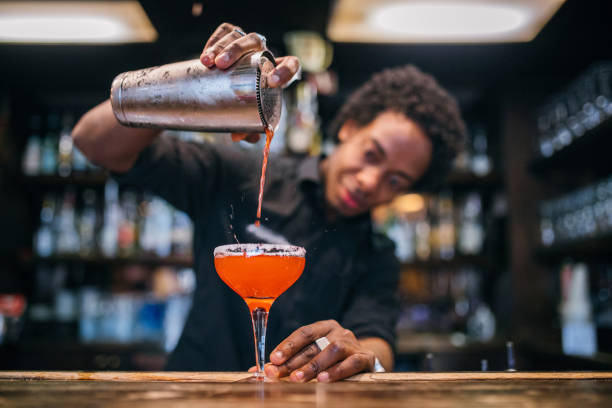
a) Technical and Operational Responsibilities:
- Prepare and serve a variety of beverages, including cocktails, mocktails, wines, beers, and soft drinks, using bar tools like shakers, jiggers, and blenders to ensure consistency and presentation.
- Mix drinks according to recipes or customer preferences, employing techniques like shaking, stirring, or layering to create visually appealing and flavorful beverages.
- Diagnose and troubleshoot customer requests or inventory issues, such as adapting recipes for dietary needs or managing stock shortages, and implement solutions to maintain service flow.
- Maintain cleanliness and organization of the bar area, including washing glassware, restocking supplies, and ensuring proper storage of ingredients to meet hygiene standards.
- Work on specialized bartending skills, such as flair bartending, crafting signature cocktails, or preparing artisanal drinks with additional training in mixology or beverage trends.
b) Administrative and Safety Responsibilities:
- Interpret customer orders, bar menus, and event requirements to plan and execute beverage service efficiently.
- Communicate with customers, waitstaff, and management to take orders, suggest drinks, and address feedback or complaints promptly.
- Maintain records of sales, inventory, and cash transactions for compliance with bar policies and financial audits.
- Ensure adherence to safety and legal standards, such as following Food Safety and Standards Authority of India (FSSAI) guidelines for food handling, checking customer age for alcohol service, and using personal protective equipment (PPE) to prevent health risks or accidents.
- Collaborate with kitchen staff, event planners, or other hospitality teams to integrate beverage service into broader dining or event experiences.
| Level | Eligibility |
| Entry-Level (Certificate) | Minimum 10th or 12th standard pass; interest in hospitality or customer service is beneficial. |
| Diploma (Optional) | 12th standard pass, preferably with interest in hospitality or food and beverage service for advanced training. |
| Advanced Roles (Further Training) | Certificate or diploma in Bartending or Food and Beverage Service; relevant work experience preferred. |
| Route | Focus Area | Duration | Outcome |
| Certificate Programs | Basic Bartending and Mixology | 1-3 months | Entry-level roles in small bars, restaurants, or cafes as bartenders. |
| Diploma Programs | Food and Beverage Service | 6 months-1 year | Positions in larger hotels, upscale bars, or luxury establishments. |
| ITI (Industrial Training Institute) Courses | Food and Beverage Service | 6 months-1 year | Practical skills for immediate employment in hospitality sectors. |
| Short-Term Training (Optional) | Advanced Mixology (e.g., Flair Bartending, Craft Cocktails) | 1-2 months | Specialized skills for emerging fields like artisanal or themed bartending. |
- No National Entrance Tests: Most certificate, ITI, and diploma programs for bartenders do not require national-level exams like JEE or NEET, focusing on direct or merit-based admissions.
- ITI Entrance Exams: Some state-run ITIs may conduct basic entrance tests or interviews for admission to Food and Beverage Service courses.
- Institute-Specific Criteria: Reputed vocational centers may evaluate candidates based on 10th/12th marks or practical aptitude tests.
- Direct Admissions: Many private and government vocational training centers offer admissions based on educational qualifications and personal interviews.
- Technical Skills: Expertise in drink preparation, knowledge of beverage recipes, and use of bar tools to ensure quality and presentation.
- Problem-Solving Skills: Ability to handle customer requests, manage busy service periods, and resolve inventory or equipment issues efficiently.
- Customer Service Skills: Proficiency in engaging with customers, recommending drinks, and creating a welcoming environment to enhance guest satisfaction.
- Soft Skills: Communication skills to interact with patrons and staff, along with multitasking abilities to manage orders and bar operations simultaneously.
- Safety and Hygiene Awareness: Knowledge of food safety protocols, alcohol service regulations, and workplace safety to prevent contamination or legal issues.
- Adaptability: Readiness to learn emerging trends like craft cocktails, zero-waste bartending, or health-focused drinks for modern hospitality demands.
a) Residential and Commercial Settings:
- Government Sector: Roles in government-run hotels, tourism board facilities, or event catering services, often with fixed hours and benefits.
- Private Sector: Positions with small to medium bars, restaurants, or local pubs; hours may vary based on customer traffic or late-night operations.
b) Industrial and Specialized Settings:
- Government Sector: Opportunities in public sector undertakings (PSUs) like India Tourism Development Corporation (ITDC) properties focusing on large-scale hospitality services.
- Private Sector: Roles in luxury hotels, international chains, nightclubs, or upscale lounges focusing on high-end or specialized beverage services for premium guests or events.
| Level | Government Sector (INR Annual) | Private Sector (INR Annual) |
| Entry-Level | ₹2,00,000 - ₹2,80,000 (Pay Scale: Level 2-3 under 7th CPC, if applicable) | ₹2,20,000 - ₹3,20,000 |
| Mid-Level | ₹3,00,000 - ₹4,20,000 (Pay Scale: Level 4-5, if applicable) | ₹3,40,000 - ₹4,80,000 |
| Senior-Level | ₹4,50,000 - ₹6,00,000 (Pay Scale: Level 6-7, if applicable) | ₹5,00,000 - ₹7,50,000 |
Note: Salaries have been updated based on recent data and projections for 2026. The private sector entry-level salary reflects an average monthly pay of approximately ₹18,000 - ₹26,000 scaled annually, with adjustments for inflation and demand growth. Government sector salaries align with the 7th Central Pay Commission (CPC) scales where applicable, with potential revisions under consideration by 2026, and include benefits like Dearness Allowance (DA) and House Rent Allowance (HRA). Private sector earnings are higher in urban areas and luxury hospitality roles (e.g., 5-star hotels, upscale bars), often including tips, bonuses, or seasonal incentives. Data is approximate and may vary based on location, experience, and economic conditions.
- General Bartender Roles: Strong demand due to the growth of the hospitality, tourism, and entertainment sectors, increasing nightlife culture, and urbanization in India.
- Specialized Roles: Significant growth in opportunities within luxury hotels, craft cocktail bars, and themed lounges, driven by rising demand for unique and premium beverage experiences.
- Emerging Areas: Rising demand for bartenders in event catering, destination weddings, and health-conscious drink preparation (e.g., low-calorie cocktails, mocktails) supporting lifestyle and experiential trends.
| Institute | Program Focus | Location | Sector Affiliation |
| Industrial Training Institutes (ITIs) | Food and Beverage Service | Nationwide | Government |
| National Skill Development Corporation (NSDC) Partners | Bartending Skills under Skill India | Nationwide | Government-Private |
| Government Polytechnic Colleges | Diploma in Hotel Management | Multiple Locations | Government |
| Institute of Hotel Management (IHM) | Food and Beverage Service | Multiple Locations | Government-Private |
| Indian School of Hospitality (ISH) | Bartending and Mixology | Gurugram | Private |
| IGNOU (Indira Gandhi National Open University) | Certificate in Hospitality Management | Multiple Centers | Government |
Note: Admission requirements vary; government institutes and ITIs often have lower fees but may require basic eligibility checks, while private institutes may charge higher fees with more flexible admission processes. Check specific institute websites or NSDC portals for course details and application processes.
a) Technical and Supervisory Path:
- Government Sector: Progression to roles like Senior Bartender or Food and Beverage Supervisor in public sector hotels based on seniority and internal exams.
- Private Sector: Move to specialized roles like Head Bartender, Bar Manager, or Mixologist with additional certifications and experience.
b) Further Education Path:
- Government and Private Sector: Pursue advanced studies (e.g., Diploma or Bachelor’s in Hotel Management or Hospitality) to transition into roles like Food and Beverage Manager, Event Coordinator, or Vocational Trainer.
| Pros | Cons |
| Strong demand due to growing hospitality and entertainment sectors in India | Physically demanding work involving long hours standing, often late at night |
| Opportunities for creativity in crafting unique drinks and experiences | Exposure to workplace hazards like spills or repetitive strain requiring careful safety practices |
| Accessible entry through short-term vocational training | Limited decision-making authority in structured settings; often under management direction |
| Potential for career growth with customer service and mixology skills | Private sector roles may involve irregular hours, night shifts, or high-pressure environments |
| Societal impact by enhancing guest experiences and social settings | Continuous learning required to keep up with evolving drink trends and customer preferences |
- Technology: Adoption of advanced tools like automated drink dispensers, digital menu boards, and POS (Point of Sale) systems, necessitating skills in modern techniques for bartenders.
- Public Policy Focus: Government initiatives such as Skill India, Incredible India, and tourism promotion policies are boosting demand for trained bartenders to support hospitality growth.
- Digital Integration: Growing use of digital platforms for order management, social media for showcasing signature drinks, and virtual training, requiring bartenders to develop digital literacy alongside service expertise.
- Skill Development and Industry Growth: Under Skill India 2.0, partnerships with NSDC and private entities are focusing on upskilling bartenders for modern trends like craft beverages and sustainable bar practices.
- Education: Enroll in a relevant program (Certificate/Diploma/ITI) from recognized Indian institutes or NSDC-affiliated centers, choosing between government (affordable) or private (flexible) options.
- Certifications: Obtain credentials through NSDC, Tourism and Hospitality Skill Council, or company-specific programs for specialized skills like mixology or flair bartending.
- Internships/Apprenticeships: Gain hands-on experience through apprenticeships with bars, hotels, or restaurants to build practical expertise.
- Networking: Join associations like the Indian Federation of Culinary Associations or participate in bartending competitions for industry exposure and opportunities.
- Government Job Applications: Apply for roles in public sector hotels or tourism facilities through notifications from relevant authorities or Staff Selection Commission (SSC).
- Private Sector Opportunities: Seek positions with bars, hotels, or event venues via job portals like Naukri.com, Indeed, or direct applications.
- Stay Updated: Follow advancements through resources from the Ministry of Tourism, hospitality trade magazines, and webinars on trends like craft cocktails and sustainable bartending.
| Sector | Category | Employers |
| Government Sector | Hospitality Settings | India Tourism Development Corporation (ITDC), State Tourism Corporations |
| Training Institutes | Institute of Hotel Management (IHM) | |
| Private Sector | Hotel Chains | Taj Hotels, Oberoi Group, ITC Hotels |
| Bars and Nightclubs | Social, Monkey Bar, Aer Lounge (Four Seasons) |
- Skill Gaps: Advancements in mixology and beverage trends require ongoing training, which may be limited in rural areas or smaller cities.
- Work Conditions: Many bartenders work in high-pressure environments with long hours, late-night shifts, or physical strain, risking fatigue or health issues.
- Regional Disparities: Advanced training and job opportunities are often concentrated in urban centers or tourist hubs (e.g., Mumbai, Bangalore), limiting access in rural regions.
- Market Competition: High number of workers in the unorganized sector can lead to wage suppression or inconsistent work for entry-level bartenders.
A career as a Bartender in India offers a dynamic and engaging opportunity to contribute to the nation’s hospitality and entertainment sectors, with roles in both government and private settings. Supported by national initiatives for skill development and the growing demand for unique and high-quality beverage experiences, this vocational path is ideal for individuals passionate about customer service, creativity, and social interaction. With accessible training, certifications, hands-on experience, and adaptability to emerging trends, aspiring bartenders can build stable and impactful careers while enhancing India’s vibrant hospitality landscape.