
Academic Writer
Academic Writer (Entry to Mid-Level)
Explore Career
Archaeologists are professionals dedicated to uncovering, studying, and preserving the material remains of past human societies, ensuring a deeper understanding of history, culture, and human evolution through scientific methods. In India, the demand for archaeologists is steadily growing due to heightened focus on heritage conservation, urban development requiring archaeological surveys, and government initiatives like the National Education Policy (NEP) 2020, which emphasizes interdisciplinary studies and cultural preservation. With roots in historical exploration and modern advancements such as digital archaeology, geospatial technologies, and bioarchaeology, this career is vital for reconstructing past civilizations, informing policy on heritage protection, and educating future generations. Professionals in this field are crucial for roles in research, education, cultural resource management, and museum curation, contributing to opportunities in history, anthropology, and heritage tourism. This career drives progress through trends like technology-driven excavations, public archaeology, and global collaborations for cultural preservation.
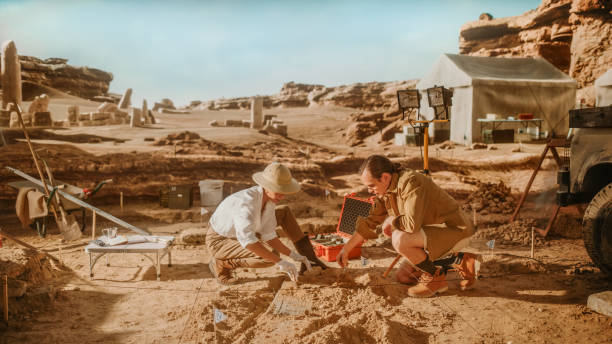
Archaeologists work in diverse settings such as excavation sites, museums, universities, government agencies, cultural heritage organizations, or as independent consultants, often collaborating with historians, anthropologists, conservationists, policymakers, and local communities across various demographics. Their roles encompass fieldwork, laboratory analysis, documentation, and public education while addressing challenges like funding constraints, site destruction due to urbanization, and ethical concerns over cultural repatriation in India’s complex historical landscape. They face issues such as limited public awareness of archaeology’s importance, bureaucratic delays in project approvals, and the need to balance development with preservation amidst diverse stakeholder interests. By leveraging expertise in excavation techniques, artifact analysis, historical interpretation, and digital tools, they uncover insights into human history that shape cultural identity and policy. As key contributors to India’s heritage and academic ecosystem, they propel progress through trends like non-invasive survey methods, digital archiving, and community-driven heritage projects.
| Route | Steps |
| Route 1: Bachelor’s to Master’s - Direct Entry | 1. Complete 10+2 in any stream (preferably Humanities/Science) with minimum 50% marks 2. Pursue Bachelor’s in Archaeology, History, or Anthropology (3-4 years) 3. Complete Master’s in Archaeology or specialization (1-2 years) 4. Join roles in research, museums, or government after internships |
| Route 2: Diploma to Degree Pathway | 1. Complete 10+2 and enroll in a 1-2 year Diploma in Archaeology or Heritage Studies 2. Gain entry-level roles or pursue lateral entry into degree programs 3. Build skills through practical fieldwork projects 4. Pursue advanced certifications or degrees for career growth |
| Route 3: Master’s to Ph.D. - Research Focus | 1. Complete Bachelor’s and Master’s in Archaeology or related field 2. Pursue Ph.D. (3-5 years) with research in specific periods or methodologies 3. Join as faculty, senior researcher, or consultant in academia or heritage sectors |
| Route 4: International Education Path | 1. Complete 10+2 and clear relevant entrance exams or language proficiency tests 2. Pursue degrees in Archaeology or Heritage Studies from international universities 3. Gain global exposure through advanced methodologies and fieldwork 4. Return to India or work internationally in research or cultural organizations |
| Route 5: Short-Term Courses and Practical Entry | 1. Complete 10+2 or basic education in any stream 2. Enroll in short-term certificate courses (3-6 months) in Archaeology, Museology, or Conservation 3. Work in entry-level assistant roles for hands-on learning 4. Build experience and pursue formal qualifications for established roles |
| Institute | Course/Program | Official Link |
| Deccan College Post-Graduate and Research Institute, Pune | MA/M.Phil./Ph.D. in Archaeology | https://www.dcpune.ac.in/ |
| University of Delhi, Delhi | MA in Ancient History and Archaeology | https://www.du.ac.in/ |
| Banaras Hindu University (BHU), Varanasi | MA in Archaeology and Museology | https://www.bhu.ac.in/ |
| Jawaharlal Nehru University (JNU), New Delhi | MA/M.Phil. in Ancient History | https://www.jnu.ac.in/ |
| University of Calcutta, Kolkata | MA in Archaeology | https://www.caluniv.ac.in/ |
| University of Madras, Chennai | MA in Ancient History and Archaeology | https://www.unom.ac.in/ |
| Maharaja Sayajirao University of Baroda, Vadodara | MA in Archaeology and Ancient History | https://www.msubaroda.ac.in/ |
| University of Kerala, Thiruvananthapuram | MA in Archaeology | https://www.keralauniversity.ac.in/ |
| University of Mumbai, Mumbai | MA in Archaeology | https://mu.ac.in/ |
| Institute of Archaeology, Archaeological Survey of India, Noida | PG Diploma in Archaeology | https://asi.nic.in/ |
| Institution | Course | Country | Official Link |
| University College London (UCL), London | MA/MSc in Archaeology and Heritage | UK | https://www.ucl.ac.uk/ |
| University of Oxford, Oxford | MPhil/DPhil in Archaeology | UK | https://www.ox.ac.uk/ |
| Harvard University, Cambridge | Ph.D. in Archaeology and Anthropology | USA | https://www.harvard.edu/ |
| University of Cambridge, Cambridge | MPhil/Ph.D. in Archaeology | UK | https://www.cam.ac.uk/ |
| Stanford University, Stanford | Ph.D. in Classics and Archaeology | USA | https://www.stanford.edu/ |
| University of California, Berkeley | Ph.D. in Anthropology (Archaeology Focus) | USA | https://www.berkeley.edu/ |
| University of Toronto, Toronto | MA/Ph.D. in Archaeology | Canada | https://www.utoronto.ca/ |
| Australian National University, Canberra | MA/Ph.D. in Archaeology and Anthropology | Australia | https://www.anu.edu.au/ |
| Leiden University, Leiden | MA/Ph.D. in Archaeology | Netherlands | https://www.universiteitleiden.nl/ |
| University of Copenhagen, Copenhagen | MA/Ph.D. in Prehistoric Archaeology | Denmark | https://www.ku.dk/ |
India:
International (for Relevant Studies or Exposure):
Junior Field Assistant → Archaeologist → Senior Archaeologist → Project Director (Excavation/Heritage) → Department Head (Archaeology) → Director of Cultural Heritage → Policy Advisor/Chief Research Officer
| India (Firms/Organizations) | International Collaborations |
| Archaeological Survey of India (ASI), New Delhi | UNESCO World Heritage Networks |
| Indian Council of Historical Research (ICHR), New Delhi | Global Historical Research Networks |
| National Museum, New Delhi | International Museum Networks |
| Indian National Trust for Art and Cultural Heritage (INTACH), New Delhi | Global Heritage Conservation Networks |
| Deccan College Post-Graduate and Research Institute, Pune | International Archaeology Networks |
| Centre for Cultural Resources and Training (CCRT), New Delhi | Regional Cultural Education Networks |
| State Archaeology Departments, Multiple Locations | Regional Heritage Networks |
| Azim Premji Foundation, Bangalore | Global Education and Heritage Networks |
| Tata Institute of Social Sciences (TISS), Mumbai | Interdisciplinary Research Networks |
| Ministry of Culture, Government of India, New Delhi | Global Cultural Exchange Networks |
| Pros | Cons |
| High societal impact by uncovering human history and preserving cultural heritage | Often involves physically demanding fieldwork in remote or harsh conditions |
| Growing demand in India due to heritage conservation and urban development needs | Pressure to secure funding for projects amidst limited government or private support |
| Rewarding role in connecting past societies to present understanding and identity | Challenges in balancing development pressures with site preservation and ethical concerns |
| Diverse career paths across research, education, museums, and cultural management | Risk of slow career progression due to limited permanent positions and reliance on contracts |
| Opportunity to work globally through international collaborations and heritage projects | Limited public awareness or appreciation of archaeology’s role compared to other sciences |
| Career Level (Private/Public Sector Example) | India (₹ per annum) | International (USD per annum, Tentative) |
| Junior Field Assistant (Entry) | 2,50,000 - 4,00,000 | $25,000 - $35,000 |
| Archaeologist (Early-Mid) | 4,00,000 - 6,50,000 | $35,000 - $50,000 |
| Senior Archaeologist (Mid-Level) | 6,50,000 - 9,50,000 | $50,000 - $65,000 |
| Project Director (Excavation/Heritage) (Senior) | 9,50,000 - 13,00,000 | $65,000 - $80,000 |
| Director of Cultural Heritage (Top) | 13,00,000 - 18,00,000+ | $80,000 - $100,000+ |
| Note: Salaries are indicative and vary based on location (metro vs. non-metro for India; country/region for international roles), sector, and experience; public sector often follows government pay scales in India. |
A career in Archaeology offers a profound opportunity to uncover human history, preserve cultural legacies, and shape collective identity, opening doors to impactful contributions in a heritage-driven world. These professionals are the custodians of the past, using their expertise and curiosity to craft narratives that connect ancient societies to modern understanding across diverse contexts. This profession blends a passion for discovery with scientific rigor, providing diverse pathways in research, education, cultural management, heritage tourism, and beyond. For those passionate about unravelling history, driven by a desire to protect cultural treasures, and eager to navigate the evolving landscape of digital tools and ethical preservation, becoming an Archaeologist is a deeply rewarding journey. It empowers individuals to transform perspectives by equipping society with the knowledge to value, preserve, and learn from the past through impactful, accessible, and innovative approaches to cultural heritage.

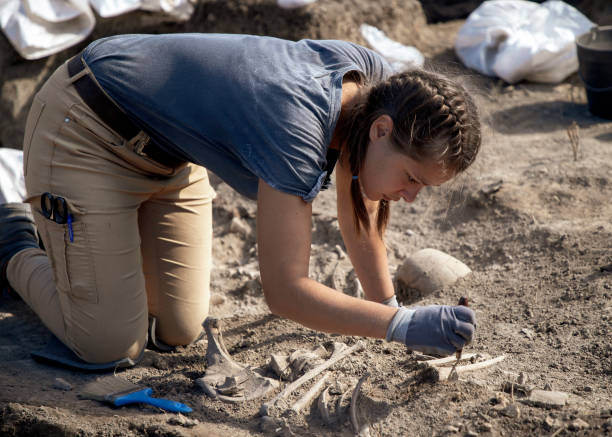
Entry-level professionals who assist in excavations, surveys, and documentation under supervision. They build skills by supporting fieldwork....
0.0LPA

Early-to-mid-level professionals who independently conduct digs, analyze artifacts, and contribute to research reports. They assist in site...
0.0LPA
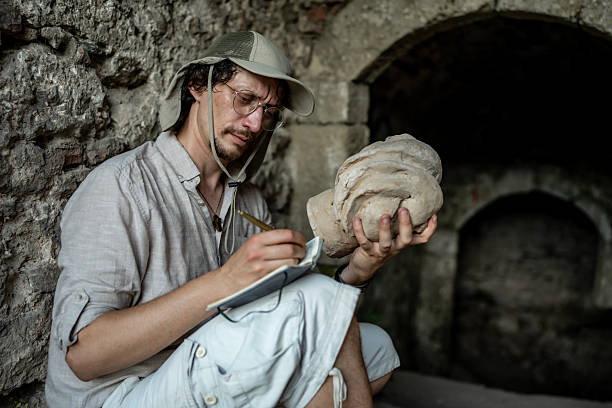
Mid-level professionals who lead excavations, mentor juniors, and publish significant findings with increased responsibility. They balance...
0.0LPA
Take the next step and explore more about Archaeology.
Explore similar career paths that might interest you